The West Asian conflict has crossed the two-month mark, and the Strait of Hormuz, through which one-fifth of global crude oil and LNG transits, is still under a blockade. This makes any immediate increase in the UAE's exports practically impossible. So, what exactly is the intent behind the departure of the Arab country from the Organization of the Petroleum Exporting Countries, or, OPEC?
Given the blockade of Hormuz, leaving OPEC does not change the commercial reality for the UAE or any other interlinked nation. Paradoxically, however, it is this very limitation that renders the present moment perfect for crafting such an exit.
Advertisement - Scroll to continue
If the UAE had decided to walk out of OPEC under normal conditions, each of the following factors would have imposed significant costs - the cartel's price floor limit, the reliance on cartel discipline, the risk of Iran flooding the market as long as Saudi Arabia remained committed to its own discipline, and the fragile political fallout in the Gulf. But none of these charges is relevant anymore, thanks to the war and the choking of Hormuz. In any case, OPEC cartel discipline has been undermined severely by the conflict, what with Iran mounting massive assaults on Emirate shipping and infrastructure, as well as on its other Gulf neighbours.
Internal Contradictions
To understand the structural inevitability of such a shift in the UAE's trajectory, it is necessary to trace the decade-long saga between the UAE's production ambitions and the framework defined by OPEC's quota system.
Advertisement - Scroll to continue
Under a $150 billion investment programme for the period 2023-2027, Abu Dhabi's national oil company, ADNOC, plans to ramp up its production capacity from the current 4.85 million barrels per day (MB/d) to 5 MB/d, three years ahead of an earlier deadline of 2030. However, according to Energy Intelligence, OPEC's quota rules limited actual UAE output in January 2026 to just around 3.4 MB/d. That means about 1.36 million barrels per day would lie underutilised.
The real asymmetry was in the system of fiscal architecture. A break-even oil price is the minimum price per barrel of oil at which a producer can cover all its costs without incurring a loss. For the UAE, this figure was just about $50 a barrel. Saudi Arabia's breakeven price, in contrast, is around $80 to $90 a barrel. The OPEC floor-pricing function - its biggest benefit to its members, one that keeps oil prices from falling below a certain level - was, thus, fundamentally more advantageous to Saudi Arabia than it was to the UAE.
In effect, the UAE was subsidising a price floor it did not even need to remain profitable. In simpler terms, it was facilitating higher oil prices that, in turn, helped higher-cost producers in the cartel.
The Geopolitical Fracture
This institutional fracture cannot be separated from a simultaneous geopolitical realignment that had progressively weakened OPEC internally. The UAE-Saudi relationship is historically the bilateral axis around which OPEC's decision-making is done. That axis had fractured even before the current was.
The two countries backed opposing factions in Yemen's civil war, with their shared military coalition collapsing into open recrimination by late 2025 when Riyadh struck a weapons shipment bound for the UAE-backed Yemeni separatists. Economically, as Saudi Arabia's Vision 2030 began redirecting foreign investment and tourism flows away from the UAE, the two nations got even more competitive.
The 2020 Abraham Accords only accelerated this divergence. By formalising ties with Israel, the UAE carved out a foreign policy identity structurally distinct from the Saudi-led Arab consensus, deepening its strategic value to Washington, independent of Gulf solidarity frameworks.
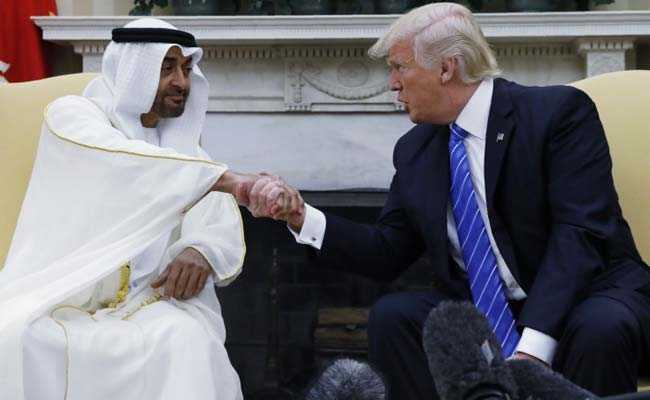
Then came Trump's oil ask. The US administration began explicitly stating that its military support for Gulf states was conditional on lower oil prices. The argument was that the US defends OPEC members, who then exploit that protection through oil price inflation. Here, the two OPEC heavyweights, Saudi Arabia and the UAE, again found themselves in competing positions.
The UAE could largely afford to sell oil at lower prices, given its $50 breakeven price, and enjoy independent US military protection through the Abraham Accords. For Saudi Arabia, that was not the case.
Now, with OPEC behind it, the UAE can easily fulfil this American demand and send precisely the kind of signal that would cement its strategic value in Washington.
A Collective Breakdown
For OPEC, the result of all this, as an institution, is not simply reputational, but structural. OPEC+ produces around 41% of the global oil supply. However, the cartel's power lies less in its combined production capacity and more in its ability to control 'spare' capacity - that is, the excess production that can be rapidly deployed to absorb supply shocks and send a signal of market credibility.
Saudi Arabia and the UAE together had over 4 million barrels a day of the world's actionable spare capacity. Of this, the UAE's 1.36 million barrels per day of spare capacity now lies outside the OPEC framework. This means the cartel loses "one of the core pillars underpinning its ability to manage the market", says Jorge Leon of Rystad Energy. Saudi Arabia, with its own capacity constrained and cut by half from 2.6 MB/d to 1.3 MB/d due to wartime export troubles and its fiscal imperative to prevent a protracted price collapse, cannot fill this function alone. The challenge for OPEC now, therefore, is to manage a market it can no longer stabilise, without the spare capacity buffer that once gave its signals credibility.
The Defection Cascade
The institutional consequences may compound rapidly through a defection logic already visible before the war. In February this year, Kazakhstan, OPEC+'s most persistent quota violator, recorded production of approximately 1.767 MB/d against a ceiling of 1.570 MB/d - a breach of nearly 300,000 barrels per day.
Its dominant upstream operators, Chevron and ExxonMobil, have explicitly declined to cut their production plans simply to align with OPEC+ targets; Kazakhstan's energy ministry has also stated openly that it puts national interests first.
Angola's exit from OPEC in 2024 over quota disputes showed that departure is institutionally survivable. The UAE's exit also establishes something, but for itself: that departure can be strategically advantageous.
The OPEC, in effect, is now a cartel that cannot punish defection because its very enforcement mechanism relies on the spare capacity it is in the process of losing. Robin Mills of Qamar Energy has assessed the current moment aptly: "If there is a time to leave, now is the time."
Advantage India?
For the world's biggest oil-importing countries like India, the effects are on two-time scales.
In the short term (a few weeks to years), the Hormuz blockade is an emergency supply squeeze. War risk premiums on tanker traffic have surged, raising import prices, widening India's current account deficit and intensifying its monetary dilemma. In this regard, little changes until the Strait opens or alternative routes are devised.
In the medium term, however, the calculus is different: ADNOC's oil sales are generally directed at Asian customers such as India, China and Japan. A free UAE capable of pumping a maximum of 5 MB/d following the Hormuz blockade means significant additional supplies.
Therefore, a bilateral deal with ADNOC, outside of OPEC, might allow New Delhi to strike more volume-type deals and become part of a recalibrated supply chain network. Thus, OPEC's decline and calibrated retreat over time gives India a strategic advantage in the medium term.
Whatever the ramifications for the Gulf, the UAE is not the end of OPEC. Instead, it marks the start of a 'post-credibility' phase, in which the organisation can no longer credibly threaten the costs of defection. The only solution, paradoxically, is explicit cooperation amongst members, but even that is difficult to achieve given how significantly their overall economic interests diverge.
The OPEC, which, somehow, now seems incapable of ensuring critical export infrastructure for its members who sell oil and POL (petroleum, oil and lubricants) products, of penalising over-producers, and of matching the strategic bargain offered by Washington on petro-dollar contracts (since the 1970s), is thus staring at the death of its market credibility. The Hormuz blockade did not break OPEC. It merely accelerated the irreversible fracture that had been in the making for years now.
[Deepanshu Mohan is Professor of Economics and Dean, O.P. Jindal Global University, and a Visiting Professor at the London School of Economics. Saksham Raj is a research analyst in CNES, O.P Jindal Global University.]
Disclaimer: These are the personal opinions of the author