








The Bondi Beach massacre, said to be the deadliest attack in Australia since 1996, has shaken the country to its core and no doubt horrified Jewish communities across the Western world. Policymakers are scrambling for answers. Families are grieving. Alarmingly, Australia's sense of safety has been punctured. But this tragedy must also serve as a wake-up call for the ummah, the global Muslim community.
It beggars belief. How did two men - a 50-year-old father and his 24-year-old son, with no apparent connection to the Arab-Israeli conflict in the faraway Middle East - carry out an attack that killed 15 innocent Jewish civilians celebrating Hanukkah? There is no doubt this was a premeditated assault on families gathered for a peaceful, joyous festival.
For God's Sake, Look Inward
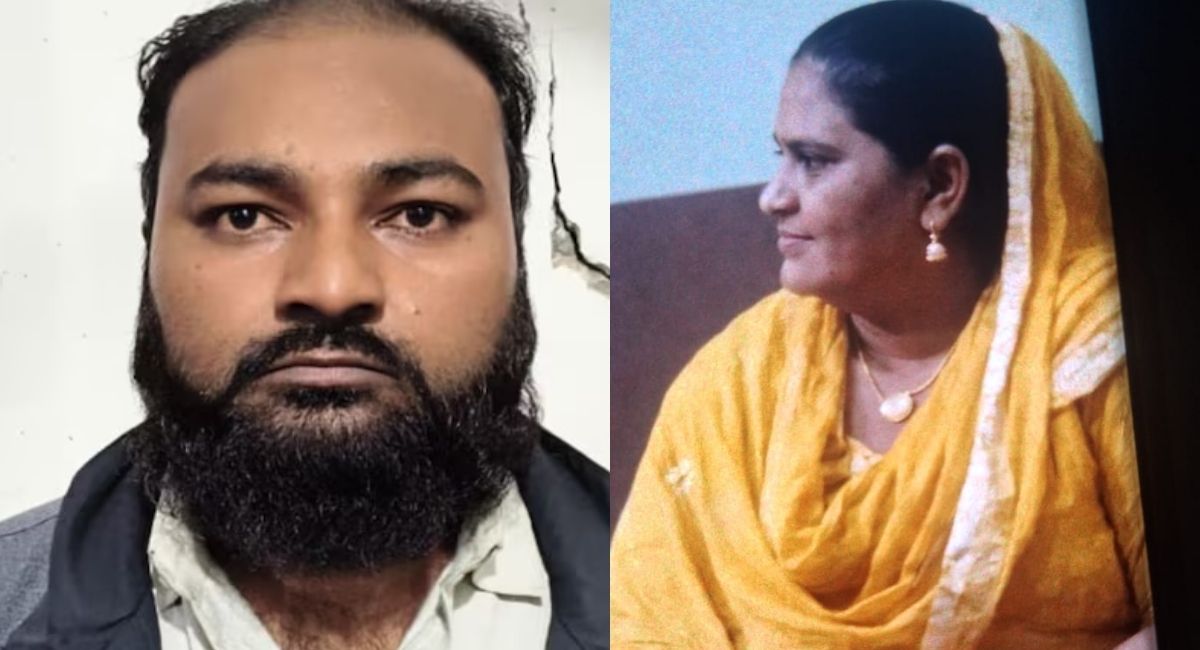
Yet, instead of widespread introspection, much of the immediate online and WhatsApp chatter in parts of the Muslim world turned to finding excuses or explaining away the dastardly act. They ranged from Gaza to Netanyahu to Western hypocrisy. Indeed, the usual deflections. The gunmen's precise motives are still unclear. The surviving suspect, 24-year-old Naveed Akram, now lies in a hospital bed under heavy guard. The other suspect, Naveed's father, Sajid Akram, was killed during the attack. Police have declared the attack a terrorist incident. Prime Minister Anthony Albanese has said early assessments suggest it may have been inspired by Islamic State ideology.
Whatever the claimed grievances - even in the face of the unquestionable horrors in Gaza - the Bondi Beach killings cannot be justified. No faith permits such violence. No moral code should defend it. My submission is simple. We must confront the anger, denial and victimhood narratives that create a permissive environment in which extremists begin to believe their violence is righteous. Injustice cannot be fought with more injustice.
There is no denying this was antisemitism. This was hate. And if we are to be honest, painfully honest, this moment demands more than grief and outrage; it demands introspection, especially within the wider Muslim world.
Victimhood Meets Denial
When the Christchurch mosque massacre happened in New Zealand in 2019, I called it an act of pure, unfiltered hate. I was applauded in my community. A white supremacist, who was an Aussie citizen, had murdered 51 Muslims at prayer. The outrage was unanimous. That day, solidarity worked.
But on Sunday, when a Muslim father-son duo killed 15 unarmed Jewish civilians in Australia, I called it what it was - a hate crime, which was indefensible. But the reaction was very different. I was told I was "timid", "too soft", even a "pacifist". Some asked me why I wasn't focusing on Gaza or Kashmir instead. As if anger elsewhere could explain bloodshed on an Australian beach. This reluctance to look inward and this instinct to explain away the actions of the perpetrators is not strength. It is shortsightedness.
During my only trip to Israel a few years ago, many Palestinians were pleasantly surprised that the Muslims in the non-Arab world had so much concern for them. Of course, this was before the beginning of the current ongoing war in Gaza. And yet, I believe justice for Palestinians, both in Gaza and the West Bank, cannot be achieved by murdering Jews in Sydney. Anger over Kashmir cannot justify planting bombs in Delhi. It does not give the moral license to anyone to kill innocent civilians anywhere in the world.
Yet, annoyingly, the justifications begin almost instantly.
Some quoted the New York Times columnist Thomas Friedman's well-known warning that Israel's war might fuel global antisemitism. Yes, the context matters. But context is not consent. Anger at Netanyahu's government does not explain why a father and son in Sydney picked up weapons and walked towards people who had come to celebrate a festival by the sea.
The Bigger Failure - And Not Just Ours
There is another uncomfortable truth. Western policymakers must also confront their own blind spots. Naveed Akram, the young suspect, was charged with 59 offences, including 15 counts of murder and one of committing a terrorist act.
Punishing individuals is necessary. It is the demand of the law. But is it sufficient? Naveed Akram may spend the rest of his life behind bars and perhaps never be out on parole. But think about it, did the father-son duo not walk to the beach that evening prepared to die? Suicide bombers in Iraq, lone wolves in Europe, militants in India, none of them acted under the illusion that they would survive. The 10 gunmen who descended upon Mumbai on November 26, 2008, were fully armed. They knew they were on a suicide mission. But they had orders to kill, create mayhem and spread fear. They did it for 60 hours. The lone survivor was hanged to death. Has that stopped terror attacks?
You cannot deter a person who believes death is a promotion.
The Strange Pull Of Radicalism
And this is where the real question for policymakers, and for all of us, begins. Punishment after an act of terror is the easy part; prevention is the hard, necessary work. How do we understand the inner drift of an otherwise ordinary man towards radical certainty? How do we disrupt the slow, corrosive accumulation of grievance, real or imagined, before it hardens into the kind of ideological fury that turns strangers into targets?
This is not a Muslim problem alone, nor should it ever be framed that way. Every community has produced its own extremists. Myanmar's Buddhist mobs. India's Hindu lynch groups or individuals. Sikh militants in Punjab in the 1980s. Europe's white supremacists. The Middle East's armed factions. Someone had once said that extremism is not a doctrine. It is a pathology that preys on the weak, the angry, the impressionable.
I have seen it up close. In 1997, while reporting in Lahore, I met a Pakistani Sikh father and his son who spoke with chilling pride about their "perfect record" of planting bombs on the Indian side of Punjab, killing civilians, slipping back across the border without ever being caught. They were polite, soft-spoken, almost gentle in demeanour. And yet, they appeared indifferent to the sufferings of their victims.
That encounter has stayed with me. It taught me that radicalisation and hatred does not always look like a monster. Sometimes, it looks like an ordinary father and an ordinary son until the day they pick up a weapon. But the Muslim world, at this moment, finds itself at a crucial moral crossroads. Gaza burns. The West Bank bleeds. These tragedies should never be minimised. They are real. They deserve justice. But they do not justify terror in Sydney. They do not justify bomb plots in Delhi. They do not justify celebrating the deaths of innocent and unarmed civilians anywhere.
Failure Of Dialogue
Only honest conversations within the ummah - the global Muslim community bound by faith, not geography - can heal the fractures that extremists exploit. Only scholars, imams, families and ordinary Muslims can reclaim the moral centre that has been distorted by those who mistake vengeance for valour. Stop the selective outrage. Why do we grieve only when the victims look like us? Why should the death of a Jewish civilian be any less tragic than that of a Muslim child in Gaza? Some in the community talk about state terrorism. Even that is no justification for murdering civilians. No faith authorises the killing of innocents. Not Islam. Not Judaism. Not Hinduism. Not Christianity. Blood spilt in the name of God stains God's name, not His enemies.
I am writing in grief. I have written about sufferings in Gaza too in these columns. This one goes out to the victims in Sydney. This is also for all those communities that are caught between fear and fury, living through cycles of revenge.
(Syed Zubair Ahmed is a London-based senior Indian journalist with three decades of experience with the Western media)
Disclaimer: These are the personal opinions of the author


