A Rude Awakening For India: Navigating The Trumpian Tempest - By Shashi Tharoor
To simply buckle under US pressure would be a profound miscalculation for India, yielding not just economic ground but strategic dignity.
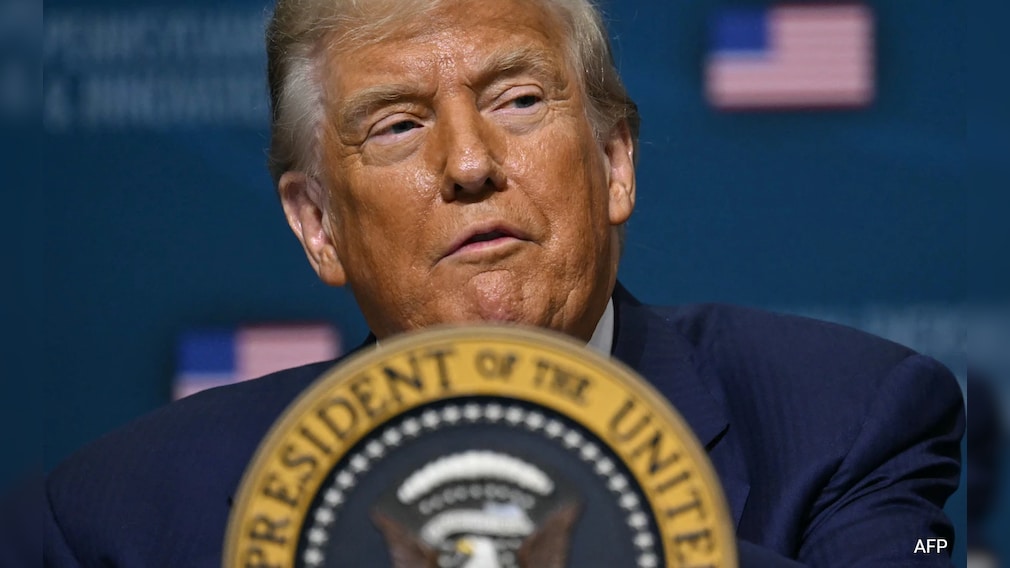
The recent announcement by US President Donald Trump of a sweeping 25% tariff on Indian goods, coupled with an unspecified "penalty" for our sovereign choices in defence and energy procurement from Russia, is not merely a trade dispute. It is a stark reminder of the volatile landscape of international relations, where economic leverage is increasingly weaponised to dictate geopolitical alignment. As a nation of increasing global heft, India must analyse this development with clear eyes, acknowledging both the immediate challenges and the enduring principles that must guide our response.
A Transactional Worldview
President Trump's remarks, delivered with characteristic bluntness on social media, underscore a transactional worldview that views trade deficits as personal affronts and strategic autonomy as a hostile act. His accusations of "far too high" Indian tariffs and "obnoxious non-monetary trade barriers" are well-worn arguments, often deployed without full appreciation for the developmental imperatives that shape India's economic policies. More concerning, however, is the direct linkage of tariffs to India's independent foreign policy - specifically, our historical and current ties with Russia. This is an attempt to co-opt India into a narrow geopolitical framework, demanding that we sacrifice our multi-aligned strategy for a singular allegiance.
Let us be unequivocal: India's relationship with Russia is rooted in decades of strategic partnership, particularly in defence and energy. This is a matter of national security and economic prudence, not a capricious choice to irk any particular nation. To suggest that India must abandon these longstanding ties under duress is an affront to our sovereignty and an attempt to curtail our strategic autonomy.
A Significant Hit
The economic impact of these tariffs on India's exports, currently valued at around USD 87-90 billion to the US, cannot be understated. Equally troubling is the fact that our tariffs are significantly higher than those of competitors like Vietnam, Indonesia and other exporter nations (not to mention Trump's current favourite, Pakistan). Our vibrant gems and jewellery sector, the burgeoning automobile components industry, the flourishing iPhone export market to the US, steel, aluminium, and even segments of our electronics manufacturing, are staring at significant headwinds. The prospect of job losses, particularly in our MSMEs and export hubs, is a real concern that demands immediate attention. Many companies contemplating relocating from China to India may now be forced to rethink their plans and move to other countries with lower US tariffs. Economists rightly warn of a potential drag on our GDP growth, perhaps as much as half a percent of GDP.
Yet, to simply "buckle under" would be a profound miscalculation, yielding not just economic ground but strategic dignity. India has consistently championed a rules-based international order, and this unilateral imposition of tariffs, especially with a geopolitical rider, flies in the face of such principles. We must not, and indeed cannot, surrender our right to conduct our foreign policy based on our national interests.
So, what, then, is the prudent course of action for India?
Diplomacy, Diversification, Dialogue
Firstly, strategic resolve and diplomatic firmness. India must make it abundantly clear that while we value our partnership with the United States, our foreign policy choices are non-negotiable and dictated solely by our national interest. We must continue to engage in trade negotiations with sincerity, but without ceding ground on critical issues such as market access for sensitive sectors like agriculture and dairy, or compromising on our data localisation policies. The current tariffs should be viewed as a negotiation tactic, and our negotiators must be empowered to push back against unreasonable demands.
Secondly, accelerated diversification of export markets. This moment of crisis must be transformed into an opportunity. While the US is a crucial market, we must redouble our efforts to strengthen trade ties with other significant economies and blocs - the European Union (with whom we are currently negotiating a Free Trade Agreement, or an 'FTA'), the UK (especially post-FTA), Japan, ASEAN, and our partners in the Global South. This diversification will reduce our over-reliance on any single market and build resilience against such unpredictable unilateral actions.
Thirdly, domestic strengthening and competitiveness. This includes a renewed focus on improving our logistics, reducing the cost of doing business, and enhancing the productivity of our labour force. While we cannot always compete purely on low wages, we must invest in skills, technology, and infrastructure to make our products globally competitive, even in the face of tariffs. This might also entail a strategic review of our own tariff structures to ensure they are rational and serve our long-term economic goals.
Finally, exploring all avenues for redressal. While the World Trade Organization's (WTO) dispute settlement mechanism has been weakened, India should keep open the option of challenging these tariffs through both bilateral and multilateral platforms, highlighting their punitive and discriminatory nature. We must also continue to advocate for a truly equitable and rules-based global trading system.
President Trump's actions are designed to test our resolve. India, a rising power with a proud history of strategic independence, must meet this challenge not with capitulation, but with steely resolve and calibrated countermeasures. The path ahead will be arduous, but sacrificing our strategic autonomy for short-term economic relief would be a betrayal of our national interest. India must stand firm, negotiate hard, diversify strategically, and emerge from this Trumpian tempest as an even stronger and more self-reliant nation.
(Shashi Tharoor is an author, former diplomat, and Member of Parliament from Thiruvananthapuram, Kerala, since 2009)
Disclaimer: These are the personal opinions of the author
-
Opinion | US-Iran MoU Collapse: Why The Strait Of Hormuz Is Back On The Brink

Why did the ceasefire fail? Could it have been prevented? The answer to many of these questions lies in the framing of the 14-Point MoU and the uneven playfield that it created.
-
NDTV Investigation: No Single Cause Or Common Pattern In Bikaner's Maternal Health Crisis
Part 3 of NDTV's investigation into the series of maternal deaths and severe post-delivery complications examines a different pattern emerging at Bikaner's PBM Hospital
-
Blog | Amaira, And The Daily Goodbye Every Parent Takes For Granted
I kept thinking about that moment every parent knows so well. The one where you watch your child disappear through the school gate, believing they will come home.
-
Opinion | By Trump, For Trump: Inside The Murky Election Crisis America Is Sleepwalking Into
Trump has learnt that overturning an election after losing is extraordinarily difficult. This time, he is shaping the battlefield before America votes.
-
Opinion | Satluj To Santosh To Padmaavat, How Getting Offended Became India's Favourite Hobby
There are three reasons why films based on real incidents or beloved myths depart from the truth
-
NDTV Investigation: Why Did 8 New Mothers Suddenly Fall Ill At A Jodhpur Hospital?
Part 2 of NDTV's investigation into the series of maternal deaths and severe post-delivery complications reported across government hospitals in Rajasthan focuses on Jodhpur.
-
Opinion | Thanks To Trump, Saving The US-Iran Islamabad Deal Is Now Harder Than Ever
Neither side wants more war. But neither side seems able to stop itself from marching towards one.
-
Opinion | After US-Iran, Why Is Pakistan Suddenly 'Brokering' Peace In Libya Now? Hint: $4 Billion
According to reports, Pakistan became one of the interlocutors alongside the US, Saudi Arabia, Qatar, and Turkey.