Opinion | The $700-Billion-Big China Problem Behind Trump's Venezuela Blitz
Venezuela is only part of the story. China has assembled a formidable economic footprint across Latin America. Trade between China and the region crossed $518 billion in 2024, making Beijing the largest trading partner for much of South America.
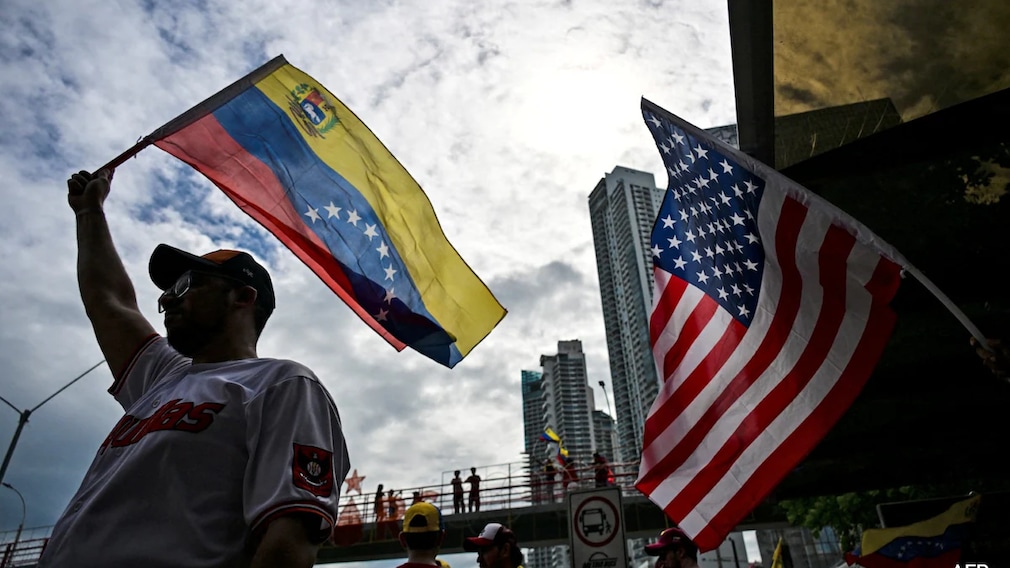
If you go by the headlines, you would think the removal of Venezuela's president, Nicolas Maduro, and his transfer to the United States were carried out to protect America's national security. We were told he was involved in narco-terrorism and drug trafficking that was poisoning and ruining American lives. This, we were assured, was law enforcement that required the use of force.
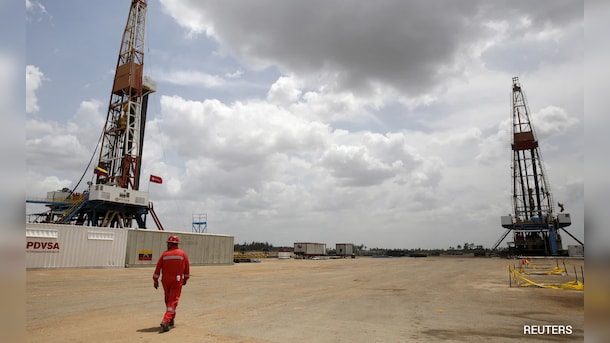
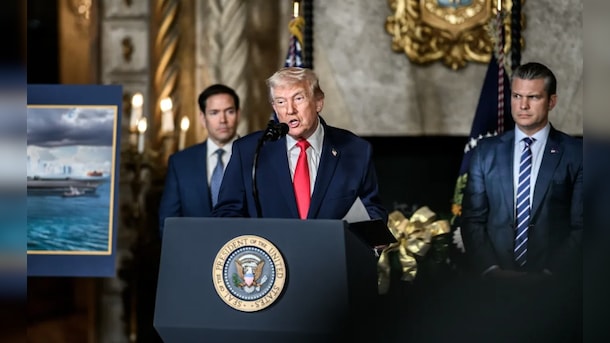
Then, in typical Donald Trump fashion, the curtain slipped. He admitted - some might say - boasted, with refreshing bluntness that it was really about oil. Vast oil reserves that Venezuela is blessed with. What he did not say was that it may also be about rare minerals, present in abundance in Venezuela and desperately needed by the US. And what he did not explicitly say was that it was about dismantling China's presence in Latin America. He left that to his Secretary of State.
Scratch the surface, and you don't need to be Einstein to see the larger picture. Venezuela was never just Venezuela. It was one more battlefield in the long, grinding US-China standoff, with energy sitting right at the centre. The November temporary truce between the two parties has done little to allay doubts and suspicions against each other.
Rubio's Revelation
A couple of days after the lightning strike in Caracas, US Secretary of State Marco Rubio dropped the pretence altogether. "This is the Western Hemisphere. This is where we live," he said, before making it clear that Washington would not tolerate rivals using it as a base of operations. You get the drift, don't you? It's about China. And to a much lesser degree, about Iran. And just in case anyone missed the point, Rubio spelt out the provocation. You cannot, he said, allow the world's largest energy reserves to sit in the hands of America's adversaries. Period.
For two decades now, China has been doing what it does in many countries. Patiently and quietly, writing cheques, building roads, power plants and ports and locking in long-term energy supplies. Venezuela fitted the model perfectly. Beijing invested more than $100 billion in infrastructure and energy projects and cultivated political goodwill. China became the destination for nearly 80% of Venezuelan oil exports. These are official Chinese figures for 2024.
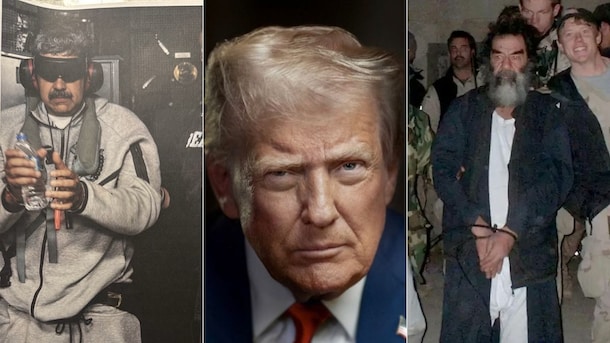
Only hours before he was abducted, Maduro was calling President Xi Jinping an "elder brother" and a global leader, while Chinese state media busily showcased the depth of bilateral ties. Those images were soon overshadowed by pictures of Maduro blindfolded, handcuffed and photographed aboard a US warship.
Should Maduro's Ouster Worry China?
But if anyone still believes this was merely about removing a "hostile" leader, they are being wilfully naive. This was about dismantling a strategic pillar of Chinese influence in Latin America.
The damage to China's interests in Venezuela is immediate and measurable. The flow of Venezuelan oil exports to China is in jeopardy. Chinese firms, such as the China National Petroleum Corporation (CNPC) and Sinopec, were among the largest investors and operators in the country. Beijing's exposure includes more than $100 billion in finance and project commitments since 2000, and around $10 billion in outstanding loans. They are assets now vulnerable to freezes, nationalisation, renegotiation or quiet disappearance under a new political dispensation. We do not know whether the raid disrupted physical oil flows to China. What's important is that it injected political poison into every existing deal and every future calculation. Chinese banks and companies will now have to factor in US pressure as a permanent risk, while regional partners will think twice before deepening ties that could turn into geopolitical liabilities overnight.
And mind you, Venezuela is only part of the story. China has painstakingly assembled a formidable economic footprint across Latin America. Trade between China and the region crossed $518 billion in 2024, making Beijing the largest trading partner for much of South America. Conservative estimates also place China's investment stock in Latin America at well over $100 billion, spread across energy, mining, logistics, ports and telecoms, with an additional $150 billion or more extended through loans and development finance. These figures are drawn from long-term tracking by the China-Latin America Finance Database, run by the Inter-American Dialogue and Boston University and academic monitors, (such as the Red ALC-China and Dussel Peters Monitor), which have documented Beijing's deep and sustained capital exposure across the region. That scale is sufficient to generate economic leverage, and more than enough to trigger strategic anxiety in Washington.
Growing American Anxiety
That anxiety has been visible for some time. But the Panama Canal episode brought it into sharp focus. In 2025, US officials openly urged Panama to review or cancel Chinese-linked port agreements near the canal, citing security concerns. Beijing responded by questioning the scrutiny of Hong Kong-based CK Hutchison's assets and demanding explanations. Some terminals came under new management, others under political review. What had once been commercial contracts were suddenly recast as national security threats. The US seemed to tell China that in strategic locations, its investment is no longer treated as business. It is treated as provocation.\
Once Caracas was out of the way, President Trump and his senior officials began naming other countries in the region, sometimes casually, sometimes threateningly. Colombia was one of the first to feel the heat. President Trump publicly warned his left-wing president, Gustavo Petro, accusing him of allowing drug cartels to "flourish" and hinting darkly that Washington would not tolerate Colombia becoming a problem state. For a seasoned observer, this should have raised eyebrows. Colombia has long been one of America's closest partners in its war on drugs.
Growing Colombia-China Ties
But it is also true that in recent years, Bogotá has also been deepening ties with Beijing, signing a cooperation plan under the Belt and Road Initiative (BRI) and joining the network altogether. It was a move that surprised many in Washington and pointed to an expanded Chinese footprint that went beyond mere trade. The total trade between Colombia and China has surged to around $18-20 billion, making China one of Colombia's top trading partners, and the two countries are partnering on infrastructure, regulatory cooperation and logistics projects, signalling that Chinese economic presence in Colombia is no longer marginal.
At a press conference after the Venezuela operation, President Trump declared that under his new national security strategy, American dominance in the Western Hemisphere would "never be questioned again", framing the attack as a reassertion of US power in its "home region". Within hours, that posture extended to Mexico, with Trump accusing it of allowing drugs to "pour" into the US and claiming that cartels were effectively running the country, reviving earlier suggestions of US military action, including drone strikes against cartel targets. Mexico's President, Claudia Sheinbaum, however, rejected any foreign intervention, reiterating that sovereignty is "not for sale" and warning that unilateral action and invasion cannot form the basis of international relations.
China's growing economic footprint in Mexico adds another layer of unease in Washington. Beijing is now one of Mexico's largest trading partners, with bilateral trade exceeding $100 billion annually and Chinese firms expanding rapidly in manufacturing, electric vehicles, electronics and logistics, often using Mexico as a production base linked to the US market. As Chinese investment deepens, Mexico increasingly sits at the intersection of trade, security and great-power rivalry.
Then there was Cuba, a familiar target, but more vulnerable now. Trump dismissed the need for direct intervention by claiming the island was "ready to fall", deprived of Venezuelan oil and economic lifelines. US officials openly suggested that Havana's dependence on Caracas had left it exposed.
Outside of Latin America, Trump's words grew even less restrained. Iran, though geographically distant, was folded into the same logic. Tehran was warned that unrest at home could invite American action, particularly if it threatened energy markets or regional stability on US terms. And then there was Greenland, whose proposed "acquisition" Trump has mentioned so often that it is no longer treated as a joke. European leaders have protested politely, but few doubt that if Washington were to act decisively, Europe's ability to stop it would be limited. The Caracas operation has only reinforced that fear.
A Precedent That May Backfire
It is this precedent that has now alarmed citizens of faraway Taiwan. Analysts there have been wondering that if the US can unilaterally 'seize' a sitting president from a sovereign country without international authorisation, what stops China from attempting something similar closer home? Beijing already claims all of Taiwan as part of its mainland. If it were to seize the island, China believes it would not amount to the violation of international law. While Beijing may not be ready or willing to seize Taiwan's leadership tomorrow, the Caracas episode feeds into a growing narrative within China that international rules are applied selectively and that obedience is for the weak. That perception, once embedded, is difficult to reverse.
It is quite extraordinary to think that an American action intended to check China's influence in Latin America may end up strengthening the argument of Chinese hardliners who believe the global order is already broken. Taiwan's fears are not paranoia. They are a rational response to a world in which precedent is being rewritten by the world's most powerful leader.
Since Donald Trump returned to the White House a year ago, the pattern has been clear. Many analysts in the US argue that Venezuela was never an isolated operation but a warning shot. China was the intended audience. Washington has chosen to challenge Beijing's influence in its own backyard not through tariffs or diplomatic pressure, but through brute force. Whether this approach weakens China or merely hardens its resolve remains to be seen. What is already clear, however, is that the pretence that this is about democracy, as European leaders would like us to believe - or drugs - has worn thin. The oil has spoken. Rare minerals are fast driving the new gold rush.
-
Blog | Madhav Gadgil: The 'Durable Optimist' Who Believed Science, Too, Has Obligations

Gadgil, despite decades of frustration and bureaucratic sidelining, believed that people could organise, that knowledge could travel, and that democracy, however delayed, could still correct its course.
-
Blog | What's Stopping Vijay's Film? 6 'Conspiracy Theories' About Jana Nayagan
In Tamil Nadu, it turns out you don't need a release date for the promise of a blockbuster. Sometimes, just a missing censor certificate is enough.
-
From Trump And AI To Russia And Water: The 'Top Risks' Of 2026
Ian Bremmer's Eurasia Group, one of the world's top risk research and consulting firms, has released its 'Top Risks 2026' report.
-
Opinion | Suresh Kalmadi: The Man Behind The Legendary 5-Star Dinner That Unnerved Even Sonia Gandhi
Kalmadi proved that in Indian politics, the man who controls the guest list often has more power than those whose names appear on it.
-
Europe's Different Yardsticks To Judge Events In Venezuela And Ukraine
Russia has called the US strike on Venezuela and the subsequent capture of Nicolas Maduro an act of armed aggression
-
Opinion | How Venezuela's China-Made Weapons Failed To Keep The US Away
Unlike post-Operation Sindoor, when Beijing hailed Pakistan's air-defence operations against India as a success of Islamabad's "Made in China" military force, there is an eerie silence within Beijing this time.
-
Opinion | Donald Trump Has A New Project: 'Make Venezuela Great Again'
Trump's presidency, much like of those before him, reveals the structural constraints that limit any US leader's ability to disengage from global conflicts.
-
A History Of US-Led Regime Changes And Their Disastrous Consequences
There is a familiar theme to American power when it decides to reorder the world. It is against that historical backdrop that Donald Trump's latest foreign intervention must be understood.
-
Blog: In Manipur, The More Things Change, The More They Stay The Same
As 2026 arrives, where do things stand today for Manipur, a border state that faces a situation so unique that modern India has never seen or found the correct words to define it adequately
-
Opinion | Bangladesh To Pak, An Embattled India Steps Into 2026 - By Shashi Tharoor
The events in our backyard offer a reminder that being a "Global South" leader is a hollow title if one's own immediate periphery is on fire.