Opinion | 38% vs 18%: How Bengal Exposes The Biggest Irony Of Women's Reservation
Bengal with its duality - 38% women in Parliament versus 18% in the state contest - captures the core tension of the Bill better than any other example.
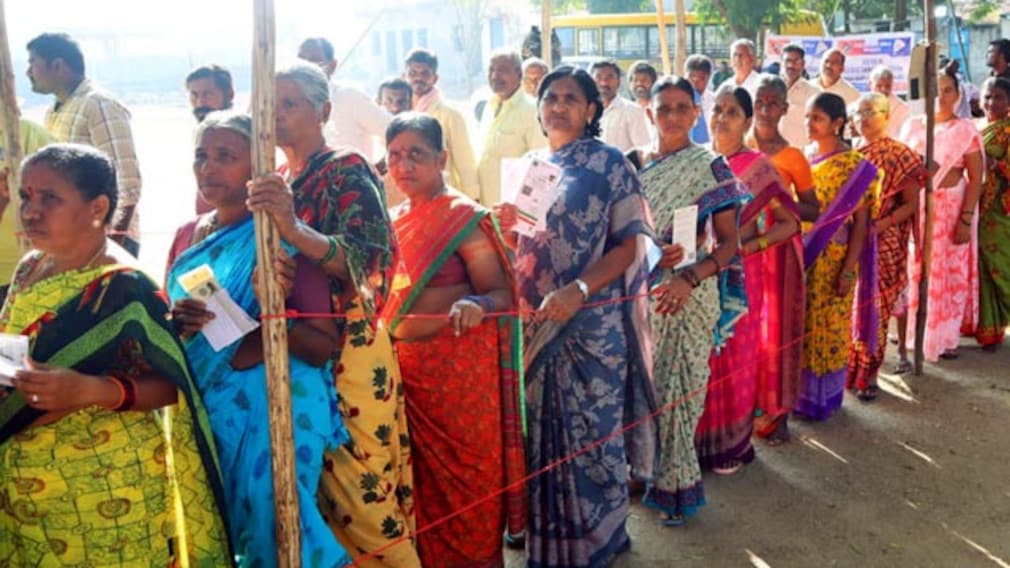
Long debated and stalled for decades, the legislative odyssey of the Women's Reservation Bill, now formally known as the Nari Shakti Vandan Adhiniyam, began nearly 30 years ago when it was introduced in September 1996. In September 2023, the Parliament finally passed the 128th Constitutional Amendment Bill unanimously, reserving 33% of seats for women in the Lok Sabha, state legislative assemblies, and the Delhi Assembly.
The law seeks to correct India's gender imbalance in politics, where women currently account for only about 15% of Parliamentary representation. The catch, however, is that the law was tied to the completion of a fresh census and a subsequent delimitation exercise, pushing implementation to 2034 at the earliest.
What The Delimitation Pivot Hides
The Union government is now attempting to accelerate this timeline by proposing amendments that would use 2011 census data instead of the pending census and expand Lok Sabha seats by 50% - from 543 to 816, with 273 seats reserved for women - asking the Parliament to pass this in three days while West Bengal and Tamil Nadu are still mid-election.
In response, Congress President Mallikarjun Kharge has accused the government of "rushing the process to gain political advantage" as the Congress Working Committee warns of the profound consequences of the delimitation proposal. While the 50% seat expansion is presented as equitable, the absolute gaps between states widen dramatically: Northern states gain roughly 200 seats against the South's 66. In an 816-member House where the majority mark shifts to 409, the Hindi heartland, where the BJP's base is most concentrated, commands a larger share of power, making Southern states increasingly less decisive in government formation.
By using 2011 Census data, which contains no full caste enumeration, the government has also sidestepped the long-standing demand for a quota-within-a-quota for OBC women. Constitutional scholar Zoya Hasan has noted that basing electoral restructuring on data that is 15 years old, and predates the pandemic, mass migration, and rapid urbanisation, risks misrepresenting the very communities the bill claims to empower.
The BJP's Bengal Gambit
The timing has an obvious factor: West Bengal, which votes in two phases this month. The BJP's strategy is to use the bill as a direct weapon against Mamata Banerjee's most loyal constituency of women voters, who have consistently given the Trinamool Congress a double-digit lead in post-poll surveys. Modi has framed the legislation as a "historic opportunity", suggesting that Banerjee's record is no substitute for a Constitutional guarantee, while Smriti Irani, campaigning in Rajarhat, accused both the Congress and the Trinamool of failing to support the bill "despite being led by female leaders".
The BJP's women-focused campaign also invokes the RG Kar case related to the rape and murder of a trainee doctor in August 2024, with Irani accompanying the victim's mother, now a BJP candidate from Panihati, as she filed her nomination. The message is pointed: the Trinamool's headline numbers on representation are hollow if the state's institutions fail to protect women on the ground.
TMC's Numbers: Ahead Of The Benchmark?
The irony here, however, is that the Trinamool Congress already operates beyond the 33% threshold in its own Lok Sabha delegation. In the 2024 Lok Sabha elections, 11 out of 29 Trinamool MPs were women, amounting to roughly 38%, the highest share among major national parties. By comparison, women account for around 13% of the BJP's elected MPs.
At the state level, over 20% of Mamata Banerjee's Council of Ministers are women, including high-profile portfolios such as agriculture, welfare, and public health. In contrast, BJP-ruled states such as Uttar Pradesh, Gujarat, and Madhya Pradesh still have far lower shares of women MLAs than Bengal, even after decades of national-level discussions on quotas.
What distinguishes the Trinamool's record is not just the headcount but the diversity behind it. The party's women MPs span a wide social and professional range: actors with deep constituency ties, doctors and academics, career politicians, a former bureaucrat, and an Anganwadi worker who arrived at Parliament without the cushion of elite networks or family incumbency. They are drawn from Adivasi, Dalit, Muslim, and urban middle-class backgrounds, reflecting constituencies that cut across rural, peri-urban, and metropolitan Bengal. Mamata Banerjee remains one of only two women Chief Ministers in the country, a product not of reservation but of four decades of street-level political activism.
The 'Party Ticket'
As West Bengal moves towards the 2026 state elections, the BJP's "women-first" pitch - cash transfers, women-only police battalions, and job-quota promises - will be heavily advertised. On the other hand, Banerjee can leverage not only scheme-based welfare such as Kanyashree Prakalpa and Lakshmir Bhandar, but also a demonstrable record of women's representation in both the Lok Sabha and the state cabinet.
And yet, West Bengal, held up as the Bill's best-case argument, is not exempt from the contradictions of the "party ticket". While the Trinamool's 38% women MPs in the Lok Sabha is an impressive achievement, the upcoming Assembly elections offer a more sobering reality: the party has fielded 52 women out of 291 candidates - just about 18%, which is half the 33% threshold it champions nationally and a steep drop from its Parliamentary contingent. The BJP in Bengal lags further behind, fielding only around 11% women for the state polls.
The Trinamool Congress appears to have chosen "winnability" over gender equity in drawing up its nominee list. It is a sad reflection of our electoral system that development, health, education and gender issues no longer ensure electoral victory, and are consigned to manifestoes, The party has dropped 74 sitting MLAs this year. In many cases, these seats are filled by new faces, but the pressure to hold onto a majority has led the party to favour established organisational leaders who are still predominantly male.
Bengal with its duality - 38% women in Parliament versus 18% in the state contest - captures the core tension of the Bill better than any other example: it is the strongest case for why reservation is necessary, and simultaneously a reminder of how much political will it takes to make it real. If anything, the Bill's passage may amplify comparisons rather than consolidate credit, raising a broader question: can a party leverage a policy for electoral gain when its core objectives core are already being realised more effectively, albeit imperfectly, by its opponent?
(Rasheed Kidwai is an author, columnist and conversation curator)
Disclaimer: These are the personal opinions of the author
-
Delhi's New Policy Paves Way For High-Rises. Architects Flag One Big Risk

Without parallel investments in roads and urban design, higher density could simply place more pressure on already strained neighbourhoods.
-
Opinion | A Quiet Indo-Pacific Revolution Is Underway, And India Is At Its Centre
America's unpredictability has finally done what the China threat never could for the Indo-Pacific
-
Beyond Low Cost: Why Foreigners Choose India's Healthcare Over The West
India's medical tourism industry is estimated to be worth $12.32 billion in 2026. It is growing much faster than the country's overall tourism sector.
-
Opinion | Trump's Quiet Turkey 'U-Turn' Has Loud Consequences For India
In a stunning policy reversal, Trump has decided to sell America's F-35 jets to Turkey, a staunch Pakistan ally and its closest defence supplier
-
Rs 1,160 Crore Rice 'Scam' Widens: 56 Mills, 22 Ethanol Plants Under Scanner
Investigators are trying to establish how much of the nearly 5 lakh metric tonnes of government rice allocated for ethanol production was actually converted into ethanol, and how much may have been diverted through private mills before returning to government warehouses.
-
A Truck, A Rice Mill And A Rs 1,160 Crore Question In Madhya Pradesh
The suspicion is that the government rice was diverted to private rice mills and later found its way back into government warehouses as custom milled rice.
-
Opinion | Sharad Pawar Has An Old 'Two Plus Two' Bargain For Delhi
Sharad Pawar appears to be keeping two doors open, and the political cost could be huge for both opposition and the NDA.
-
Blog: Your SUV's Most-Used Feature Is Now The Brake Pedal
The growing menace of traffic begs a question: Is buying a car slowly becoming one of the worst financial decisions for people living in large cities?
-
Opinion | US-Iran MoU Collapse: Why The Strait Of Hormuz Is Back On The Brink
Why did the ceasefire fail? Could it have been prevented? The answer to many of these questions lies in the framing of the 14-Point MoU and the uneven playfield that it created.