Opinion | 2025: The Year Women Were Used, Not Empowered - By Priyanka Chaturvedi
Not one national party tried to reach the 33% quota for tickets for women candidates in state elections held this year. The irony strikes harder when the Supreme Court refused to bring political parties under the ambit of the PoSH Act.
The year 2025 has been an interesting rollercoaster ride for me personally, with its own highs and lows. However, every lesson it offered was worth the ride. But how was 2025 for the women at large? As a year-end column, I thought this would be the most apt topic to write on.
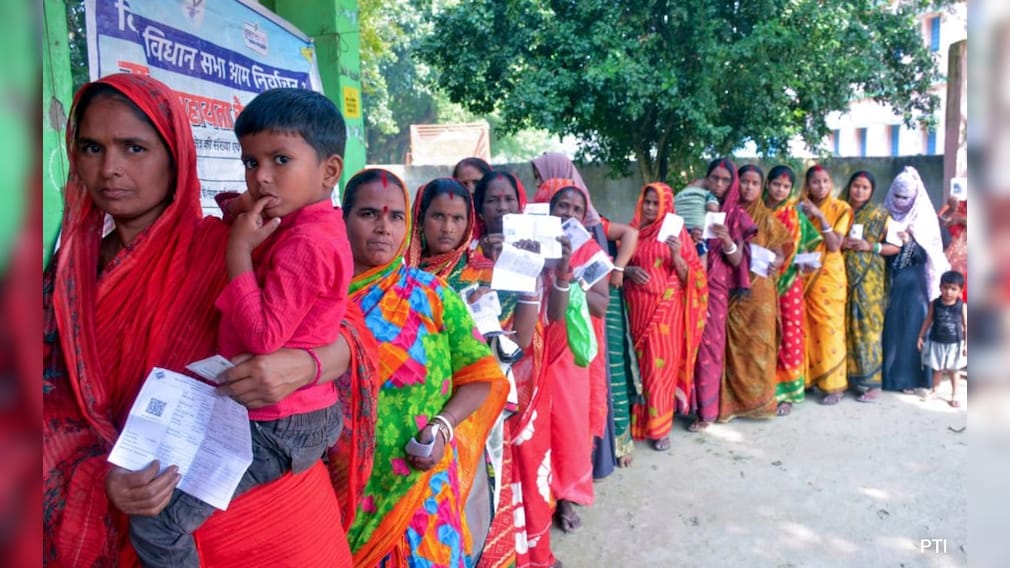
We saw how this year the women electorate was wooed, that while women mattered at the ballot boxes, they continued to be denied fair representation in elections. Misogyny saw a massive rise on digital platforms. We saw how Pahalgam attacks targeted married women, and our fight against was also an ode to the woman; a team of all-women officers briefed the nation on our response to Pakistan's terror attacks.
However, with the high visibility in 2025, the year that feminism became the centrepiece of discussion, did it lead to satisfactory outcomes? The jury is still out. What is clear is that empowerment is welcome only as long as it is a profitable idea - whether for one's politics, one's credibility or for election outcomes. It's encouraged so long as it is non-disruptive and doesn't ask for representation in spaces that exist and are not occupied by the other gender.
What we as women need to take into 2026 is our ambition, our emboldened voices and unburdening of our guilt for seeking more space in this highly inequitable construct of power structure. Listen, ladies, till we don't ask, no one is going to hand it over to us. Till we don't seek change, no one wants to change. Reminds me of the poem by Pushpamitra Upadhyay, which I quote,
"Suno Draupadi Shastra Utha lo, ab Govind na aayengey"
("Take up your arms, Draupadi; Krishna isn't coming")
Women were visible everywhere this year. However, the control and contribution over funds for businesses, women-based policy, women's agency, and power in institutions that matter - remained stubbornly male. What is obvious is that being seen is different from being in charge. If the power levers continue to be skewed in favour of men and don't shift, then visibility alone changes nothing.
Take, for example, the 2024 Women's Reservation Bill to be implemented in 2029. Not one national party tried to reach the 33% quota for tickets for women candidates in state elections held this year. The irony strikes harder when the Supreme Court refused to bring political parties under the ambit of the PoSH Act, citing fears of opening a "Pandora's box". The message was unmistakable: women may enter political spaces, but their safety is not guaranteed. Participation is allowed; protection is negotiable.
The rise in misogyny - whether online, on social media apps, digital platforms, in pop culture, in casual "jokes", in moral policing - is not accidental but a reaction to having to cede long-held control and social constructs. We as women need to learn that the backlash in the form of trolling, sexism, and character assassination attempts is not a sign of us failing, but a confirmation that the dynamics of long-held power are being challenged. So, any resistance to such a change does not mean that you should step back; it should only make your resolve stronger and commitment deeper.
Most times, we women, almost apologetically, have to explain our reasons to fight harassment, to demand the need for consent, equal pay, and seek safety. These are our rights, and we should be speaking about them with all our might and as a collective. What I have learnt over the years is this: you do not owe clarity to people invested in misunderstanding you. Most times, strategic silence is not weakness; it is self-preservation. You do not need to win the 'Miss Congeniality' award to be able to get anywhere; you are not here to seek approval, you are out there to get things done in the best way possible.
It may look like we have made giant strides in 2025; however, the truth remains that women are still undervalued (homemakers), underpaid (wage pay gap), and replaceable. This is an outcome of not a system that is broken, but of one that is designed to function exactly this way. We women have, since birth, been conditioned to behave in a certain way, ignore certain things, learn to adjust, and stay silent. We are praised for behaving within the boundaries created, surviving things that we should never have had to endure in the first place. Our resilience has been used as a euphemism for tolerance of injustice. This year, yet again, underlined that there is no "correct" way to be a woman that guarantees safety or dignity. Clothes, choices, silence, success - none of it insulates you.
The cultural lesson of this year is not that women need to lean in harder or heal better. It is that the system needs to lose its dependence on women's unpaid labour, emotional restraint, and constant accommodation. We must consciously uncondition our minds and unlearn to take pride in being able to "handle it all". Unburden, breathe, and be unapologetically ambitious.
(The author is a Rajya Sabha MP and Deputy Leader of the Shiv Sena-UBT)
Disclaimer: These are the personal opinions of the author
-
Congress Falls Back On A Fullback: Where Pargat Singh Fits In The Punjab Poll Play

Vijay Inder Singla, a Hindu face, was reportedly the frontrunner before the Congress replaced one Jat Sikh with another as its Punjab unit chief. How far does such arithmetic work in the state's politics? Pargat's appointment holds some of the answers.
-
Why Doesn't Congress Boycott If Polls Are "Fixed"? Answer Lies Beyond Rahul Gandhi's "Distraction" Quip
The starkest demand for a boycott has come from outside the political Opposition, from the Cockroach Janta Party. But does a boycott help? Here's what research, examples, and expert analysis tell us.
-
'Sully' To Gimli, Sioux To Patna: When Pilots Got It Unbelievably Right
Captain Smit Machchhar fought off his co-pilot after being stabbed and opened the cockpit door, saving 174 people.
-
Opinion | Are Saudi Arabia And UAE Reuniting Again After 10 Years?
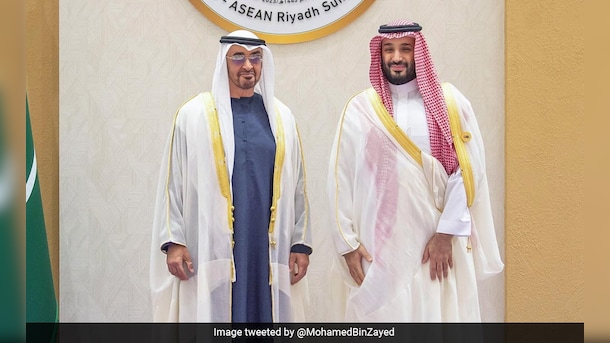
On Tuesday, the UAE's Vice President, Deputy Prime Minister and Chairman of the Presidential Court, Mansour bin Zayed, met Saudi Crown Prince Mohammed bin Salman.
-
Opinion | 'Lies, Damned Lies, Statistics': On The Controversy Around India's GDP Growth Figures
The debate is less about a single figure than about a decade-long erosion of trust in official statistics.
-
Opinion | Why India Cannot Keep 'Overestimating' Its Value To Washington
Some of India's value to Washington came from the tension between the US and China. That is changing now.
-
Opinion | India Has A 'Lobbying' Problem In Washington, And It Has Come Back To Haunt It
While the EU, Japan, the UK and South Korea secured quick deals, India's efforts were getting drained in prolonged negotiations and the wrong kind of lobbying.
-
India Is Getting Old Before Getting Rich, Will Turn 'Aged' In 16 Years: Moody's
Countries with the steepest fertility declines today will age the fastest in the coming decades. India's drop has been steep.
-
Opinion | Why Does Trump Want To Sell Arms To A US 'Adversary'? Inside His Strange Bargain
Trump's aides maintain that no such offer had been made. But the story points to a larger strategy