Bangladesh To Pak, An Embattled India Steps Into 2026 - By Shashi Tharoor
The events in our backyard offer a reminder that being a "Global South" leader is a hollow title if one's own immediate periphery is on fire.
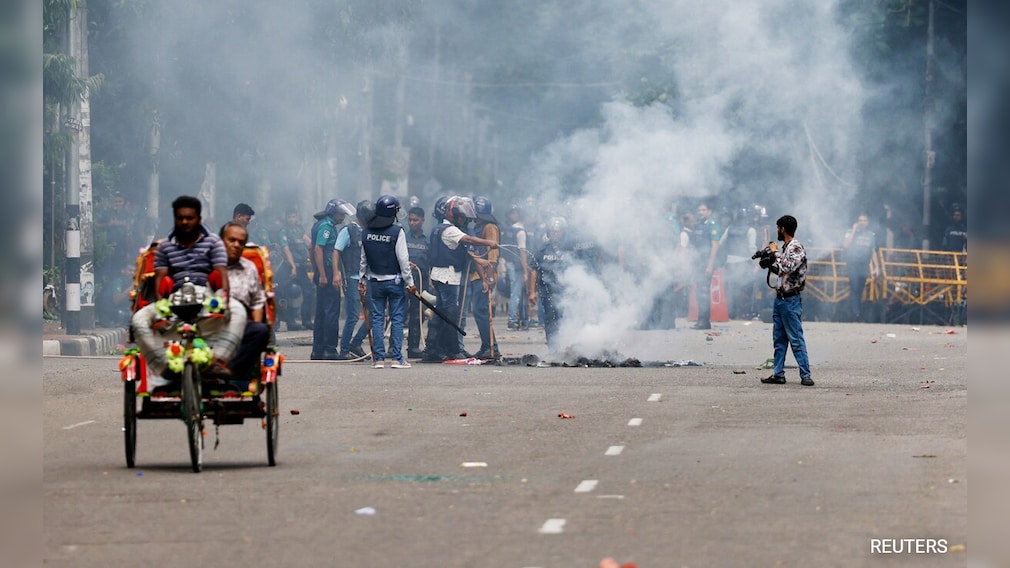
As 2025 draws to a close, India finds itself navigating a turbulent regional environment. The year has been marked by Pakistan's uneasy economic stabilisation and Bangladesh's dramatic political transition, both of which carry profound implications for India's security, diplomacy, and economic outreach in New Delhi's backyard.
India's "Neighbourhood First" policy is facing its most gruelling stress test in decades. For years, New Delhi's regional strategy relied on a binary of "stable friends" and "managed foes". Today, that binary has collapsed into a kaleidoscopic mess of volatility. From the collapse of a pro-India regime in Dhaka to a near-kinetic escalatory cycle with Islamabad, the year-end report card for India's periphery reads like a geopolitical cautionary tale.
The most seismic shift of 2025 remains the structural transformation of Bangladesh. After fifteen years of a "Golden Era" for India under Sheikh Hasina, India now faces a Dhaka that is ideologically fluid and strategically aloof.
An Increasingly Pak-Friendly Bangladesh
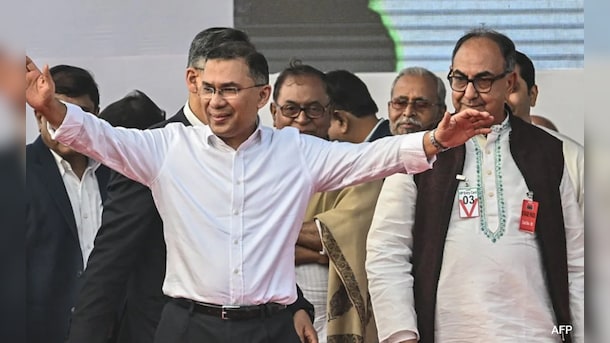
The interim government, led by Nobel laureate Muhammad Yunus, has spent the year trying to balance the revolutionary zeal of student leaders against the institutional vacuum left by the Awami League's collapse. For India, the implications are stark. The "security-first" pillar, where Dhaka actively suppressed anti-India insurgents from the Northeast, is no longer guaranteed; if anything, the opposite, with militants gaining sanctuary in Bangladesh, is a real risk, as is the prospect of Pakistan's ISI fishing in troubled waters around India's "soft underbelly" there. Following the assassination of a student leader, preposterously blamed by some on India (which has no interest whatsoever in promoting instability in Bangladesh), student leaders have increasingly used provocative rhetoric, with some openly threatening to provide refuge to separatist elements in India's "Seven Sisters" states, and one even brashly claiming that his country knows how to separate India from its North-East.
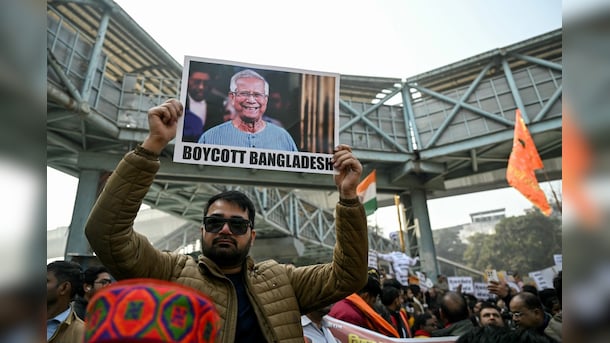
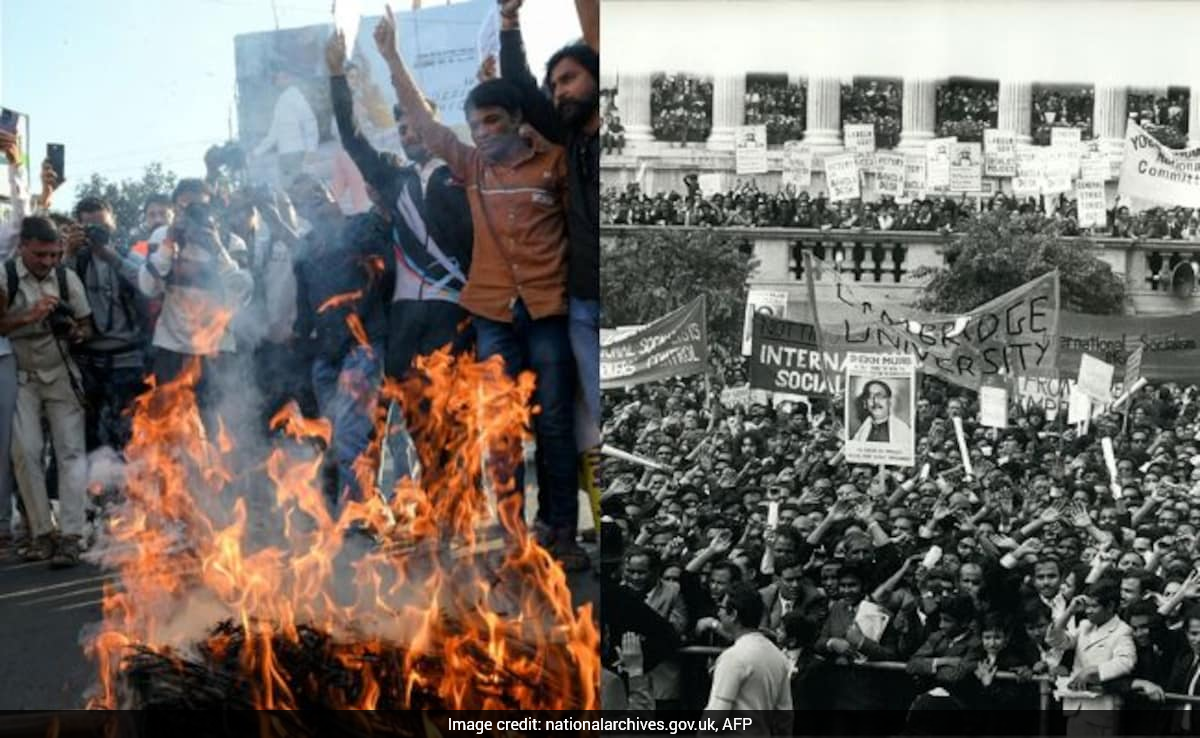
The resurgence of Islamist forces, notably the Jamaat-e-Islami, has added a layer of communal anxiety. Tensions surrounding the death sentence on the ousted Sheikh Hasina and Dhaka's demand for her extradition will continue to mount if New Delhi continues to host her, which it has little choice but to do. Throughout 2025, reports of violence against minorities and the targeting of Indian cultural assets have soured the "people-to-people" connect that was once the bedrock of the relationship. The recent lynching of a Hindu worker, Dipu Chandra Das, has inflamed passions on both sides, with protests engulfing diplomatic establishments in both countries. Meanwhile, Bangladesh grapples with energy shortages, inflationary pressures, and declining investor confidence. India's ambitious plans for regional connectivity through ports, rail, and energy grids depend heavily on stability in Bangladesh.
Look Beyond Sentiment
As we enter 2026, India must transition from a "legacy-based" diplomacy to a "transactional-plus" engagement. The emotional bond of 1971 is no longer enough to anchor ties with Bangladesh; New Delhi needs a new narrative that appeals to the "Gen Z" of Dhaka who did not live through the Liberation War. As the country heads toward elections in early 2026, India finds itself in an unfamiliar position: a bystander watching its influence being challenged by a younger, more nationalistic generation that views New Delhi's past support for the previous regime as an affront to their sovereignty. Questions loom over whether, with the lawlessness and intimidation in the streets, the forthcoming elections in Bangladesh would be free and fair - or whether they would even take place as scheduled.
While the East is a puzzle of political transition, the West remains a theatre of hard-nosed military posturing. The year 2025 saw the most significant military confrontation between India and Pakistan since 2019. The "Operation Sindoor" strikes in May, India's justified response to a major terror attack in Pahalgam, signalled that the Modi government's threshold for "strategic patience" has lowered further. However, Pakistan's response was not merely conventional: it involved a spate of missiles and drones, guided by real-time intelligence from Chinese satellites hovering over India. Islamabad's establishment of a new Army Rocket Force Command (ARFC) and its pursuit of hypersonic technologies suggest a shift toward "asymmetric deterrence".
Pakistan's Curious Diplomatic Game
At the same time, Pakistan's GDP growth edged up to 2.7% in FY25, supported by easing inflation, lower interest rates, and modest recovery in private consumption. The government touted reforms aimed at export-led growth, particularly in agriculture, minerals, and technology. Islamabad's push for export-led growth in textiles and agriculture could challenge Indian producers in overlapping markets. Yet, foreign investment inflows fell sharply, down 25% in the July-November period. Reliance on IMF support underscored the fragility of this rebound, but foreign backers have rallied around with loans, grants and loan guarantees, notably from US-dominated international institutions, in addition to China and Saudi Arabia. This is just as well: in Pakistan, economic fragility often translates into external adventurism. If the economy fails and the omnipotent military again gets the bulk of the blame, India must remain alert to Pakistan's potential use of cross-border tensions as a diversionary tactic.
Despite its internal economic malaise, Pakistan has shown a surprising ability to play an effective geopolitical-diplomatic game, securing a historic defence pact with Saudi Arabia and re-engaging with Washington on "non-traditional" security areas like critical minerals. For India, the nightmare of a two-front challenge is no longer a theoretical exercise; it is a lived reality. The increasing "internationalisation" of Pakistan's security architecture, and its successful leveraging of ties with both China and the Gulf, has made it harder for India to diplomatically isolate Islamabad.
The Expanding Shadow Of Beijing
The common thread through both the Dhaka and Islamabad narratives is the expanding shadow of Beijing. In Bangladesh, the interim government's search for "alternative partners" has led to a flurry of Chinese infrastructure MOUs, particularly in port and industrial sectors. In Pakistan, the China-Pakistan Economic Corridor (CPEC) continues to be the lifeblood of an otherwise gasping economy. China's opportunistic diplomacy in Bangladesh and Pakistan threatens India's primacy in South Asia. New Delhi must ideally accelerate connectivity projects and deepen people-to-people ties to counterbalance Beijing, but current circumstances militate against both. Instability in both neighbours heightens risks of infiltration, militancy, and refugee crises. India's border management must combine vigilance with humanitarian sensitivity.
India's traditional levers of geographic proximity and cultural affinity are being outmatched by China's "investment-led diplomacy". Meanwhile, the United States, while still professing to be a strategic partner for India, no longer seems to "have our back" in the contest with China. President Trump's notably more conciliatory posture towards Beijing and his bonhomie towards Pakistan's Field Marshal Asim Munir, whom he has met three times in 2025, plus the resumption of cabinet-level contacts with Pakistan, have also complicated the neighbourhood. Whether the latter is driven by a desire to woo Pakistani troops to keep the peace in Gaza, or to prevent a total collapse of Pakistan's relations with Kabul, the implications for India cannot be positive.
Actions And Reactions
As 2025 makes way for 2026, the news headlines underscore the fragility of India's neighbourhood. Pakistan's economic reforms remain hostage to political instability, while the challenge is managing a nuclear-armed neighbour that has learned to survive on the brink of economic collapse while modernising its strike capabilities. Meanwhile, Bangladesh's democratic transition is fraught with uncertainty even as it explores defence pacts with Pakistan. For India, the challenge is not merely to react to crises but to proactively shape the regional order - through diplomacy, economic engagement, and strategic foresight.
As the subcontinent enters 2026, New Delhi's ability to navigate this troubled neighbourhood will be a litmus test of its regional leadership. The events in our backyard offer a reminder that being a "Global South" leader is a hollow title if one's own immediate periphery is on fire. India's rise as a global power will ultimately be judged not by its votes at the UN, but by its ability to maintain a ring of stable, if not friendly, states around its borders. So the year ends not with a resolution, but with a warning: in the new South Asian order, proximity is no longer a privilege; it is a vulnerability that requires constant, unsentimental management. Yet if anyone can do it, India can.
(Shashi Tharoor has been a Member of Parliament from Thiruvananthapuram, Kerala, since 2009. He is a published author and a former diplomat)
Disclaimer: These are the personal opinions of the author
-
Opinion | How A Pak-Friendly BNP Is Now In Pole Position In Bangladesh

Tarique Rahman's return to Dhaka on Christmas Day, and now the passing away of his mother, Begum Khaleda Zia, have placed the BNP in pole position to win the forthcoming general elections in Bangladesh in February next year.
-
Opinion | 2025: The Year Women Were Used, Not Empowered - By Priyanka Chaturvedi
Not one national party tried to reach the 33% quota for tickets for women candidates in state elections held this year. The irony strikes harder when the Supreme Court refused to bring political parties under the ambit of the PoSH Act.
-
Opinion | On Christmas And 'Tulsi Diwas' - And, Manufactured Traditions
By pinning Tulsi worship to Christmas Day, the architects of this movement aren't trying to honour the plant or our culture; they are trying to colonise the calendar.
-
Opinion | At 14, Vaibhav Suryavanshi Might Just Be Too Good To Be 'Protected'
This boy from Samastipur is simply asking Indian cricket to widen its imagination. Can it keep up?
-
Opinion | SHANTI Bill May Not Necessarily Be A Nuclear 'Sell-Out', After All
Whether SHANTI is a sell-out dressed up as reform, or a lever for reliable power for industry and cities, and for turning rural power from a lottery into a utility, will be decided by the hard work of implementation.
-
Opinion | Ain't No Mountain High Enough ... To Keep Them From Getting To Aravallis
A technical redefinition threatens to turn one of India's oldest mountain ranges into legally exploitable land. But even by the government's own standards, four questions remain unanswered.
-
Younger Brother Or Frankenstein's Monster? Delhi-Dhaka 54 Years On
Bangladesh's streets are echoing with anti-India slogans, protests are being held outside high commissions and Delhi and Dhaka ties are at an all-time low.
-
Story Of 2 Decembers: 2025 Feels Different From 1971 For India, Bangladesh
The death of radical leader Sharif Osman Hadi resulted in an unsubstantiated allegation against India behind the killing, and the Indian High Commissioner to Bangladesh was summoned.
-
Opinion | Why The Anti-India Rage In Bangladesh Makes Little Political Sense
Election time among most of our neighbours inevitably has an anti-India component these days. Such narratives are useful for the politically ambitious.
-
Opinion | In 'Dhurandhar', More Gang Wars Than Spy Wars
What Dhurandhar has in common with the other big Hindi hit of the year, Saiyaara, a romantic tale about a soft boy and his lost love, is great music and lack of pre release marketing hype