Why Doesn't Congress Boycott If Polls Are "Fixed"? Answer Lies Beyond Rahul Gandhi's "Distraction" Quip
The starkest demand for a boycott has come from outside the political Opposition, from the Cockroach Janta Party. But does a boycott help? Here's what research, examples, and expert analysis tell us.
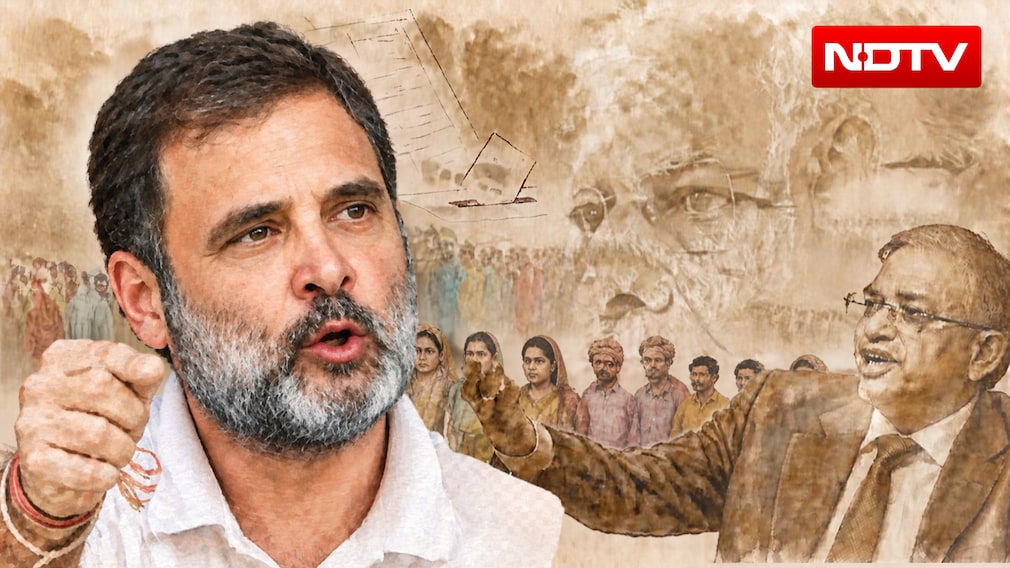
If you say the umpire is fixed, why play? When you say it like that, it sounds simple enough. Only, it isn't.
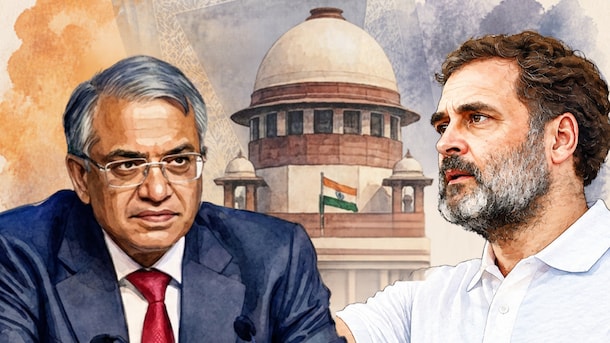
For months now, Rahul Gandhi has argued that the Election Commission of India is fixed. He has alleged "vote chori" from Karnataka to Haryana to Maharashtra, carried the charge on a yatra across Bihar, and recently told Chief Election Commissioner (CEC) Gyanesh Kumar to "turn approver", claiming there's a case of voter-list manipulation across recent elections.
"Today elections are fundamentally broken, and the laws passed by the Parliament thus elected could be seen as illegal, because the vote has been destroyed," said the Leader of Opposition, claiming vindication after The Indian Express revealed dissent within the EC.
The EC's clarifications later triggered an instant Congress response: "Fundamental questions remain unanswered."
But a fundamental question came Rahul Gandhi's way, too, at his 'gotcha' press conference. Will the Congress boycott the elections? Rahul first gave a précis of his arguments. Then he responded to the b-word with a d-word. "Distraction mein nahin jaaunga. I will avoid the distraction. But thank you," he quipped.
Beyond the quip, the Congress-led opposition parties' INDIA bloc has now announced marches and rallies. "Our collective opinion is that [Prime Minister] Narendra Modi, [Home Minister] Amit Shah and Gyanesh Kumar stole elections. We are not going to take this lying down," Rahul said after a meeting of the bloc on September 30.
Nothing announced involved a boycott.
From 'Different Matter' To 'Distraction'
The starkest demand for a boycott has come from outside the political Opposition, from the Cockroach Janta Party, the Gen-Z youth protest movement whose Jantar Mantar sit-in led to the education minister's resignation in July. "When you continue to participate in rigged elections, you legitimise these elections and help maintain the illusion that they are free and fair," CJP founder Abhijeet Dipke wrote on X.
Just like in a fixed match, not every catch is dropped. Some catches are taken, and the match may even be dragged to the last over to make it look like a close fight.
— Abhijeet Dipke (@abhijeet_dipke) September 25, 2026
In the same way, you will be handed a few wins, just enough to keep you contesting and to make people believe…
Rahul Gandhi and the Congress have side-stepped the idea for at least over a year.
In July 2025, when asked if a boycott was an option, the Congress's Bihar in-charge Krishna Allavaru said, "All options are being discussed." Rahul Gandhi said the EC was not doing its job.
On August 7, 2025, when asked directly about a boycott, Rahul Gandhi said, "What action opposition parties will take, how we will go about it in the coming days, that is a different matter." Not much could be gleaned outright.
The next month, Rahul Gandhi said some more: "My work is to participate in the democratic system. My work is not to protect the democratic system. That is the work of the institutions in India. But they are not doing it." In the Bihar Assembly election that November, the RJD-Congress combine lost massively to the BJP-led NDA.
An Opposition Argument
Two Opposition leaders have now argued that Rahul Gandhi has not articulated. Gurdeep Singh Sappal, a permanent invitee to the Congress Working Committee who coordinates the party president's office, wrote, "A boycott is desertion, and desertion is not resistance." He argued that a party that contests elections has polling agents in every booth and the standing to challenge results in court. "A boycott does not stop the theft. It removes the witnesses," he wrote.
Mamata Banerjee-led Trinamool Congress MP Derek O'Brien replied to Dipke on X with a formula: "Opposition boycotting elections = BJP wins all seats."
Opposition boycotting elections = BJP wins all seats. Once that happens, they amend the Constitution to legalize all their crimes.
— Derek O'Brien | ডেরেক ও'ব্রায়েন (@derekobrienmp) September 25, 2026
Also not contesting elections means betraying the lakhs of workers who are on the ground, fighting with their lives.
That is why it is important…
What Boycotts Actually Do
Researchers and think tank papers say context matters. A 2010 policy paper by Matthew Frankel of the Brookings Institution assessed 171 boycotts, many across South America and the Middle East, between 1990 and 2009. He found only about 4 per cent of the boycotts achieved a positive outcome in his view. He called for a 'Threaten but Participate' approach, also the title of the paper.
In Bangladesh, Khaleda Zia's BNP boycotted the 2014 elections, which meant Sheikh Hasina's Awami League governed for another decade before it was overthrown by protests, followed by elections in which Zia's son became prime minister, as Hasina and her League were thrown out of the contest. Bangladeshi political scientist Ali Riaz, who later chaired the interim government's Constitution Reform Commission, argued after the 2024 elections that the opposition party's boycott did expose the Hasina government's brutal methods, but it fell short because it failed to build a common platform or mobilise people on the streets.
He essentially argued that only unity in the opposition ranks can make a boycott meaningful.
Also Read: "Whatever Fate Awaits Me, I Will Return To My People," Says Sheikh Hasina
There have been some instances in India as well, history professor and political commentator Harjeshwar Pal Singh told NDTV. "In Punjab in 1992, amid militancy and after nearly five years of President's Rule, most Akali Dal factions stayed out of the Assembly elections," he recalled. Voter turnout fell below 24 per cent, and the Congress won. "The Akali Dal of the Badals handed the field to the Congress, but eventually returned to power in 1997," he noted. He saw it as a loss-now, gain-later outcome, but one in which the losses first "nearly put the Akalis out of business".
He also cited pre-Independence India as an example of bargaining: "The Congress boycotted the councils the British set up in 1920, and returned to contest them within a few years. It threatened to boycott those elections at first, and then managed to get some concessions in return after the 1937 polls too." Such boycotts in post-1947 India have mainly been in states affected by insurgencies.
No national party has boycotted a Lok Sabha election.
Even in 1937, Jawaharlal Nehru spoke in favour of participating in elections under British rule. "There can be only two forces in the country, one representing the Indian National Congress, and the other, the government," he said in a speech at Bombay on February 9, 1937.
What Law Says, And What's Likely Next
Nehru aside, there's always a cricket analogy, too, for almost everything in India and the wider subcontinent.
In 1978, at Sahiwal in Pakistan, Indian captain Bishan Singh Bedi called his batsmen off the field in protest over bouncers the umpires would not call as dangerous play or wide. With 23 runs left to get off 14 balls, eight wickets in hand, victory was possible. Bedi chose a boycott. The scorebook recorded a Pakistan win. Indian election law works much the same way. An election is valid no matter how many people vote or don't. If there's one candidate, that person is declared elected without a poll.
Also Read: Gyanesh Kumar Has An Immunity Pin. Why A Petition Says He Can't Use It
Asked about the cricket analogy, Harjeshwar Pal Singh cited the lack of ideological drive on the ground even after leaders' assertions from podiums. "The question is: will candidates or leaders leave the field even if the captain asks them to?" he said. For instance, if Rahul Gandhi were to announce a boycott, leaders at the constituency level might still enter the fray, or join or form another party that's participating, he argued. "And not all non-BJP parties may be on board," he noted.
The professor further made a case for participating, "Even if one were to buy the argument that the BJP allows the Congress to win in some states where the BJP has no standing -- or 'to keep up a veneer of fairness' -- it does give Rahul Gandhi's party hold over some power. That is important if you want to do be relevant in fundraising, and be able to run the party, even as a movement."
Affirming that people's opinion holds the ultimate power even beyond elections alone, he said, "Public opinion can be rallied if the Congress can carry out an outreach properly. Challenges to the Modi government are already emerging in some spheres of public opinion. Something's gotta give, as they say."
The Election Commission, meanwhile, has said internal objections were part of its decision-making. "Differing views and observations are a normal part of deliberation in any institution," its press note said. The BJP has denied any manipulation and said the Congress's case is simply that of a sore loser.
The Congress and others have tried multiple routes to remove CEC Gyanesh Kumar. In April, Rajya Sabha Chairman CP Radhakrishnan and Lok Sabha Speaker Om Birla refused to admit their notices to seek a vote on Gyanesh Kumar's fate. Even if admitted, a removal motion would need a Special Majority in both Houses, which the INDIA bloc does not have. Legal challenges to the 2023 law on EC appointments are pending in the Supreme Court.
Also Read: Gyanesh Kumar Has An Immunity Pin. Why A Petition Says He Can't Use It
The street is the battlefront now. After the September 30 INDIA bloc meeting, Congress president Mallikarjun Kharge announced a mass movement. He set out five demands: return to the pre-SIR voter rolls; a clear right of appeal before any deletion; protections against exclusion due to administrative failures; simpler registration for first-time voters; and a return to ballot papers over electronic voting machines (EVMs).
"Our fight against vote chori will not remain behind closed doors," the party posted.
A protest march is planned to the Election Commission office in Delhi on October 6. Rallies across districts will then be followed by a mega gathering in the national capital on November 1. The AAP and DMK, though speaking against the BJP, did not join the INDIA bloc meeting. The CJP has its own rally scheduled for October 2, drawing support from some parties.
Today, INDIA alliance leaders met and agreed on the following six points.
— Congress (@INCIndia) September 30, 2026
1. From October 2 to 8, district-level “Save Democracy” marches
2. On October 6, all Opposition MPs will march to the Election Commission.
3. Opposition leaders will seek an appointment with the… pic.twitter.com/gdFgMg8D4e
The next big round of Assembly elections, in early 2027, includes the massive heartland state of Uttar Pradesh, where the BJP has been in power since 2017.
While Rahul Gandhi has called the boycott question a distraction, an argument he delivered a year ago still describes what his party is doing: "My work is to participate in the democratic system. My work is not to protect the democratic system. That is the work of the institutions in India."
-
Opinion | Are Saudi Arabia And UAE Reuniting Again After 10 Years?

On Tuesday, the UAE's Vice President, Deputy Prime Minister and Chairman of the Presidential Court, Mansour bin Zayed, met Saudi Crown Prince Mohammed bin Salman.
-
Opinion | 'Lies, Damned Lies, Statistics': On The Controversy Around India's GDP Growth Figures
The debate is less about a single figure than about a decade-long erosion of trust in official statistics.
-
Opinion | Why India Cannot Keep 'Overestimating' Its Value To Washington
Some of India's value to Washington came from the tension between the US and China. That is changing now.
-
Opinion | India Has A 'Lobbying' Problem In Washington, And It Has Come Back To Haunt It
While the EU, Japan, the UK and South Korea secured quick deals, India's efforts were getting drained in prolonged negotiations and the wrong kind of lobbying.
-
India Is Getting Old Before Getting Rich, Will Turn 'Aged' In 16 Years: Moody's
Countries with the steepest fertility declines today will age the fastest in the coming decades. India's drop has been steep.
-
Opinion | Why Does Trump Want To Sell Arms To A US 'Adversary'? Inside His Strange Bargain
Trump's aides maintain that no such offer had been made. But the story points to a larger strategy
-
Opinion | The AI Boom Has Run Into A Big 'Debt' Trap Problem. Inside The 5% Danger Line
For most of the AI buildout's first two years, hyperscalers funded it the easy way: out of operating cash flow. That era is over.
-
Opinion | Iran To Saudi, Pakistan Is Now Fast Running Out Of Sides To Play
Pakistan's long history of playing all parties to its own benefit may have reached the end of its road.
-
Gyanesh Kumar Has An Immunity Pin. Why A Petition Says He Can't Use It
The Opposition wants the Chief Election Commissioner prosecuted for alleged manipulation of voter rolls, but a 2023 law stands in the way. A petition in the Supreme Court now says the law has a gap.
-
Opinion | Is The World Staring At A Big Stock Market Crash - And Recession? 5 Uneasy Signs
On Wednesday, the US bond market recorded its worst day since Trump's "Liberation Day" tariffs rattled markets in April 2025. The 30-year US Treasury yield topped 5.43%, putting it on track for its highest close since 2004.