The 'Vande Mataram' Row: What Stanzas Did Congress Drop, And Why
Prime Minister Modi recited the full hymn at an event Friday morning, on the 150th anniversary of its composition, and said the Congress had "severed torn apart" the poem.
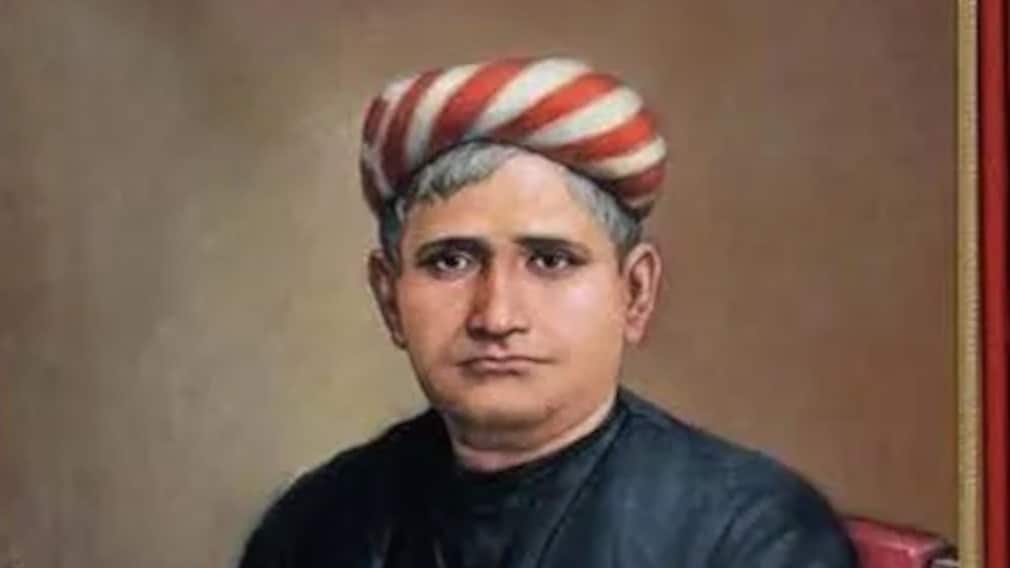
On November 7, 1875, Bengali author Bankim Chandra Chatterjee – one of India's most influential 19th century thinkers – wrote the words to a poem, a hymn, that would become a rallying cry for freedom fighters in the battle to liberate India from British colonial rule.
That six-stanza hymn, first published in his 1882 novel 'Anandmath', was 'Vande Mataram'.
Today, it has become a battleground between the BJP and the Congress, with the former accusing the latter of having disrespected the hymn, and so the country, by "pandering to a communal agenda" in 1937 and adopting a truncated version as the country's National Song.
The disregarded sections referenced three Hindu goddess, including Durga.
Prime Minister Narendra Modi – who recited the full hymn at an event Friday morning, on the 150th anniversary of its composition – said the Congress had "severed… torn apart" the poem.
And his BJP shared letters written by Congress leader Jawaharlal Nehru in September and October 1937 – correspondence with Netaji Subhas Chandra Bose – in which the ex-Prime Minister suggested the "background of 'Vande Mataram' is likely to irritate the Muslims".
The Congress responded by claiming the BJP and its ideological mentor, the Rashtriya Swayamsevak Sangh, routinely 'avoids' the song; party boss Mallikarjun Kharge called it "deeply ironic that those who today claim to be the guardians of nationalism – RSS and BJP – have never sung 'Vande Mataram'..."
Leaders from both sides, and other opposition parties, traded jabs and jibes all day, with Samajwadi Party MLA Abu Azmi even declaring "no one can make me sing it".
What is the 'Vande Mataram' row?
In his six stanzas, Chatterjee paid homage to the divine feminine and cast India as a fierce yet nurturing 'mother' figure, ("… mataram") offering intellectual, emotional, and physical support.
READ | Bankim Chandra Chatterjee: The Man Who Wrote 'Vande Mataram'
Chatterjee also made references to the feminine figure's, or the 'mother's, ferocity ("…swords flash out in seventy million hands, And seventy million voices roar they dreadful name from shore to shore") and gentleness ("…Mother, giver of ease, laughing low and sweet").
But opening abstract references to the 'mother' turn concrete in later stanzas, specifically the last two. Chatterjee refers to the Hindu goddesses Durga, Kamala (or Lakshmi), and Saraswathi, framing them as the feminine guardians of the country, "pure and perfect without peer".
In 1937 the Congress, then led by Nehru, decided in Faizpur to use only the first two stanzas for national gatherings. The argument was that direct references to Hindu goddesses were not well-received by some members of the Muslim community; they were seen as 'exclusionary'.
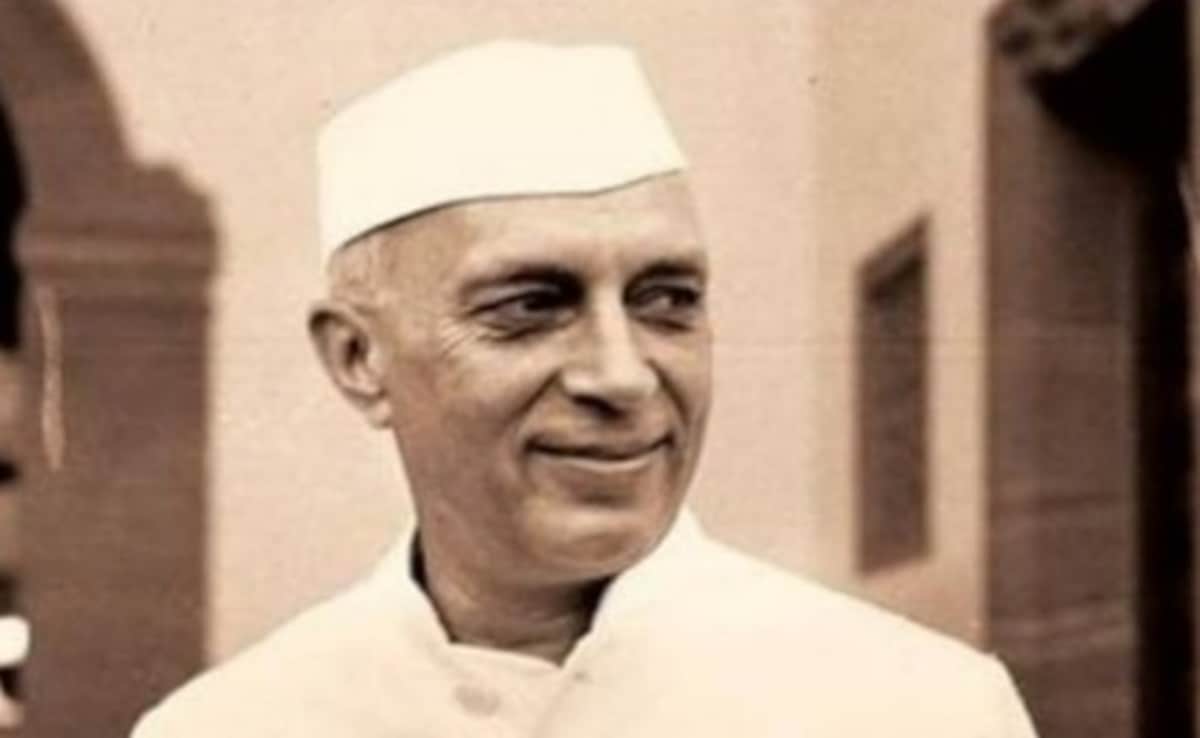
The BJP accused Nehru of 'pandering' to a communal agenda (File).
The BJP has argued the exclusions illustrate the Congress' 'divisive' plans; the Prime Minister said dropping the stanzas "sowed the seeds of the nation's division", referring to the Partition.
In the letter Nehru wrote to Bose (pages of which were shared by BJP spokesperson CR Kesavan), he seemed to suggest the stanzas in question need not be interpreted as having anything to do with goddesses or divine figures; "… that interpretation is absurd… I think the whole song and all the words in it are thoroughly harmless and nobody can take exception".
He also acknowledged unease within some members of the Muslim community and said "there does seem some substance in it (the row over those stanzas)" even if the larger controversy, in his opinion, had been "manufactured by the communalists".
READ | "Nehru Removed Ma Durga Stanzas": BJP On 'Vande Mataram' Row
As a result, when the Congress met in Faizpur between December 26 and 28 of that year (1937), 'Vande Mataram' was adopted sans the stanzas referring to Durga, Lakshmi, and Saraswathi.
The resolution read: "Taking all things into consideration, therefore, the Committee recommends that whenever 'Vande Mataram' is sung at national gatherings, only the first two stanzas should be sung".
However, the Congress also acknowledged the freedom of any individual to "sing any other song… in addition to, or in place of, the 'Vande Mataram' song".
Nevertheless, nearly 90 years later, that decision by the Congress continues to cause turmoil within Indian politics, particularly ahead of high-voltage election in Bengal next year, where issues of patriotism and 'appeasement (of Muslims)' have been, and will continue to be, raised.
NDTV is now available on WhatsApp channels. Click on the link to get all the latest updates from NDTV on your chat.
-
Opinion | China Claims It Has Cut Troops At The Indian Border. But The Math Doesn't Add Up

The reduction likely has more to do with the deployment along the LAC than the total strength active in the region
-
Opinion | China Is No Longer Waiting For Trump To Set The Rules. And He Knows It
America's old diplomatic tricks with China won't work any longer. Because China has changed, and so has its ambitions.
-
Opinion | As UN Interviews Its Next Chief, The Interviewers Have Some Explaining To Do
On the panel sit governments whose wars, vetoes, and unpaid dues have helped make the organisation ineffective.
-
Opinion | Trump-Xi Meet: What China Can Give America, And What India Could Lose
If Trump can secure some of what he wants directly from Beijing, India's immediate value to Washington could change in particular areas.
-
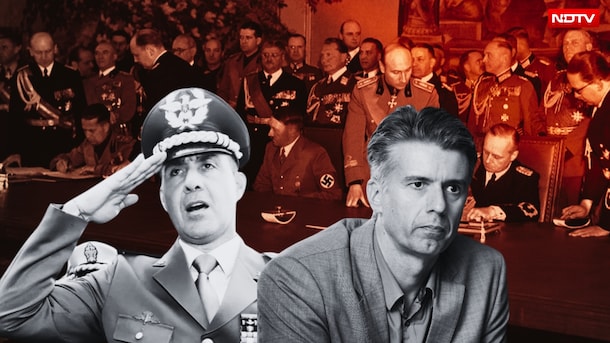
A New 'Axis'? 87 Years After Pact Of Steel, A New European Far-Right Tie-Up
Nearly nine decades after Nazi Germany and Fascist Italy formalised their alliance, senior figures from Germany and Italy's far-right appeared together at a political rally on Sunday.
-
Opinion | 'Blackmail' Diplomacy: Why India Can't Be A Pawn In US' War On Russia
The new sanctions bill is both blackmail and hypocritical: blackmail because it seeks to change India's principled stand, and hypocritical because the US has provided exemptions to others, and itself.
-
Blog | Katrina Kaif, And The Very Indian Problem Of Too Much 'Audacity'
The remarkable thing about many Indian trolls is not that they have opinions, but that they expect - get this, Katrina Kaif, no less - to care about them.
-
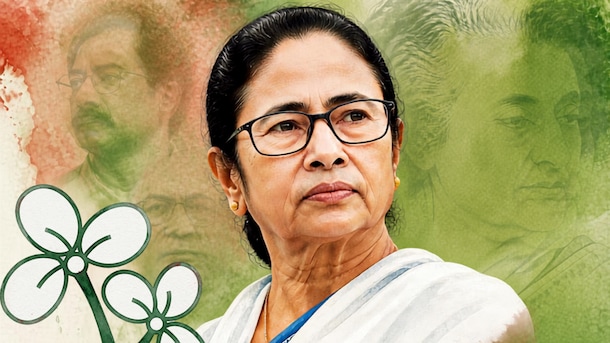
Mamata Banerjee Drew Her Party's Symbol By Hand. It's Now Tied To An Indira Gandhi Case
The Election Commission's method for settling such disputes became central in the seminal Congress split of 1969, when Indira Gandhi fought the old guard. The poll body weighed three tests then.
-
Bruised, Limping, Unbowed: Sia Says She Will Be Back On The Bike Soon
There was pain in Sia's steps, anger in her words, and something else - a quiet determination that the road would not be taken away from her.
-
Exclusive: 16 Months After Op Sindoor, Pak Still Fixing Runway India Broke At Sargodha
Sargodha's PAF Base Mushaf lies about 172 km northwest of Lahore and roughly 200 km west of the India-Pakistan border, near Amritsar.