Ten Minutes From Kanpur, The Plane Crash That Killed Madhavrao Scindia
On September 30, 2001, the Congress lost one of its brightest leaders, Madhavrao Scindia, in a plane crash 10 minutes from Kanpur
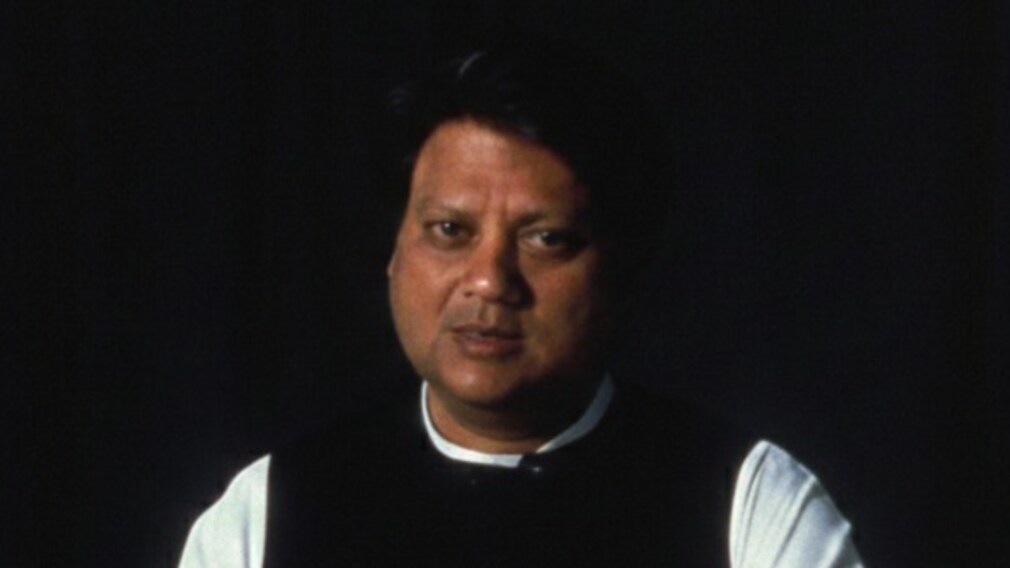
"Madhav loved to stick his neck out," wrote K Natwar Singh in his obituary for his dear friend, "Comrade Maharaja" Madhavrao Scindia, 13 days after the latter died in a plane crash. Was 'sticking his neck out' behind the fatal crash of the Beechcraft C-90 King Air on September 30, 2001?
The air crash investigation report suggests it might have been. Scindia's friends and colleagues never quite knew what happened in those final moments onboard the VT-EEF, the business jet owned by Jindal Strips and loaned to Scindia's private secretary OP Khanna for a flight from Delhi to Kanpur. There was no money involved.
Only eight people: 56-year-old Madhavrao Scindia, a group of journalists from the leading media houses of the country, and a two-member crew were on the flight to Kanpur that day.
What Happened On September 30, 2001
33-year-old Captain Vivek Gupta was to pilot the C-90, with 21-year-old Captain Ritu Mallick with him. Captain Gupta had 1,596.3 total flying hours at the time, and Captain Mallick had 271.4 hours. The C-90 was deemed airworthy. It had suffered a belly landing in Pune on September 19, 1993, and remained on ground till the beginning of 1995, when it was cleared for flight after major repairs. It had 8,083 hours of flight since new, and 7,008 landings when the aircraft took off for Kanpur from Delhi. It did not have a flight recorder. It was not mandatory on an aircraft the size of the C-90.
Captain Vivek Gupta had received a Met briefing at the Indira Gandhi International airport in Delhi at 11.13 am. He went through the report and self-briefed the satellite pictures from 8.30 am that he was handed. There were three hours in between for which he did not have any weather data.
At this point, there was general clouding around Delhi, and the local visibility at Palam was 3,500 metres, well within the pilot's minima. There seemed no reason for the pilot to not undertake the flight.
The C-90 taxied out at 12.35 pm. Six minutes later, at 12.41 pm, it was airborne. The adjoining stations of Aligarh, Lucknow and Kanpur reported thunderstorm with rain, but the intensity of it wasn't immediately available to Captain Gupta. VT-EEF took off from Delhi. It was routed via Aligarh and Lucknow, and direct to Kanpur. The enroute weather was briefed to the pilots: isolated thunderstorm with rain and severe turbulence and icing, and a 'cycir' (cyclonic circulation) apparently persisting at the lower levels over Southwest Uttar Pradesh and northern Madhya Pradesh. None of this warranted a cancellation of flight at this point.
Around an hour after takeoff, the aircraft lost contact with Delhi ATC. It was not in contact with Lucknow ATC either. The aircraft was supposed to land in Kanpur at 1.50 pm. Before going silent around 1.35 pm, the pilot had requested a deviated track and direct routing to Kanpur. But even on a deviated track, it was impossible for him to have avoided the weather. The aircraft had managed to negotiate a major portion of the weather and would have shortly been out of it when it crashed. He had entered in thick weather of convective cloud.
On ground, witnesses described the intensity of bad weather: heavy rains, low clouds, and strong winds.
Why Did The Pilot Not Go Back To Delhi?
Two other aircraft were in the same area at the time. A single-engine UP government aircraft from Lucknow to Aligarh went back to Lucknow. A Sahara India helicopter from Delhi to Lucknow went back to Delhi. While the single-engine aircraft wasn't designed to negotiate such weather, the helicopter anyway has no capability to fly in weather.
The C-90, on the other hand, did not circumvent the weather or go back to Delhi. The investigation report says that Captain Vivek Gupta had had an air incident, where he had damaged an aircraft and been grounded. After he was allowed to fly again, he was overly cautious and wanted no chances. The weather was fairly bad. Even very experienced pilots would have dithered before flying into that storm. So, why did Captain Gupta go through it?
The only possible reason, says the investigation report, was the latent pressure of flying the dignitaries on board.
The People On Board
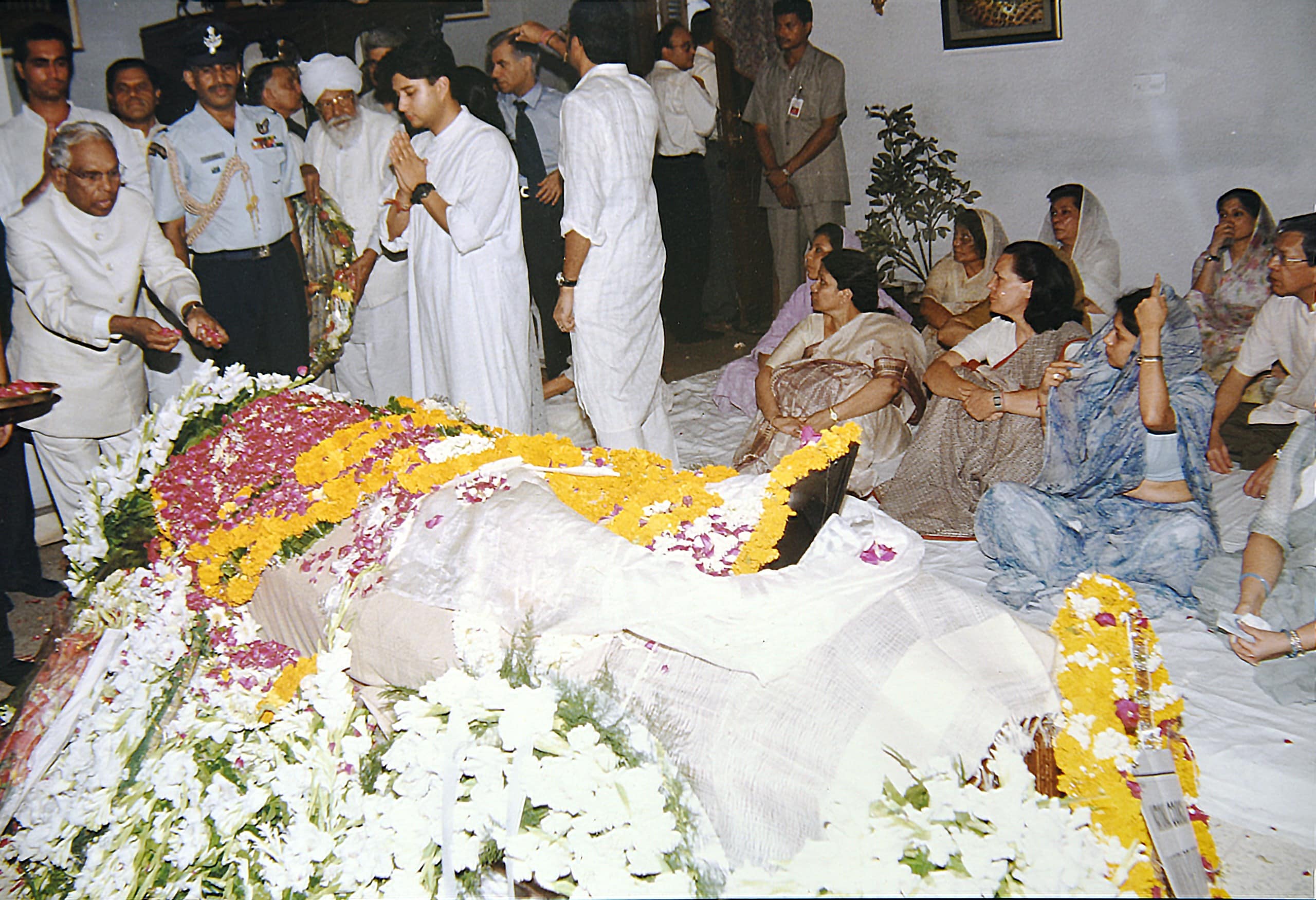
Madhavrao Scindia died at the age of 56. Photo: Getty Images
Onboard the C-90 that day was Congress's most prolific leader, the 'Maharaja' of Gwalior, Madhavrao Scindia. Scindia was flying to Kanpur to address a public rally at the behest of UPCC President Prakash Jaiswal. He was to be at the Parivartan Yatra on Jaiswal's home turf, Kanpur.
Along with Scindia on that aircraft was his personal assistant Rupinder Singh, Aaj Tak Special Correspondent Ranjan Jha and his photographer Gopal Bisht, The Indian Express's Sanjiv Sinha, and the Hindustan Times' Anu Sharma, along with the two pilots, Captain Vivek Gupta and Captain Ritu Mallick. The journalists were on their way to cover Scindia's rally in Kanpur.
Ten minutes before landing, all eight were dead.
The Injuries, The Fire, And The Burns
The pilots and one passenger, Gopal Bisht, sustained extensive and deep burn injuries. The other passengers had superficial burn injuries that couldn't have killed them. All eight occupants of the C-90 had decelarative injuries in the 'Z' axis - vertical axis of the body from waist up, and not much horizontal injuries on their body.
The aircraft crashed into the ground with such vertical speed that it sent the internal organs of the eight people onboard crashing out of the skull. Four people, including Scindia, were found with their brain matter missing. Captain Vivek Gupta was found with his brain matter exposed, and Captain Ritu Mallick was found with her brain tissue coagulated. Most injuries were to the head and face of all eight people.
There was no trace of carbon monoxide in the bodies recovered. There was no fire or smoke in the aircraft before it crashed. A post-impact fire broke out. All eight people were found within the aircraft when the wreckage was examined. The momentum of the ground impact made the accident unsurvivable for anyone on board.
The Final Stages Of The Flight
The C-90 is a small aircraft with a small wingspan. The smaller the wingspan, the greater the rate of roll. When the weather is turbulent, an aircraft like this gets thrown about very easily. It then depends on the reaction time of the pilot, whether or not the aircraft can survive the displacement. A fraction of a second's delay can push the aircraft into a downward spiral.
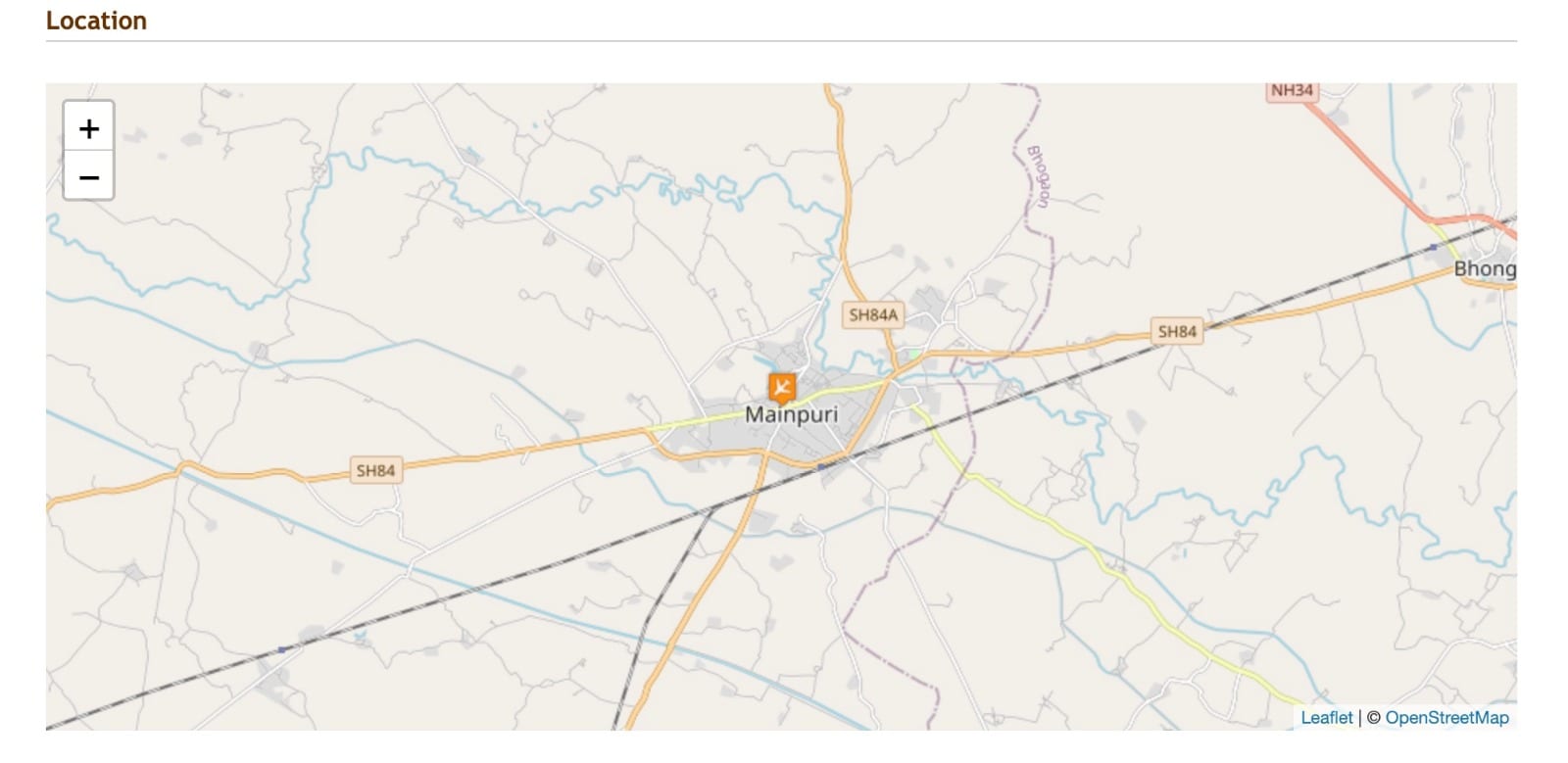
The site of the crash. Screenshot: aviationsafety.net
VT-EEF, in the last stages of flight, followed a curved path to the right. About 500 metres from the point of impact on the ground, its tail plane came off. This led to the pilot losing whatsoever control he might have had at this point. He switched off both engines and feathered the propellers as per the checklist before impact. Witnesses on ground said they heard the aircraft go silent before it hit the ground.
When the airplane lost its tail plane, it had already sustained major damage to its wings and body. The loss of tail left the aircraft moving forward with very little speed but very high rate of descent. The accident site - with almost no dispersion of wreckage - confirmed what the final stages of the flight were like. All eight bodies were found within the aircraft, with Captain Mallick's seatbelt fastened to her waist.
After The Crash
Madhavrao Scindia was looked at as the Congress's prime ministerial candidate. At 56, Scindia was a lot that several other Congress leaders aspired to be. Sonia Gandhi, unlike what the media of the time reported, "depended heavily" on Scindia, wrote former External Affairs Minister Natwar Singh.
"His seniority (No 2 after Deputy Speaker PM Sayeed) gave him a natural authority in the House [Lok Sabha]. His relations with Opposition leaders were cordial. They had confidence in him. If he gave his word, he would stick to it. The Lok Sabha sizes up a member quickly. And the judgment is unsparing. Members can see a lightweight a mile away. Scindia became a heavyweight the moment he presented his first Railway Budget in 1985. I was present in the House. It was an astonishing performance. He was the best Railway Minister we have had. Hence, not only the Congress party but the Lok Sabha as a whole will feel his absence acutely," Singh wrote of Scindia in 2001.
Madhavrao Scindia, the son of the last ruling Maharaja of Gwalior, inherited a 'kingdom' in a democracy. For a decade after the death of his father Jiwajirao Scindia, he could use the title of the Maharaja of Gwalior. In 1971, it was all abolished.
The title gone, Scindia followed his mother Vijaya Raje Scindia's footsteps and entered politics. In 1971, at the age of 26, he won the Guna constituency on a Bharatiya Jan Sangh ticket. He switched to the Congress in 1980.
Over the 30 years that he was a politician; Scindia saw nine elections and nine victories. He won eight of them by lakhs. In 1998, a lone precarious election happened. Scindia won Gwalior by, in his words, by a "wafer-thin" 23,000 votes.
On October 4, 2001, Madhavrao Scindia was cremated in Gwalior with a lakh and a half in attendance. The grief was real. Gwalior, for whose people Madhavrao Scindia always 'stuck his neck out', said a teary goodbye to him with chants of "Har Dil Pe Naam Likkh Dia Madhavrao Scindia" - On every heart is written the name of Madhavrao Scindia.
Also Read: CCTV Footage Shows Moment Ajit Pawar's Plane Crashed, Burst Into Flames
-
Opinion | Iran's Biggest Victim Is Also Its 2nd-Largest Trade Partner. What Gives?

The UAE is Iran's second-largest trading partner and also home to roughly half a million Iranians. Why, then, has it absorbed more fire than any other Gulf state?
-
In Numbers: How Has India Kept Fuel Prices Low Even As Europe Sees 70% Spikes?
India imports 88% of its crude. Why then is it not seeing massive price hikes for fuel and LPG? Inside the unique strategy it's following...
-
Opinion | India Just Decided To Let Chinese Capital In Again. But There's A Catch
In March 2026, India eased regulations that had restricted Chinese capital in local companies, in a development that marks New Delhi's cautious approach towards capital flows from Beijing.
-
Trump's Iran 'Knocked Out' Claim Blown Up By US Intel On Missiles, Drones
Donald Trump claimed this week the war would end in two to three weeks as he threatened to send Iran back to the Dark Ages. But based on these reports the fighting is far from over, even if US President wants to push a contrary narrative.
-
Opinion | Rs 30 Petrol Hike To Currency Crisis, What Oil At $150 Can Really Do To The World
At $125 per barrel, petrol and diesel retail prices will need to rise by Rs 8-14 per litre. At $150 - which experts think is now likely - these figures could touch Rs 26-30 per litre.
-
Opinion | The Problem With Trump's Fantasy Of A 'Crippled' Iran
Even a relatively insulated US economy cannot entirely escape the ripple effects of sustained disruptions in one of the world's most critical energy corridors.
-
Opinion | Trump's Iran War Is About To Become Someone Else's Problem Soon
Start alone, end alone - that may be the harshest lesson for Trump as he now tries to dash for the door in Iran.
-
What Happens If Iran War Actually Ends In 2 Weeks: The Challenges Ahead
Trump said the war could end in two weeks sans a deal to re-open the Hormuz. Analysts say it could take six to weight weeks more for oil flows to normalise, with each extra week of fighting adding seven to 14 days of recovery.
-
Opinion | Why 2 Gulf States Want Iran War To Continue - Even As They're Battered By It
If Trump withdraws from this war, the UAE, Saudi Arabia and other Gulf countries would be left to face the music alone, with an angrier, fiercer, and possibly more vengeful Iran.