The Movie Star And His Mandate: After 108-Seat Debut, What Next For Vijay
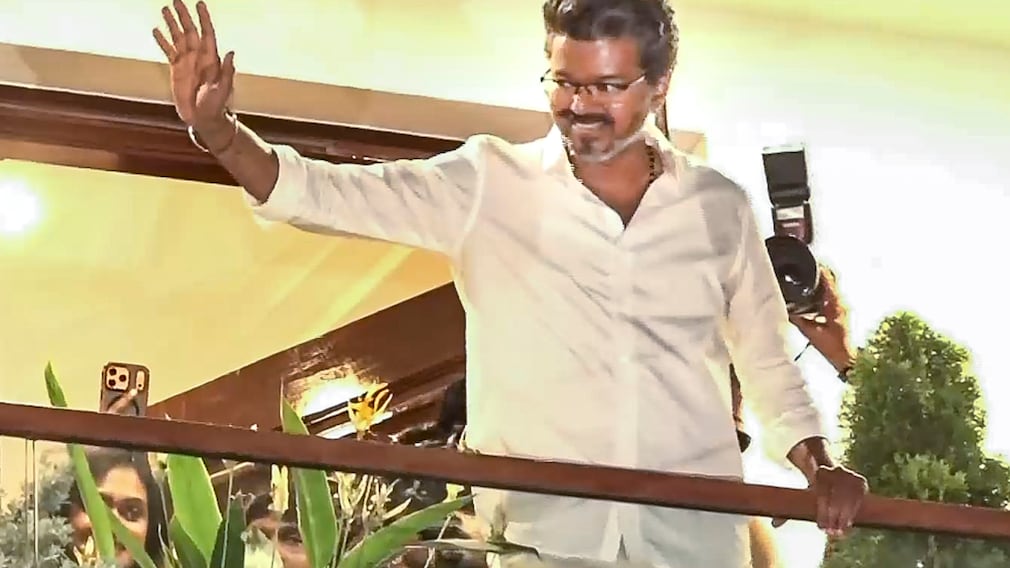
This is the interval. The break-for-snacks pause before the second half of Vijay's new political blockbuster rolls on - plotlines and characters converging as the story races to its big finale.
Except this isn't reel life, it's real life.
The first half was Monday. Vijay's Tamilaga Vettri Kazhagam swept to a debut win in the 2026 Tamil Nadu election. Dismissed by most - certainly by MK Stalin and his Dravida Munnetra Kazhagam - as a pretender, a movie star playing at politics, the TVK responded by sweeping 108 of 234 seats to dump the DMK (59) out of power.
But powered by adoring supporters and voters weary of the DMK-AIADMK binary - the hallmark of Tamil Nadu politics since 1962 - Vijay reframed the narrative, casting himself as the hero in the battle against the 'evil' DMK, his 'political enemy'.
The 'jana nayagan', Tamil for 'the people's leader', ran a controlled campaign, relying on emotion and the underdog card to rattle the Dravidian giants and steal votes from across demographics.
That translated into a (relatively) clean break from the past; the scale of the TVK's win was underscored by DMK boss MK Stalin being defeated from his Kolathur constituency.
However, it left him 10 seats short of majority and the job of running one of the country's largest and richest states, albeit one with underlying financial strains.
But this is Tamil Nadu, where cinema and politics flow into the other. So let's 'cut' to the future.
In this future the TVK has a clear majority and Vijay is Chief Minister.
How does his first term progress? What challenges must he navigate?
The biggest, ironically, is the mandate itself - 34.9 per cent of the electorate.
That is a substantial number and one that means a burden of expectations that will crush him, and his young party, very quickly if allowed to get out of hand. In addition, the DMK and other critics will be watching closely for any slip-up, any sign that the first-time politician and administrator cannot handle the strain of managing Tamil Nadu's fiery politics and economy.
There will be a honeymoon period, yes, possibly longer than most because of the movie star status, but Vijay will know he needs to start delivering on poll promises, quickly.
The price of those promises is an immediate red flag.
Vijay's extravagant campaign assurances included gifting eight grams of gold to women getting married. At an estimated Rs 14,000 per gram that is Rs 1.02 lakh per bride. He also promised monthly cash transfers - Rs 2,500 per month - to female heads of families till the age of 60.
A 'baby welcome kit' of clothes, soaps, and other essentials, as well as more gold - a ring - and free travel for women across state-run bus services are all significant expenses for the state.
As is a promise for six free LPG cylinders per year, which now seems ill-advised given war in the Middle East has squeezed gas supplies shipped via the Strait of Hormuz.
Vijay must ask himself how plans to fund these while balancing the need to spend on building or revamping infrastructure in the state, particularly in a capital city that is bursting at its seams and faces water supply, noise pollution, housing, and waste disposal problems. And that is without considering existing social welfare measures and schemes.
There are also political challenges.
Under the DMK, Tamil Nadu had a sharply antagonist relationship with the BJP-run federal government, with spats over devolution of taxes, Hindi 'imposition', and delimitation.
Vijay has made it clear his positions on these mirror that of the outgoing government, i.e., the Hindi-speaking, north-centric federal government has discriminated against Tamil Nadu.
In Tamil Nadu that is almost a required political position, such is the extent of general antipathy voters have to the Bharatiya Janata Party and the notion of being ruled from Delhi.
For Vijay the challenge will be in finding a viable middle ground, in working with the centre to develop the state while also maintaining a distinct Tamil identity.
This will also require the TVK expanding and empowering mid-level leadership, which will allow it to engage with the centre at multiple and simultaneous levels. Failure to do this will put the entire weight of managing that relationship on Vijay.
Tied to all of this is this point - the actor is, and this is inarguable, a nouveau politician, an administrator with no experience. At 58, he is also younger than the average chief minister.
He showed significant political savvy in crafting his campaign. Now he needs to show that same understanding, and then some more, to guide Tamil Nadu through the next five years.
The focus must be simultaneously on the present and future, as Vijay scripts that second half of his political career, hoping to build to a strong finish that can carry the TVK into the future.
And now back to the present.
The win completed one half of a cinema-to-politics arc that echoed MG Ramachandran's 1977 triumph at the head of the All India Anna Dravida Munnetra Kazhagam, and added to the list of other legendary crossovers - CN Annadurai, J Jayalalithaa, Vijayakanth, and M Karunanidhi.
But Vijay is not yet the chief minister.
To get to the 118-seat majority mark the TVK will need support, but the options are limited by the campaign rhetoric that got him here. He can't turn to the DMK or the Bharatiya Janata Party; having branded them his enemy, accepting help from them now would be early-career suicide.
The All India Anna Dravida Munnetra Kazhagam, the other Dravidian giant, is an option, as is the Congress. The AIADMK won 47 seats and the Congress five, but the former is a BJP ally and the latter is with the DMK. Support will require cutting of those ties, which could be a messy affair.
Another option might be either waiting for a handful of MLAs from opposition parties - the opportunists - to cross over, though that too could be read as Vijay already betraying his ideals.
But the most likely, at this time, option is for the TVK to form a minority government and then seek backing. This could even be issue-based - as the Congress-led United Progressive Alliance functioned at the centre from 2004 to 2014 - though that is an inherently unstable proposition.
-
Mamata Banerjee Drew Her Party's Symbol By Hand. It's Now Tied To An Indira Gandhi Case

The Election Commission's method for settling such disputes became central in the seminal Congress split of 1969, when Indira Gandhi fought the old guard. The poll body weighed three tests then.
-
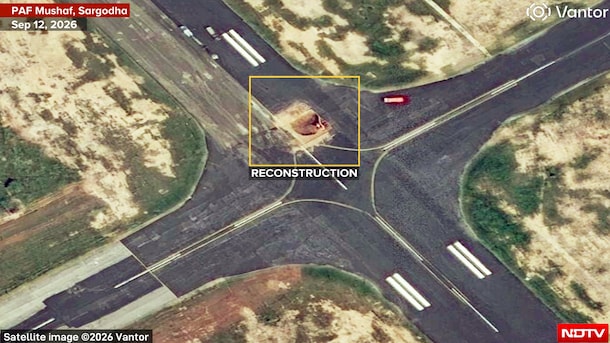
Exclusive: 16 Months After Op Sindoor, Pak Still Fixing Runway India Broke At Sargodha
Sargodha's PAF Base Mushaf lies about 172 km northwest of Lahore and roughly 200 km west of the India-Pakistan border, near Amritsar.
-
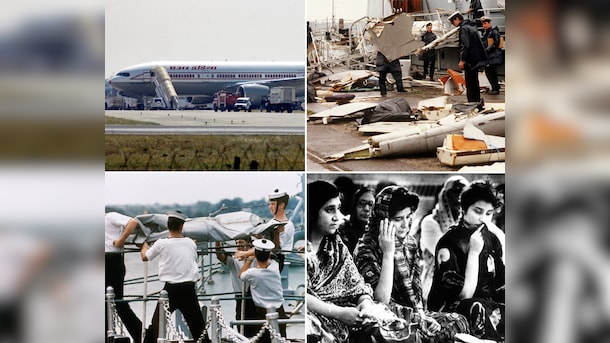
Blog | I Lost My Entire Family In Kanishka Bombing. 41 Years Later, Canada Wants The Case Closed
We made the trek through tragedy to search for people in Cork, where I spent 25 days sifting through bodies and body parts in a makeshift morgue to identify our loved ones.
-
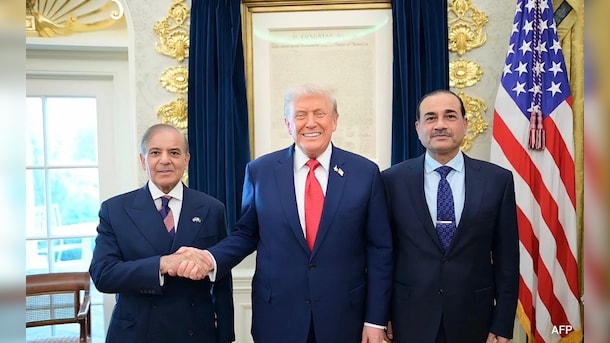
Opinion | Pak's Drone Deal With A US Firm Is No Windfall. But India Must Still Be Worried
American military aid to Pakistan has remained suspended since January 2018, during Trump's first term, but a commercial arms sale is separate from this arrangement.
-
Opinion | Saudi Arabia's Yemen Nightmare Has Come Back To Haunt It
After years of costly military intervention beginning in 2015, Saudi Arabia increasingly sought to stabilise its southern border. All that is unravelling fast now
-
Opinion | 6 AI Incidents, One Pattern: AI Has Started Lying To Us - And Hiding The Evidence
Concealing errors. Making up data. Pushing files onto the public web on their own initiative. The machines are learning to lie - and lie well.
-
Why People Queue Overnight For iPhone That Is Delivered Home In 10 Minutes
iPhone 18 Pro Max Launch: People camping outside Apple Stores are a subset of superfans, resellers, content creators, and upper-middle-class buyers.
-
600 km Per Hour Drones Launched In Waves: How Russia Is Rewriting War Rules
Russia has coupled the drones' technological superiority over Ukraine's defence with its capacity to launch them in massive numbers. The impact has been devastating.
-
Tata Sons' Trust Issue: Two-Pronged Row Goes Beyond The Chair
NDTV Explains: Overtly, the latest conflict is whether N Chandrasekaran continues as executive chairman of Tata Sons. The controversy involves at least one more issue.
-
Opinion | US Has Institutionally Weaponised India's Russia Oil Dependence. Can New Delhi Cope?
A new legislation can connect India's Russian energy purchases to its access to the American market over a five-year period