NDTV Ground Report: Extortion Part Of China's Unconventional War On India
Up to 22 per cent of the salaries of state government employees is deducted as an unofficial "sovereignty tax" imposed by armed insurgent groups.
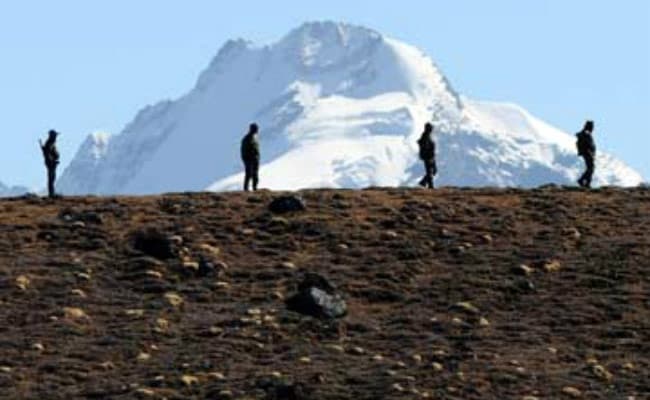
Extortion, armed violence and drugs - this is the deadly trio used by China to wage its unconventional war against India, using armed insurgent groups that it has funded for decades.
In some states in the northeast region, families live in debilitating fear - their children are at constant risk of either getting recruited into an armed insurgent group or of becoming drug addicts.
Up to 22 per cent of the salaries of state government employees is deducted at the disbursal offices - this is an unofficial "sovereignty tax" imposed by armed insurgent groups like the National Socialist Council of Nagaland - Isak-Muivah (NSCN-IM) and the Zomi Revolutionary Army (ZRA). The administration has bent over to keep the peace as these groups, armed with sophisticated Chinese-made weapons like AK 47s and rocket launchers, wield sway over most of the northeastern part of the country.
"Even the state government has been paying taxes to some of the bigger groups," said KK Sema, a retired IAS officer who spearheaded a movement against Nagaland's "sovereignty tax".
"Development funds come to the department. That department is told to pay 5-6 per cent to the groups from the headquarters itself. The money is then disbursed to the field, the field officers and contractors are also taxed. The state government will deny this. The state government employees are paying 22 per cent of their salary. This is being deducted at the disbursement office before it is paid to them. The disbursement officer would negotiate with the armed groups to reduce the 22 per cent to 10-12 per cent and the remaining amount would be paid to the government employee," he said.
Everyone and everything is "taxed" by these armed groups. From vegetables and small businesses, to trucks and farm produce, groups like the NSCN-IM and the ZRA get a cut from all trades and commodities.
The NSCN-IM's "Budget"
NDTV got exclusive access to the NSCN-IM's "Budget" for fiscal year 2025-26. The amounts are staggering as they are a record of extortion of the people of Nagaland.
This armed insurgent group plans to raise over Rs 158 crore in what they call "sovereignty tax", a fancy term for extortion. Everything from food items to fuel to construction materials is "taxed".


Small shop owners too have to pay the NSCN-IM cadre. They cough up, staring at the barrel of a gun.
Smuggling of cheap betelnut from Myanmar into India is also rife and provides a hefty sum for funding these armed insurgent groups. In this fiscal year, the NSCN-IM plans to raise Rs 2 crore from betelnut alone. Most of this betelnut from Myanmar heads to the factories of gutkha makers, according to highly placed sources. This fuels yet another illegal economy.
As a result of this wanton extortion, the prices of goods and food in Nagaland can rise sharply without warning.
"Because of the insurgency, there were many factions which were going out and taxing people. There is absolutely no reason for prices to rise. In the morning, a kilogram of tomatoes would cost Rs 30 and in the evening, it would cost Rs 60 without any real reason," Mr Sema explained.
"Civil society started questioning why this price rise was happening. A few of us got together and sent out a group of youngsters to find out what was happening in the markets. They found that each commodity was being taxed in the market. They call it the 'sovereignty tax. It is called tax. But it is nothing but extortion," he added.
Top sources told NDTV in confidence that a section of the local police and administration too actively aid these armed insurgent groups.
Take for instance, the current Chairman of the Zomi Council, the mother organisation of the ZRA - Vumsuan Naulak. A retired Intelligence Bureau officer, he can be seen in this photograph awarding a child soldier at an undisclosed location in the Chin State of Myanmar.

The Assam Rifles and a section of the state police are attempting to control the influence of these violent groups. On May 16, the Assam Rifles neutralised 10 cadres of an unnamed group and recovered seven AK-47 rifles, one RPG launcher, one M4 rifle and four single-barrel breech-loading rifles. They also found ammunition and war-like stores in Chandel district of Manipur, along the India-Myanmar Border.
The Dimapur Police have stepped up efforts to file cases of extortion - 58 cases were filed between January 2024 and April 2025. 81 arrests were made and 78 weapons - from Chinese made AK 47s to Israeli Uzis - were seized. Special Operation Teams have also been set up to provide rapid action in cases of extortion.
Police sources also told NDTV that Ikato Chishi Swu, son of one of the late founders of NSCN-IM Isak Chishi Swu, is currently in China. He had released a letter in April stating that he was quitting the NSCN-IM and would head to Myanmar to "continue the struggle" as the NSCN-IM had become a "corrupt" organisation.
But flush with Chinese funding and sophisticated arms, these groups recruit more youth and the deadly cycle of violence continues unabated.
In the third part of this series, we will look at how China fuels drugs into India as part of its non-conventional warfare strategy.

-
Hit Songs, Empty Pockets: The Hidden Math Behind India's Viral Music Boom

Over 80,000 brands and five lakh creators in India make branded content. The opportunity is worth around Rs 1,500 crore.
-
Opinion | Great 'Exceptions': How The Oil India Was Attacked For Is The Oil Trump Now Seeks
A law written to punish the buyers of Russian oil was suspended by the US to protect a purchase of Russian oil. India spent fourteen months being lectured for less.
-
Opinion | Louis Vuitton Loot, Torched Cars: France Protests Have An Unlikely Beneficiary
It's an unbelievable moment. Crowds looting the most exclusive stores in Paris, including the famed Luis Vuitton. But what's behind this meltdown?
-
Blog: Kolkata Didn't Learn From 2015. Eleven Years Later, It Proved To Be Fatal
The City of Joy isn't a stranger to crowd control. Be it during Pujo or Christmas at Park Street, Eden Gardens cricket matches, or Derbies between Mohun Bagan and East Bengal. But during Pujo, the entire city is on alert.
-
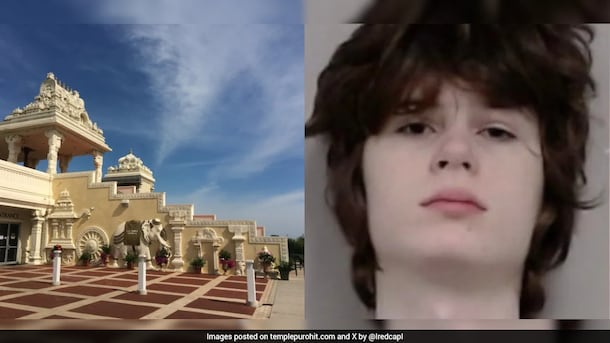
Opinion | Slurs, Threats, Now A Temple Attack Plot: When Did America Become So Hostile To Indians?
The rising tide of anti-India, anti-Hindu, and racist attacks serves as a stark reminder that economic prosperity does not automatically guarantee social immunity from bigotry.
-
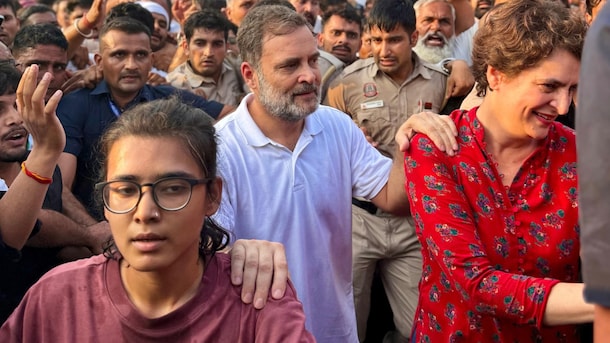
A Step Behind Neha Bora: What Rahul Gandhi's Gesture Says About Congress' Gen-Z Pitch
At INDIA bloc's march to Supreme Court, Rahul Gandhi placed himself a step behind two women, hands resting on their shoulders. One was his sister Priyanka. The one on his right was Neha Bora. Here's what the image means for the protest wave now, and for Rahul's politics in general.
-
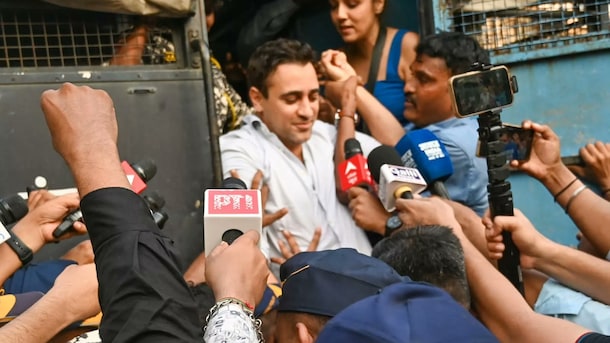
Opinion | Imran Khan, And The Perils Of Having An 'Opinion' In Bollywood
The reality of the industry is quite grimy. More often than not, its inhabitants have been fairweather friends, happy to sing the praises of whoever is in a position of authority.
-
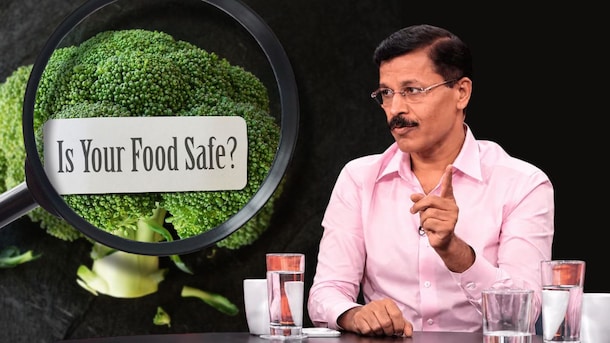
Exclusive: India's Food Safety Problem Goes Beyond Just Dirty Kitchens - By Tukaram Mundhe
On World Food Day, Maharashtra's Commissioner of Food Safety explains why instead of taking stopgap measures, the entire supply chain in India needs to be held accountable and made transparent.
-
Opinion | India Has Enough Coal. So Why Are Power Plants Running Short? A 76 Million 'Crunch'
As of October 5, as many as 82 of the 191 thermal plants monitored by the Central Electricity Authority were in the 'critical' category
-
Opinion | Starlink, India, And Why Elon Musk Must Know His Billionaire Tantrums Won't Work
India should neither be intimidated by Musk's global influence nor distracted by his theatrics.