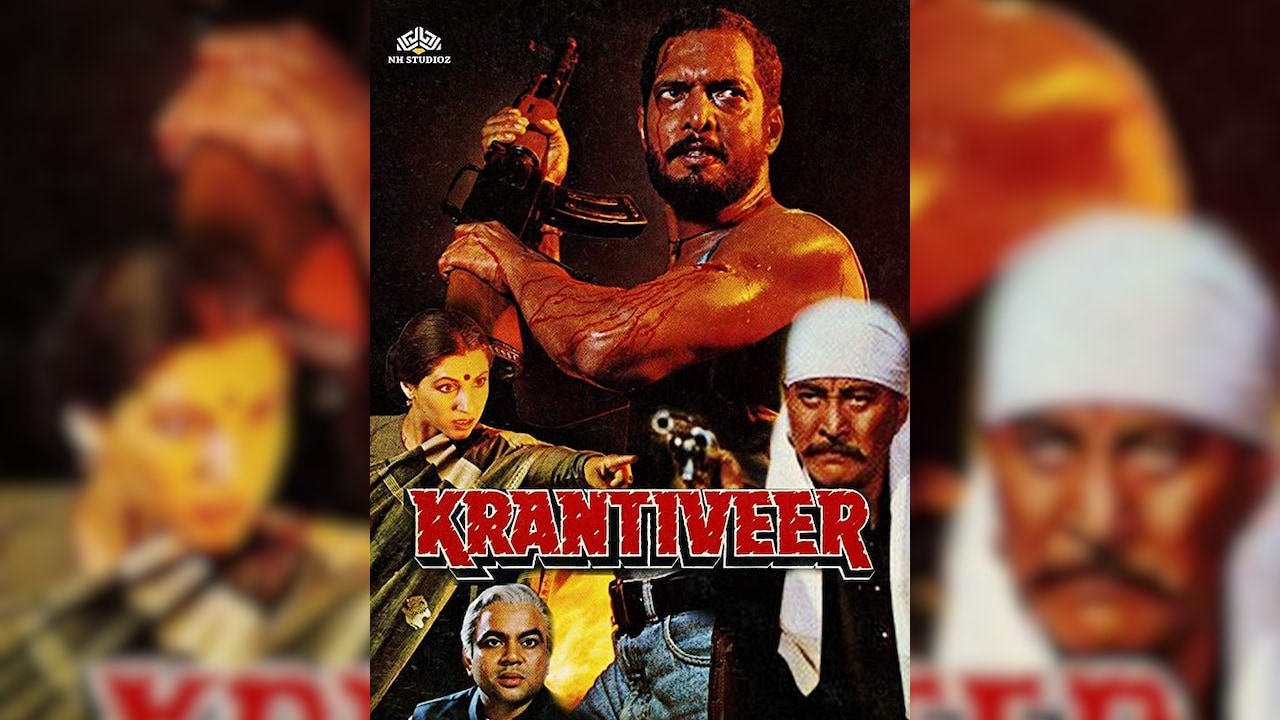
Hindu ka khoon-Musalman ka khoon? Nana Patekar's Krantiveer Questions Still Hang
Krantiveer was released in 1994, after the communal violence that had scarred Bombay and other parts of India. Nana's voice carried the pain of every riot, every broken home
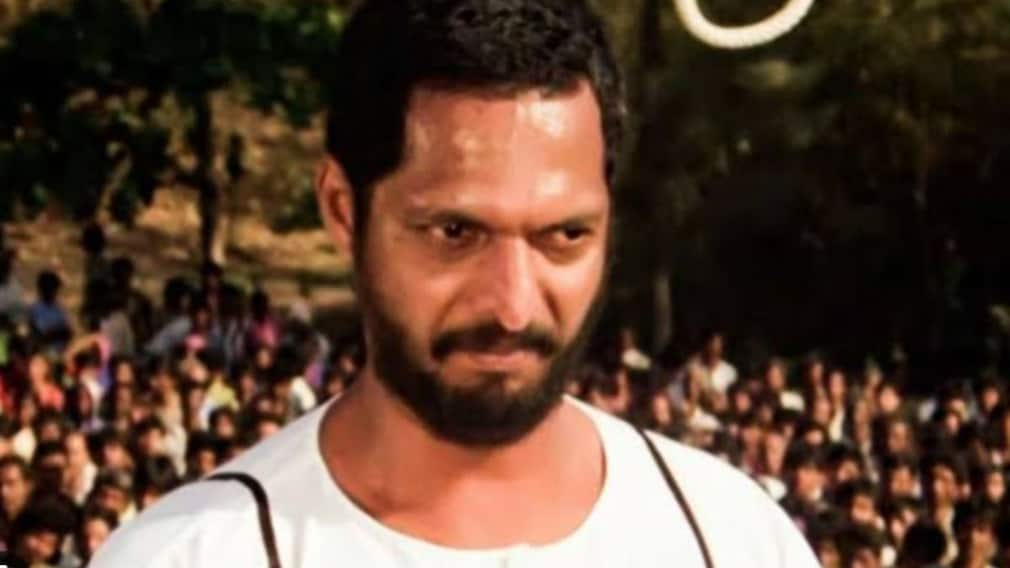
"Aa gaye meri maut ka tamasha dekhne" [You have all come to witness the drama of my death]. Pratap Narayan Tilak sniggered at the crowd as he himself stood at the edge of death.
There are film scenes that entertain. There are scenes that shock. And then there are scenes that barge out of the screen and confront the audience head-on.
Two scenes from Nana Patekar's Krantiveer belong to that last category - the hanging scene and the iconic "Hindu ka khoon, Musalman ka khoon" scene.
In the film, he did not merely play a character. He became the voice of a wounded nation - angry, broken and yet unwilling to surrender to injustice.
The hanging scene is not simply about punishment. Nana's performance makes it feel less like a cinematic spectacle and more like a public execution of humanity itself.
Read | Actor Nana Patekar Dies At 75, Was Found Unconscious At His Goa Residence
Pratap is staring at the noose. The crowd has gathered, expecting a spectacle. Instead, Pratap turns the gaze back on the crowd. The man who is supposed to be on trial begins putting society itself in the dock.
His anger is directed not just at corrupt politicians or criminals, but at ordinary people who watch injustice unfold, complain about it, and then return home as if nothing happened.
The remarkable thing about that final speech is that it doesn't feel like a lecture.
It feels like an explosion.
Nana doesn't just deliver Pratap's words. He spits them out with frustration and sarcasm.
Pratap reminds us that patriotism is not just slogans. It is standing against injustice. It is protecting human life. It is refusing to let religion become a weapon. It is having the courage to speak when silence is safer.
The most enduring moment in the earlier part of the film comes when Nana takes the bull of communal hatred by its horns.
He holds up the simplest truth imaginable: blood does not carry a religious identity.
"Hindu ka khoon, Musalman ka khoon. Bata" [Hindu blood. Muslim blood. Look at it. Tell them apart].
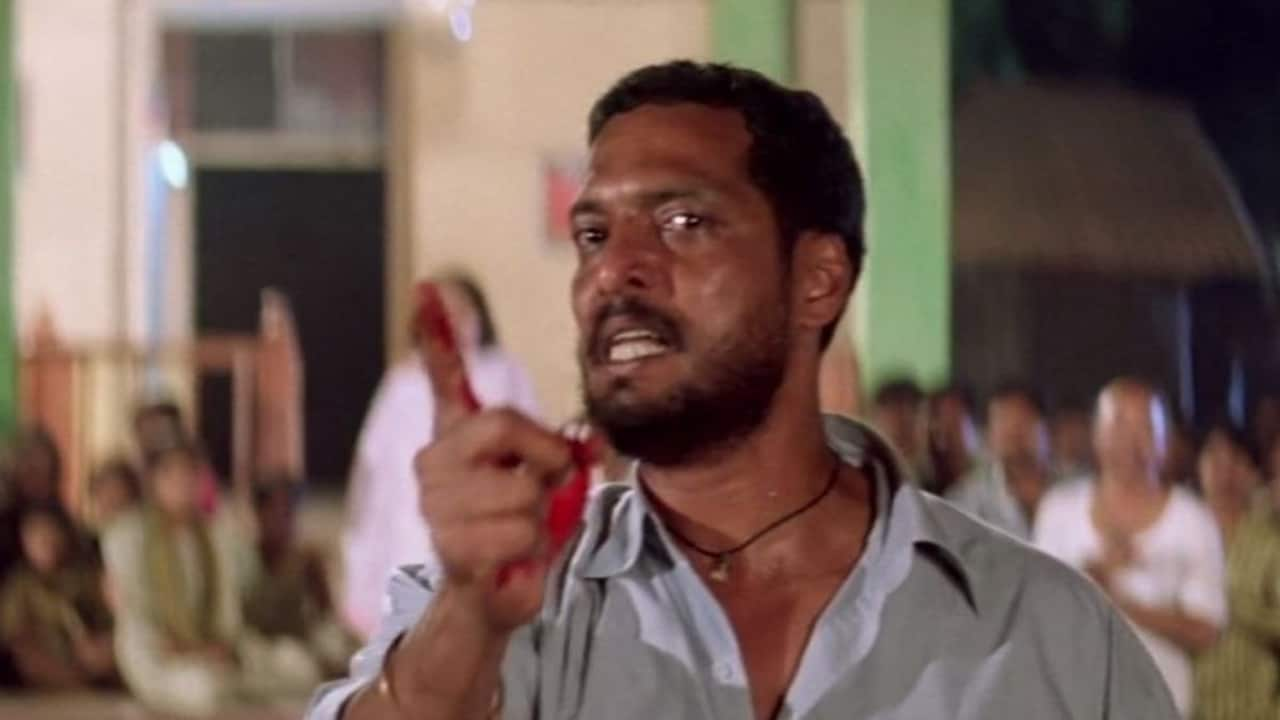
The question is devastating precisely because the people who manufacture hatred need differences. The human body doesn't. The colour is the same. The pain is the same. The loss is the same. And if the blood is indistinguishable, what exactly are we fighting over?
The words strike with the force of a slap.
Read | "We All Have To Go Some Day": Nana Patekar Spoke About Death 4 Days Ago
Krantiveer was released in 1994, after the communal violence that had scarred Bombay and other parts of India. Its story itself revolves around powerful interests engineering communal violence to clear poor residents from their land.
Nana's voice carries the pain of every riot, every broken home, every child who has lost a parent and every parent who has watched a child disappear into violence.
Perhaps that explains why the scene feels less like dialogue and more like an outburst.
Decades have passed, but the question remains painfully simple: When someone tells us that our neighbour is different from us, do we stop to ask what actually separates one human being from another?
That is why the scene refuses to become merely a piece of 1990s Bollywood nostalgia. It is not remembered only because Nana Patekar shouted. It is remembered because, beneath all that fury, he asked the crowd to look at something they could not argue with.
Human beings bleed the same.
The hanging scene leaves us shaken. The Hindu-Muslim blood scene leaves us ashamed of how easily humanity is divided.
Thirty-two years later, Nana Patekar's questions still hang in the air.
-
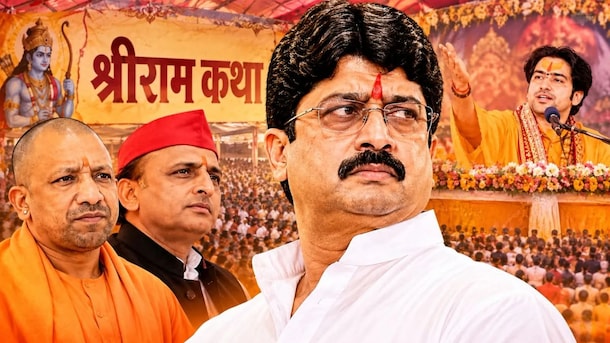
Kunda's King And His Thakur Court: Raja Bhaiya's Big Power Play Before UP Polls

UP Elections 2027: The Ram Katha may have been about Lord Ram, but the political story unfolding in Kunda was about Raja Bhaiya.
-
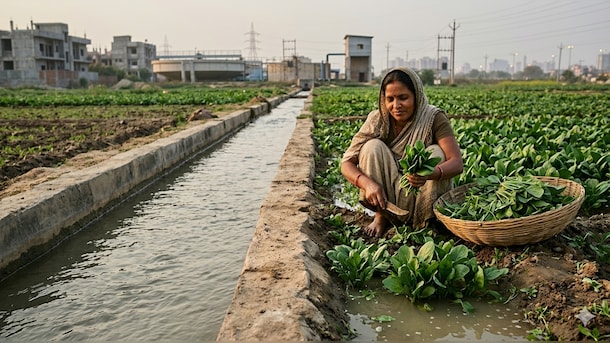
The Hidden 'Water Cost' Of Agriculture: Comparing India With Major Economies
Traditional flood irrigation, which remains common across Indian farms, is a major reason. It has a water-use efficiency of just 35-40 per cent.
-
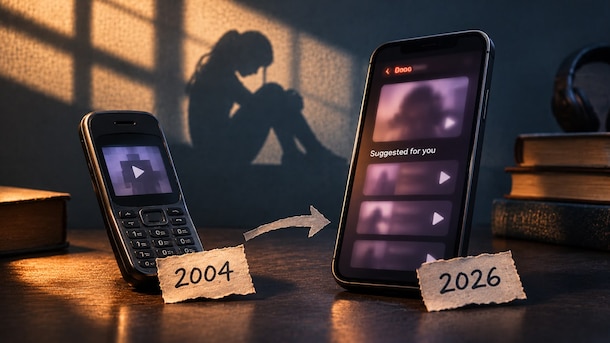
Blog | DPS MMS To Instagram: The Cost Of Irresponsible Men
On International Men's Day, it is worth having a conversation that isn't always comfortable for men.
-
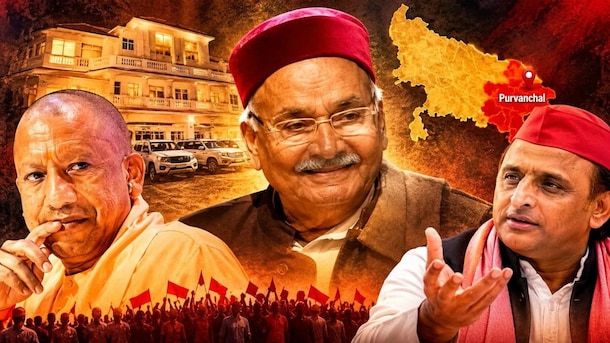
Real-Life Mirzapur? Story Of UP's Tiwari Haata That Akhilesh Yadav Visited
The Samajwadi Party chief's pit stop at the Tiwari Haata in Gorakhpur carried considerable political significance ahead of the UP elections
-
The Name Is Bond. Emo Bond. Robert Pattinson Inherits 007 With Feelings
The internet has already given the new James Bond a nickname. It is a joke, but it touches on the oldest question for the "cool" spy franchise: How much is he allowed to feel?
-
Buying Property For Investment? 6 Factors To Check Beyond Price
For anyone buying property as an investment, the real question is not simply how much the property costs. It is how much money it can generate.
-
Is Buying Home In A Small Town Smarter Than In A Metro? Here's The Math
According to Knight Frank's H1 2026 Affordability Index, the EMI-to-income ratio stood at 69% in Mumbai and 67% in the National Capital Region.
-
Samajwadi Seat Talks: The UP-Size Gap Between Congress' Rhetoric and Reality
UP Election 2027: Seat-sharing negotiations are rarely easy. More so when they involve a regional force determined to guard its turf and a national party desperate to regain lost ground.
-
Cyber Outages: The Attack That Has No Name
Banks, flights and the world's office mail failed four times in five days, each time without an attacker. The world spends $247 billion a year on locks