India To Dust Off 1971 War Air Base To Counter Bangladesh's China Turn
If Beijing does fund the renovation of Lalmonirhat then expect the Chinese to have military assets - fighter jets, radars, surveillance equipment, etc. - stationed there as part of the deal.

Bangladesh's reported plans to revive a World War II-era air base - Lalmonirhat in Rangpur division - with help from the Chinese has rung alarm bells in the upper echelons of the Indian administration.
The alarm bells are ringing because re-activating Lalmonirhat allows Beijing a military foothold literally on Delhi's doorstep; the base is less than 20km from the India-Bangladesh border.
They are also ringing because Lalmonirhat is less than 20km from the Siliguri Corridor - the 22km-wide stretch of land connecting the seven northeastern states to the rest of the country.
The Corridor, referred to as the 'chicken's neck', is bordered by Nepal to the west and Bhutan to the north. Relations with those two nations are stable; indeed, there are signs the Nepalese are looking to Gyanendra Shah to reclaim the 240-year-old Hindu monarchy abolished in 2018.
But there are red flags from the southern border.
If Beijing does fund the renovation of Lalmonirhat then expect the Chinese to have military assets - fighter jets, radars, surveillance equipment, etc. - stationed there as part of the deal.

The airport at Kailashahar in northern Tripura.
These concerns have prompted India to fast-track the refurbishment of a three-decade-old civil airport in northern Tripura's Kailashahar region.
It will likely remain for civil use but, as with all other major airports in the northeast, on-ground facilities will be enhanced to allow Air Force fighter jets and planes to take-off, land, and refuel in times of war or in case of emergencies.
However, bringing the Kailashahar airport back to life won't just be about responding to Bangladesh's Lalmonirhat move. It will also be a 'friendly' reminder at a time when ties are strained following the fall of ex-Prime Minister Sheikh Hasina's government in August 2024.
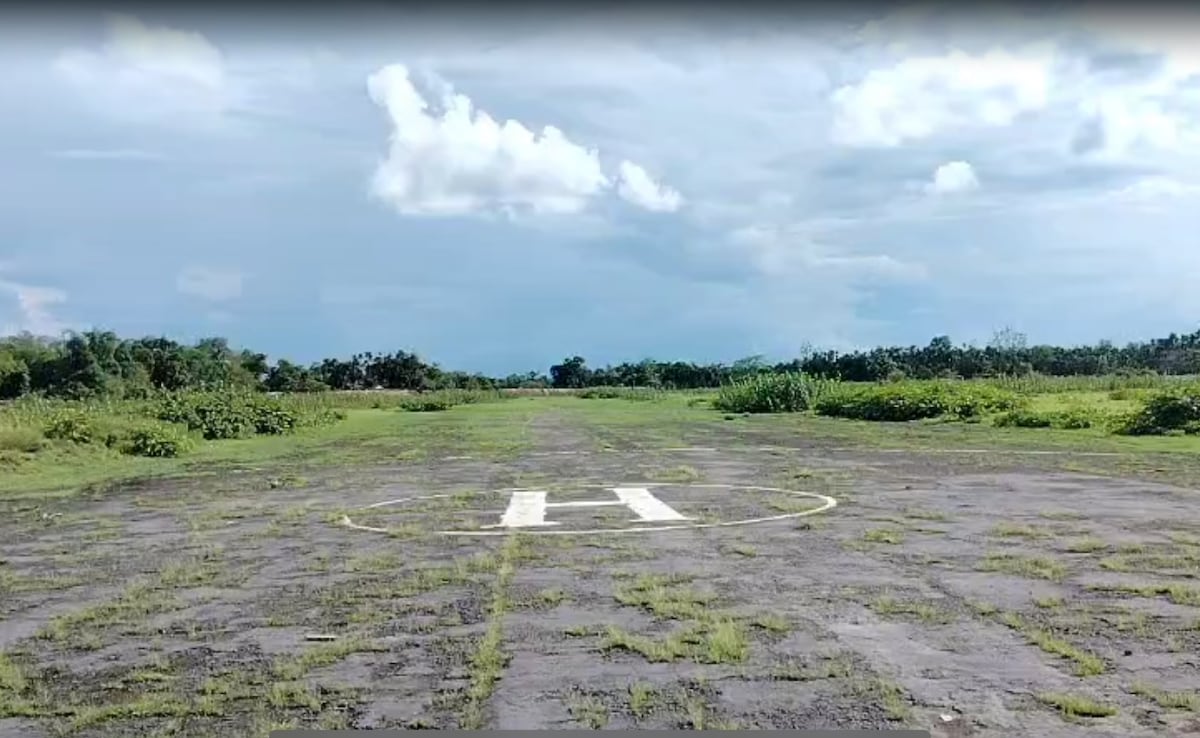
The overgrown runway at the shuttered Kailashahar airport
Sheikh Hasina was seen as a valuable ally, a reliable counter to the Chinese sniffing around northeast India. But there had been tension building within for years and all of that erupted in student-led protests over her government announced job and college quotas for war veterans.
She was deposed and an interim government set up under Nobel Peace laureate Mohammed Yunus, who has so far failed to announce an election and who has proven to be less friendly to New Delhi, and has even reached out to China and Pakistan, than was anticipated.
Under these circumstances, the Chinese helping the Bangladeshis restore an air force base within minutes of the Indian border, within minutes of the critical 'chicken's neck' is troubling.
A History Lesson
Tripura's Kailashahar airport was shut down in the 1990s but before the lights were turned off, the windows shuttered, and doors locked, it played a key role in the 1971 war against Pakistan.
Fifty-four years ago the first missions of Kilo Flight - the codename for a Bangladeshi resistance combat unit, operating under the control of the Indian Air Force - took off from this airport.
Kilo Flight was a hit-and-run strike group consisting of a Canadian-made DHC-3 Otter plane and the French-made Alouette II helicopter armed with rocket pods and machine guns.

A Bangladeh Air Force Alouette III Helicopter
Photo Credit: By Bangladesh Air Force, CC BY-SA 4.0
There was also a United States-origin DC-3 Dakota for logistical support.
And the Kilo Flight team later led the formation of the Bangladesh Air Force.
Why Is Kailashahar Important Otherwise
Restoring this airport is also a big step towards improving air connectivity in a state that has, realistically, only one major airport - the one in capital Agartala.
And, on May 26, 2025, a high-level delegation from the Airports Authority of India visited the long-abandoned airport and its surrounding areas to assess its current condition. The team later told reporters "further planning will done in consultation with the state government".
NDTV is now available on WhatsApp channels. Click on the link to get all the latest updates from NDTV on your chat.
-
Census Asks 40 Questions. Why Number 10 Is A Battleground | NDTV Explains

The caste question is a fill-in-the-blank for everyone other than SCs and STs. But there's a case for making it a dropdown with set options. Let's decode the history and math behind the politics.
-
Opinion | Why India's Bureaucrats Have Learnt That Doing 'Nothing' Is Safer
India's bureaucracy has perfected a peculiar survival strategy: make a decision, you may be punished; make none, and you are usually safe.
-
Opinion | 482 Dead, And Counting: How A Glacier Collapse Became A Himalayan Disaster
What looks like a sudden flood is actually the final link in a chain of events unfolding across an increasingly unstable Himalayas
-
Opinion | Rahul Gandhi Is Cleaning House - But At The Cost Of The Congress
In his search for a new organisation, Rahul Gandhi is making the big mistake of treating the Congress he inherited as dead weight.
-
One-Day Disaster, Multi-Season Economic Shock: Nepal's Sisyphean Curse
Nepal Flash Floods: Nepal cannot prevent every earthquake, landslide or glacial collapse. But it can reduce how much each disaster costs.
-
Meta Pays Billions Over Teen Harms In US. In India, Algo Runs Unchecked
The US Surgeon General has separately warned that heavy social media use roughly doubles adolescents' risk of depression and anxiety, and that nearly half of teens surveyed said it made them feel worse about their bodies.
-
Blog | 'No Calls, People Scanning Banks For Bodies': Nepal Journalist Describes Flood Aftermath
As of Thursday evening, it was still impossible to get through to mobile phones in Dhunche, the district headquarters, or the flood-ravaged towns of Syabru Bensi or Timure.
-
Opinion | Toxic Knows Exactly What It Is Doing To Its Hero. And You May Have Missed It
Toxic's bait-and-switch goes beyond its plot. Geetu Mohandas is almost making a subtle point - for those who can see it.
-
Why Nepal Is So Vulnerable: Glacial Lakes, And A Himalaya That Moves Constantly
The August 26 inland tsunami was not an accident of weather. It sat at the intersection of processes that make Nepal one of the most hazard-exposed countries.