India Bakes At 47.6 Degrees: Heatwave Explained, From Urban Heat To El Nino
Health advisories issued by the government and doctors include the need for hydration, limiting outdoor exposure during peak hours, and watching for heatstroke symptoms.
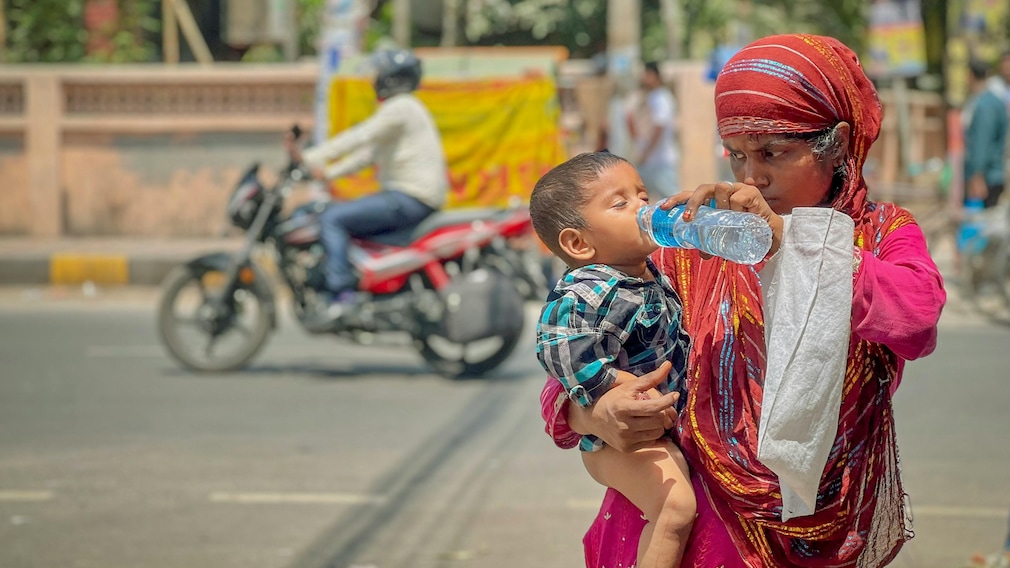
Large parts of India baked under a heatwave Tuesday with temperatures soaring well above seasonal norms in major cities. Delhi recorded 42 to 44 degrees Celsius, while the mercury reached 41 to 43 degrees in Ahmedabad and Nagpur and 40-41 degrees in Jaipur and Lucknow.
The temperature crossed the 47-degree mark - a terrifying 47.6 - in Uttar Pradesh's Banda for a second straight day, with similarly brutal conditions as far south as Vidarbha in Maharashtra.
Hyderabad and Chennai saw daytime peaks in the mid-to-high 30s. Coastal Mumbai remained relatively cooler - in the high 30s - but humid, and Kolkata reported high 30s temperatures.
Fried locals hoping for cooler nights were disappointed as even the minimum readings in many places - including Delhi and Jammu and Kashmir - were five degrees above normal.
Weather forecast
The forecast for the week offers little immediate relief for large parts of the northwest and central states. The India Meteorological Department expects heatwave to severe heatwave conditions to persist for several days, with temperatures likely several degrees above normal.
In fact, in isolated pockets it could possibly continue crossing 45 degrees before western disturbances and localised thunderstorms sweep parts of the north and northeast.
In the south, major cities can expect hot daytime conditions with humid and uncomfortable nights, while the northeast and parts of the east will see more rain and thunderstorms.
Why is India burning up?
In part it is a regular seasonal phenomena; the months of April and May usually do experience high heat levels due to increased solar radiation, dry continental winds, and the formation of low-pressure heat zones over western states like Rajasthan and in neighbouring Pakistan.
But the intensity and spread of this heatwave - which has painted the subcontinent in fiery shades of orange and deep brown - is the product of both domestic and global factors.
Domestic factors behind India heatwave
On the domestic side this includes the 'urban heat island' effect, which refers to a phenomenon in which cities and metropolitan areas see much hotter temperatures - sometimes 10 degrees Celsius more - than surrounding rural regions. This is primarily because in cities vegetation and green cover has been replaced by steel, glass, and concrete structures that absorb the heat.
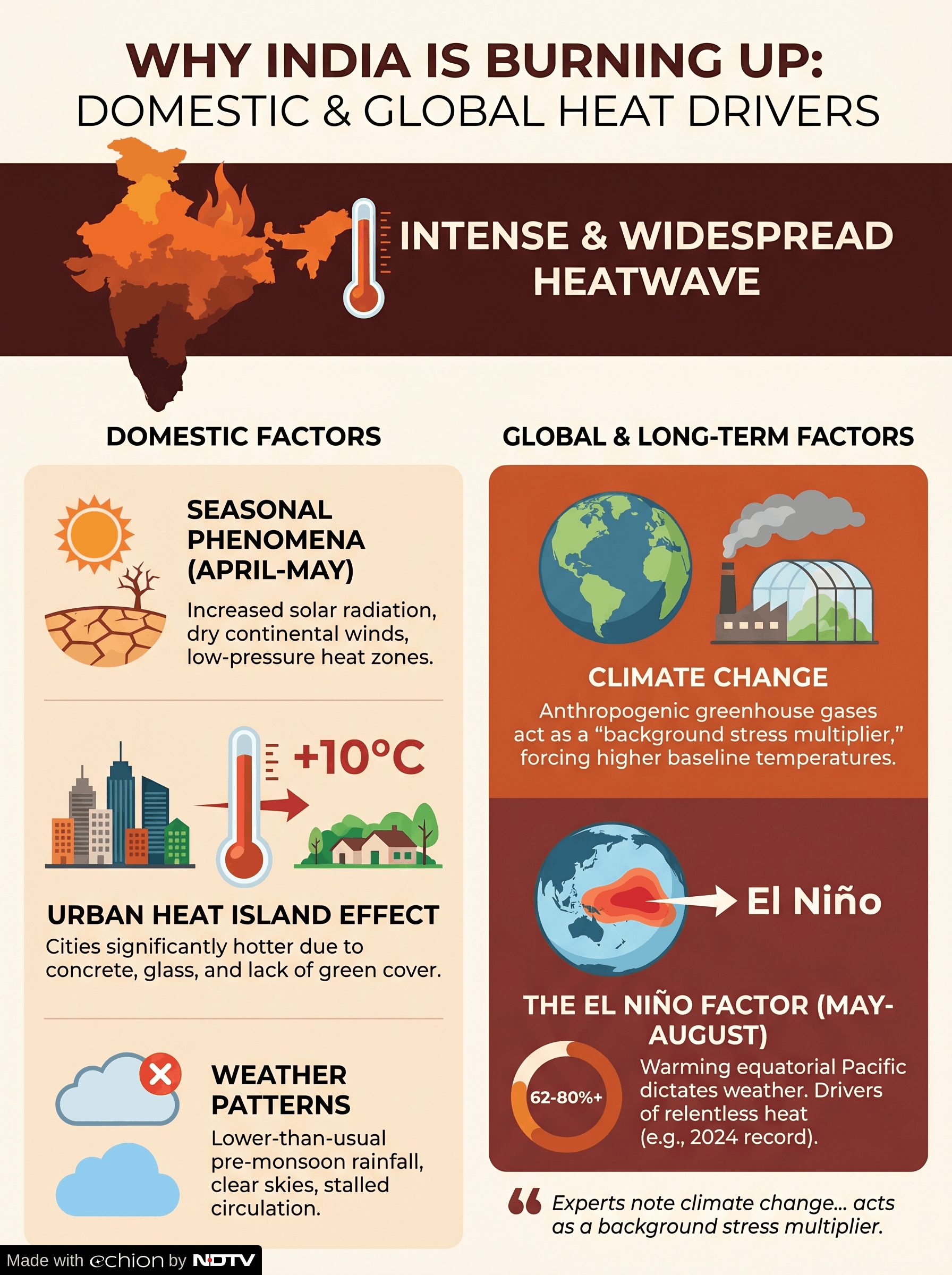
Other factors include lower-than-usual pre-monsoon rainfall, clear skies and stalled circulation patterns, all of which conspirer to prevent cooler air from the oceans reaching inland areas.
Experts note climate change - driven by anthropogenic greenhouse gas emissions, i.e., heat-trapping gases released by human activities - is also at play, acting as a background stress multiplier to force higher baseline temperatures during the summer that then trigger heatwaves.
The El Nino factor
On the global side there are two factors, one of which is El Nino conditions developing in the equatorial Pacific region. Data modelling from the World Meteorological Organization indicates a high probability - 62 to 80+ per cent - this will establish itself between May and August.
El Nino (and its counterpart, La Nina) are Spanish terms - translated as 'little boy' and 'little girl' - that are essentially climatic patterns in the Pacific Ocean that dictate weather worldwide.
Essentially 'little boy' brings periods of unusually warm weather and 'little girl' the opposite, and this happens when surface temperatures of the Pacific Ocean are either too warm or too cold.
It is not that there is an El Nino or La Nina event every year, or even that the effect is the same everywhere in the world. In fact, regional effects can vary significantly. But the general trend in an El Nino cycle is relentless heat; 2024, the hottest year on record, was driven by this factor.
The IMD noted the likely development of El Nino conditions this year too.
Impact on India
A critical impact - certainly for India - is on monsoon rainfall.
Warmer Pacific Ocean waters are pushed south and east in an El Nino phase, meaning regions in the east, i.e., Asia, Australia, and central Africa, usually experience drier weather.
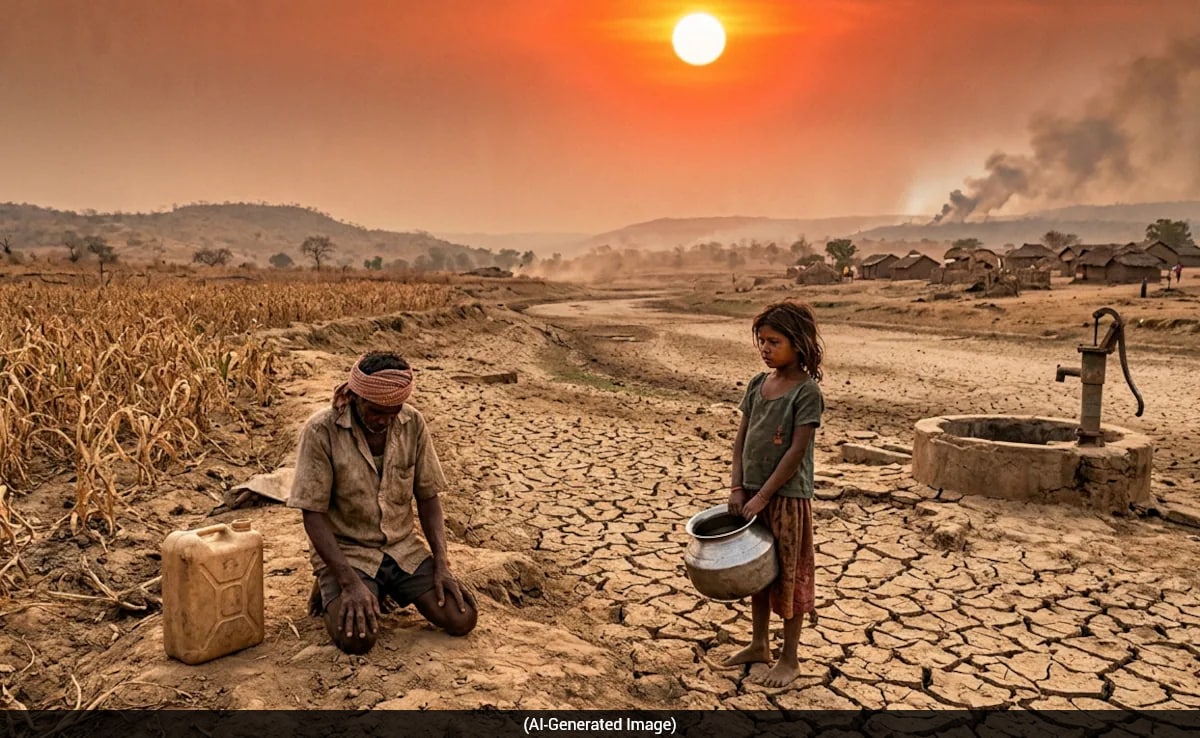
Heatwaves and droughts are not uncommon in India but intensity has increased.
The IMD has already released a statement warning that the 2026 southwest monsoon is "most likely to be below normal (90-95 per cent) of the long period average (LPA)" and that "seasonal rainfall over the country as a whole is likely to be 92 per cent (five per cent variation) of LPA".
How to stay safe
The practical implications of a heatwave are immediate.
Hospitals must prepare for heat-related illnesses and power grids face higher energy draw and demand for cooling. In rural areas farmers must combat heat stress on crops and livestock.
Health advisories issued by the government and doctors include the need for hydration, limiting outdoor exposure during peak hours, and watching for heatstroke symptoms.
As India moves through this window, the focus will be on the strength of western disturbances and arrival patterns of the southwest monsoon, as well as any localised activity that can produce significant and prolonged periods of rains, i.e., thunderstorms.
Until then, residents across the worst-affected plains should plan for sustained high temperatures and take preventive measures to reduce health and economic harms.
-
Ringside View | How Royal Challengers Bengaluru Transformed Itself Into A Winning Machine

Mo Bobat, RCB's Director of Cricket, helped explain the mindset after the franchise became the first team to qualify for the playoffs this season.
-
"I Cry In Shower": Meta, LinkedIn Employees Share Fears, Anxiety Amid Layoffs
Life decisions are on hold. Employees say they are unable to plan a future because they don't know if they will still have a salary next quarter.
-
Opinion | Twisha Sharma: Why India's Wealthiest Women Are Still Dying In 'Respectable' Marriages
Data show that women belonging to the lowest and highest wealth quintiles have equally been exposed to physical violence.
-
Opinion | Xi Is Truly Done Falling For The Great American Bluff
The Chinese and others have long sized up Trump. And they're no longer buying his threats - or his promises.
-
Opinion | PM Modi's Austerity Appeal And The Bitter Economics Of 'Sacrifice'
Can the watch still keep time if one or two of its components are stopped or slowed? The fact is, just as private investment has direct and indirect benefits, consumption cuts have direct and indirect consequences.
-
Opinion | 3 Blasts In A Week: Pakistan's Taliban Blowback Is Entering A Dangerous New Phase
First came an IED attack, then a suicide blast, with militants taking weapons and police personnel from the site, then a bomb blast.
-
Opinion | Why Freebies Work Brilliantly, Until They Suddenly Don't: A Tamil Nadu Paradox
Freebies work under three conditions - and fail when any one of those conditions is absent.
-
The Missile Is Dead. Long Live The Map: How Iran Invented 'Future Of War'
Iran's weaponisation of the Strait of Hormuz - squeezing energy flows and simultaneously threatening subsea cables - has re-introduced the world to structural leverage warfare and marked it as the future of conflict.
-
Opinion | PNS Hangor: Inside The $5 Billion Submarine Fleet Pakistan Is Buying From China
With the commissioning of PNS Hangor, what is no longer open to debate is the proposition that any future India-Pakistan conflict, in terms of force composition, will be a proxy engagement involving Chinese military technology.