One In Six Samples Failed Tests In FY26: Are Indians Losing Faith In Food?
Counterfeit and substandard products not only create health risks but also weaken consumer confidence and impose economic costs on the country.
The glass of milk on the breakfast table. The paneer in a curry. The spices in the kitchen cabinet. Even a packet of roasted chana marketed as a healthy snack.
For millions of Indians, these are everyday staples. Yet India's latest food safety numbers suggest that trust in what we eat is facing one of its toughest tests.
As the world observes World Food Safety Day on June 7, a troubling statistic has come into focus: "nearly one in every six food samples tested in FY26 failed safety and quality checks".
The figure is more than just a regulatory number. Experts say it points to a deeper challenge confronting India's food ecosystem - one that stretches from farms and factories to grocery stores, restaurants and home kitchens.
A Growing Trust Deficit
Food safety is no longer just about compliance with regulations. It has become a question of consumer confidence.
"Consumers in India are increasingly scared of consuming day-to-day commodities which we did not even think twice about earlier," said Dr Saurabh Arora, Managing Director of Auriga Research.
According to Arora, products such as milk, paneer, cereals, pulses and even healthy snack items have become subjects of concern amid growing reports of adulteration and contamination.
The problem is being amplified by social media, where genuine warnings often mix with misinformation, creating a flood of content that leaves consumers unsure about what to believe.
"The entire food system including growers, producers, packers, regulators and consumers must work together to rebuild trust," Arora said.
That trust deficit may ultimately prove more damaging than any individual food safety violation.
The Hidden Cost of Unsafe Food
Food contamination carries a significant economic cost. But health experts argue that the human cost is even greater.
Dr Vimal Pahuja, MD Associate Director, Internal Medicine and Metabolic Physician at Dr LH Hiranandani Hospital, pointed to World Health Organization estimates showing contaminated food causes around 600 million illnesses and 420,000 deaths globally every year.
In India, the consequences range from food poisoning and gastrointestinal disorders to liver damage, neurological conditions and long-term diseases linked to prolonged exposure to harmful substances.
Heavy metals, artificial dyes, pesticide residues and industrial chemicals can accumulate in the body over time, causing gradual damage to vital organs, Pahuja said.
"The most vulnerable populations - children, the elderly and economically disadvantaged groups - often consume these foods without realising the risks," he added.
Experts warn that every failed sample represents more than a failed laboratory test. It represents potential health risks for real people.
Why Adulteration Hurts Everyone
For food businesses that invest heavily in quality controls, adulteration creates another problem: unfair competition.
Akshat Khandelwal, Founder and CEO of Nuflower Foods and Nutrition, said a handful of non-compliant players can damage the reputation of the entire sector.
"Companies that adulterate products don't just harm consumers. They also undermine businesses that are trying to follow the rules and provide genuine value," he said.
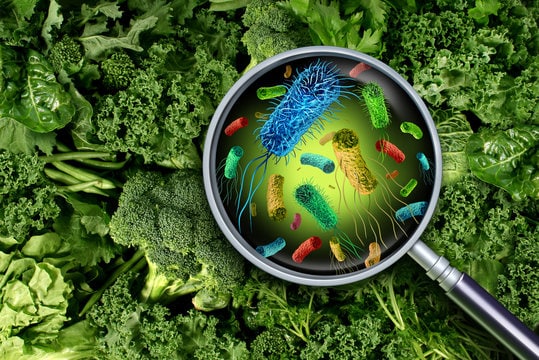
Contaminated food causes around 600 million illnesses and 420,000 deaths globally every year..
Industry experts argue that food companies need to move beyond basic compliance and embrace modern quality management systems. These include stringent supplier audits, extensive testing of raw materials and packaging, end-to-end traceability and tightly controlled manufacturing environments.
Equally important, Khandelwal said, is creating a culture where quality failures are reported and addressed openly rather than concealed.
A Challenge Bigger Than Factories
Food safety problems are often associated with manufacturers. But experts say the issue is much broader.
Sanjay Kumar, CEO and MD of Rassense, India's largest corporate food services company, believes food safety reflects the overall quality of a country's public systems.
"Food safety cannot be viewed in isolation," Kumar said. "It is linked to infrastructure, water quality, city food management systems, hygiene standards and consumer awareness."
The challenge becomes particularly difficult in India's vast informal food economy, where maintaining consistent standards across millions of small businesses remains a daunting task.
Counterfeit and substandard products not only create health risks but also weaken consumer confidence and impose economic costs on the country.
For Kumar, stronger governance and accountability throughout the value chain are essential if India wants to build a safer and more trusted food ecosystem.
The Workplace Cafeteria Is Under Scrutiny Too
Food safety concerns are increasingly shaping decisions in places that were once taken for granted -- including office cafeterias.
According to Uttam Kumar, Co-founder and COO of HungerBox, employees today are far more informed than they were a few years ago.
"They read labels, follow food safety news and ask questions about sourcing and hygiene standards," he said.
As a result, enterprise food service providers are facing greater pressure to demonstrate compliance rather than merely claim it.
That means maintaining documented vendor audits, verifiable FSSAI compliance records, cold-chain traceability and systems capable of quickly identifying the source of any quality issue.
Technology is becoming a key tool in this effort. HungerBox, for instance, uses digital monitoring systems that require photographic proof of hygiene checks and operational compliance, creating an auditable record of food safety practices.
The stakes are high. In the age of viral social media posts, a single incident can damage years of reputation-building.
Why Brands Are Betting on Transparency
Many food companies now view transparency as a business necessity rather than a marketing strategy.
Parul Sharma, Co-Founder of Gladful, said consumers increasingly want to know exactly what goes into the products they buy.
Her company has chosen to avoid ingredients such as palm oil, maida, maltodextrin, artificial preservatives and artificial colours, focusing instead on what it calls a clean-label approach.
According to Sharma, the industry's challenge is not only protecting consumer health but also preserving trust in packaged food itself.
"The deeper risk is creating a generation of consumers who stop trusting packaged food altogether," she said.
Brands that invest in safety, quality checks and ingredient transparency are helping protect the credibility of the broader food and beverage sector, she added.
Why Enforcement Remains Difficult
Despite expanding testing networks and regulatory oversight, enforcement remains uneven.
Experts point to differences in infrastructure, testing capacity and local implementation across regions.
India's food safety regulators face a massive task. Millions of food businesses operate across a population exceeding 1.4 billion people.
As a result, the gap between regulations on paper and implementation on the ground remains significant.
For many consumers, that means food choices still involve an element of uncertainty.
What Consumers Can Do
Experts say consumers remain the first line of defence against unsafe food.
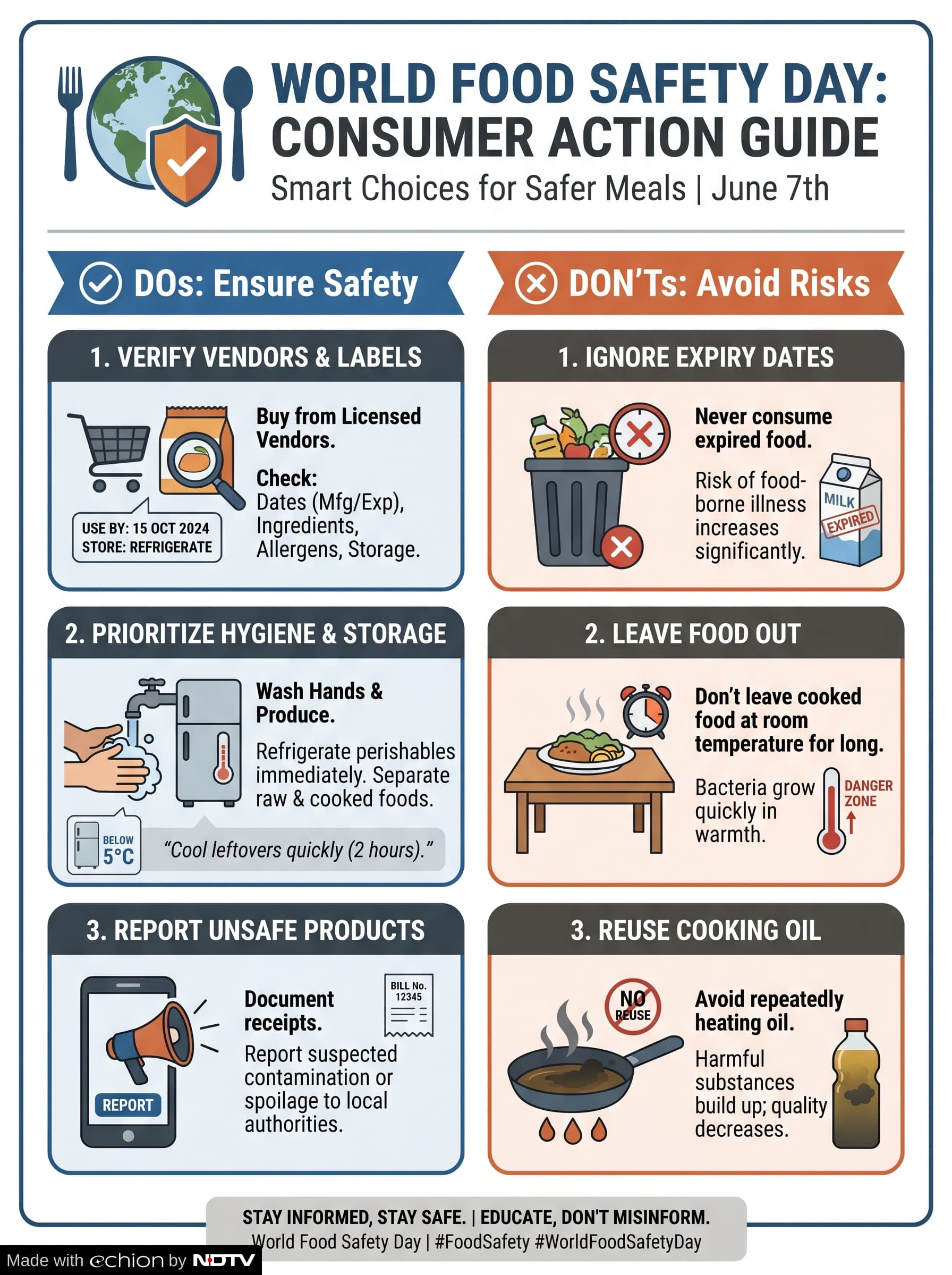
Tehseen Siddiqui, Chief Dietician at Saifee Hospital, advises buyers to purchase food only from licensed vendors and carefully read product labels, including manufacturing dates, expiry dates, ingredient lists and allergen declarations.
Consumers should also inspect packaging for damage, refrigerate perishable foods promptly, wash fruits and vegetables thoroughly and maintain good kitchen hygiene practices.
Equally important is reporting suspected cases of contamination or unsafe products to food safety authorities.
There are habits to avoid as well. Siddiqui warns against consuming expired food, buying poorly labelled products, reusing cooking oil repeatedly, leaving cooked food at room temperature for extended periods and purchasing dairy or meat products from questionable sources.
She also cautions consumers against blindly forwarding food safety claims on social media without verification.
"One informed consumer is one less victim," she said.
-
2 Indians Survived 9/11, Then American Justice System Became Their Nightmare

Pulled off a Texas train hours after 9/11, two Indian men were plunged into America's largest terror manhunt.
-
Opinion | Building BRICS In New Delhi
For India as the host nation, chairing the summit tests the core tenet of its modern foreign policy: strategic autonomy.
-
Mayawati's Tough Love: Nephew Akash Anand Benched Again. What It Means For BSP
Akash Anand, the 31-year-old foreign-educated nephew of BSP boss Mayawati, finds himself out of favour, for at least the third time in three years, with the latest turn coming in Lucknow on September 3.
-
Opinion | The Insider's Warning: Why Anthropic Researcher's Resignation Is Big
AI's builders have a problem: everyone fears what happens if they stop, and everyone fears what happens if they don't
-
Blog | I Lived In Satya Niketan. And I Was Too Young To See What It Did To Us
Sparking switches, falling ceilings, cardboard-partitioned rooms. Satya Niketan had been crumbling for years. I just didn't know when it would collapse.
-
Opinion | A New 'Subsea Cable' Is Coming To India. But It's A Wake-Up Call For Something
Backed by some of the biggest names in tech - Microsoft, Singapore's Singtel, Tata Communications, and Japan's NEC - the 'I-2SEA' will carry high-speed data traffic that AI systems need to function
-
Opinion | India Faces A BRICS Challenge. Can It Find A Way Through?
The Delhi Summit is being held at a challenging time. Such circumstances have not been encountered since the BRICS Summits started in 2009 in Russia
-
Opinion | Why The Jauhar Scene In Padmaavat Needs To Be Seen For What It Does
The practice of 'jauhar' was certainly abolished long ago. But that does not mean that it should be romanticised or glorified in mass culture.
-
Opinion | Sachin Pilot's Long Wait Is Over. Can Congress Finally Use Him?
The grand old party is now betting that the man who turned 'waiting' into a virtue can deliver Punjab
-
Ground Report | Sunlight Is A Luxury In Delhi Students' Hub Where Building Collapse Killed 7
The civic infrastructure in Delhi's Satya Niketan hasn't caught up with the pace of development and appears to be crumbling under the weight of the influx of tenants and the greed of landlords.