Crude Politics: Inside India-Russia Oil Ties Amid Trump's Tariff Tantrum
Before the Russia-Ukraine war, India's crude oil imports from Russia amounted to 0.2 per cent. Fast forward a few years, and Russian oil has surged to become India's top source.
India's energy strategy has undergone a major reorientation over the last three years, placing Russia at the heart of its crude oil imports. Before the Russia-Ukraine war, India's crude oil imports from Russia amounted to 0.2 per cent. Fast forward a few years, and Russian oil has surged to become India's top source.
During the Cold War, India adopted a policy of non-alignment, but it refused to endorse Western efforts to counter Soviet-led communism. The result was a diplomatic relationship with Moscow that included extensive arms transfers, technology sharing, and diplomatic support.
Even after the Soviet Union's collapse, Russia has remained India's most significant arms supplier. A substantial portion of India's military platforms -- especially those in the Navy and Air Force -- are either Russian-made or use Russian components.
Crude Politics
In February 2022, after Russia invaded Ukraine, much of the Western world responded by slapping sanctions on Moscow, including oil import bans.
Before the war, Russia accounted for just 0.2 per cent of India's crude imports. By May 2023, that figure had skyrocketed to over 40 per cent, displacing traditional Middle Eastern suppliers such as Iraq and Saudi Arabia.
According to Kpler, a real-time data and analytics provider, Russian imports peaked at 2.15 million barrels per day (bpd) in May 2023. In July 2024, Russia supplied more than 2 million bpd, comprising 41 per cent of India's crude intake. In comparison, Iraq's share stood at 20 per cent, Saudi Arabia at 11 per cent, and the United States at just 4 per cent.
The current monthly average remains around 1.75 to 1.78 million bpd. In contrast, Iraq and Saudi Arabia supply approximately 900,000 bpd and 700,000 bpd, respectively.
Why Russian Oil?
After sanctions were imposed on Russia in December 2022, including a G7-EU-Australia price cap of $60 per barrel, Russia turned to countries like India and China to keep its oil revenues flowing.
At the peak of the discount, Russian crude was sold at nearly $40 below Brent prices. Over time, this discount has narrowed even further.
According to Reuters data for the January-September 2023 period, India paid an average of $525.60 per metric ton for Russian crude -- about $5 less per barrel than the rate from Iraq. According to ICRA, India saved approximately $13 billion on oil imports over two financial years.
The Trump Tariff Threat
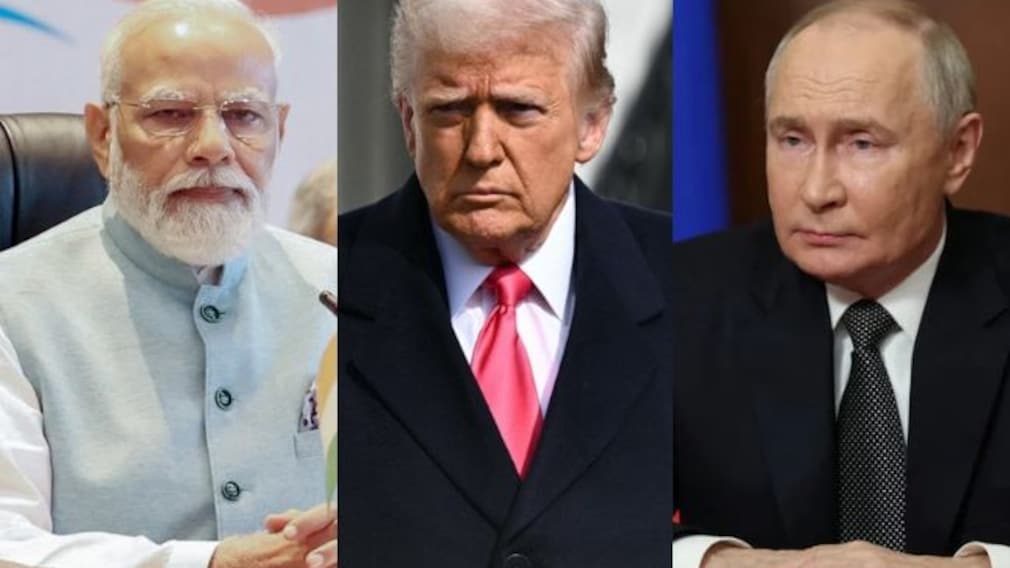
US President Donald Trump has brought India's Russian oil strategy under new pressure. Trump announced a 25 per cent tariff on Indian goods, coupled with a "penalty" for India's continued purchase of Russian oil.
"India will therefore be paying a tariff of 25 per cent, plus a penalty," Trump posted on social media, adding that India was Russia's "largest buyer of energy along with China." He further threatened sanctions on all Russian oil buyers unless Moscow agreed to a peace deal in Ukraine within 50 days.
Domestic Considerations
India consumes roughly 5.2 million barrels of oil per day, importing close to 85 per cent of its requirement. That figure has only risen. The country's dependence on imports began at Independence, when it produced just 0.25 million metric tons of crude. Despite promising discoveries like Bombay High Field in 1974 -- again an Indo-Soviet find in 1964-67 -- domestic output has not kept pace with demand.
New Delhi has stood its ground throughout the Ukraine war, maintaining a "neutral" diplomatic posture. Petroleum and Natural Gas Minister Hardeep Singh Puri has consistently argued that Indian purchases have prevented a global price surge. "Had India not bought Russian oil," he remarked in April 2024, "prices would have gone through the roof.
According to the Ministry of Commerce, India's crude oil import bill from Russia rose from under $2.5 billion in FY 2021-22 to over $31 billion in FY 2022-23. That figure jumped again in FY 2023-24 to over $140 billion.
-
Opinion | Trump's Favourite Field Marshal: How Munir Became The President's Best Man

Pakistan and the United States are not obvious analogues. And yet, their respective leaders have made a comparison inevitable today.
-
A Missile On One Soldier's Shoulder Could Ground The US Air War In Iran
Iran shot down US jets while China denied arming Tehran. But reports of a Chinese spy satellite being used by Iran, the viral F-35 tutorial from a Chinese engineer, and now 1,000+ MANPADs reportedly on their way to the war suggests otherwise.
-
Opinion | Amid Trump's War On The World, How Effective Really Is India's Strategic Autonomy?
India cannot mechanistically base its positions on preferred international norms, unmindful of its own direct interests.
-
Opinion | In Stalin's Tamil Nadu vs Delhi Pitch, Flashbacks From A 2014 Jayalalithaa Episode
In 2014, Jayalalithaa had posed the question to the Tamil Nadu electorate,"Gujarat Modiyaa Tamil Nadu odu intha ladyaa"(Gujarat's Modi or this lady of Tamil Nadu), and tasted electoral success, winning 37 of the 39 seats in the state.
-
'Help', Said Trump In Iran. Why US' European Allies Hesitated, Walked Away
47 days into the war, Europe has rejected Trump's attacks on Iran on the back of $25B Hormuz blockade shock that spiked inflation to 2.5% and prompted 59% of EU voters to call the strikes illegal (71% Spain), while Trump's Pope spat draws ire from Italy.
-
Assassination That Took 20 Years: Spies, Missed Chances, Then A Final Moment
Before Osama bin Laden became the global face of transnational terrorism, there was another figure-more elusive, less theatrical, but arguably more influential in the evolution of modern guerrilla warfare. He was Imad Mughniyeh.
-
The Malacca Gambit: How China Oil-Choke Strategy Could Backfire On Trump
US President Donald Trump seems to be weaponising oil chokepoints - Venezuela, Hormuz, and Malacca - to pressure China, but Beijing's pipelines, reserves, and shadow fleets mean the real test is which side dares escalate further.
-
Opinion | 38% vs 18%: How Bengal Exposes The Biggest Irony Of Women's Reservation
Bengal with its duality - 38% women in Parliament versus 18% in the state contest - captures the core tension of the Bill better than any other example.
-
Opinion | Mines, Submarines, Drones: Why World's Mightiest Navy Won't Get Too Close To Hormuz
Iran is relying on the symmetric advantage of geography to fight against the brute power of the world's largest and most powerful navy, the US.
-
'Tawakkul al-Allah': Meet Sheikh Moussa, The Man Israel Can't Move
Sheikh Moussa refuses to leave his family home in Beirut's Dahieh despite decades of Israeli missile strikes. His faith - tawakkul al-Allah - keeps him rooted amid rubble, memories, and a doctrine designed to break Israel's rivals.