Dagger To Chicken's Neck? Why Bangladesh Leader's Remarks Enraged India
The Chicken's Neck, also known as the Siliguri corridor, is a narrow strip of land in West Bengal's Siliguri that connects India's Northeast with the rest of the country

Bangladesh leader Muhammad Yunus' remarks on the landlocked nature of India's Northeastern states and the sharp response from the region's leaders have again put the vital Chicken's Neck corridor under the spotlight. This narrow strip, which connects the Northeastern states with the rest of the country, assumes great significance amid Delhi's tense ties with Beijing in the aftermath of the Doklam face-off. Frosty relations with Bangladesh after the ouster of the Sheikh Hasina regime added a new dimension to the geopolitics surrounding the Chicken's Neck and India's need to ensure its security.
What Is The Chicken's Neck
The Chicken's Neck, also known as the Siliguri corridor, is a narrow strip of land in West Bengal's Siliguri that connects India's Northeast with the rest of the country. All land transport to the Northeast, whether through road or rail, must pass through this corridor. At its narrowest, the corridor is just about 20 km wide. Called Chicken Neck because of its geographical shape, this strip has Nepal and Bhutan to its north and Bangladesh to its south. Any blockage on this route will effectively cut off the Northeast from the rest of India.

The 1962 War And A Rude Shock
In the 1962 war, China did not directly attack the Chicken's Neck, but the rapid advance of its forces exposed the vulnerability of this key stretch. Defence strategists have since pointed to a scenario in which a Chinese advance could effectively 'choke' the Chicken's Neck and isolate the Northeast from India. This has prompted the Indian government to deploy more forces there, including Border Security Force, Sashastra Seema Bal, and Indo-Tibetan Border Police.
The Doklam Scare
Chicken Neck fears returned to haunt India in 2017 when China started constructing a road at Doklam, which is at the centre of a territorial dispute between China and Bhutan. When China tried to expand the road, India objected because the extension would give Beijing a geographical advantage and make Chicken's Neck vulnerable. India's opposition led to a standoff between Indian and Chinese forces. The road construction was eventually halted during a disengagement exercise.

The Bangladesh Question
The ouster of the Sheikh Hasina government in Bangladesh after a nationwide movement last year brought an interim government led by Nobel laureate Muhammad Yunus to power. India has had a longstanding friendly relationship with Dhaka due to Delhi's role in the Bangladesh Liberation War. But the change of guard in Bangladesh has seen a shift in bilateral ties. India has expressed concerns over reports of attacks on minorities and received stern responses. The new regime has also reached out strongly to China, and India has watched cautiously. The changing dynamics between Delhi and Dhaka could prove critical in India's plans concerning the Chicken's Neck.
What Muhammad Yunus Said
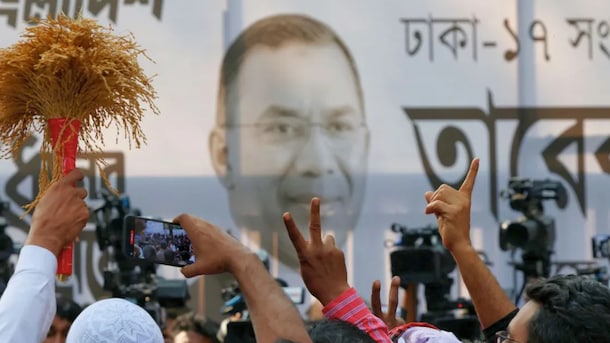
The chief advisor to Bangladesh's interim government, Mr Yunus recently visited China and met Chinese President Xi Jinping. A video of his remarks, apparently made during his China trip, has sparked uproar in India. "The seven states of India, the eastern part of India, are called the seven sisters. They are a landlocked region of India. They have no way to reach out to the ocean," he is heard saying. He says Bangladesh is the "guardian of the ocean" for the region. "This opens up a huge possibility. This could be an extension for the Chinese economy," he said.

How India Leaders Reacted
The Bangladesh leader's remarks have drawn a sharp backlash. Assam Chief Minister Sarma has said it is now imperative to develop more robust rail and road networks connecting the Northeast to the rest of the country. "This remark underscores the persistent vulnerability narrative associated with India's strategic 'Chicken's Neck' corridor."
Senior Congress leader Pawan Khera said Bangladesh was inviting China for a siege of India. "The Bangladesh government's approach is very dangerous for the safety of our Northeast. Our foreign policy is in such a deplorable state that the country, for whose creation we played a major role, is now busy trying to surround us," he said, targeting the ruling BJP.
-
Mayawati's Tough Love: Nephew Akash Anand Benched Again. What It Means For BSP

Akash Anand, the 31-year-old foreign-educated nephew of BSP boss Mayawati, finds himself out of favour, for at least the third time in three years, with the latest turn coming in Lucknow on September 3.
-
Blog | Why You Should Care Whether Schrodinger's Cat Is Dead Or Alive
Imagine going on a romantic Alpine getaway and returning with the equation that runs the modern world. The only snag: nobody can quite agree on what it says about reality.
-
Promote, Punish, Repeat: Decoding Mayawati's Akash Anand Puzzle
The development in the BSP is unprecedented. Never before has any Indian party elevated a family member and dumped him or her unceremoniously thrice within a span of three years.
-
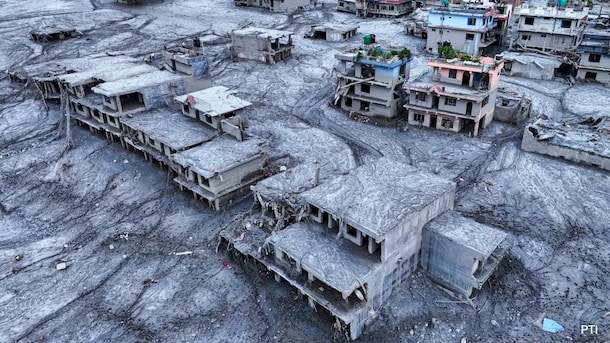
Opinion | Nepal Needs $5 Billion To Rebuild. World's Climate Fund Doesn't Have Even 10% Of It
The fund caps support at USD 20 million per project; Nepal needs two hundred times that. And the board is not scheduled to sit until December.
-
Opinion | The Rise Of Indians In US Is Making Some Americans Very, Very Angry
A new report released yesterday shows how Indians are now among the biggest targets of racist attacks in America.
-
Opinion | China, Pak, A Stalled India Visit: How Signals From Bangladesh Are Getting Louder
A fighter jet deal with China, interest in Pakistan's military bloc, and a 'stalled' visit to India - all in a month. Bangladesh's drift is getting harder to ignore.
-
Opinion | Indus Treaty, Hague, And Pakistan's Endless Search For Leverage Over India
If the IWT survived all the trials in the past, it is because India's threshold of tolerance had been unusually high. But Pakistan must know that it can't arm-twist India through international pressure.
-
Opinion | Nepal's 'Climate Compensation' Pitch Is Valid, But Its Demand From India Isn't
Nepal's vulnerability gives it a claim on multilateral climate finance. It does not follow that India bears responsibility for this.
-
Opinion | India Wants A 6th-Generation Fighter. But A Lot Could Go Wrong
India might just be building too many fighter jets to focus on any one of them well. A recalculcation is needed.
-
Reporter's Diary | Worse Than War: An Aerial View Of Nepal's Trishuli River Valley Tragedy
In many ways, reporting on natural disasters is far more harrowing than covering modern war