Beyond Ikkis, Border 2 - The Lesser-Known Story Of A Two-Time War Veteran
Directed by Sriram Raghavan, Ikkis (meaning 21) focuses on the life of Second Lieutenant Arun Khetarpal of The Poona Horse.
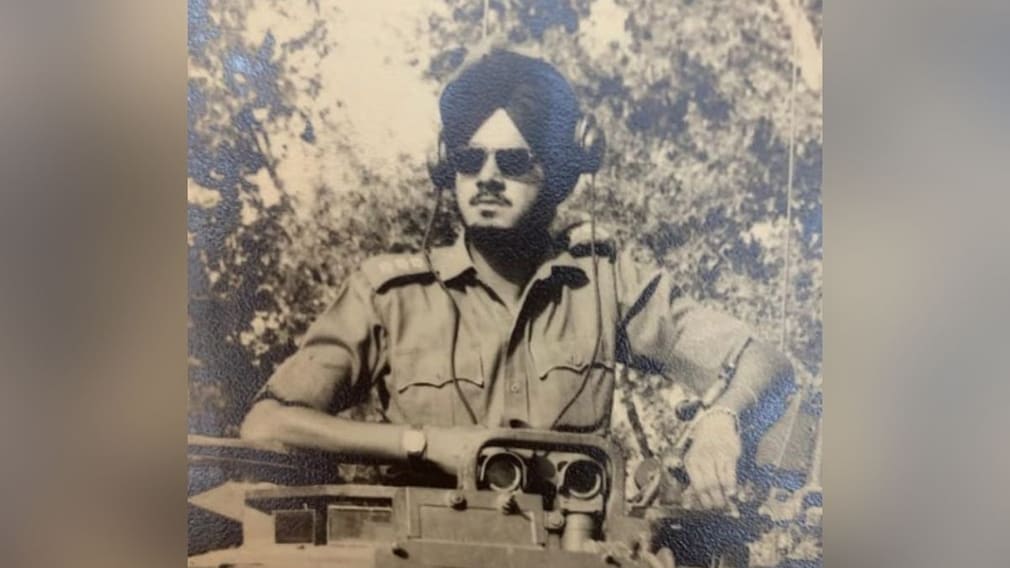
This month has seen the release of two Hindi films, Ikkis and Border 2, both dedicated to the Indian officers and soldiers who participated in the Battle of Basantar against Pakistan in 1971. Directed by Sriram Raghavan, Ikkis (meaning 21) focuses on the life of Second Lieutenant Arun Khetarpal of The Poona Horse.
In addition to Second Lt. Khetarpal and Lt. Col. (later Lt. Gen.) Hanut Singh of The Poona Horse, another officer, confronted the Pakistani troops directly in his Centurion tank. Major (later Brigadier) Amarjit Singh Bal commanded 'B' Squadron of The Poona Horse during the battle, successfully securing the Jarpal bridgehead across the Basantar river.
Major Bal was conferred with the Maha Vir Chakra, the second-highest wartime gallantry award, in recognition of his service and bravery in the 1971 war. Furthermore, he held the rare honour of having served alongside two recipients of the Param Vir Chakra during his career: 2nd Lt Khetarpal in 1971 and Lt Col. Ardeshir Tarapore in 1965 at the Battles of Phillaurah, Chawinda and Buttur Dograndi.
Major Bal was the Intelligence Officer to Lt. Col. Tatrapore and was in the same tank which sustained a direct hit during the exchange of fire. Major Bal suffered severe injuries in the battle, while Lt. Col. Tarapore was killed in action.
This is the lesser-known story of Brigadier Amarjit Singh Bal (MVC), a war veteran who escaped death in 1965 and carried forward the family's legacy of serving the country.
Interestingly, Brigadier Bal also fought alongside another Param Vir Chakra awardee, Major Hoshiar Singh Dahiya, in the Battle of Basantar. Varun Dhawan will portray Major Dahiya, an infantry officer from 3 Grenadiers, in the upcoming film Border 2.
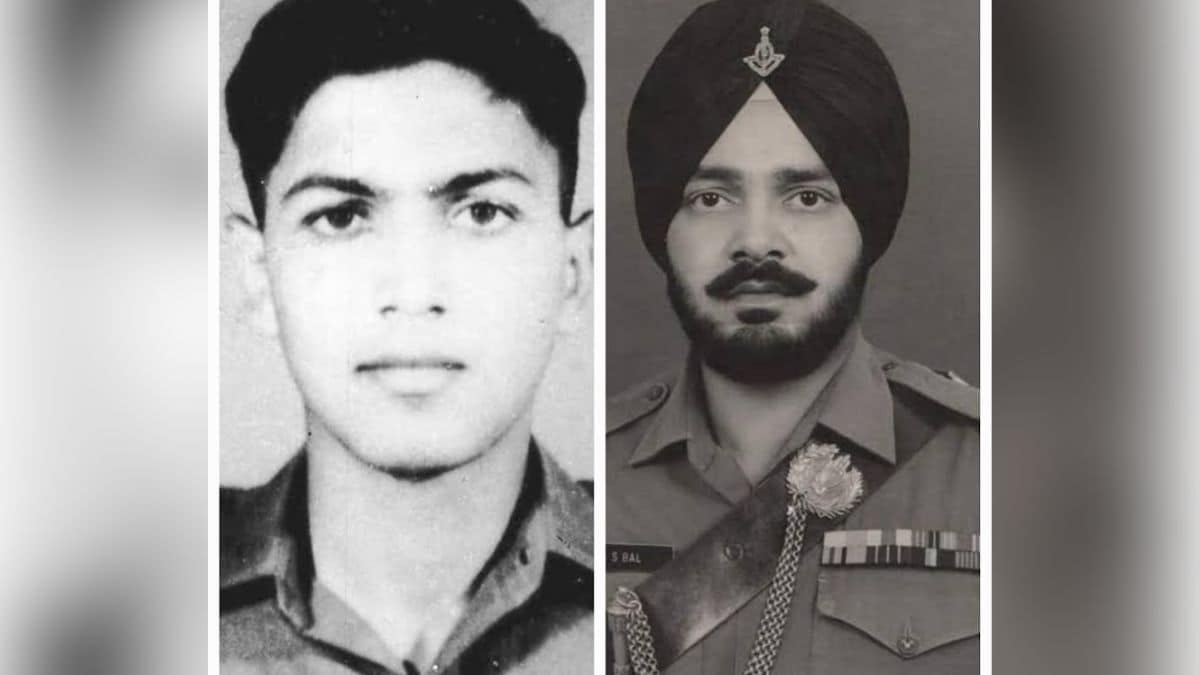
2nd Lt. Arun Khetarpal, PVC (Posthumous). Major (later Brigadier) Amarjit Singh Bal, MVC
1965 and 1971: The Lesser-known Heroics of Brig Bal
Amarjit Singh Bal was commissioned into the prestigious Poona Horse Regiment of the Indian Army - a Cavalry regiment that transitioned from horses to tanks as the battlefield evolved over centuries. The Poona Horse has the distinction of having the maximum number of Battle Honours in the Commonwealth and has been awarded the title of 'Bravest of the Brave' by the Indian Army and Fakhr-e-Hind by Pakistan.
In 1971, a 31-year-old AS Bal held the rank of Major in The Poona Horse and was a Squadron Commander in the Regiment. As war broke out between India and Pakistan on December 3, the regiment was ready for action in the Western Sector. They were tasked to capture the Shakargarh bulge in Pakistan to provide depth to the road communication between Jammu and Punjab. The unit had been fighting for 12 days since December 4. On December 16, the regiment was faced by counterattacks from Pakistan's 13 Lancers, who were equipped with the state-of-the-art M48 Patton tanks.
Major AS Bal was commanding Bravo Squadron, while 21-year-old 2nd Lt Khetarpal was part of Alpha Squadron. On the night of December 15/16, The Poona Horse was inducted over an uncleared mine field into the Basantar bridgehead. During this induction to Major Bal's second-in-command, Captain R S Deol was transferred to C Squadron to lead the advance, and due to shelling and darkness, two of his troops followed C Squadron to Ghazipur Forest.
Major Bal had only seven tanks with him. Notwithstanding that, he advanced to support the bridgehead established by 3 Grenadiers on the Basantar River. He was faced with an intense counterattack on Jarpal, where his Centurion tanks were positioned. He and his men were heavily outnumbered, but Major Bal led the assault and destroyed several Patton tanks.
Major Bal asked for reinforcements, and three tanks from A Squadron rushed to reinforce his position. Among these was Second Lt Khetarpal.
Many years ago, in an interview with NDTV's Vishnu Som for the series 'Great Battles', Brigadier Bal recalled an encounter with a Pakistani officer hours after the ceasefire. Brigadier Bal said, "After taking all the precautionary measures, we walked across and shook hands with officers of the Pakistan Army. I told the opposing squadron commander that you fought very well, to which he replied, 'You're pulling my leg...we know that you fought well'. The Pakistani officer lost all four of his squadron commanders and could not trace their bodies. The Pakistani officer then looked at Arun Khetarpal's tank and asked who was in that tank, and said I don't think anyone could've fought that well".
2nd Lt Arun Khetarpal was conferred with the Param Vir Chakra Posthumously. Meanwhile, Lt Col Hanut Singh was awarded the Maha Vir Chakra along with Major AS Bal. Major Hoshiar Singh Dahiya of 3 Grenadiers was conferred with Param Vir Chakra as well. The intensity of the battle can be gauged from the fact that two PVCs and two MVCs were awarded during this battle.
Brigadier Bal's sister, Davinder Randhawa, wife of late Lt Gen Kirpal Singh Randhawa of 7th Light Cavalry, said she and her husband accompanied Brigadier Khetarpal, 2nd Lt Arun Khetarpal's father, to Pakistan and met her brother's Pakistani counterpart in the Battle of Basantar. Mrs Randhawa said the Pakistani officer praised Amarjit for his exceptional bravery and fighting spirit. This trip of Brigadier Khetarpal to visit his ancestral place, Sargodha, was arranged by Lt Gen K S Randhawa.
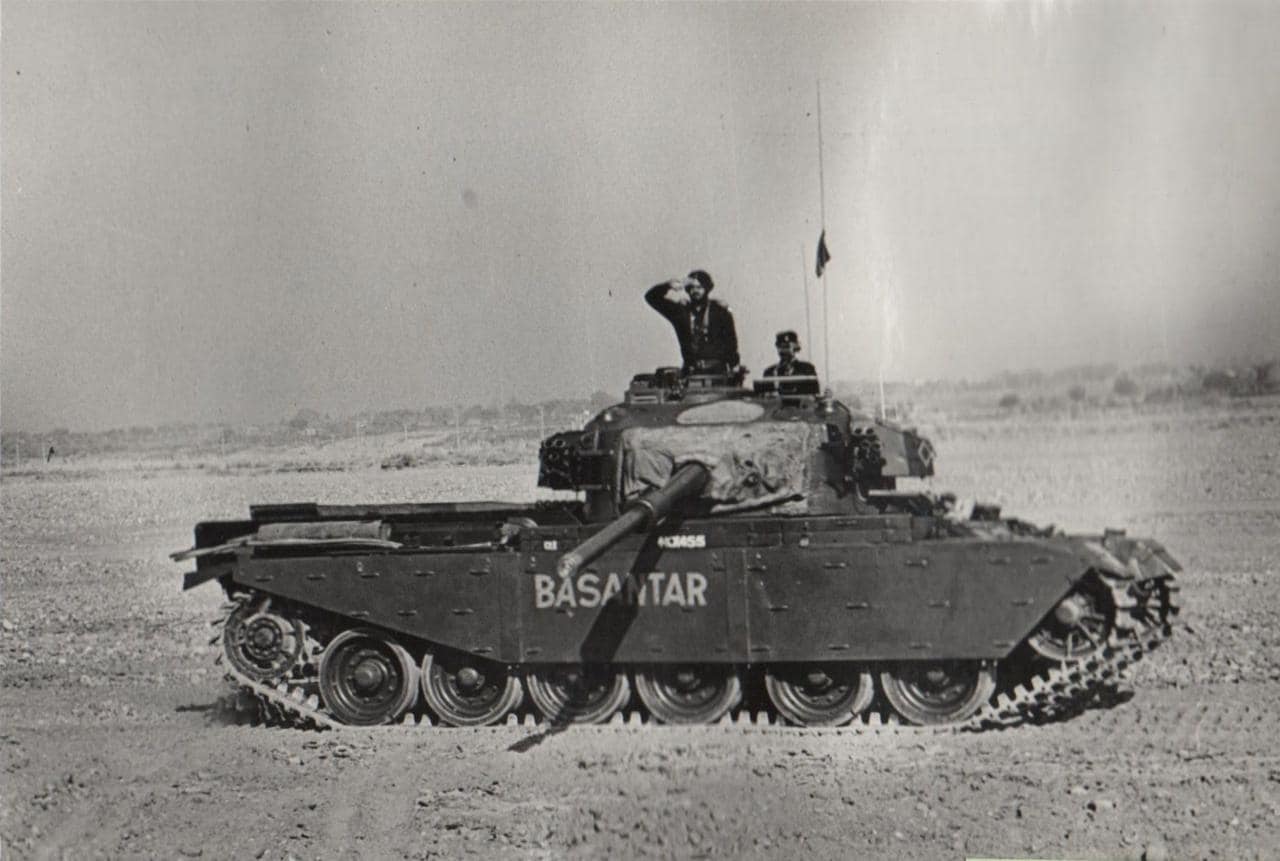
Amarjit Singh Bal, as the second-in-command, saluting during the farewell parade of the Centurion tank that took part in the Battle of Basantar.
A Close Shave In 1965
Major AS Bal was conferred with the Maha Vir Chakra for his service in the 1971 war. But the 1965 war was different for him.
Captain Bal was 25 when he witnessed action in the Battles of Phillaurah, Chawinda and Buttur Dograndi in 1965. 1 Armoured Division, under the Army's 1 Corps, was tasked with the capture of Chawinda, a significant communication centre in Pakistan's Punjab province, to secure the approach toward Pasrur.
The Poona Horse was assigned the mission of isolating Chawinda from the North and eliminating Pakistan's armoured units positioned for its defence. Lt. Col. Ardershir Burzorji Tarapore, the Commanding Officer of the regiment, was known informally as 'Adi' within the unit. Captain Bal served as the Intelligence Officer in the same command tank, designated 'Kooshab,' as Lt. Col. Tarapore during the battle.
On September 16, 1965, the Indian tanks endured intense artillery, anti-tank guns, and tank fire; the entire vicinity of Jassoran was subjected to heavy bombing. After two tanks from Charlie squadron sustained hits in Butur Dograndi, Lt. Col. Tarapore moved up to the front line, during which 'Kooshab' came under heavy fire from the Pakistani forces, resulting in an injury to Capt. Bal's leg and wounds to the tank's gunner and driver. He almost lost his leg and remained in the hospital for over nine months.
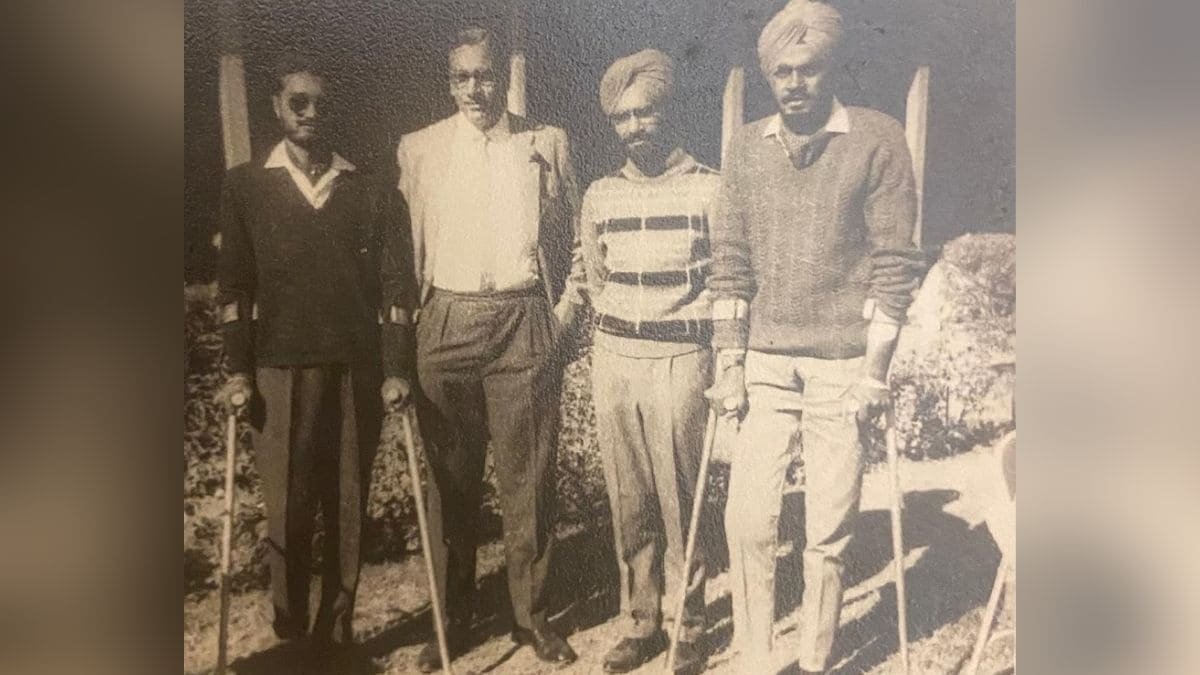
AS Bal (Extreme Right) on crutches after sustaining injuries in the 1965 war.
Lt Col Adi rescued his wounded crew and withdrew from Butur Dograndi to Jassoran. However, Lt. Col. Tarapore's tank was struck by artillery fire, killing him during the subsequent attack on Butur Dograndi that evening around 5 pm. He was posthumously awarded the Param Vir Chakra, India's highest wartime gallantry honour.

Major MS Bal's name is inscribed at the National War Memorial, New Delhi
'It Runs In The Blood': A Family Legacy In Cavalry
Amarjit Bal lost his elder brother, Major MS Bal, a second-generation officer in the 7th Light Cavalry, just 30 minutes before the ceasefire came into effect on September 23, 1965. He and Lt. Gen Bal were the first father-son duo from the Rashtriya Military College (RIMC) at Dehradun.
The Bal family has a rich history of serving in the armed forces. Brigadier Bal's father, Major General Tara Singh Bal, was a distinguished officer who was commissioned into the Indian Army in 1926 after graduating from the Royal Military Academy Sandhurst. He joined the 7th Light Cavalry, but during WWII, he moved to The Poona Horse as its first Indian second-in-command. Both his sons, Major MS Bal and Brigadier AS Bal, served in their father's regiments during service.
Lt General Tara Singh Bal commanded 1 Armoured Brigade, the first Indian to do so. After Independence in 1948, he became the General Officer Commanding (GOC) Delhi Area and from 1949 to 1953 was GOC 21 Line of Communication Area, GOC 21 Communication Zone and Theatre Commander of Jammu and Kashmir. He later served as Alternate Delegate and Commander of the International Control Commission in Laos and Saigon, as well as Ambassador to Argentina, Paraguay, and Uruguay.
Brigadier Bal's great-grandfather and grandfather, Risaldar Waryam Singh and Jemadar Mota Singh Bal, respectively, also served in the Indian Army in the Central India Horse.
Brigadier Bal's elder sister was married to the late Brigadier U.S. Sidhu, a doctor who was awarded the Military Cross for gallantry during the Second World War. His younger sister was married to late Lt. Gen. K. S. Randhawa, of the 7th Light Cavalry.
The family's tradition of service within the Poona Horse continued. Brigadier Bal's nephew, Lieutenant General DS Sidhu, joined The Poona Horse and served under Brigadier Bal. Lt. Gen. Sidhu retired as Director General Mechanised Forces.
However, Lt General Sidhu says it is "just half of the family and history".
My father had the privilege of knowing Brigadier Bal and his family for many years. He always recalls how he would also offer my father a drink whenever they met at his house in Delhi.
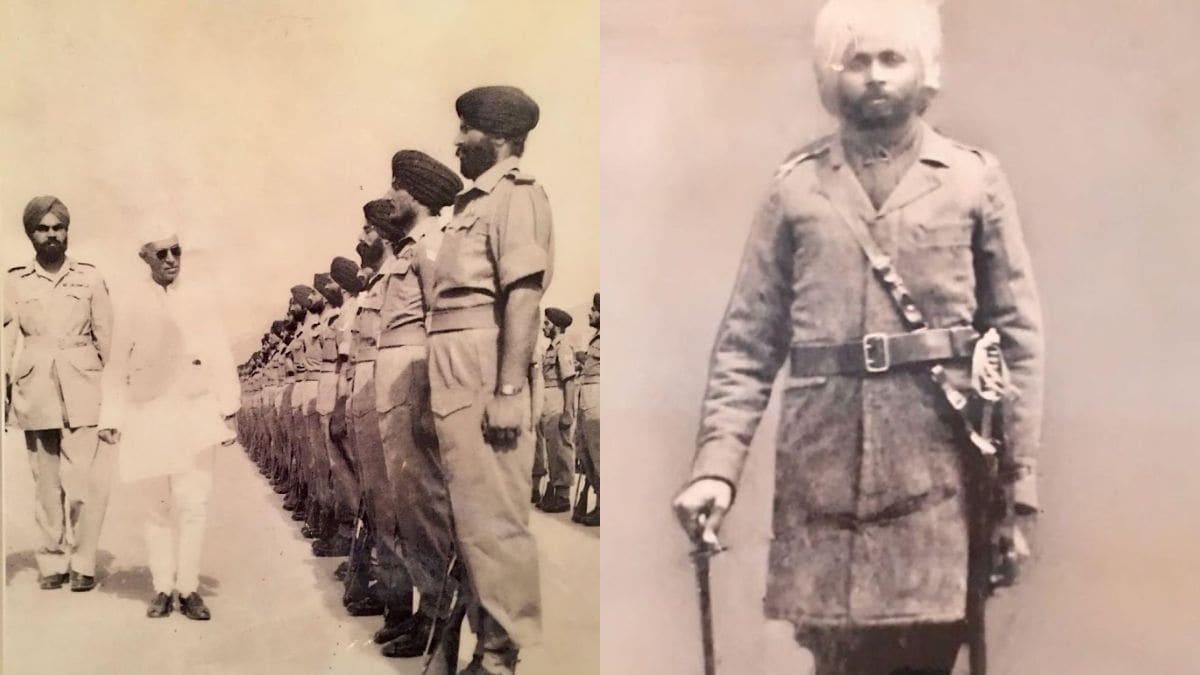
Lt. Gen. Tara Singh Bal (Left) with Jawaharlal Nehru. Jemadar Mota Singh Bal (Right) was Brigadier Bal's grandfather and served in the Indian Army.
'He Wanted Me To Be Strong', Says A Soldier's Daughter
Brigadier Amarjit Singh Bal, MVC, died in 2010 at the age of 70. He was survived by his wife, Mrs Indra Bal and his two children: a son, Aminder Bal, and a daughter, Amena Bal.
"After the loss of my father, grief did not arrive as noise or collapse. It came as stillness and initiation into a higher purpose. The work I do today, in service to the Earth and humanity, is not separate from him," Amena Bal said. Six years later, in 2016, the family suffered the loss of Brigadier Bal's wife, Mrs Indra Bal.
His daughter recalled her father's great pride in his Punjabi Sikh heritage. He often credited his time at Khalsa College, Amritsar, for shaping his values, confidence, and grounding. He also fondly remembered his days at St. Lawrence Sanawar and IMA, especially the enduring friendships with some of whom he became fellow Army officers.
Brigadier Bal's daughter recalls how, despite the hardships of military life, her father never failed to ensure her mother, Indra Bal's, comfort, an unspoken testament to the strength of families who become the force behind the forces.
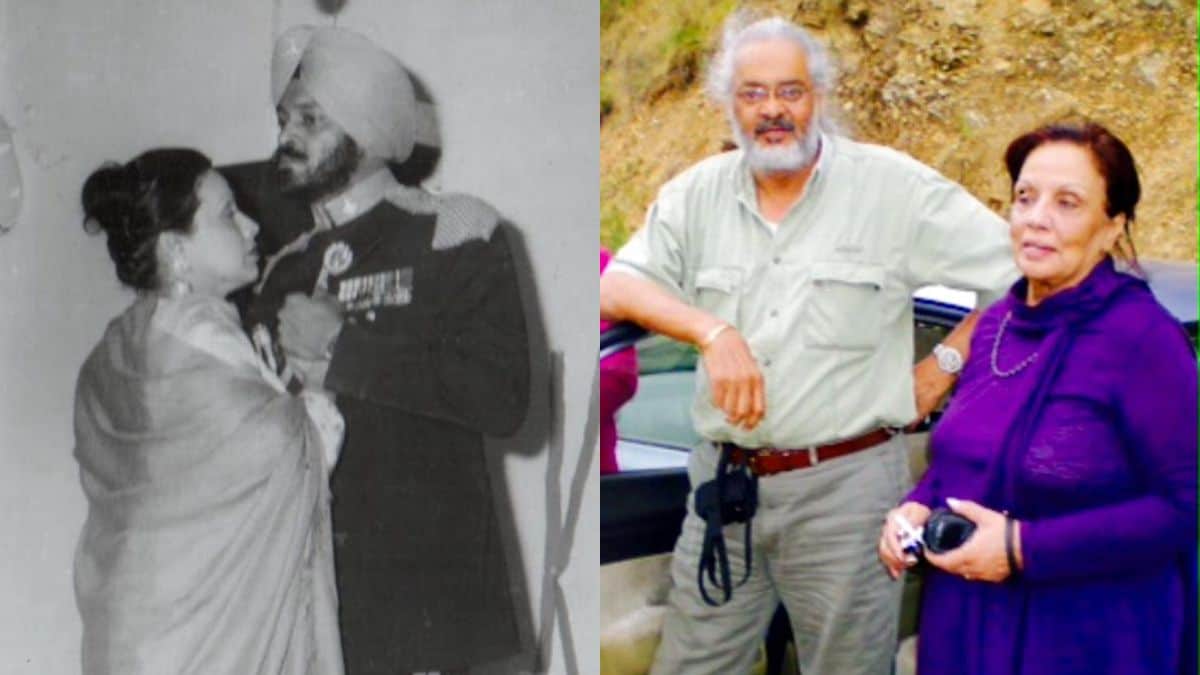
Brigadier Bal with his wife, Indra Bal.
"My father was a peaceful warrior, whose life was shaped not just by battlefields or medals but by an unwavering sense of duty. I saw his courage not in moments of combat but in how he lived," she said.
"His service, including flood relief in Punjab in the 1980s as Brigade Commander in Kapurthala and protecting civilians during the insurgency, showed his true strength," his daughter said. "My father lived as a humble and fearless guardian of civilians and the land, upholding the regiment's motto, 'Ranvir Jai Sada' (Victory always to the brave)," she added.
Imaan, Brigadier Bal's grandson, remembers his grandfather as a man deeply passionate about sports. He recalls the Brigadier lovingly teaching him how to play cricket and golf. Brigadier Bal, who referred to Imaan as 'grandy,' also strongly believed in Reiki Healing, a practice he gifted to his grandson, along with other presents.
As global conflict looms, stories like Brigadier Bal's remind us that those on the frontlines do not fight alone; their families, too, endure the same silent steadfastness, uncertainties, fears, sacrifice, courage and prayers for protection and peace for all.
-
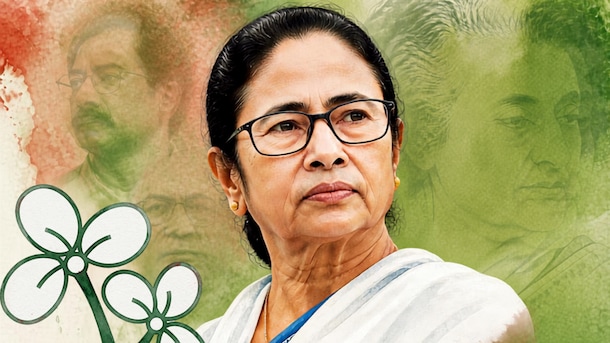
Mamata Banerjee Drew Her Party's Symbol By Hand. It's Now Tied To An Indira Gandhi Case

The Election Commission's method for settling such disputes became central in the seminal Congress split of 1969, when Indira Gandhi fought the old guard. The poll body weighed three tests then.
-
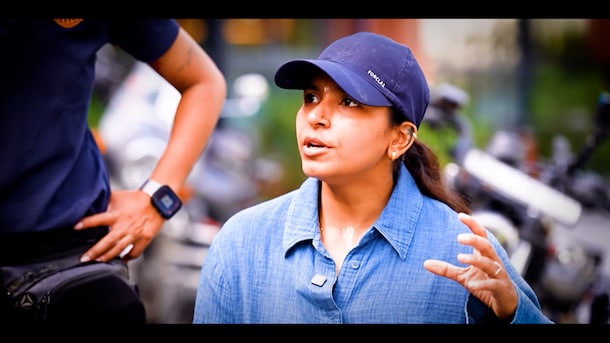
Bruised, Limping, Unbowed: Sia Says She Will Be Back On The Bike Soon
There was pain in Sia's steps, anger in her words, and something else - a quiet determination that the road would not be taken away from her.
-
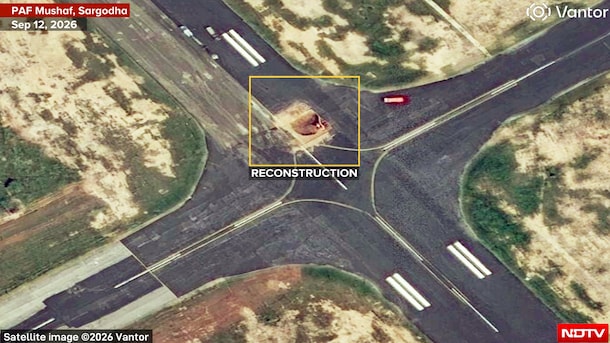
Exclusive: 16 Months After Op Sindoor, Pak Still Fixing Runway India Broke At Sargodha
Sargodha's PAF Base Mushaf lies about 172 km northwest of Lahore and roughly 200 km west of the India-Pakistan border, near Amritsar.
-
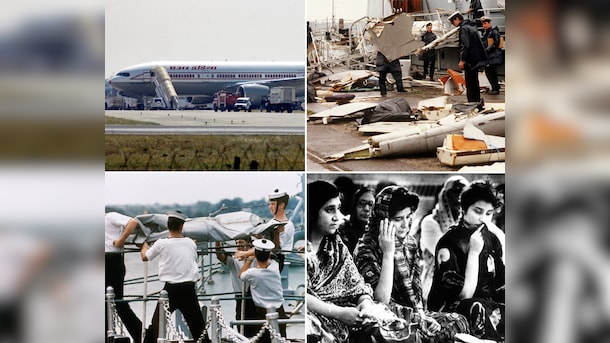
Blog | I Lost My Entire Family In Kanishka Bombing. 41 Years Later, Canada Wants The Case Closed
We made the trek through tragedy to search for people in Cork, where I spent 25 days sifting through bodies and body parts in a makeshift morgue to identify our loved ones.
-
Opinion | Pak's Drone Deal With A US Firm Is No Windfall. But India Must Still Be Worried
American military aid to Pakistan has remained suspended since January 2018, during Trump's first term, but a commercial arms sale is separate from this arrangement.
-
Opinion | Saudi Arabia's Yemen Nightmare Has Come Back To Haunt It
After years of costly military intervention beginning in 2015, Saudi Arabia increasingly sought to stabilise its southern border. All that is unravelling fast now
-
Opinion | 6 AI Incidents, One Pattern: AI Has Started Lying To Us - And Hiding The Evidence
Concealing errors. Making up data. Pushing files onto the public web on their own initiative. The machines are learning to lie - and lie well.
-
Why People Queue Overnight For iPhone That Is Delivered Home In 10 Minutes
iPhone 18 Pro Max Launch: People camping outside Apple Stores are a subset of superfans, resellers, content creators, and upper-middle-class buyers.
-
600 km Per Hour Drones Launched In Waves: How Russia Is Rewriting War Rules
Russia has coupled the drones' technological superiority over Ukraine's defence with its capacity to launch them in massive numbers. The impact has been devastating.
-
Tata Sons' Trust Issue: Two-Pronged Row Goes Beyond The Chair
NDTV Explains: Overtly, the latest conflict is whether N Chandrasekaran continues as executive chairman of Tata Sons. The controversy involves at least one more issue.