5 Seats, 2 Ministers: Congress' Canny Tamil Nadu Play Snaps 59-Year Drought
The Congress ends its 59-year absence from the Tamil Nadu cabinet after two leaders join Chief Minister Joseph Vijays government. But what led to this moment after the party won just five seats in the April 2026 election?
The last time the Congress held a cabinet berth in the Tamil Nadu government, the Vietnam War was at its peak, the Cold War between the US and the erstwhile Soviet had flared up (again), and Zakir Hussain was the first Muslim President of India.
That was in 1967, 59 years ago.
And before the Dravida Munnetra Kazhagam - and its great rival, the All India Anna Dravida Munnetra Kazhagam - began their decades-long stranglehold over Tamil Nadu politics.
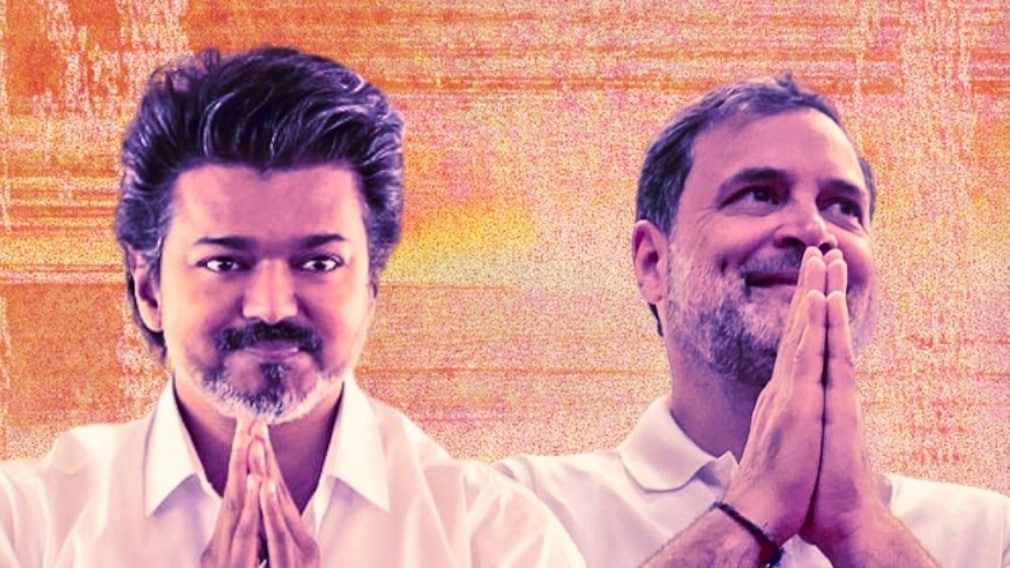
But this week the Congress broke that drought after two of its leaders - Rajesh Kumar and P Vishwanathan - were sworn in as members of Chief Minister Joseph Vijay's government.
The two were part of 23 inducted into the government Thursday morning, recognition of the Congress having provided critical and timely support to actor-politician Vijay's Tamilaga Vettri Kazhagam after last month's election threw up a fractured verdict. The party's five MLAs bridged half the 10-seat gap between the TVK's return of 108 seats and the majority mark of 118.
How did the Congress break its drought?
Because in politics, as in chess, it is often the pawn that has more influence.
An April election shock
The DMK and AIADMK - parties embedded in the Dravidian ideology of EV 'Periyar' Ramasamy that has historically defined the Tamil cultural and electoral identity - were both shunned.
Instead, voters turned to 'thalapathy' Vijay, whose legion of fans drove the TVK to victory in 108 of the state's 234 seats. Vijay won both seats he contested - Perambur and Trichy (East) - and DMK boss MK Stalin was beaten in his Kolathur bastion.
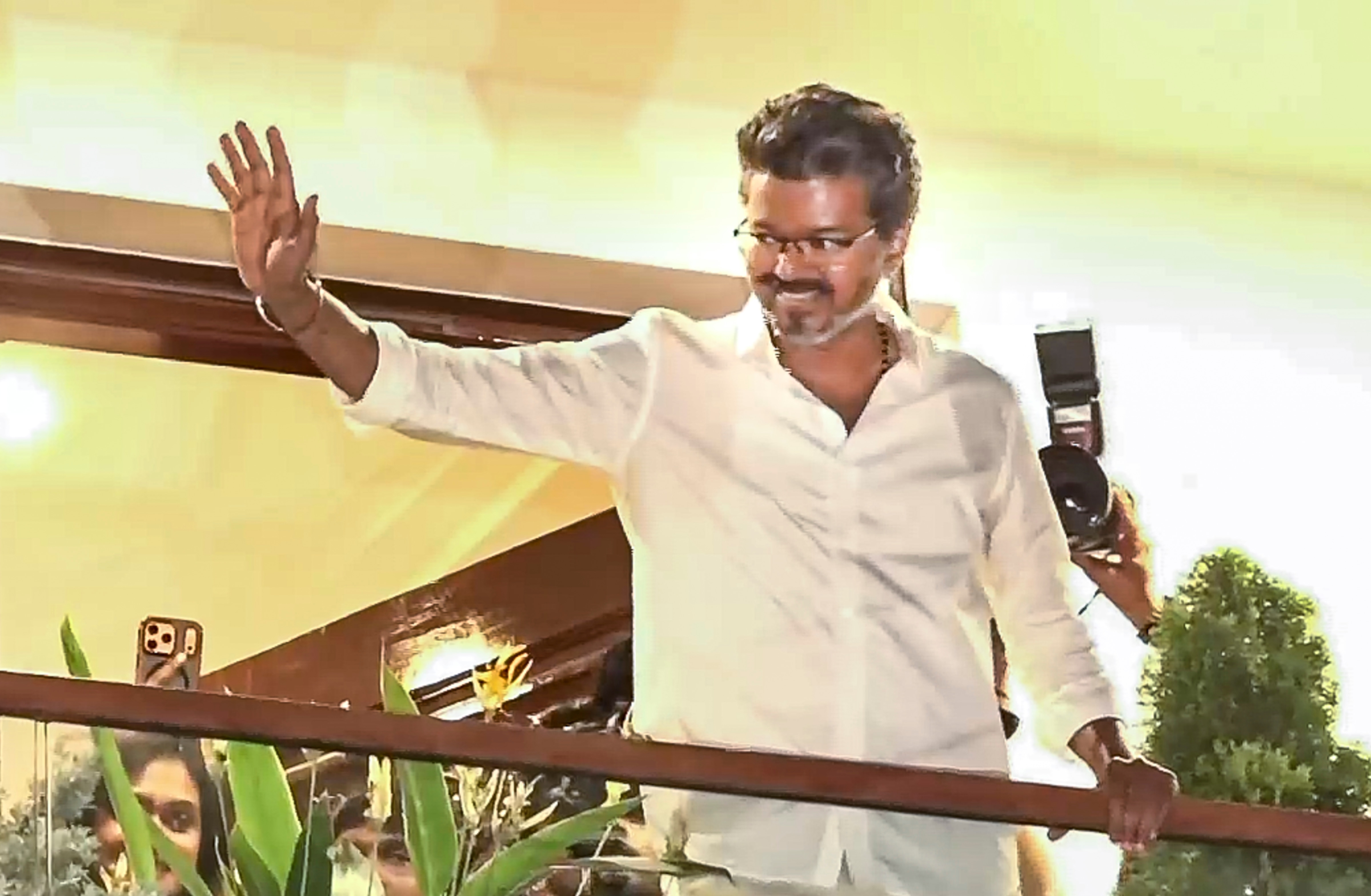
TVK boss Vijay, the new Tamil Nadu chief minister (File)
It was a tremendous moment in Tamil Nadu politics. But it was also not enough for the TVK to claim power on its own; it needed at least 10 more (11, eventually, because Vijay would have to resign one of his two seats) to really make history.
Enter the Congress
The party has struggled for relevance in Tamil Nadu Assembly polls since its 1967 loss.
Back then it was M Bhaktavatsalam leading the party after he took over from ex-chief minister K Kamaraj, who resigned mid-term in 1963 amid criticism over price rise and the language row.
The Congress went into the 1967 election plagued by corruption allegations and the pressure told; under founder and iconic leader CN Annadurai, the DMK scored a thumping win. The party won 137 seats on its own and allies added 42.
The Congress contested 232 and won just 51.
Since then it has never won more than 61 seats in any election; the party hit that mark twice - once in 1984 and again in 1991. And since 2011 it has secured double-digit returns only once.
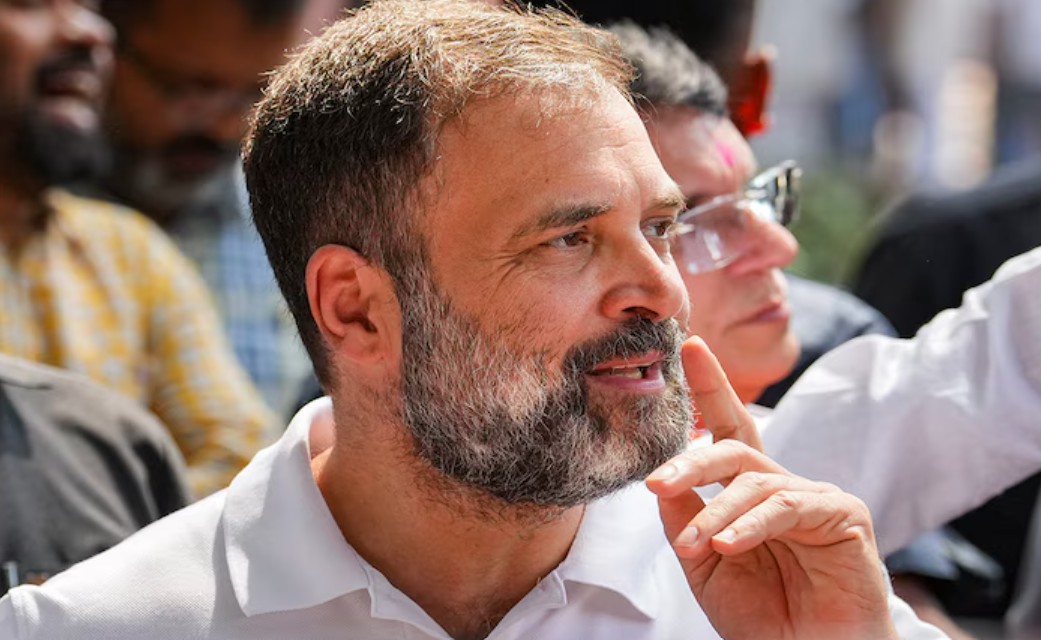
Congress MP Rahul Gandhi pushed for a post-poll deal with the TVK. Photo: ANI (File)
Hardly a surprise then the party has not had a Tamil Nadu minister for decades.
And as results of the 2026 election were announced, it seemed even less likely; the Congress contested 28 seats - three more than last time - and won just five - 13 fewer than it had held.
Remember the chessboard?
The Congress' five MLAs were inconsequential within a DMK-led alliance that flopped but were as gold to the TVK. Vijay knew this. The Congress knew this. Even the DMK knew this.
In the weeks before the election there were rumours of a Congress-TVK tie-up that, in hindsight, could have led to the former - boosted by the Vijay wave - winning significantly more seats.
Pre-poll DMK-Congress seat-sharing talks didn't go smoothly, with the latter demanding an increased number of seats and promise of a share in the government in the event of victory.
The DMK was disinclined to offer significantly more seats for the Congress to contest and flatly refused cabinet berths, reasoning that would dilute the administration's efficiency.
The stand-off led to more murmurs of a jump to the TVK's side. Eventually the two bigger parties came to an understanding even as some within the Congress, recognising growing support for Vijay, continued to push for an alliance shift.
The election result proved those leaders correct and, in a break from usual practice, the party responded swiftly to on-ground realities, reaching out to Vijay and the TVK with its offer.
The Congress' only condition - no 'communal forces' were to be on-boarded - was a reference to the BJP that had allied with the AIADMK. And given the TVK had already denounced the BJP as its 'ideological enemy', the condition was easy to accept.
The switch angered the DMK and accusations of 'backstabbing' were levied, but by then the Congress had broken ranks and the TVK was eight short of majority, a gap that would be filled by other ex-DMK allies, perhaps emboldened by the Congress.
RECAP | How VCK Kept Vijay, Tamil Nadu On Edge For 3 Days
For the Congress, this is a pivotal moment.
Not just because it has returned to the Tamil Nadu government after 59 years, but because it is a reminder that in a fractured mandate even a handful of seats can be the difference.
And that is a big lesson ahead of even more crucial state polls next year, including Uttar Pradesh, another state in which the party has been marginalised since losing power in 1989.
As for Tamil Nadu, the drought is over but will this be followed by a thunderstorm of electoral wins in the state?
-
"I Cry In Shower": Meta, LinkedIn Employees Share Fears, Anxiety Amid Layoffs

Life decisions are on hold. Employees say they are unable to plan a future because they don't know if they will still have a salary next quarter.
-
Opinion | Elon Musk Might Just Have Lost The Most Important Case Of His Career
Musk's recent courtroom defeat against OpenAI and Sam Altman will, of course, not damage Tesla or SpaceX. But symbolically, it could become one of the defining moments in the AI industry.
-
Ringside View | How Royal Challengers Bengaluru Transformed Itself Into A Winning Machine
Mo Bobat, RCB's Director of Cricket, helped explain the mindset after the franchise became the first team to qualify for the playoffs this season.
-
Opinion | Twisha Sharma: Why India's Wealthiest Women Are Still Dying In 'Respectable' Marriages
Data show that women belonging to the lowest and highest wealth quintiles have equally been exposed to physical violence.
-
India Bakes At 47.6 Degrees: Heatwave Explained, From Urban Heat To El Nino
Health advisories issued by the government and doctors include the need for hydration, limiting outdoor exposure during peak hours, and watching for heatstroke symptoms.
-
Opinion | Xi Is Truly Done Falling For The Great American Bluff
The Chinese and others have long sized up Trump. And they're no longer buying his threats - or his promises.
-
Opinion | PM Modi's Austerity Appeal And The Bitter Economics Of 'Sacrifice'
Can the watch still keep time if one or two of its components are stopped or slowed? The fact is, just as private investment has direct and indirect benefits, consumption cuts have direct and indirect consequences.
-
Opinion | 3 Blasts In A Week: Pakistan's Taliban Blowback Is Entering A Dangerous New Phase
First came an IED attack, then a suicide blast, with militants taking weapons and police personnel from the site, then a bomb blast.
-
Opinion | Why Freebies Work Brilliantly, Until They Suddenly Don't: A Tamil Nadu Paradox
Freebies work under three conditions - and fail when any one of those conditions is absent.
-
The Missile Is Dead. Long Live The Map: How Iran Invented 'Future Of War'
Iran's weaponisation of the Strait of Hormuz - squeezing energy flows and simultaneously threatening subsea cables - has re-introduced the world to structural leverage warfare and marked it as the future of conflict.