The Making Of Kaho Naa Pyaar Hai: The Film That Created A Superstar Bollywood Wasn't Ready For
We called it 'Hrithik-mania' when Kaho Naa... Pyaar Hai dropped on January 14, 2000. It felt like the world changed overnight
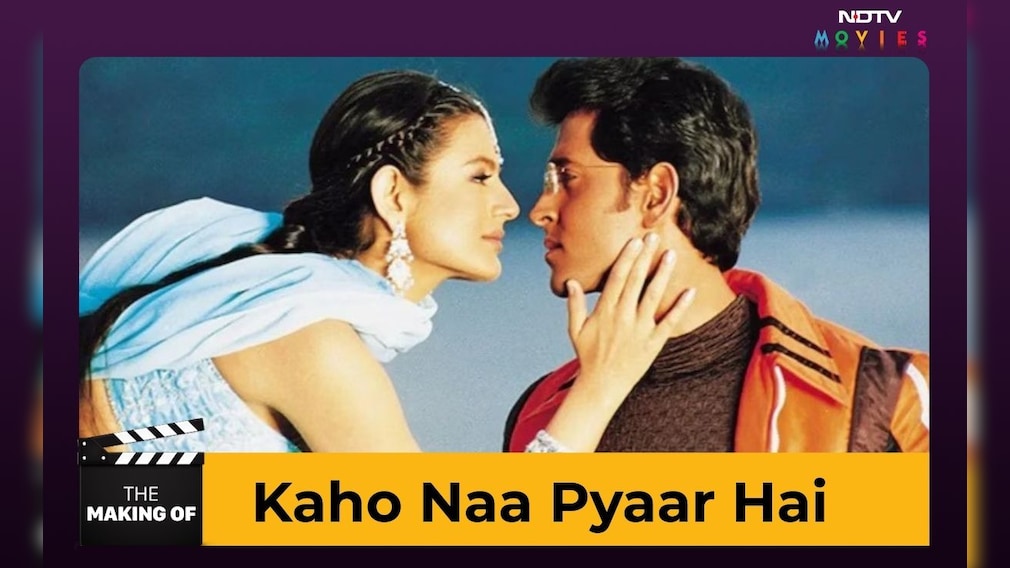
The past year was shaped by massive blockbusters like Chhava, Saiyaara and, later, Dhurandhar, a film whose impact is likely to ripple through Indian cinema for some time. But looking back over the decades, I've learned that true perspective only comes with time. As Bollywood continues to evolve, certain memories stand out more clearly than others. Today, I find myself looking back at one such turning point: Kaho Naa... Pyaar Hai (2000).
In the history of Bollywood, there are hits, there are blockbusters, and then there is Kaho Naa... Pyaar Hai. We called it 'Hrithik-mania' when it dropped on January 14, 2000. It felt like the world changed overnight.
Before I get to the making of the film, one memory stands out: how certain sections of the media seized Hrithik's rise, framing it as a 'Hrithik vs. The Khans' battle that split Bollywood and its fans. For the first time, sharp, uncomfortable lines were being drawn across the industry- along religious and communal identities.
The first film to draw Bollywood's lines between stars and fans
In recent weeks, we have seen endless prime-time debates over Dhurandhar, delving into nationalism and shifting identities. But back in January 2000, we were only in the nascent days of 24-hour news.
The spark was a literal collision. Exactly one week after Kaho Naa... Pyaar Hai released, the reigning superstar Shah Rukh Khan released his first home production, Phir Bhi Dil Hai Hindustani. It bombed. In its wake, 'Hrithik fever' became something far more clinical and calculated.
Film magazines led the charge, running sensational covers with headlines like 'The Khan Era is Over' and 'Hrithik: The New No. 1.' pitting him directly against superstar Shah Rukh Khan. But it quickly moved beyond trade numbers. The narrative took a darker, more divisive turn when the Shiv Sena began celebrating Hrithik, labelling him the "Hindu Superstar." It was a turning point. While this has become a common occurrence in recent years, this was perhaps the first time a hit film was weaponised to fracture the industry.
Recommended


At the time, the media-fueled rivalry even seeped onto the set of Karan Johar's Kabhi Khushi Kabhie Gham (2001). On screen, Shah Rukh and Hrithik were loving brothers; off screen, the tension was unmistakable. In his autobiography An Unsuitable Boy, Johar recalls Hrithik feeling like a 'lost child' as the press cast him as SRK's successor. Projected as SRK's successor by the press, Hrithik struggled with negativity, and Karan had to go out of his way to make him feel included while other senior actors kept their distance.
"You can't suddenly tell me one morning, 'Hey, you're displaced. You're too old"- Shah Rukh Khan
The rivalry moved from the cinema screens to the advertising world. Pepsi, which had SRK as its brand ambassador, mocked the 'Hrithik fever' in a controversial commercial. It featured a Hrithik lookalike wearing the iconic black outfit from Kaho Naa... Pyaar Hai, losing a girl to the 'cooler' Shah Rukh. Hurt, Hrithik fired off a letter to Pepsi, insisting a newcomer needed encouragement, not ridicule. Even his father, Rakesh Roshan, publicly accused Pepsi of targeting his son after losing the bid to sign him.
The man behind the Pepsi ad, Prahlad Kakkar, later admitted, "We showed Hrithik's lookalike losing the girl to Shah Rukh Khan. We even made him look like a dork, with braces. It backfired on us. Hrithik was so popular that we received letters from consumers, criticising us." Many editorials accused Shah Rukh Khan and the soft-drink giant of being 'insecure' and 'petty', suggesting that the ad was a deliberate attempt to mock a young, rising talent.
Years later, Shah Rukh reflected on this phase in Anupama Chopra's book King of Bollywood, calling the media's comparisons "wrong and shameless." "You can't suddenly tell me one morning, 'Hey, you're displaced. You're too old, you're not good enough,'" he said. "I couldn't step outside without someone asking me what I thought of Hrithik Roshan."
The Making Of Kaho Naa... Pyaar Hai
Interestingly, Shah Rukh Khan had starred in Rakesh Roshan's three films prior to Kaho Naa... Pyaar Hai, including the blockbuster Karan Arjun (1995). During the making of that film, Hrithik worked as his father's assistant, learning the ropes by observing stars like Shah Rukh and Salman Khan, who played loving mentors to him on set. After Karan Arjun, Rakesh Roshan's next, Koyla (1997), again starred Shah Rukh, but the film flopped, leaving Roshan at a financial loss.
In fact, Rakesh Roshan was again planning a project with Shah Rukh Khan when a different story idea took hold. This story needed a fresh face. Abandoning his plans for a star-driven film, Roshan decided to take a bold, career-defining gamble: he cast his young son, Hrithik, in the lead
Following Koylaa's failure, everything was on the line for Kaho Naa... Pyaar Hai. Behind the scenes, it was a story of huge risk, casting drama, and a father gambling everything to launch his son. Rakesh Roshan was a seasoned filmmaker, but far from a mogul. He had seen several ups and downs, and for his son's debut, he "bet the house," literally. Years later, Hrithik's sister Sunaina revealed he had mortgaged their family home twice to fund the film and even pledged his cars and office.
Hrithik Roshan's rise to stardom was far from effortless. Quiet, introverted, and struggling with a stammer, Hrithik Roshan threw himself into transformation. Hours of dance rehearsals, acting drills, and voice training. The film gave Hrithik a dual role- the sweet, vulnerable Rohit and the muscular, suave Raj. Rakesh ensured the audience saw the full spectrum of his son's acting, dancing, and action capabilities in a single ticket. To transform his physique, Hrithik even sought help from Salman Khan who trained Hrithik in his personal gym.
The Casting And The Exit Of Kareena Kapoor
Kareena Kapoor was officially signed as the lead actress, and the buzz around the pairing was huge. Kareena had even begun shooting. Rakesh Roshan had built a set at Mumbai's Filmistan Studios and wanted to kick off with a song, but Babita, Kareena's mother, insisted they start with dialogue, claiming her daughter wasn't ready to dance. She also demanded top billing for Kareena. Rakesh felt early interference like this would continue. Just four days before the major schedule, he made the call to part ways.
With a ready set, shooting just four days away and crores at stake, Rakesh Roshan was in a panic. At a wedding, he met his school friend, Amit Patel, who was there with his young, pretty, US-educated daughter, Ameesha Patel. Spotting the innocence needed for the character of Sonia, Rakesh asked if she was interested in films. When Ameesha showed interest, Rakesh told her she had only three days to prepare. Ameesha stayed at the Roshan house for those three days, undergoing a crash course in acting and costume trials before landing on the set.
Rakesh later said he wished Babita wouldn't interfere in her daughter's career. Kareena retorted in an interview that she was glad she left, claiming the film was entirely focused on Hrithik.
The 'Lucky' Notes That Defined A Generation
While Hrithik's debut and Kareena's dramatic exit grabbed headlines, it was the music of Kaho Naa... Pyaar Hai that turned the film into a cultural phenomenon. Rajesh Roshan's soundtrack introduced a new 'vibe' to Bollywood, blending traditional playback with the defining Indipop wave of the 1990s. At the heart of this musical shift was the choice of an 'unconventional' voice: Lucky Ali.
By 1999, Lucky Ali was already an Indipop sensation known for his husky and soulful voice (O Sanam, Sunoh). For the cool and mysterious character of Raj, Rajesh Roshan wanted a sound that didn't sound like the typical Bollywood playback voice. Lucky's voice was fresh, slightly westernised, and possessed a 'wandering-soul' quality that fit the character perfectly. Lucky also had deep family ties to the Roshans. His father, actor-director Mehmood, had given Rajesh his first break as a music director, and young Lucky had once worked as Rajesh's assistant.
The 'Hook Step' That Became A Legend
With unforgettable songs in place, the film's transition from a hit movie to a cultural epidemic was fueled by one specific moment: the signature 'air-pumping' step in "Ek Pal Ka Jeena." Hrithik moved with a precision and fluidity that Bollywood had never seen before.
When the film was released, the reaction was unprecedented. Hrithik Roshan became a national obsession overnight and the blueprint for the modern Bollywood superstar. The film's massive success also drew dark attention. Weeks after release, Rakesh Roshan was shot outside his office for refusing extortion, leaving Hrithik shaken and nearly ready to quit films to protect his family.
On the awards front, the film made history. It became the first film to win both Best Debut and Best Actor for the lead at the Filmfare Awards. It eventually entered the Guinness World Records (2002) and Limca Book of Records for winning the most awards (92) by any Bollywood film.
Yet its true legacy was cultural. Beyond box office numbers, it was a generational milestone that dictated dance floor etiquette for years. Even 26 years later, the opening guitar riff of "Ek Pal Ka Jeena" is enough to make millennials stand up and do that 'hook step.'
-
Opinion | US Has Institutionally Weaponised India's Russia Oil Dependence. Can New Delhi Cope?

A new legislation can connect India's Russian energy purchases to its access to the American market over a five-year period
-
Opinion | Saudi Allies Are Now Discovering The Cost Of 'Commitment' - And Not Liking It
The spectacular no-show by Saudi Arabia's two defence allies - Pakistan, a nuclear power, and Turkey, which has NATO's second-largest army - is astounding
-
12 Years Of 'Modinomics': What Changed, What Worked, What Didn't
There is no single Modinomics textbook or formula. Instead, the term has come to describe a collection of choices made during the PM Modi years.
-
Opinion | How A Tiny 0.4% UPI Fee Could Change How India Pays
The introduction of a fee can have a psychological effect beyond its immediate financial cost. Businesses that have come to view digital payments as free may begin to look for alternative - split payments, cash, and so on
-
Opinion | Rs 75-Lakh Bounty, New Jaish Base, And The Case Of Pak's Ever-Missing' Terrorist
Pak's yearly act is back: finding Masood Azhar. But there are other questions FATF must be asking next month as it meets
-
For Years, Saudi Saw Houthis As Yemen's Problem. Then, A Knock On The Door
Actual fighting between the Houthis and Saudi Arabia began late in the overall timeline of the conflict that now involves powerful belligerents
-
Lal Topi, Blue T-Shirt: Akhilesh Yadav's 'PDA' For Blue Has A Coded Message
The message is clear: the Samajwadi Party wants to talk to voters beyond its traditional Yadav-Muslim support base, particularly to Dalits.
-
The Day 600 Men Lay Siege To Islam's Holiest Site And How They Were Gassed Out
Nearly 47 years ago, on November 20, 1979, the Grand Mosque itself was seized by an armed group in one of the most extraordinary episodes in modern Saudi history.
-
New UPI Charges: If Digital Payments Save Money, Why Charge For Them Now?
UPI Payments Free For Years: The government has subsidised UPI adoption for years. Official figures show thousands of crores in payouts over years.