Why Akshaye Khanna Was Always The Dhurandhar Of Brooding Bollywood
This viral triumph of Dhurandhar may have come 28 years after Akshaye Khanna's debut, but the understated, effortless magic was always there, quietly waiting to be discovered, and finally, to set the screen ablaze
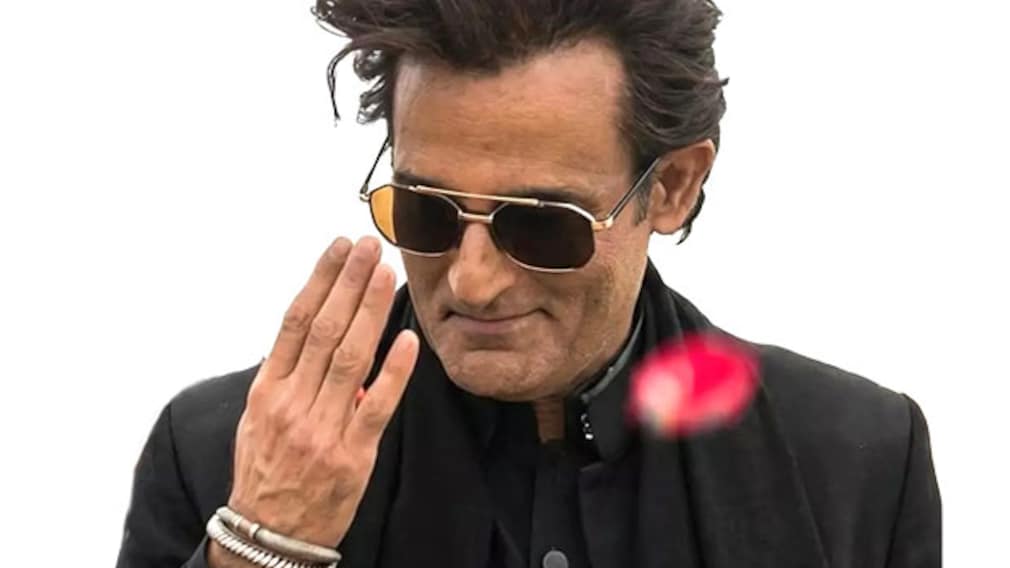
For weeks now, Dhurandhar has split the nation right down the middle, flooding timelines and sparking endless debates. But on one thing, critics and audiences are in rare agreement: Akshaye Khanna as 'Rahman Daqait' is an absolute knockout.
Mounted and marketed as Ranveer Singh's grand comeback, the film has instead turned into an unexpected, scene-stealing resurrection for Akshaye Khanna.
His menacing swagger and mega-viral dance clips have completely hijacked the narrative, sealing what is easily the most shocking and stylish comeback of the year.
It has stolen the spotlight, not just from the film's hero Ranveer Singh, but also from the film's other flamboyant stars like Sanjay Dutt and Arjun Rampal.

Akshaye Khanna Is Bollywood's Great Contradiction
What makes this moment deliciously ironic is that Akshaye Khanna is the last man you'd expect to dominate the noise. He has no social media. No PR machinery. No filmy party circuit. No photo-ops. In an age where self-promotion is both weapon and lifeline for celebrities, it has never quite been Akshaye Khanna's language.
There's has been no gossip, affairs or 'airport looks'. He works sparingly, avoids interviews, and prefers solitude in his South Bombay home. Karan Johar once famously joked that even if Akshaye were to win an Oscar on a weekend, he'd decline it, saying he doesn't step out on weekends. That's Akshaye Khanna. Until he steps in front of the camera. Then, no one else matters.
Akshaye Khanna is Bollywood's great contradiction: too good to ignore, a natural scene-stealer, yet never fully embraced as a big-league star.
I met Akshaye in July 2017 to interview him at a five-star hotel in Delhi. He was there to 'promote' a film, though the ritual of promotion has never quite belonged to him. That evening, he appeared tired and withdrawn, weighed down by a quiet heaviness. Just two months earlier, he had lost his father, veteran Bollywood actor Vinod Khanna.
Trying to break the ice, I asked Akshaye why his films arrived so infrequently.
"Personal issues," he said softly. "And... I wasn't getting good scripts." He paused, as if holding back the rest. Then, unexpectedly, he opened up. "Being an actor isn't easy. An actor is the most dependent and sensitive artist. A writer can write alone. A musician can compose alone. An actor can do nothing alone. We need a good director, good writers, good technicians, and good co-actors. Without the right team, we are nothing."
Dhurandhar proves how right he was. Akshaye hasn't changed, but the writing, and Aditya Dhar's razor-sharp presentation of him, flipped the game entirely.
He barely spoke through the interview. When I finally asked about his father, he fell silent again. "It hasn't been long," he said. "We're still affected. If I speak, I'll get emotional. Let's leave it."
Afterwards, I asked if any question had upset him. "No, no," he said simply. "I just don't feel like talking."
Here was a man promoting a big film after years away, yet completely uninterested in 'talking' or selling himself. He told me that he believes if the film was good and his performance worked, people would appreciate it, whether he promoted the film or not, whether he was the hero or not.
Years later, Dhurandhar proved him right once again. He stayed away from the film's promotional circus, but it's his presence on screen that became impossible to ignore.
The Khanna Story
Akshaye's father, Vinod Khanna, was one of Bollywood's biggest stars of the seventies. Yet at the peak of his fame, in 1982, he made a decision that shocked the film industry and his millions of fans. He walked away from Bollywood, his family, and his fortune to follow his spiritual guru, Osho Rajneesh, to Oregon.
He left behind his wife, Gitanjali, and two young sons, Rahul and Akshaye. When they separated, Akshaye was just five. Akshaye rarely spoke about it, but in a rare interview with Simi Garewal, he revealed it was only much later that he truly understood what had happened:
Simi Garewal: How old were you when dad went to the ashram?
Akshaye: Yeah, five I think.
Simi Garewal: Did you understand what was going on?
Akshaye Khanna: Much later, much much later. It's only now that you know one really understands these things and is able to accept them for what they are...I think when a relationship doesn't serve the people who are involved, I don't think there's uh any reason to continue it... I am a great believer in being self-centered, in being selfish for your own life....I'm not saying it's good to hurt people and I'm not saying you know you have to be this horrible selfish person but I think it's better than you know living for someone else or you know just sacrificing your own happiness I think that's true it's better to live alone or apart and happy than to live together and unhappy as well.
Simi Garewal: But as a kid, did you miss your father?
Akshaye Khanna: I mean oh terribly, terribly of course, of course. How could I not? But on the other hand, see, we had such a happy, I can't even tell you what a really, really truly happy childhood.
Those who knew him remember Akshaye as a deeply introverted, shy child, fiercely close to his mother. Quiet and reserved, he kept to himself. But as he has often said, behind that quiet demeanour, he always dreamed of being an actor, a star.
Never Flourished As The 'Lead Star'
After a five-year hiatus, Vinod Khanna made a triumphant return to Bollywood in 1987, enjoying nearly a decade of hits. In 1997, he produced Himalayputra to launch Akshaye, but the film failed at the box office. Akshaye's second outing, the multi-starrer blockbuster Border (1997), revealed his quiet depth: sensitive, inward-looking, and emotionally intense.
Yet films built around him as the lead romantic hero: Kudrat (1998), Doli Saja Ke Rakhna (1998), Dahek (1999) and Rishi Kapoor's Aa Ab Laut Chalen (1999), collapsed one after another. Subhash Ghai's hit Taal (1999) brought him recognition, but the film also featured Anil Kapoor and Aishwarya Rai in strong roles.
Akshaye's light, it seemed, was always shared.
Like his father before him, he never truly flourished as a solo, mass-market hero. Ironically, both father and son shone brightest in two-hero films and multi-starrers. It remained a career that never quite translated into conventional stardom.
But no one could have predicted that the strong Akshaye Khanna would trace.
The Hairline Factor
In Bollywood, a hero's hair is currency, his style, swagger, and identity copied by fans everywhere. Akshaye began losing his hair early and rapidly. Farhan Akhtar's Dil Chahta Hai (2001) reinvented him as an urbane, mature, stylish actor. But there was no escaping the truth: his hair was leaving him. Most stars fix that. Akshaye didn't.
Years later, he admitted candidly to film critic Mayank Shekhar: "Hair loss shattered my confidence. It felt like a pianist losing his fingers." Instead of fighting it, he absorbed it, allowing his vulnerability to reshape his choices.
After Dil Chahta Hai, he carved a niche in Abbas-Mustan thrillers and Priyadarshan comedies like Humraaz, Hungama, Hulchul, Race and Naqaab. Successful films, yes, but never the vehicles built solely around him. A brilliant performance as Mahatma Gandhi's estranged son Harilal Gandhi in Gandhi, My Father (2007) brought critical acclaim but flopped at the box office. Somewhere along the way, he realized that it was better to inhabit solid, unforgettable characters than chase the conventional 'lead hero' stardom.
And so he became perhaps the only Bollywood star to play crucial, scene-stealing roles in hits like Ittefaq and Drishyam with an almost-bald look, and still command every frame he's in.
Dominating Two Of The Year's Biggest Blockbusters
Amid the buzz around Dhurandhar, many overlooked Akshaye Khanna's chilling turn earlier this year as the Mughal emperor Aurangzeb in Chhaava. Two of 2025's biggest blockbusters and both defined by his magnetic presence. Quietly, 2025 has become the strongest chapter of his career.
"Underrated actor, because he didn't get his due as a leading man. Which, by the very nature of theatrical box-office, depends on too many variables, including the script that suits his subdued, understated persona-something that, say, Dil Chahta Hai managed to draw out. With Chhava and Dhurandhar, you can see how he instantly stands out in a milieu that is otherwise so over-the-top," says film critic Mayank Shekhar.
But Akshaye himself wears success lightly.
Asked what success means to him, he replied with disarming clarity in an interview: "If I run a Rs 500-crore business but don't become Ratan Tata or Dhirubhai Ambani, does that mean I'm unsuccessful? If I don't become Shah Rukh Khan, am I a failure? Out of 120 crore people in this country, just 15-20 get to become film heroes. What more do you want?"
This viral triumph of Dhurandhar may have come 28 years after Akshaye Khanna's debut, but the understated, effortless magic was always there, quietly waiting to be discovered, and finally, to set the screen ablaze.
-
Opinion | In 'Dhurandhar', More Gang Wars Than Spy Wars

What Dhurandhar has in common with the other big Hindi hit of the year, Saiyaara, a romantic tale about a soft boy and his lost love, is great music and lack of pre release marketing hype
-
Opinion | The 'SHANTI' Bill Is A Radioactive Gamble With India's Future
The Bill shields foreign suppliers from being sued. It blocks citizens from the courts. It looks like a law written by the nuclear lobby, for the nuclear lobby.
-
Opinion | After Bondi Beach Attack, Some Hard Questions For The Muslim World
The Muslim ummah needs to confront the anger, denial and victimhood narratives that create the environment in which extremists begin to believe their violence is righteous.
-
Opinion | India's Aviation Model Is Cracking Under Its Own Weight
When airlines strain against duty hour limits, when safety oversight suffers from understaffing, when passenger protection exists only on paper, the aviation system functions dangerously, accumulating risks that eventually manifest as crises.
-
Blog | "It Was A Shell From My Tank": When A Father Met The Pak Soldier Who Killed His Son
"He stood like a rock before our Patton tanks," Brigadier Naser (retd) told Madan Lal Khetarpal, almost three decades after his son was killed in battle.
-
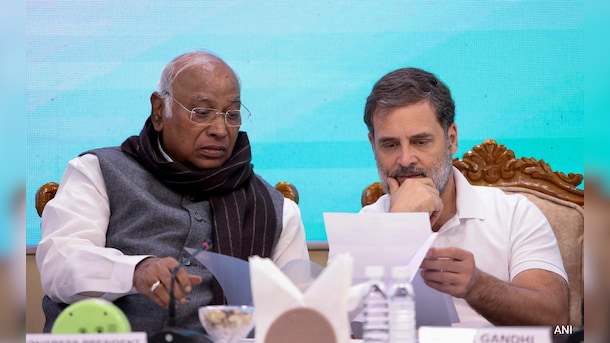
Opinion | Will Congress 'High Command' Fumble Another State? Possibly
Significantly, Karnataka is the fourth Congress-ruled state seeing such mayhem under Kharge.
-
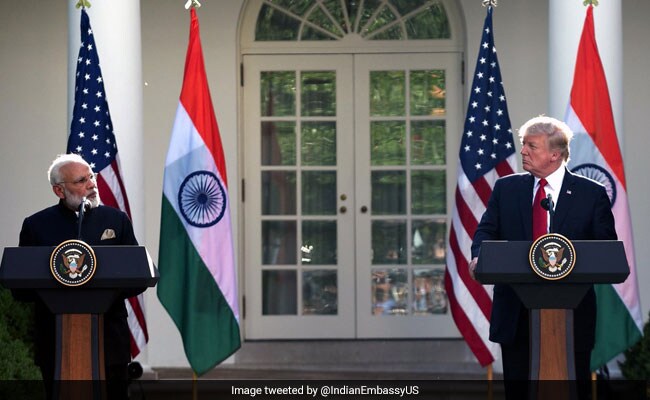
Opinion | India's Exclusion From US' Pax Silica Club Isn't A Snub - But It Matters
India is not part of the initial grouping. Some see this as a snub. Others say it does not matter. Both reactions miss the point. The issue is not optics. It is whether India is moving fast enough up the chokepoint ladder to be treated as a partner rather than a customer.
-
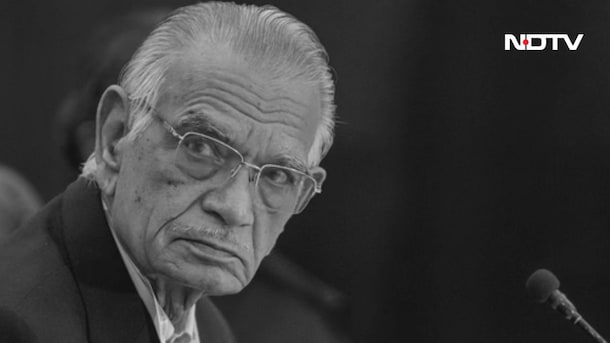
Blog | Shivraj Patil: The 'Always Dapper' Home Minister, Brought Down By 26/11
A Sonia loyalist, Patil was known for his impeccable style and elegance. But nothing could prepare him for the aftershocks of the dastardly 26/11 terror attacks in Mumbai.
-
News Updates
-
Featured
-
More Links
-
Follow Us On
