Before Dhurandhar, There Was Sarfarosh, The First Bollywood Film That Named Pakistan And The ISI As Villains
Sarfarosh may not have been a phenomenon like Dhurandhar, but it definitely changed expectations for realistic cop dramas and terrorism thrillers that followed
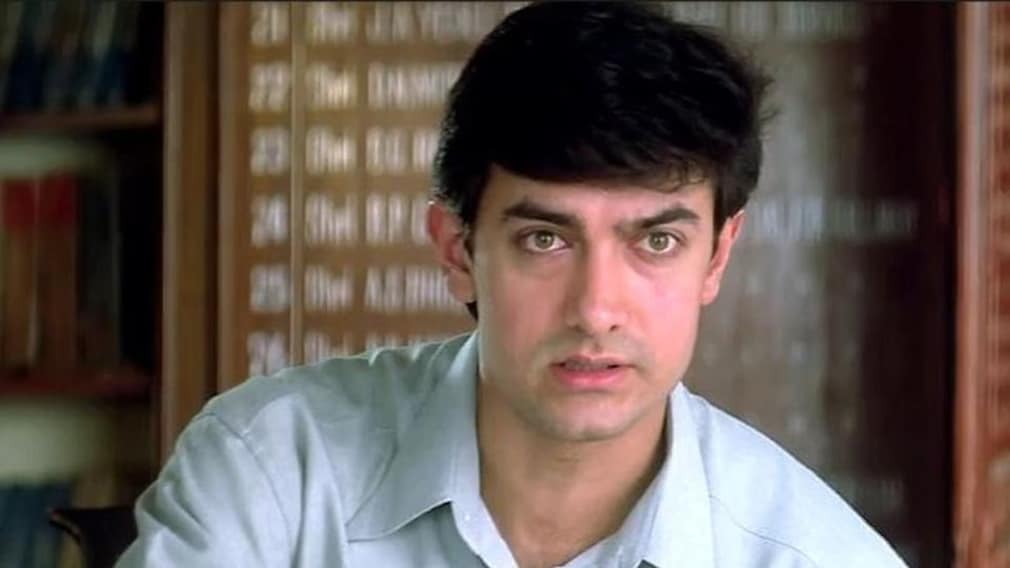
We're in the Dhurandhar era now, where the ISI and Pakistan are standard blockbuster villains. But before the high-octane spy universes and the chest-thumping nationalism, when Bollywood was still playing it safe, one film dared to draw first blood: Sarfarosh.
Released on 30 April 1999, 26 years ago, Sarfarosh was among the first to drop the metaphors and name names, openly calling out Pakistan and the ISI as the central antagonists.
It is interesting that Sarfarosh director John Matthew Matthan had said he had kept the India-Pakistan terrorism angle of the film a secret from everyone except Aamir Khan and Naseeruddin Shah, because "it was part of the censor board's thing that you should not take the name of the neighbouring country. So, most of the people acted in the film without knowing the story."
Back then, Bollywood played by very different rules.
The Road To Sarfarosh
John Matthew Matthan was not a typical Bollywood debutant. He came from advertising, having directed hundreds of commercials, but his dream was always larger than 30-second narratives. He had earlier assisted Govind Nihalani on Aakrosh (1980) and later worked on Gandhi (1982), where Nihalani was a cinematographer. That exposure shaped his obsession with realism and detail.
After fifteen years in advertising, Matthan decided to make his first film focused on Pakistan's proxy war in India.
Matthan began developing Sarfarosh as early as 1992 with the core idea of a personal revenge story. The idea later evolved after the 1993 Mumbai bomb blasts conspiracy came to light. Matthan and his co-writer Hriday Lani began researching, which grew into a deeper look at how Pakistan-backed terrorism operated in India, how the ISI infiltrated networks and how attacks were carried out with help from insiders across places like Mumbai, Rajasthan, and even South India.
What made Sarfarosh different was not just its subject but its tone. At a time when Bollywood relied on exaggeration or melodrama, Matthan chose restraint. The police procedures, the intelligence gathering, and even the bureaucracy of the Home Ministry were all researched in detail.
Recommended


Casting Against Type
Sarfarosh follows IPS officer Ajay Singh Rathod (Aamir Khan), whose past trauma from a terrorist attack fuels his mission against cross-border terror. While investigating arms smuggling in Rajasthan, he uncovers a larger ISI-backed operation using local gangs and insiders across India. He forms a bond with a celebrated ghazal singer from Pakistan, Gulfam Hassan (Naseeruddin Shah), only to later discover his shocking connection to the conspiracy. As loyalties collapse, Rathod exposes the conspiracy and stops a major attack.
Before Sarfarosh, Aamir Khan was predominantly viewed as a romantic star. His earlier attempts at intense or action-driven roles like Aatank Hi Aatank (a take on The Godfather) or Baazi, where he played a police officer, had not succeeded commercially. His big blockbusters like Dil, Rangeela and Raja Hindustani were all romantic musicals.
Before Matthan approached Aamir, his filmmaker friends and financiers wanted Shah Rukh Khan for the box office. But he had written the script keeping Aamir in mind. He believed Aamir's soft image was his greatest strength. Vulnerable enough for the audience to worry about, so that the transformation would feel more powerful. It was a graph of a soft, unassuming man becoming a determined officer. Like an origin story, the strength lies in contrast.
He met Aamir Khan in 1992 and narrated the script to him. Aamir liked it, but he had some commitments. The shooting began only in 1996 and was completed in 1999 as Aamir was busy shooting multiple films.
The Sophisticated Villain
Perhaps the most striking creative choice was the casting and characterisation of the main villain, Gulfam Hassan, played with chilling sophistication by Naseeruddin Shah. John Matthew Matthan had earlier worked with Shah as an assistant director in Aakrosh. That familiarity helped shape a villain unlike the usual Bollywood template.
Gulfam is not a shouting, caricatured mastermind. He is a celebrated ghazal singer, a symbol of art, culture, and diplomatic softness. The soft-spoken Hassan is also a Muhajir who feels displaced and disrespected in Pakistan. He channels his bitterness into something far more dangerous: using his artistic stature in India as a cover to orchestrate an ISI-backed proxy network.
What makes the character unforgettable is the bond between ACP Ajay Singh Rathod and Hassan. It begins with genuine admiration and mutual respect, only to slowly unravel into suspicion and psychological battle. This shift from warmth to revelation gives the film its most gripping tension, turning ideology into something personal and deeply unsettling.
Matthan had met Sonali Bendre during the shoot of a cola ad. When he narrated the story to Sonali, she asked him what Naseeruddin Shah was doing in the film. The director just told her Shah is playing the role of a ghazal singer, and it is a supportive role, keeping his villain turn under wraps.
The film also stood out for its casting for almost every character. It ditched the regular supporting actors for lesser-known stage and TV actors who were cast in key character roles, like Akhilendra Mishra, Vallabh Vyas, Pradeep Rawat, Ahmed Khan and Anil Upadhyaya. Some of them later made their way into Aamir's debut production, Lagaan. Mukesh Rishi, who was mostly known for playing negative roles, got a major turning point as Inspector Salim, the cop suspected of colluding with the terrorists because he was a Muslim. His scenes with Aamir Khan stood out for the rare nuance to the film's handling of Muslim identity, about a cop who chose to stay in India and must constantly prove his loyalty.
And yes, Nawazuddin Siddiqui made his actual debut in Sarfarosh, with the miniscule cameo of a man interrogated by Aamir Khan.
Sonali Bendre once said the shoot felt so grounded she thought she'd signed a documentary until they got to the songs. They spent 10 days shooting 'Jo haal dil ka' in the freezing mountain rain of Panhala. It was so cold that the crew literally had to rub brandy on her feet just to keep her warm enough to keep shooting.
It was a chartbuster album with tracks like "Is deewane ladke ko" and the patriotic "Zindagi maut na ban jaaye", but the cult favourite remains Jagjit Singh's "Hoshwalon ko khabar kya", written by Nida Fazli and shot in the lanes of the University of Delhi, woven gently into the film's mood.
What's fascinating is how Sarfarosh had all the familiar 90s tropes: the tragic backstory, a big villain, a suspenseful twist, romance, and even the rain-soaked 'hot song' "Jo haal dil ka". But despite all the Bollywood ingredients, it still felt different, 'realistic', and widely praised for rethinking the cop film template.
Release And Reinvention Of Aamir Khan
The film was completed and sent to the Censor Board, which initially demanded several cuts. They wanted the makers to remove the words 'Pakistan' and 'ISI'. Aamir Khan and John Matthew Matthan resisted the cuts and ultimately persuaded the censor board to retain the references, making it one of the early Hindi films to explicitly name Pakistan and the ISI as current antagonists. Before it, there was Border, but it was based on the historical Battle of Longewala (1971).
Released on April 30, 1999, Sarfarosh stood out immediately and became a major hit. It was widely praised for striking a rare balance between realism and commercial Bollywood storytelling. And just weeks later, the Kargil War brought the India-Pakistan conflict into sharp national focus, making the film's themes feel even more immediate and resonant.
The film turned out to be a real turning point in Aamir Khan's career and, in many ways, marked the beginning of the 'rebranding' that shaped the Aamir we know today. Before it, he was mostly doing love stories. He took on Sarfarosh not expecting a big commercial impact, but because it offered him something different creatively. The film's success changed things. It gave him confidence. Post-Sarfarosh, you can see a visible shift as he stopped chasing the routine and started focusing on more unusual, high-impact films, often doing just one film at a time.
The film is often credited with shifting the mainstream Bollywood police officer from the loud, 'supercop' to a realistic, committed public servant. Looking back, Sarfarosh may not have been a phenomenon like Dhurandhar, but it definitely changed expectations for realistic cop dramas and terrorism thrillers that followed.
Perhaps its biggest legacy is proving that a mainstream Bollywood film could treat realism seriously without losing audience appeal. Something that even Dhurandhar adopts in combining grounded realism with commercial scale.
Much has changed since Sarfarosh was released. Over the years, both Aamir Khan and Naseeruddin Shah have faced backlash and online trolling for their comments about growing intolerance in India, even being told by trolls to "go to Pakistan."
Yet it was their film that, years earlier, became one of Bollywood's first major productions to explicitly call out the ISI and Pakistan as the main adversaries.
-
Between Nehru And Netanyahu, Rahul Gandhi Faces An Uncomfortable Question

The divergence has come to the fore after Rahul Gandhi endorsed maintaining strong ties with Israel, citing India's defence requirements and national interests.
-
Kunda's King And His Thakur Court: Raja Bhaiya's Big Power Play Before UP Polls
UP Elections 2027: The Ram Katha may have been about Lord Ram, but the political story unfolding in Kunda was about Raja Bhaiya.
-
The Hidden 'Water Cost' Of Agriculture: Comparing India With Major Economies
Traditional flood irrigation, which remains common across Indian farms, is a major reason. It has a water-use efficiency of just 35-40 per cent.
-
Blog | DPS MMS To Instagram: The Cost Of Irresponsible Men
On International Men's Day, it is worth having a conversation that isn't always comfortable for men.
-
Real-Life Mirzapur? Story Of UP's Tiwari Haata That Akhilesh Yadav Visited
The Samajwadi Party chief's pit stop at the Tiwari Haata in Gorakhpur carried considerable political significance ahead of the UP elections
-
The Name Is Bond. Emo Bond. Robert Pattinson Inherits 007 With Feelings
The internet has already given the new James Bond a nickname. It is a joke, but it touches on the oldest question for the "cool" spy franchise: How much is he allowed to feel?
-
Buying Property For Investment? 6 Factors To Check Beyond Price
For anyone buying property as an investment, the real question is not simply how much the property costs. It is how much money it can generate.
-
Is Buying Home In A Small Town Smarter Than In A Metro? Here's The Math
According to Knight Frank's H1 2026 Affordability Index, the EMI-to-income ratio stood at 69% in Mumbai and 67% in the National Capital Region.
-
Samajwadi Seat Talks: The UP-Size Gap Between Congress' Rhetoric and Reality
UP Election 2027: Seat-sharing negotiations are rarely easy. More so when they involve a regional force determined to guard its turf and a national party desperate to regain lost ground.
-
Cyber Outages: The Attack That Has No Name
Banks, flights and the world's office mail failed four times in five days, each time without an attacker. The world spends $247 billion a year on locks