Before Dhurandhar And Ramayana, There Was One Forgotten Genius Who Created Both Worlds
While his TV series Ramayan received its due, the first mega-budget spy thriller of Bollywood, the film that started it all, is rarely discussed anymore
Over the past two weeks, two Bollywood films have dominated the conversation across print, video, and social media.
The spy thriller Dhurandhar 2 (still raking in the crores), and Ranbir Kapoor's Ramayana, whose polarising teaser sparked both massive buzz and intense trolling.
This brings us to a filmmaker who mastered these two very different genres: the gritty spy thriller and the timeless sacred epic.
He was the man who gave India its first genuine, big-budget spy blockbuster and its most beloved on-screen Ramayan.
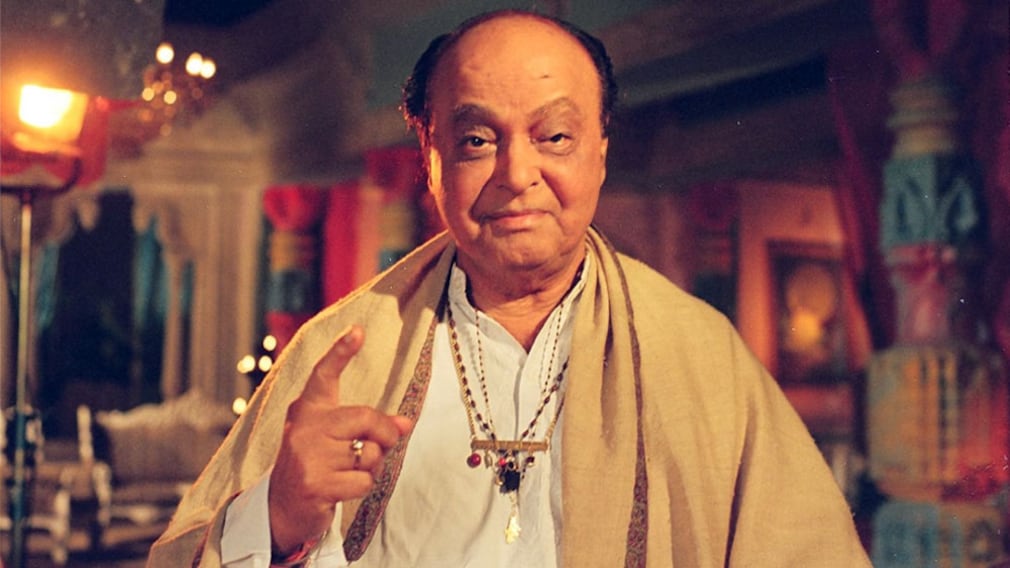
His name was Chandramouli Chopra.
Never heard of him? Don't worry. He changed his name, and the world came to know him as Ramanand Sagar.
Yes, the same Ramanand Sagar who created the 1980s TV phenomenon Ramayan. A show that an entire generation claimed as their own, and one that, even today, is regarded as the gold standard of mythological storytelling. But long before he brought the gods to the small screen, he was busy defining the grammar of the Indian spy thriller.
That lavish, ambitious spy film was Ankhen, featuring a young, dashing Dharmendra as the leading man. Interestingly, it was released in 1968, the same year India's external intelligence agency, RAW, was formed.
Much like Dhurandhar today, Ankhen was the biggest blockbuster of its year. A massive hit that went on to celebrate a diamond jubilee.
The Birth Of India's First Big Spy Thriller
Ramanand Sagar began his journey in the 1930s as a clapper boy in the silent film era and worked his way up to assistant stage manager at Prithvi Theatre. He burst onto Bollywood as the dialogue and screenplay writer of Raj Kapoor's romantic hit Barsaat, quickly earning a reputation as one of Bollywood's top screenwriters. Over the years, he penned hits like Dilip Kumar's Sangdil and Paigham, and Shammi Kapoor's Rajkumar.
Recommended


While writing, he was also directing, but it was the musical blockbuster Aarzoo (1964), starring Rajendra Kumar and Sadhna, that established him as a top-tier producer-director. At a time when Bollywood was defined by family sagas and romances, Sagar decided to take a risk. Inspired by the scale of James Bond films, he decided to step into a genre India had yet to master: the globetrotting spy thriller with a distinct Indian heartbeat.
Ramanand Sagar was keen to cast a fresh face as his spy hero. When he saw Dharmendra in Shola Aur Shabnam (1961), he was struck by his rugged charm and knew he had found his man. In his book An Epic Life: Ramanand Sagar - From Barsaat to Ramayan, his son, Prem Sagar, writes, "Papaji liked his big sturdy hands and thought how perfect they would look holding a pistol!"
But the film wasn't just about the hero. It carved out an equally powerful space for its leading lady, Mala Sinha. At the time of casting, Sinha was actually the bigger draw, and received the coveted first billing in the opening credits over Dharmendra. She also plays a formidable spy, effortlessly slipping between traditional and modern outfits as the mission demands. And since it's a Bollywood film,
And, of course, being a Bollywood film, she also gets to sing romantic songs written by legendary Sahir and composed by ever-dependable Ravi, featuring chartbusters like Milti hai zindagi mein mohabbat kabhi kabhi and Ghairon pe karam apno pe sitam.
Secret Agents, Patriotism, And A Coded China
The nearly three-hour Ankhen was a massive production set across India, Japan, and Lebanon, places that were unfamiliar and entirely new to Indian audiences in the late '60s. Like a true Bond film, it had guns, gadgets, and plenty of glamorous women.
The story of Ankhen kicks off with India facing terrorist attacks in Assam and weapons being smuggled in by Doctor X (Jeevan, rocking a brown military uniform), who operates from the northeast of India. His partner-in-crime is the sinister Madam (Lalita Pawar), who sports green and grey androgynous outfits and a truly questionable hairdo.
Since India didn't have an MI5 (or a RAW) yet, the defence falls to a secret agency founded by three veterans of the Azad Hind Fauj: Diwan Chand, Ashfaq Bhai and Ishak Singh- a Hindu, a Muslim, and a Sikh. They don't work for the government. They are 'deshbhakt entrepreneurs' running a freelance spy ring. Unlike later Bollywood spy films, where villains are usually from Pakistan, Ankhen pointed east, a clear nod to China after 1962, with the villain dressed in a bizarre mix of Mao and Hitler-inspired attire.
Enter our desi James Bond duo: Sunil (Dharmendra) and Meenakshi (Mala Sinha), working for this secret group. Sunil is dispatched to Beirut, where he runs into Meenakshi, only to realise she's an old flame from a mission in Japan. Unlike the Hollywood version, our Bond is a sanskari spy. He is totally disinterested in serenading girls who stalk him and instead treats them to lessons in deshbhakti. He saves his romance for the lead agent, with whom he shares zero chemistry.
Mala Sinha, meanwhile, does it all: gunning down villains in high-fashion gowns while delivering heavy emotional melodrama. It is not surprising that she gets a more layered role and more screen time than the leading man, paired with some truly disastrous costumes.
The film is packed with spy tropes. Sliding doors, flashing transmitters, colourful lights, strange masks and a secret den. It also had an action sequence of Dharmendra wrestling a real tiger. 007 usually relies on Q's high-tech gadgets when he's in trouble. When our Desi Bond Sunil gets trapped, he relies on his jigri dost (Mehmood). His best friend leads a troupe of undercover beggars to find him, all while singing the chartbuster De data ke naam tujhko allah rakhe.
The production was huge for its time, shooting across Japan, from misty Kegon Falls to bustling Kobe, and the exotic clubs and waterfronts of Beirut. These foreign backdrops were a revelation, bringing a whole new world to 1960s Bollywood audiences. But here's the twist: most of the 'Beirut sequences' in the story were actually filmed in Iran. Even that famous song, De data ke naam, was shot on the streets of Tehran.
Though Ankhen hasn't aged perfectly and looks tacky in parts, Ramanand Sagar's ambition is unmistakable. You see it in those slickly shot international sequences and the fact that it provided the actual blueprint for the modern Hindi spy thriller. There is a distinct old-world charm to Ankhen. It lacks the loud jingoism or the need to label a specific religion or country as the 'dushman.' It avoids overt violence to prove a point, relying instead on pure, adventurous Bollywood masala storytelling.
The Ankhen storm that shocked the film industry
The posters for Ankhen carried a tagline that was a bold statement of defence
"Us mulk ki sarhad ko koi chhu nahi sakta,
Jis mulk ki sarhad ki nigahbaan hain 'Ankhen'"
(No one can touch the borders of that nation, whose frontiers are guarded by the 'eyes')
Produced on a modest budget of just Rs 85 lakhs, the film went on a rampage at the box office, raking in a staggering Rs 6 crores. In an era devoid of SFX or digital finesse, Ankhen was powered purely by ambition, and unmistakable Bollywood flair. Much like the Dhurandhar phenomenon today, the success of Ankhen was total and overwhelming. Its runaway success stunned the industry. For months, 'Housefull' boards were a constant outside theatres, and the film went on to earn the coveted diamond jubilee status, running for over 75 weeks.
Ramanand Sagar made more hit films later, but he could never quite recreate the sheer scale of success that Ankhen achieved on the big screen.
Technically, it wasn't India's first spy film. A few projects inspired by James Bond films were planned almost simultaneously. Farz, starring Jeetendra as Agent 116, released a year earlier, and Joy Mukherjee's Humsaya followed shortly after. Both identified China as the villainous state. But while Farz was a hit, it never matched the sheer scale of Ramanand Sagar's blockbuster.
A gentle man with a soul for romance, Sagar would go on to craft the Ramayan two decades later, changing Indian television forever. Despite the dated technology and clunky visuals, his storytelling left such a mark that even Nitesh Tiwari's upcoming Rs 4000-crore extravaganza is being measured against Sagar's version. The gold standard still remains his show made on a fraction of that budget.
But while his TV series Ramayan received its due, the first mega-budget spy thriller of Bollywood, the film that started it all, is rarely discussed anymore.
-
Blog | 'Baap Da Brat': Kerala Mini Cooper Crash, And Why 'Daddy' Can't Keep Saving You

There are three things you should never underestimate in India: the power of 'jugaad', the elasticity of the law, and the confidence of a 'Baap da Brat' who believes his Papa Posh can fix absolutely anything.
-
Opinion | 'Say Our Name': Why A Tiny Island Nation Wants The World To Get Its Name Right
Standing before the UN hall of nations, Naoero President David Adeang asked the world to unlearn its comfortable habits and speak a restored truth.
-
TVS Succession Row Explained: Why Venu Srinivasan's Family Is Divided Over Wealth
TVS Family Dispute: TVS Holdings is a key entity because it owns a controlling stake in TVS Motor Company. It owns 50.26% of TVS Motor.
-
Opinion | The US Is Showing India Just How Cheap Its 'Friendship' Is
Can local talent fully replace Indian contribution? Why is the US leading in setting up Global Capability Centres in India - over 60% - and pocketing the IP?
-
Jantar Mantar Tells Time. The Clock Just Stopped On Its Time As An Iconic Protest Site
On Monday, October 12, 2026, Delhi Police denotified Jantar Mantar Road as a designated site for demonstrations. The Supreme Court had given it a nudge. Here's how history met politics on that street for decades.
-
Opinion | Saudi Airport Attack, And Why Pakistan Keeps Biting Off More Than It Can Chew
For all those who were envious of Pakistan's 'new status' as "mediator extraordinaire", here is a reality check
-
Opinion | Visa Shocks To Racist Attacks, When Did America Come To Hate Indians So?
Sometimes it is about H-1B visas. Sometimes it is jobs. Sometimes it is "foreigners." Sometimes it is about temples. The language of the attack varies, but the message is consistent
-
How El Nino And Warming Oceans Could Shape Earth's Climate In 2027
From changing ocean currents to extreme weather, scientists are watching a combination of climate signals that could influence temperatures, rainfall and ecosystems in the months ahead.
-
Blog | Nana Patekar, And The Sharp, Lasting Sting Of His 'Plain-Speak'
"Subah ghar se niklo, bheed ka hissa bano..." Nana Patekar's characters often spoke with the bluntness of men who had little patience for pretence. Just like Nana himself.