11 Years Later, Piku Still Understands Parents, Children And Emotional Baggage Better Than Most
The casting was a brilliant gamble, pairing Deepika Padukone's mainstream stardom with Irrfan Khan's indie soul for a refreshingly unconventional chemistry. Adding Amitabh Bachchan as a cranky, quintessential Bengali Bhadralok father completed a trio that gave the film its natural, lived-in feel.
As Bengal prepares to welcome a new government, the journey from Delhi to Kolkata will carry many meanings, political and cultural. But for those who look at life through cinema, that highway opens up another memory. It is the route that gave us Piku, a film that turned a road trip into a warm, messy look at family ties, roots, and the realisation that sometimes, the longest journeys are just ways of coming home.
Released eleven years ago on May 8, Piku remains a warm, bhadralok portrait of middle-class India in all its eccentric charm.
A Story About ‘Motion' And Emotion
Shoojit Sarkar, who grew up in Delhi and Kolkata, has a gift for finding magic in the mundane. Piku is the ultimate proof. If you've lived with your parents as an adult, this film feels instantly familiar. It captures the daily friction of a shared home: the humour, the exhaustion, and that deep, quiet love hiding under all the bickering. It captures that bittersweet role reversal where we eventually become the parents to our own parents.
As Piku says, “Ek age ke baad parents apne aap zinda nahi reh paate. Unko zinda rakhna padta hai. Aur woh zimmedaari bachhon ki hi hai.”
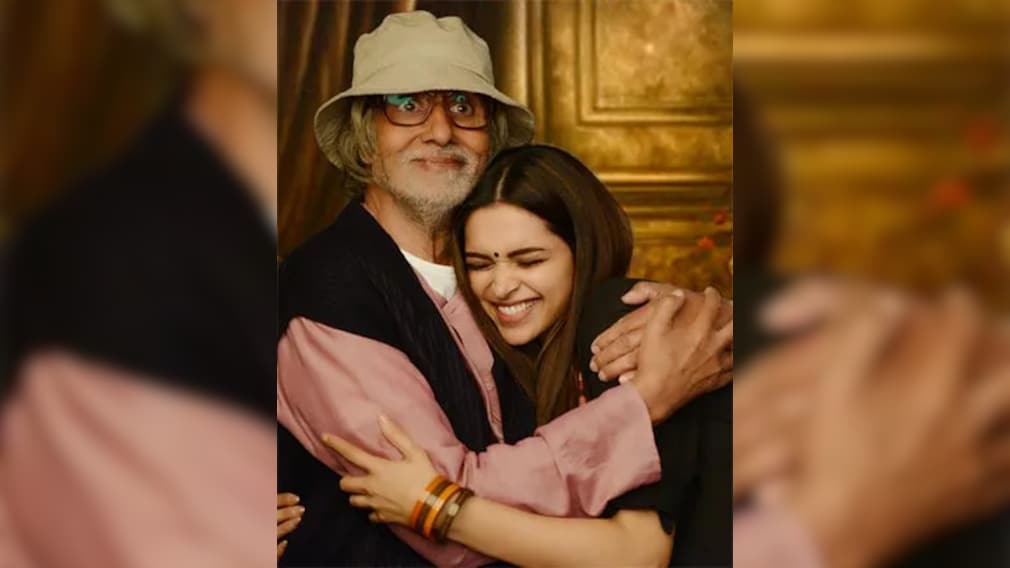
At its heart is the relationship between Piku (Deepika Padukone), a career-driven woman, and her ageing father, Bhashkor Banerjee (Amitabh Bachchan). Her constant irritability and his need for control spill into everything, from awkward questions about her dating life to unfiltered updates on his bowel movements.
Piku carried the tagline‘Motion se hi emotion,' where even ‘mess' is literal. “Insaan ka emotion uska motion ke saath juda hua hai,” says Banerjee, a man obsessed with his constipation, surrounding himself with diagrams of intestines and strange homemade health potions. Piku juggles a demanding career with the impossible task of managing her father while receiving daily updates about his constipation: “Semi-liquid motion first, then two days of constipation, what should I do? Yeh Koi message hota hai dene ke liye, office mein?”
Recommended


And then there's Irrfan Khan's Rana, the reluctant driver and car rental owner who finds himself trapped between their two massive egos. The outsider who brings the perspective, “Father hain to tum unki maa kyun bani baithi ho,” and gradually becomes the calm, steady presence that holds Piku's chaotic world together.
The Unusual Casting
The casting was a brilliant gamble, pairing Deepika Padukone's mainstream stardom with Irrfan Khan's indie soul for a refreshingly unconventional chemistry. Adding Amitabh Bachchan as a cranky, quintessential Bengali Bhadralok father completed a trio that gave the film its natural, lived-in feel.
Deepika as Piku swapped her usual glamour for minimal styling and effortless everyday wear. She insisted on keeping her look natural with cotton kurtas, understated makeup because, as she said in an interview, “Piku doesn't have time to dress up. She has a father to worry about.”
Remembering the sequences between Amitabh Bachchan and Irrfan, director Shoojit Sarkar said in an interview, “It was a meeting of two completely different schools of acting.” He explained that Amitabh Bachchan belongs to the school of ‘intense preparation.' He rehearses like he's in a theater, perfecting his performance through repetition. Coming from the era of actual film rolls, he is very careful not to waste a single take. So he performs when he is absolutely ready. Irrfan, however, was like a ‘fine whiskey' matured with every take once the camera started rolling. For him, the first take was just the first sip of tea; he needed to finish the whole cup to really find his flow. Sircar recalls that Irrfan was actually quite nervous about sharing the screen with a legend, even asking, “How was I? How did I look?” It was a rare moment of anxiety for Irrfan, but despite their different methods, the two soon found a perfect rhythm together.
The Delhi To Kolkata Journey: More Than Just A Road Trip
The real magic in Piku begins with the entry of Rana, the North Indian ‘outsider', into the fierce Bengali household of Bhaskor Banerjee. You can say that the presence feels particularly relevant today. As Bengal grows accustomed to North Indian guests navigating its inner lanes, the journey also reminds us that once the dust of any election settles, we're all just dealing with the same messy family drama.
At the heart of Piku lies a road trip. Bhaskor wants to visit his family home in Kolkata. When Bhaskor refuses to fly and insists on driving from Delhi to his ancestral home in Kolkata, the journey becomes both literal and emotional.
The crew actually drove that route - Delhi to Kolkata via Varanasi to film the travel scenes. Shoojit wanted authenticity, and he got it. Deepika, Amitabh, and Irrfan shared the cramped car for hours, with cameras fitted inside to capture their natural irritation and spontaneous laughter. For a 25-to-50-kilometre stretch on the highway, Amitabh Bachchan, Deepika Padukone, Irrfan, and the actor playing their helper, Budhan, were all rigged inside the car together. They couldn't leave until the shoot was over, making them feel like real companions stuck on a long journey.
Because the tracking vehicle had to travel several kilometres before it could turn around, Sircar used that extra time to keep the cameras rolling. “I'd tell them we have another 15 kilometres to go, so let's keep trying the scene," he recalls. Freed from the pressure of a formal take, the actors began to play and improvise just for fun. Some of the film's most magical, organic moments, like Rana finally snapping at Bhashkor, happened in those stretches. They were truly stuck together, “in the car, in life, in character,” recalled Sircar in an interview.
In 2015, during the release of the film, Deepika had recalled how those long days on the road blurred the line between realism and acting. “We were really on that journey,” she had said. “Sometimes the cameras were rolling without us realising it. Shoojit Sarkar said that many conversations in the car were improvised and real.
In one of the film's best moments during the road trip, the tension inside the car finally boils over. When Bhashkor begins his usual guilt-tripping, complaining that Piku sees him as a ‘burden', Rana finally snaps, calling out the emotional blackmail parents often use and defends Piku, “Burden hote toh woh Calcatta nai leke jaati aapko.” Piku is initially shocked by Rana's bluntness, but in that moment, her irritation shifts into a quiet, newfound respect.
The bond that develops between them from there is incredibly charming. It isn't built on grand romantic dialogue, but on silent gestures and shared glances. My favourite is their ‘egg roll date', where Piku playfully asks, “Shaadi karoge?”
Rana doesn't miss a beat with his signature wit: “Toh tumhare 90 saal ke bacche ko adopt karna padega.…?”
“Bilkul… karoge?” Piku teases back.
“Maatha kharab nai hai mera”, Rana chuckles.
The chemistry between the three was magical, blending irritation, humour, and growing affection, much like a real family road trip. Shoojit Sircar's direction, Juhi Chaturvedi's writing, and Anupam Roy's music come together in a way that feels simple and real, like everyday life.
Roots, Roads, And Letting Go
When the road trip ends in Kolkata, the film settles into a warm, nostalgic rhythm. Against the backdrop of peeling colonial walls and the quiet Hooghly river, the film captures a Kolkata that moves at its own pace.
Bhaskor's desire to return to his old house, Champakunj, is not just stubbornness, but a longing to reconnect with his roots. The house itself feels like a piece of old Bengal that is slowly disappearing. His brother's family reflect the classic Bengali bhadralok: educated, opinionated, deeply rooted in culture, yet carrying a quiet sense of loss. It is a story about holding on, even as time moves on.
But it is here, finally, that Piku learns to stop managing everything and start feeling.
An emotional Bhaskor finds a quiet peace in returning to his roots. Following a joyful cycle ride through the streets of his youth and a taste of his favourite food, he experiences what he calls the “best motion” of his life. A simple sign that he is finally happy and at ease. Then he dies quietly in his sleep. His death is gentle and almost ordinary.
What makes this so special is that the film doesn't treat death as a big tragedy, but as a natural, peaceful end to a life well-lived. For Amitabh Bachchan, known for his intense and dramatic ‘death scenes', this is the quietest departure of his career.
Constipation just becomes a metaphor for everything we hold inside. In Kolkata, Bhaskor finally lets go. A realisation that emotion and motion are both needed to keep life going.
There is a quiet scene that captures the film's theme. Piku decides to sell her old family home. While walking through Kolkata with Rana, she points to a building and laments that there was once a theatre there, now replaced by a new structure. Rana gently points out that she is doing the same with her own house.
When she insists it's ‘practical', he tells her, “I am not saying tum galat ho. Maybe this is the way forward. Isi ko log development bolte hain. Par apni roots… unko agar ukhad do, toh kya bachega?” In that brief exchange, the film finds its heart and quietly becomes a reflection on belonging. On where we come from, and what we choose to leave behind.
The story ends just as simply, with Piku and Rana playing badminton at her Delhi home, with life moving on, a little lighter than before. As if signalling that even as the skyline begins to look a little different, the best way to move forward is to stay light on your feet.
-
Why Doesn't Congress Boycott If Polls Are "Fixed"? Answer Lies Beyond Rahul Gandhi's "Distraction" Quip

The starkest demand for a boycott has come from outside the political Opposition, from the Cockroach Janta Party. But does a boycott help? Here's what research, examples, and expert analysis tell us.
-
'Sully' To Gimli, Sioux To Patna: When Pilots Got It Unbelievably Right
Captain Smit Machchhar fought off his co-pilot after being stabbed and opened the cockpit door, saving 174 people.
-
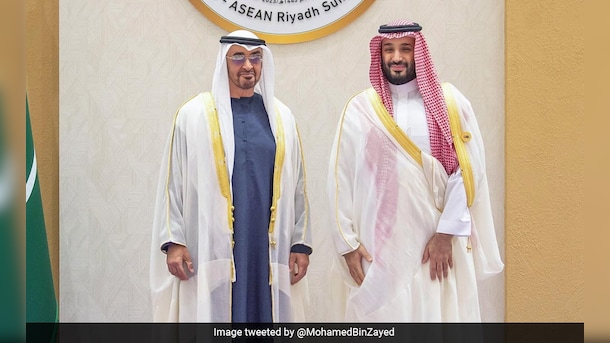
Opinion | Are Saudi Arabia And UAE Reuniting Again After 10 Years?
On Tuesday, the UAE's Vice President, Deputy Prime Minister and Chairman of the Presidential Court, Mansour bin Zayed, met Saudi Crown Prince Mohammed bin Salman.
-
Opinion | 'Lies, Damned Lies, Statistics': On The Controversy Around India's GDP Growth Figures
The debate is less about a single figure than about a decade-long erosion of trust in official statistics.
-
Opinion | Why India Cannot Keep 'Overestimating' Its Value To Washington
Some of India's value to Washington came from the tension between the US and China. That is changing now.
-
Opinion | India Has A 'Lobbying' Problem In Washington, And It Has Come Back To Haunt It
While the EU, Japan, the UK and South Korea secured quick deals, India's efforts were getting drained in prolonged negotiations and the wrong kind of lobbying.
-
India Is Getting Old Before Getting Rich, Will Turn 'Aged' In 16 Years: Moody's
Countries with the steepest fertility declines today will age the fastest in the coming decades. India's drop has been steep.
-
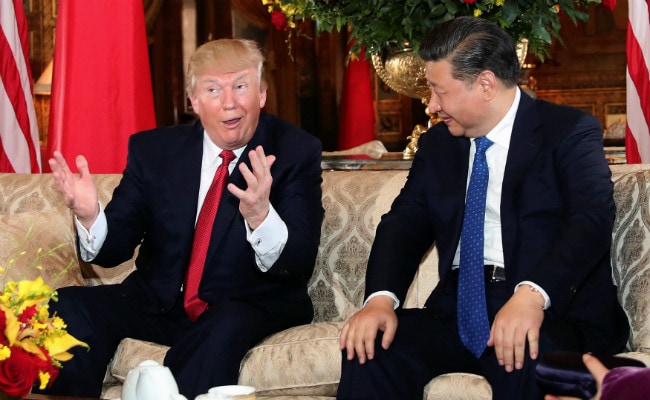
Opinion | Why Does Trump Want To Sell Arms To A US 'Adversary'? Inside His Strange Bargain
Trump's aides maintain that no such offer had been made. But the story points to a larger strategy
-
Opinion | The AI Boom Has Run Into A Big 'Debt' Trap Problem. Inside The 5% Danger Line
For most of the AI buildout's first two years, hyperscalers funded it the easy way: out of operating cash flow. That era is over.
-
Opinion | Iran To Saudi, Pakistan Is Now Fast Running Out Of Sides To Play
Pakistan's long history of playing all parties to its own benefit may have reached the end of its road.