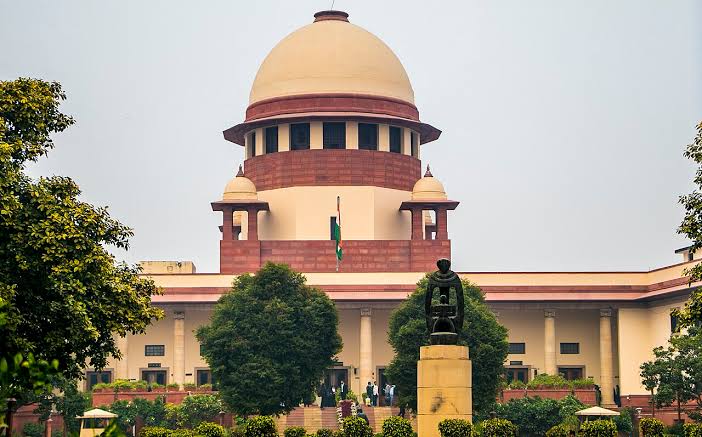

The Supreme Court on Wednesday dismissed a plea challenging the Rs 8 lakh annual income ceiling prescribed for the Economically Weaker Sections (EWS) quota, observing that students unable to afford private medical college fees could explore scholarships, subvention or other forms of financial assistance.
A bench of Justices BV Nagarathna and Joymalya Bagchi declined to interfere with a Rajasthan High Court order that upheld the fee structure of private medical colleges in the state.
The plea was filed by Harshvardhan Singh, who challenged the existing fee structure in private medical colleges and questioned the applicability of the EWS criteria in such institutions.
The petitioner argued that the EWS income threshold of Rs 8 lakh per annum was inconsistent with the high tuition fees charged by private medical colleges, which range from Rs 18.9 lakh to Rs 25 lakh a year.
During the hearing, Justice Nagarathna said private educational institutions could not be expected to charge fees on par with government colleges.
"You cannot say private educational institutions shall charge the same as government institutions. That cannot be. One person cannot come and say that private fees are exorbitant, so make them like government fees," the judge observed.
Highlighting the distinction between government and private institutions, Justice Nagarathna said private medical colleges are self-financing, whereas government colleges receive state grants.
During the hearing, counsel for the petitioner also alleged that provisions relating to seat increases in medical colleges allowed certain seats to be converted into general-category seats, raising concerns about affordability and access.
Responding to the arguments, Justice Nagarathna noted that while capitation fees are prohibited, that does not mean private institutions can be compelled to charge fees equivalent to those in government-run colleges.
"There is a vital difference. Capitation fee is banned. But that doesn't mean you have to take it as per government college rates. Otherwise, all private institutions' assistance to the State in the matter of medical education will become nil. They will close down and diversify. We need doctors in this country," the judge observed, highlighting the significance of private medical colleges in expanding the country's medical education capacity.
"If private medical colleges are not allowed to function in this manner, their assistance to the state in the field of medical education will stop. We need doctors," Justice Nagarathna remarked.
Addressing concerns about affordability, she added, "If you are unable to pay, get a scholarship, subvention or other financial assistance."
The Rajasthan High Court had earlier upheld the fee structure fixed for private medical colleges, noting that it had been determined by the State Fee Regulatory Committee in accordance with guidelines laid down by the Supreme Court.
In its brief order, the court said, "We do not find any reason to intervene with the High Court order. The special leave petition is dismissed. Question of law, if any, is kept open."
