China Outspends India In Space, But New Delhi Holds The Trust Card
The US remains the undisputed leader in the global space race. But it's realistic for India to aim for the third place, says Bellatrix Aerospace COO.
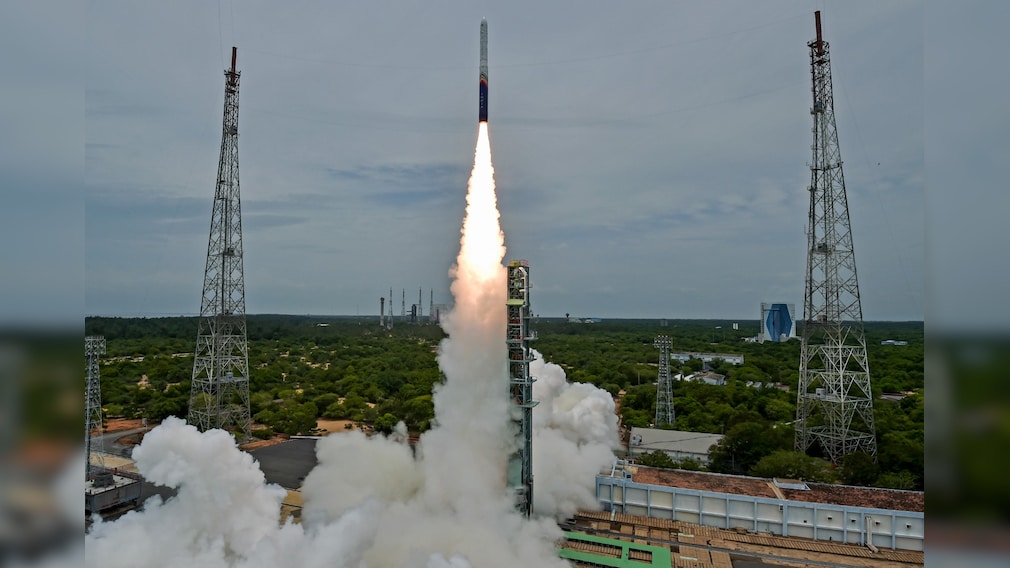
India's space ambitions are no longer confined to government labs and five-year missions - they're now a boardroom conversation, a startup pitch deck, and, increasingly, a geopolitical bargaining chip. But in the global space race, China's name comes up before India -- and for good reason.
According to Yashas Karanam, Co-Founder and COO of Bellatrix Aerospace, Beijing today commands "a much broader set of space capabilities than India", backed by experience in complex missions and a war chest that dwarfs India's own space budget. "The biggest difference, in my view, is the scale of investment," he said. "China has committed substantially more funding to space... whereas India's space budget remains a relatively small fraction of that."
In an exclusive conversation with NDTV, Karanam said, "Money isn't the whole story... China's Achilles' heel is trust." Even as Chinese firms build increasingly sophisticated hardware, geopolitical suspicion keeps the US, Europe, India, and a swathe of international companies at arm's length. Many of China's commercial space players, he pointed out, have grown up inside (or stayed tethered to) state institutions, which only deepens that wariness. So, China may out-build the world, but it can't necessarily out-sell it. New Delhi, on the other hand, has the world's trust, adds Karanam.
ISRO's Brain Drain: Real, But Not What You Think
The past year has seen a steady trickle of Indian Space Research Organisation (ISRO) scientists heading for the exits. There is a narrative that foreign space giants are cherry-picking India's best minds.
Karanam pushes back on that framing. "Yes, the money gap is real. A large share of ISRO's talent pool comes from IIT campuses, and their private-sector batchmates are often earning orders of magnitude more." That pay gap, he says, is the real driver behind the exits -- not poaching by rival nations.
"We are not seeing a lot of foreign companies poaching India's best talent at this point," he clarified. "We are seeing a lot of ISRO people coming into private sectors... Mostly all the Indian scientists who are retiring from ISRO are going into quite a lot of Indian space tech startups."
Can India Crack The Top 3?
So where does that leave India in the global pecking order? Karanam is bullish -- with a caveat.
The US remains the undisputed leader in space spending, trailed by Europe's decades-old investment cycle, with China holding a firm third position, followed by Russia. India, he believes, has "so many companies and so many opportunities opening up" that it's realistic to aim for third place -- or, failing that, a solid fourth.
The pitch rests on India's manufacturing economics and engineering talent pool, which Karanam claims already rival global benchmarks. "We are at par, if not better, with some of the global companies in terms of the timelines to delivery, and we are also trying to match the quality of the West," he said -- a confident claim from a founder who has spent a decade building satellite propulsion systems from an Indian factory floor.
Where Does The $1 Trillion Actually Come From?
The "trillion-dollar space economy" has become one of the most-repeated numbers in the industry, but Karanam breaks down where the money will actually flow -- and how it trickles down to ordinary people.
Three big buckets, by his account:
Telecom and connectivity - direct-to-device communication and Starlink-style constellations racing to blanket the planet in high-speed internet.
Defence and surveillance - a category supercharged by the wars in Ukraine and the Middle East, driving demand for round-the-clock satellite-based tracking and intelligence.
New-age applications - from in-orbit servicing to the early, still-speculative idea of space-based data centres, which could add an entirely new revenue stream if the engineering challenges are cracked.
For the average person, Karanam insists, the payoff is already invisible-but-everywhere: satellite navigation getting you home, disaster response teams reacting faster because of orbital imagery, and soon full-strength internet on a mountain trek where no telecom tower will ever reach. Even national defence benefits, he noted, since satellites can watch conflict zones without the risk of a drone getting shot down mid-mission.
Building Bellatrix When Nobody Believed In Indian Space-Tech
Long before "space economy" became a buzzword investors chased, Karanam and his team were pitching a sector nobody understood. Back in 2015-16, even as the US saw early capital flow into launch vehicle startups, India had no success stories and virtually no venture funds willing to bet on space.
"We had to see 100+ rejections before we closed our first round," Karanam recalled. Much of that early struggle wasn't about the technology -- it was about educating investors on an entirely unfamiliar asset class. That patient groundwork, he believes, is part of why space-tech is now considered one of the hottest deep-tech categories in the country, with capital far easier to raise today than it was a decade ago.
The Quiet Revolution Happening In Orbit
Perhaps the most underrated shift Karanam flagged has nothing to do with funding or geopolitics -- it's happening inside the satellites themselves.
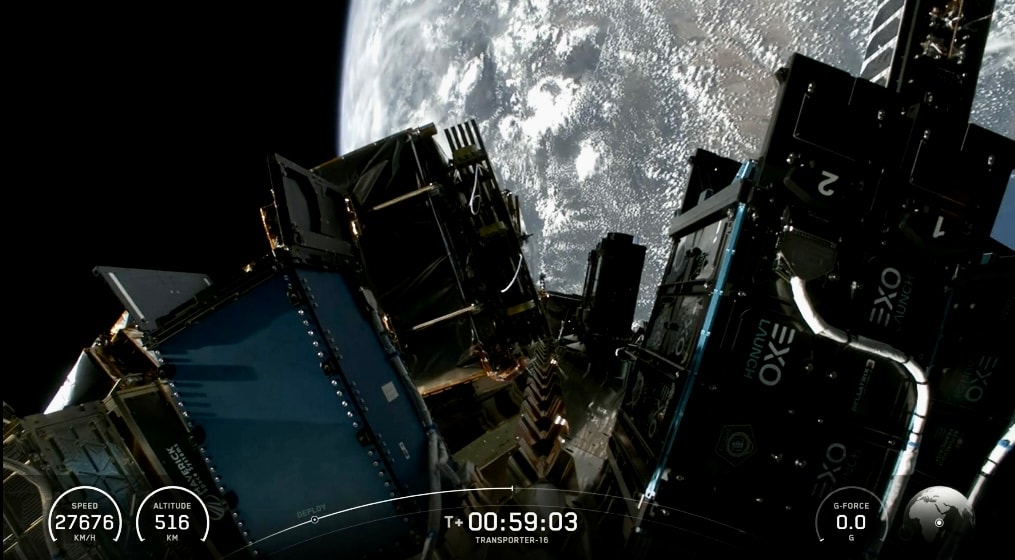
Until around 2015, nearly every satellite headed to space was a geostationary giant: room-sized, weighing three to six tonnes, costing upwards of $100 million, and parked 36,000 kilometres above Earth. Today's satellites tell a completely different story. Between 2018 and 2026, the industry has shifted decisively to Low Earth Orbit (LEO) -- compact satellites flying just 400 to 1,100 kilometres up, enabled by leaner electronics, better heat dissipation, and improved RF systems.
The altitude drop has real-world consequences: sharper Earth-observation imagery for both civilian and defence use, and dramatically lower signal latency -- the very breakthrough that made 4G and 5G possible from space, where older tech could barely support 2G. The next frontier, Karanam revealed, is pushing satellites even closer, toward 200 kilometres -- a zone where propulsion becomes the biggest bottleneck. It's a problem Bellatrix says it's actively building propulsion systems to solve.
-
Indian Family Wipeout Over iPhone: The Dangerous Lure Of Consumer Tech Debt

Young buyers walk into physical retail stores, hand over basic identity documents and walk out with a consumer electronic device that costs more than their entire family's monthly take-home income
-
It's About The Provenance: Head Of Strategy Koreel Lahiri Decodes One Identity Of NDTV
We at NDTV consciously recognise the fact that the same consumer inhabits several screens during the course of a day.
-
Opinion | India's UPI Miracle Has Created A Difficult, Rs 20,000-Crore Question
UPI's whole magic was the Rs 30 payment it charged nothing for. But how long can it stay free?
-
Opinion | Manmohan Singh, Bachchans, And Other Secrets Of 10 Janpath: The Sonia Gandhi Story
She entered politics reluctantly, mastered its power games, chose Prime Ministers, and managed betrayals. Congress's most powerful woman finally tells the world how.
-
Opinion | Why The Congress-Samajwadi 'Merger' Fantasy Could Be Opposition's Biggest Self-Goal
Rahul Gandhi and Akhilesh Yadav do not need to become one another. They need to become better at being themselves, together.
-
Opinion | Mumbai's 'Marathi' Test For Cabbies, And The Art Of Fixing The Wrong Problems
All these years, India's financial capital has worked just fine without a Marathi mandate for its taxiwallahs. Whose problem is the new language rule actually solving now?
-
Opinion | Rs 1.05 Lakh Crore Lost: Inside The Dangerous Rise Of India's Gen Z Stock Traders
Investors under 30 now account for 37.9% of the total investor base in India. But they are also losing money at a much higher rate. Why are they doing it?
-
Opinion | Why A 'Bangladesh' Proposal By Turkish Media Should Worry India
A recent article in Turkish media illustrates how Ankara is turning into a strategic threat for India and its neighbourhood
-
Opinion | 4,800 Indians Removed, 51,000 ICE Arrests: What's Happening In Trump's America?
According to Stop AAPI Hate, Indians are now one of the most targeted groups by ICE, with the highest number of arrests, detentions, and deportations out of all Asian and Pacific Islanders.