Blog | "Hamberder" To "Furniture Of Children", Trump And His 'Unpresidented' English
Time and again, Donald Trump has proven that he possesses the best words. They just aren't always the ones in the dictionary.
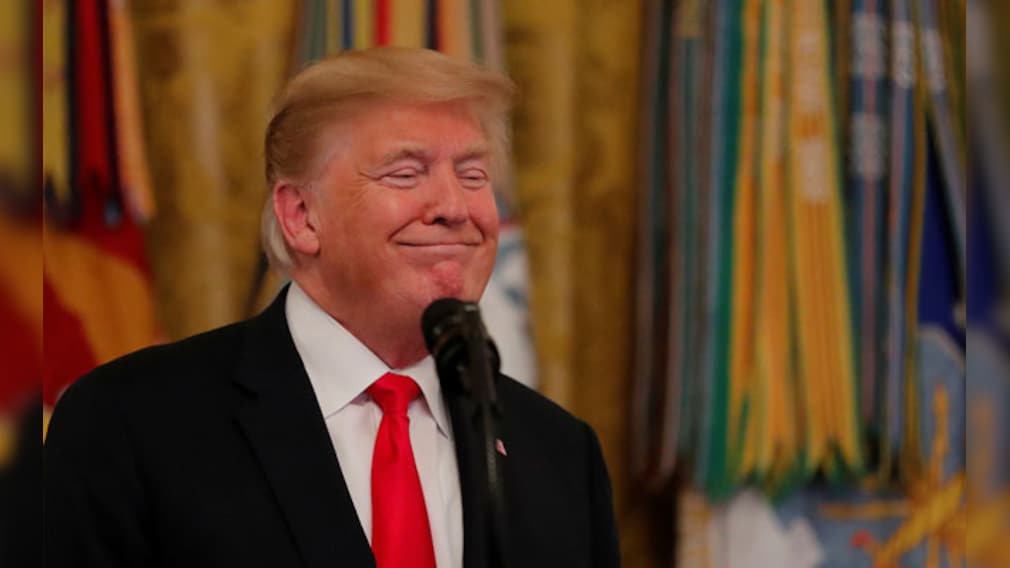
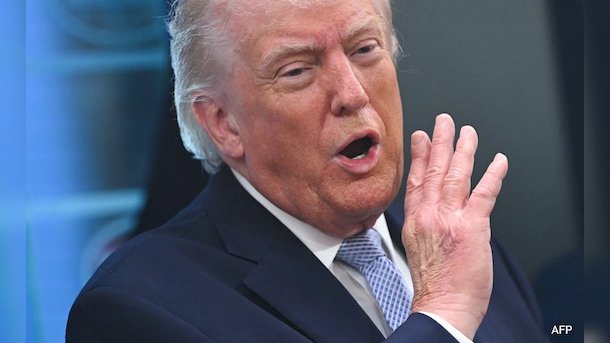
The English language is a stubborn, ancient beast. It has rules, syntax, and generally agreed-upon spellings. But the language keeps evolving, and rarely has it been bludgeoned into such fascinating new shapes as it is by the 47th President of the United States. It is no secret that where world leaders prefer to lean into diplomatic opacity, the most powerful leader in the world prefers unfiltered creativity: "I know words. I have the best words," he had declared at a rally in 2015, in the run-up to his first term. As the first year of his second term concludes, one can only add, "and how!"
When Donald Trump approaches a podium or a smartphone, he does not merely use English; he negotiates with it. He stares down syllables until they surrender and rearranges vowels until they agree to his terms. To the pedantic linguist, these are errors. But to the connoisseur of chaos, they are "Trumpisms" - accidental masterpieces of a man who seems to view the dictionary rather as Italian drivers regards traffic lights, not as a binding standard-setter but as a suggestion that can be ignored whenever one can get away with it - and when you are the President of the United States, that means pretty much any time.
Remember 'Covfefe'?
It begins, of course, with the Presidential thumbs and their propensity for careless tweeting. Historians of the future will likely dedicate entire semesters to the "Covfefe" incident. It remains the Mona Lisa of typos: mysterious, evocative, and utterly unintelligible. Was it a nuclear code? A cry for help? A nickname for a White House intern? Years later, "covfefe" retains a mystical aura. It is a word that means nothing, yet somehow encompasses the entire surreal experience of the Trumpian tweet era.
But "covfefe" was merely the opening act. We must consider the culinary innovation of the "hamberder". When the President tweeted about serving "hamberders" to the Clemson Tigers, he didn't just mistype a fast-food staple; he created a new category of cuisine. A hamburger is something you eat at a picnic; a 'hamberder' sounds heavier, darker - a beef patty that requires heavy breathing and a nondisclosure agreement to consume.
Then there is the persistent case of the "stollen" election. In post after post, the President has railed against the vote being "stollen". To the uninitiated, this is a misspelling of "stolen". To those of us with a penchant for German baking, however, it is a delightful image. Stollen is a dense, powdered sugar-coated fruit bread eaten at Christmas. Every time the President rages about the "stollen", one cannot help but picture ballot boxes stuffed not with fraudulent votes, but with dried fruit, marzipan, and holiday greetings in the language of Mr Trump's paternal ancestors, the German Trumpfs.
Origins And Oranges
If his thumbs are agents of chaos, his tongue is a revolutionary. The President often speaks with the confidence of a Ferrari engine inside a golf cart; the momentum is high, but the steering is loose. This leads to phonetic collisions like "oranges". During a discussion on an FBI investigation, the President repeatedly insisted on looking at the "oranges" of the probe. He meant "origins", of course, but by saying "oranges" three times, he turned a legal inquiry into a quest for Vitamin C.
Similarly, he once spoke with great passion about the "furniture of our children". He meant to say "future", but in the heat of the moment, he accidentally suggested that America's youth are merely decorative ottomans in the living room of democracy. And let us not forget the "anomynous" op-ed writer - a pronunciation that sounded less like a person withholding their name and more like a shy species of dinosaur.
The Trumpian worldview also requires a new map. Why be constrained by the globe when you can invent nations? He once praised the healthcare system of "Nambia" while addressing African leaders. Nambia does not exist, though it sounds like a lovely place, likely bordering Wakanda, where the golf courses are tremendous and the tariffs are low. He has also taken us to "Thigh-land" and introduced us to the "Yo-Semites". This last one, intended to be Yosemite National Park, was pronounced as a casual greeting to a group of Jewish people ("Yo! Semites!"), transforming a tourist valley into an oddly precise demographic shout-out.
Perhaps his most practical contribution to English, however, is his approach to names. The President is a busy man; he values efficiency. Why waste seconds saying "Tim Cook, CEO of Apple", when "Tim Apple" conveys the same data in half the time? It is a return to medieval naming conventions, like John the Baker or Donald the Builder. It is ruthless, corporate efficiency applied to identity.
Critics may call his occasional “braggadocious” effulgences (the adjective comes from his speech to the United Nations General Assembly, no less) a "word salad", but that implies a mix of vegetables. This is more of a word khichdi - spicy, thick, and full of things you can't quite identify. Whether he is acting "unpresidented" (a Freudian slip for the ages) or winning "bigly", Donald Trump has proven that he possesses the best words. They just aren't always the ones in the dictionary.
(Shashi Tharoor has been a Member of Parliament from Thiruvananthapuram, Kerala, since 2009. He is a published author, including two books on the English language - 'Tharoorosaurus' and 'A Wonderland of Words' - and a former diplomat.)
Disclaimer: These are the personal opinions of the author
-
Opinion | The Last Bet? What Trump's 'Mother Of All Bombs' Could Actually Do To Iran

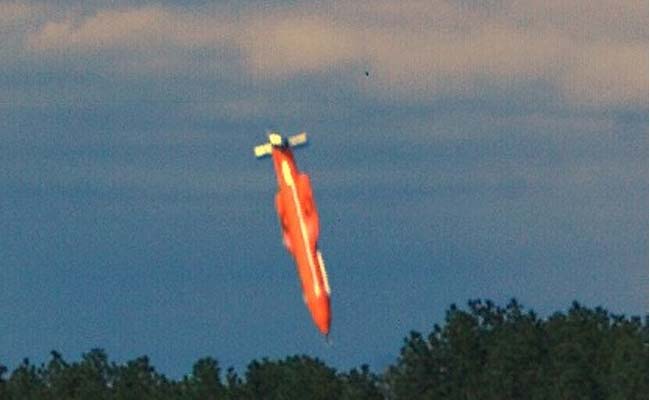
Can an MOAB deliver a decisive blow to Iran that may force it to surrender immediately, as Japan did after Hiroshima and Nagasaki in World War 2?
-
Hit Songs, Empty Pockets: The Hidden Math Behind India's Viral Music Boom
Over 80,000 brands and five lakh creators in India make branded content. The opportunity is worth around Rs 1,500 crore.
-
Opinion | Great 'Exceptions': How The Oil India Was Attacked For Is The Oil Trump Now Seeks
A law written to punish the buyers of Russian oil was suspended by the US to protect a purchase of Russian oil. India spent fourteen months being lectured for less.
-
Opinion | Louis Vuitton Loot, Torched Cars: France Protests Have An Unlikely Beneficiary
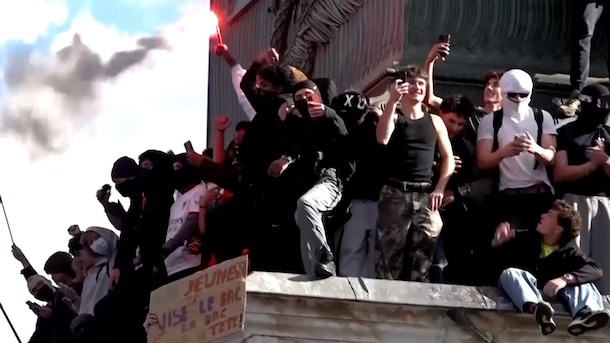
It's an unbelievable moment. Crowds looting the most exclusive stores in Paris, including the famed Luis Vuitton. But what's behind this meltdown?
-
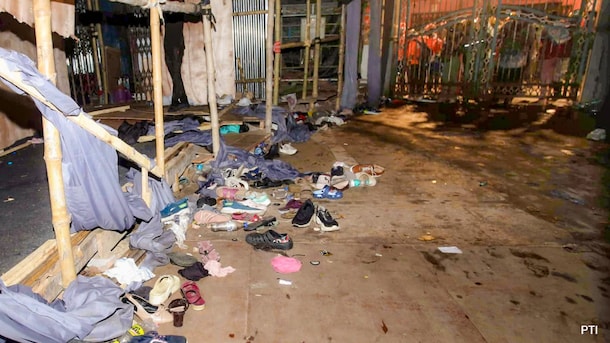
Blog: Kolkata Didn't Learn From 2015. Eleven Years Later, It Proved To Be Fatal
The City of Joy isn't a stranger to crowd control. Be it during Pujo or Christmas at Park Street, Eden Gardens cricket matches, or Derbies between Mohun Bagan and East Bengal. But during Pujo, the entire city is on alert.
-
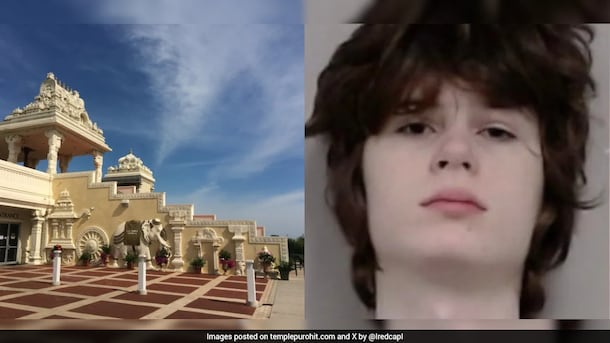
Opinion | Slurs, Threats, Now A Temple Attack Plot: When Did America Become So Hostile To Indians?
The rising tide of anti-India, anti-Hindu, and racist attacks serves as a stark reminder that economic prosperity does not automatically guarantee social immunity from bigotry.
-
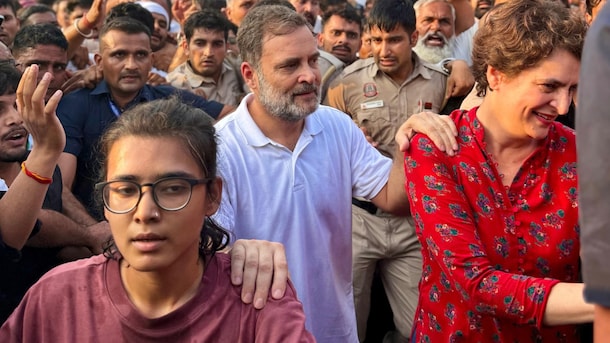
A Step Behind Neha Bora: What Rahul Gandhi's Gesture Says About Congress' Gen-Z Pitch
At INDIA bloc's march to Supreme Court, Rahul Gandhi placed himself a step behind two women, hands resting on their shoulders. One was his sister Priyanka. The one on his right was Neha Bora. Here's what the image means for the protest wave now, and for Rahul's politics in general.
-
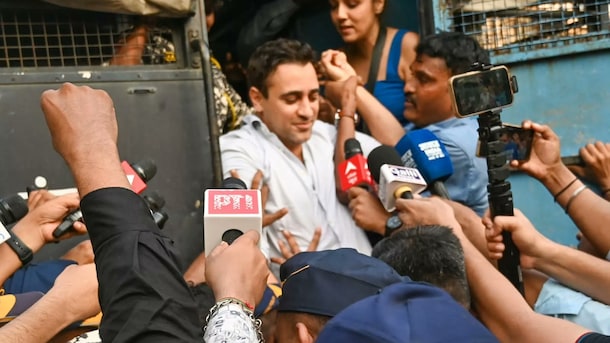
Opinion | Imran Khan, And The Perils Of Having An 'Opinion' In Bollywood
The reality of the industry is quite grimy. More often than not, its inhabitants have been fairweather friends, happy to sing the praises of whoever is in a position of authority.
-
Exclusive: India's Food Safety Problem Goes Beyond Just Dirty Kitchens - By Tukaram Mundhe
On World Food Day, Maharashtra's Commissioner of Food Safety explains why instead of taking stopgap measures, the entire supply chain in India needs to be held accountable and made transparent.
-
Opinion | India Has Enough Coal. So Why Are Power Plants Running Short? A 76 Million 'Crunch'
As of October 5, as many as 82 of the 191 thermal plants monitored by the Central Electricity Authority were in the 'critical' category