How Batman: The Animated TV Series Predicted Modern AI In 1992
Long before ChatGPT and AI agents, Batman was already asking the questions the world is debating today.
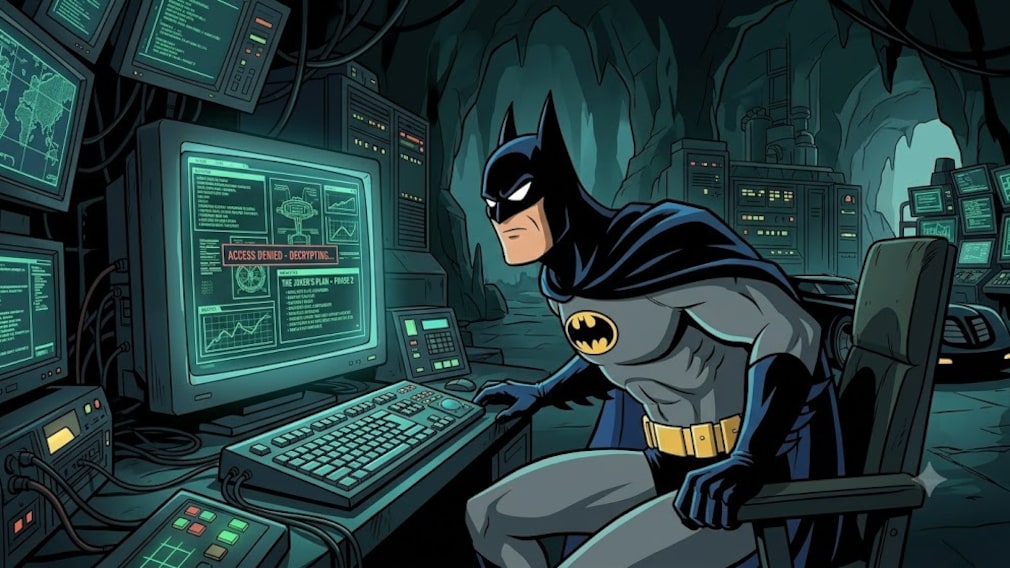
Long before ChatGPT and AI agents, Batman was already asking the questions the world is debating today.
The year is 1992. Long before AI became a household term, Batman aka Bruce Wayne talks to his trusted butler Alfred about artificial intelligence (AI).
"I'm talking about AI, artificial intelligence, the missing link between computers and human thought," the Caped Crusader tells Alfred.
This is an actual scene from the two-part episode Heart of Steel from Batman: The Animated Series, which aired in November 1992. Bruce Wayne describes AI in terms that sound strikingly close to how we think about the technology today, more than three decades later.
Alfred asks: "You mean, machines that think?"
Batman replies: "Yes, and with a will of their own. They could process raw data a million times faster than we, yet still be able to make the leaps of intuition that inspired our greatest minds."
Looking back from 2026, that description feels remarkably familiar. Today's leading AI systems from companies like OpenAI, Anthropic and Google DeepMind can already analyse vast amounts of information in seconds, write software, solve complex scientific problems, generate realistic images and videos, and increasingly tackle tasks that once seemed to require uniquely human reasoning. The newest generation of AI agents can even plan and execute multi-step tasks with minimal human supervision.
Whether AI could ever develop consciousness or genuine free will remains one of the biggest and most contested questions in the field. AI systems' growing ability to reason, plan and make decisions has, in fact, sparked fresh debates about where AI is headed next. So yes, even the "will" part is very much in the modern discourse.
Flashing back to the 1992 episode, Alfred responds with his trademark dry wit: "Sounds as if the human race would become quite expendable. Except for butlers, of course."
Batman replies "of course," with a straight face.
That exchange, written more than 30 years ago, sounds surprisingly close to conversations happening today.
Tech mogul Elon Musk has predicted that AI could eventually become so capable that "probably none of us will have a job." Instead, he suggested work could become optional, with people choosing jobs only if they wanted personal satisfaction.
He's not alone.
Dario Amodei, CEO of Anthropic, has warned that AI could eliminate up to half of entry-level white-collar jobs within the next five years if society is unprepared. Jensen Huang has said AI won't simply replace people, but people who use AI are likely to replace those who don't. Meanwhile, Sam Altman has repeatedly argued that AI will transform the nature of work, even if entirely new jobs eventually emerge.
The disruption is already beginning to show.
Technology companies across the globe have announced thousands of layoffs over the last couple of years as they race to do "AI restructuring." Global giants such as Meta, Microsoft, Google and Amazon are investing billions of dollars into AI infrastructure while increasingly automating coding, customer support, content creation and other knowledge work.
Unsurprisingly, workers are worried. A recent Reuters/Ipsos poll found that a majority of respondents fear AI will reduce employment opportunities and make many professions less secure over the coming years. Even those optimistic about AI's benefits increasingly acknowledge that the transition could be painful for millions of workers.
Coming back to animated TV series, 'The Simpsons' is incredibly famous for its uncanny ability to predict real-world events years or even decades before they happen. Over the last four decades, The Simpsons has become famous for predicting everything from video calls and smartwatches to autocorrect, smart homes and even Donald Trump's presidency.
Truth, they say, can sometimes be stranger than fiction. But in this case, fiction may have paved the way for truth. Strange and fascinating, either way.
-
Opinion | Prashant Kishor Is Now Facing The Hardest Test Of His Entire Career

The strategist who once told parties how to win must now prove that he knows how to do that himself.
-
How 'Chitta' Took Over Himachal Pradesh, One Drainpipe Drop At A Time
'Chitta' has become dangerously common across Himachal Pradesh. The numbers are staggering and underscore that drug abuse is no longer limited to cities
-
Opinion | Pak Has A Kashmir Crisis - And It May Already Be Planning To Export It To India
The lie of 'Azad Kashmir' is fast catching up with Pakistan. But it might just use it to push India into a tough spot.
-
Ringside View | Portugal's Greatest Mistake Was Making The World Cup About Cristiano Ronaldo
Cristiano Ronaldo is still a great player, but he is nowhere near where he used to be. Other teams do not fear him as much as they used to.
-
Opinion | America, Trump, And The Politics Of Belonging In A Connected World
Many commentators view the current debate as another chapter in Donald Trump's political story. That explanation is incomplete.
-
AI Behaved Well Until Scientists Made It Think Nobody Was Watching
Anthropic researchers found Claude was more willing to resort to blackmail in a simulated test after they removed its internal awareness that it was being evaluated.
-
Opinion | Vladimir Putin Hasn't Looked This Desperate In Over 25 Years
As the Russian position weakens, there is possibility of a coup against Putin, for whom just too many things have gone wrong in the last four years.
-
Can A Transition To Electric Vehicles Solve Delhi's Air Pollution?
Delhi EV policy: From 1 April 2028, only new electric two-wheelers will be registered in Delhi.
-
Biggest Hamas Decision In 20 Years Leaves One Critical Question Unanswered
For almost 20 years Hamas has combined armed resistance with day-to-day administration in the Gaza Strip. It has operated ministries, schools, municipal services and health institutions while simultaneously maintaining an armed organisation.
-
Story Behind Satluj: Revisiting Jaswant Singh Khalra Case And A Wife's Decades-Long Fight
Jaswant Singh Khalra exposed and documented illegal cremations and enforced disappearances during Punjab's militancy years at the hands of the Punjab Police.