India At Russia-Belarus War Games: What It Means And Why NATO, US Are Uneasy
The US confirmed it sent military representatives to observe the Zapad war games, which were the first such Russian-Belarussian exercise since Moscow's invasion of Ukraine three years ago.
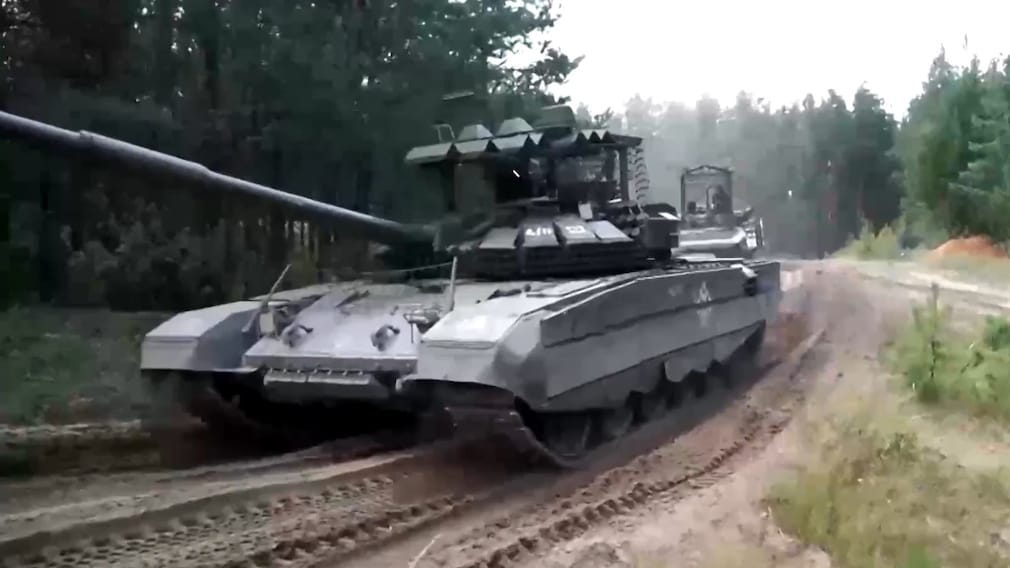
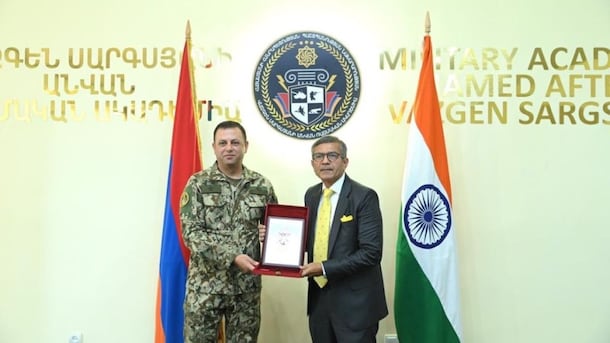
India's decision to send 65 soldiers to Zapad 2025 - Russian-Belarussian military exercises that included simulations for the launch of nuclear weapons - came as the West, specifically the North Atlantic Treaty Organisation, is on edge over war games on its doorstep. Military analysts cited in interntional media believe these games were designed to intimidate the rest of Europe, starting with Poland.
In Delhi, participation in the Zapad games was seen as deepening long-standing ties with Russia.
It also reinforces operational collaboration between the two militaries, which is critical since a bulk of India's armed forces still operates Russian-origin hardware. The government's 'aatmanirbhar Bharat', or 'self-reliant India', push in the defence sector is a plan to reduce that reliance but not in the short-term.
This, though, is also at a time when ties with the United States and the European Union go through turbulence - with spats over buying Russian oil and the trade tariff / deal stand-off with the US.
NATO's uneasiness is reflected in remarks made by the European Union's foreign policy chief, Kaja Kallas, who said the partnership with India extends beyond the trade deal the two are expected to sign.
"... it is about defending rules-based international order (and) participating in military exercises, the purchase of oil... these are obstacles to our cooperation," she said.
However, she did also admit India, which has saved billions of dollars in buying oil from Russia, would not "completely decouple" from that link, and Brussels and Delhi need to talk through their issues.
The US, meanwhile, has confirmed it sent military representatives to observe these war games, which were the first such Russian-Belarussian exercise since Moscow's invasion of Ukraine three years ago.
On its purchases of Russian oil, India has repeatedly said these are driven by its rapidly growing energy requirements and that it will continue to seek the best possible deal - from the point of view of its finances. India has also pointed out the double standards at play, referring to the EU buying gas from Russia without sanctions from the US and China escaping punitive tariffs despite buying even more oil.
Delhi's presence at the Zapad war games puts relations with the West, the US particularly, in a grey area, at least for now. The US has exerted, or tried to exert, pressure on the Indian government via the tariff route, threatening and imposing outrageous levies - over 50 per cent in some cases - on exports.
India has held firm, refusing to retaliate against the US (as some countries have done) or buckle and concede strategic trade and geopolitical advantages (as others, including Pakistan, have done).
Analysts argue the Indian government has, in fact, handled the US and Donald Trump issue quite well, maintaining friendly relations (and keeping bilateral trade talks afloat) while making its red lines, such as refusing to allow US manufacturers access to price-sensitive agriculture and dairy markets, clear.
That adroitness seemed to pay off this week when Mr Trump reached out to Prime Minister Modi via a late-night phone call, ostensibly to wish him a happy 75th birthday, but also to tacitly signal a possible reset of India-US relations, which are, arguably, among the most consequential global partnerships.
The Zapad turn of events, however, puts that renewal attempt back under the spotlight.
Mr Trump has not yet responded to Indian troops in Belarus, particularly as he tries to win over Minsk - a critical ally of Russia's Vladimir Putin - in his now long-running attempts to end the war in Ukraine.
And some of the 'alarm' over India at Zapad 2025 also stems from growing bonhomie with Russia and China, the two countries the US is most at odds with in the European and Indian Ocean theatres.
Driven by high tariffs (and the threat of other such punitive measures), the three countries have inched towards each other, solidifying already-existing links in the BRICS and Shanghai Cooperation Organistion bloc. And the US is not happy about that, which played a role in Mr Trump's phone call.
That Mr Modi's visit to China for the SCO and a photo of him with Xi Jinping and Vladimir Putin was labelled a 'chilling' image by some sections of the Western media underlines that point.
India's presence at the Zapad games, therefore, have been seen by US officials as a potential 'line in the sand' moment, over concern Washington could lose a powerful ally in this part of the world.
Ultimately this points to how fluid global geopolitics has become, particularly after the wars in Ukraine and West Asia, which have disrupted diplomatic and military relations and altered economic realities.
Finally, and perhaps most importantly, it underlines an evolving foreign policy trend.
India has made it clear wants to maintain strategic autonomy and is willing to work with a range of global partners on a range of issues, but on equal terms and regardless of friction between them.
Incidentally, the war games also put NATO on alert for a different reason; in 2022 Moscow's attack on Kyiv came immediately after war games in southern Belarus, which borders Ukraine. The September 12-16 exercise, therefore, were viewed with concern by other bordering states, including Poland.
Those concerns had been raised even a week earlier, after Poland, a NATO member, week shot down armed Russian drones in its airspace. That was the first time Russia had crossed into NATO airspace.
In fact, since the invasion of Ukraine there have been 11 'incursions' into Poland. And a rattled Warsaw demanded NATO order a no-fly zone over Ukraine to protect the alliance from potential drone attacks.
-
Census Asks 40 Questions. Why Number 10 Is A Battleground | NDTV Explains

The caste question is a fill-in-the-blank for everyone other than SCs and STs. But there's a case for making it a dropdown with set options. Let's decode the history and math behind the politics.
-
Opinion | Why India's Bureaucrats Have Learnt That Doing 'Nothing' Is Safer
India's bureaucracy has perfected a peculiar survival strategy: make a decision, you may be punished; make none, and you are usually safe.
-
Opinion | 482 Dead, And Counting: How A Glacier Collapse Became A Himalayan Disaster
What looks like a sudden flood is actually the final link in a chain of events unfolding across an increasingly unstable Himalayas
-
Opinion | Rahul Gandhi Is Cleaning House - But At The Cost Of The Congress
In his search for a new organisation, Rahul Gandhi is making the big mistake of treating the Congress he inherited as dead weight.
-
One-Day Disaster, Multi-Season Economic Shock: Nepal's Sisyphean Curse
Nepal Flash Floods: Nepal cannot prevent every earthquake, landslide or glacial collapse. But it can reduce how much each disaster costs.
-
Meta Pays Billions Over Teen Harms In US. In India, Algo Runs Unchecked
The US Surgeon General has separately warned that heavy social media use roughly doubles adolescents' risk of depression and anxiety, and that nearly half of teens surveyed said it made them feel worse about their bodies.
-
Blog | 'No Calls, People Scanning Banks For Bodies': Nepal Journalist Describes Flood Aftermath
As of Thursday evening, it was still impossible to get through to mobile phones in Dhunche, the district headquarters, or the flood-ravaged towns of Syabru Bensi or Timure.
-
Opinion | Toxic Knows Exactly What It Is Doing To Its Hero. And You May Have Missed It
Toxic's bait-and-switch goes beyond its plot. Geetu Mohandas is almost making a subtle point - for those who can see it.
-
Why Nepal Is So Vulnerable: Glacial Lakes, And A Himalaya That Moves Constantly
The August 26 inland tsunami was not an accident of weather. It sat at the intersection of processes that make Nepal one of the most hazard-exposed countries.