A History Of US-Led Regime Changes And Their Disastrous Consequences
There is a familiar theme to American power when it decides to reorder the world. It is against that historical backdrop that Donald Trump's latest foreign intervention must be understood.
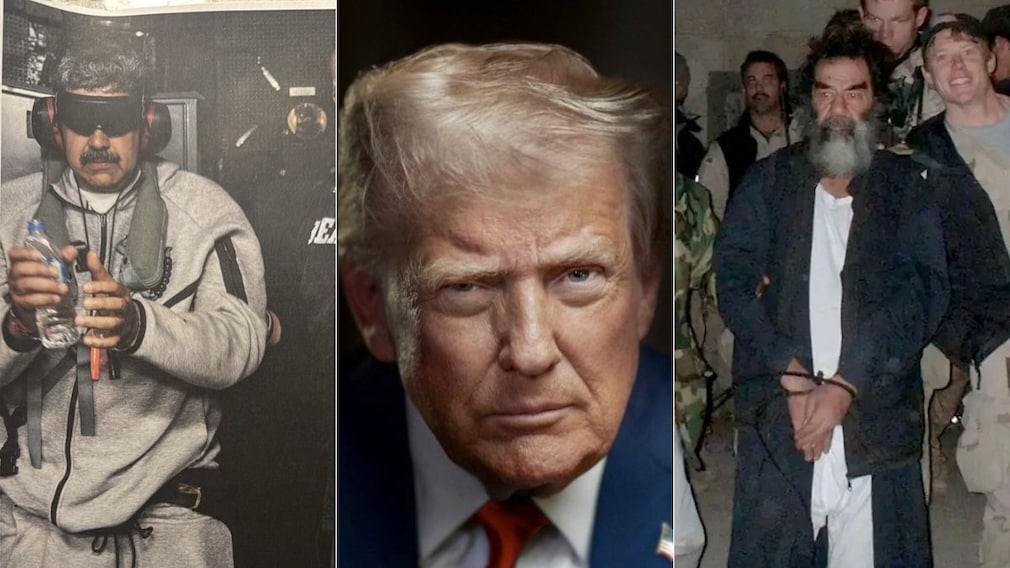
In late 2001, US-backed forces swept into Kabul, ending the Taliban's rule in a matter of weeks. A new Afghan leader, Hamid Karzai, was installed with American backing. President George W Bush spoke confidently of democracy taking root in Central Asia. Two decades later, the Taliban returned to power almost as swiftly as they had been removed.
In Iraq, US troops toppled Saddam Hussein in 2003 with similar speed. Washington promised a democratic transformation, but a prolonged insurgency, sectarian civil war, regional destabilisation, and the rise of the so-called Islamic State-outcomes that continue to shape the Middle East today.
There is a familiar theme to American power when it decides to reorder the world. It is against that historical backdrop that Donald Trump's latest foreign intervention must be understood.
READ | NYT Reporter Cold-Called Trump At 4:30 am After Maduro Op. The President Answered
Trump's Venezuela Gamble
On Saturday, President Trump openly celebrated what he described as a flawless US military operation in Venezuela, which included an assault involving special forces, air strikes, and naval deployments that culminated in the seizure of Nicolas Maduro in Caracas.
From a purely tactical perspective, the mission succeeded. US officials confirmed that no American service member was killed. The Venezuelan leader was removed from power and taken into US custody. For Trump, who prizes visible demonstrations of strength, it was an operation that delivered immediate results.
Politically, however, it places him in far more treacherous territory.
READ | Venezuela Has World's Largest Oil Reserve. How US Action Affects Markets
For years, Trump has built his appeal on opposition to America's "endless wars." He has repeatedly condemned the Iraq invasion as a catastrophic mistake and framed his foreign policy as a rejection of what he and his supporters call "neocon wars." The US leader returned to power vowing to be a "peace President", but a year later he his fighting on multiple fronts.
The sudden embrace of a large-scale military intervention abroad therefore sits uneasily with Trump's own rhetoric-and with the expectations of many of his voters.
America's Long Record Of Regime Change
The United States is not new to the practice of interfering in the domestic politics of independent and sovereign nations. Washington has been responsible for the forced removal of roughly 35 foreign leaders over the past 120 years-nearly a third of all such interventions globally in that period.
READ | "Deep Concern": India's Message To People Of Venezuela After US Raid
Scholars refer to this as foreign-imposed regime change, or FIRC. Around one-third of all forced regime changes worldwide are followed by civil war within a decade.
From Guatemala in 1954 to Panama in 1989, the United States has repeatedly intervened to remove leaders it regarded as hostile or unreliable. In Guatemala alone, Washington helped oust three leaders in a single year, triggering decades of instability and violence.
In Iraq, the dismantling of Saddam Hussein's security apparatus left hundreds of thousands of armed men unemployed. The resulting struggle for power fuelled sectarian violence, empowered Iran-backed militias, and ultimately gave rise to the Islamic State.
In Afghanistan, the US-installed government never achieved legitimacy across the country. Corruption, factionalism, and dependence on foreign military support hollowed it out from within, paving the way for the Taliban's return.
The Bush-Karzai Rupture
Few episodes illustrate the structural flaws of regime change more clearly than the relationship between Washington and Hamid Karzai.
Initially presented as a partner in rebuilding Afghanistan, Karzai increasingly clashed with his American backers over civilian casualties, negotiations with insurgents, and the scope of US military operations. Over time, the relationship deteriorated to open hostility.
"To the American people, give them my best wishes and my gratitude. To the US government, give them my anger, my extreme anger,' Karzai had said.
In Venezuela, Trump administration has justified its actions by portraying Maduro as the head of a transnational criminal network. The administration has also remained vague about its endgame, whether it intends to install a new government directly, pressure Venezuelan institutions to reorganise themselves, or oversee a transitional authority.
But history offers little reassurance.
-
Explained: Why Tamil Nadu Dropped Second Airport Near Chennai

While the government stands firm with the protesting residents, Chief Minister Vijay assured that Chennai's aviation needs will not be ignored. The state will soon announce a detailed plan for a new airport at an alternative site, he said.
-
Opinion | A 'Snub' Gone Too Far? The Story Of Bangladesh PM's Stalled India Visit
The abrupt cancellation of Prime Minister Tarique Rahman's scheduled visit to New Delhi this month raises many questions.
-
Inside Pak's New Law That Has One Man Written All Over It: Asim Munir
With a new act, Munir has truly reached the apex. At least most politicians in Pakistan will hope so.
-
Behind Sugar Shock: Not Ethanol, But Over-Estimation Led To 16% Price Rise
In November 2025, the government allowed sugar mills to export 15 lakh tonnes. Now, India has allowed 10 lakh tonnes of raw sugar to enter duty-free.
-
3 Minutes, 6 Stanzas, Century-Old Debate: The Many Turns In Vande Mataram's Journey
PM Narendra Modi launched a year-long commemoration of the song's 150th anniversary on November 7, 2025. In December, both Houses held special discussions on it, during which the 1937 Congress decision was scrutinised.
-
Indian Family Wipeout Over iPhone: The Dangerous Lure Of Consumer Tech Debt
Young buyers walk into physical retail stores, hand over basic identity documents and walk out with a consumer electronic device that costs more than their entire family's monthly take-home income
-
China Outspends India In Space, But New Delhi Holds The Trust Card
The US remains the undisputed leader in the global space race. But it's realistic for India to aim for the third place, says Bellatrix Aerospace COO.
-
It's About The Provenance: Head Of Strategy Koreel Lahiri Decodes One Identity Of NDTV
We at NDTV consciously recognise the fact that the same consumer inhabits several screens during the course of a day.
-
Opinion | India's UPI Miracle Has Created A Difficult, Rs 20,000-Crore Question
UPI's whole magic was the Rs 30 payment it charged nothing for. But how long can it stay free?
-
Opinion | Manmohan Singh, Bachchans, And Other Secrets Of 10 Janpath: The Sonia Gandhi Story
She entered politics reluctantly, mastered its power games, chose Prime Ministers, and managed betrayals. Congress's most powerful woman finally tells the world how.