The 60-Day Clock That May Stop Trump's Iran War, And How He Could Ignore It
Under the War Powers Resolution, also called the War Powers Act, an American president who has activated the armed forces without Congressional approval has 60 days to stand down.
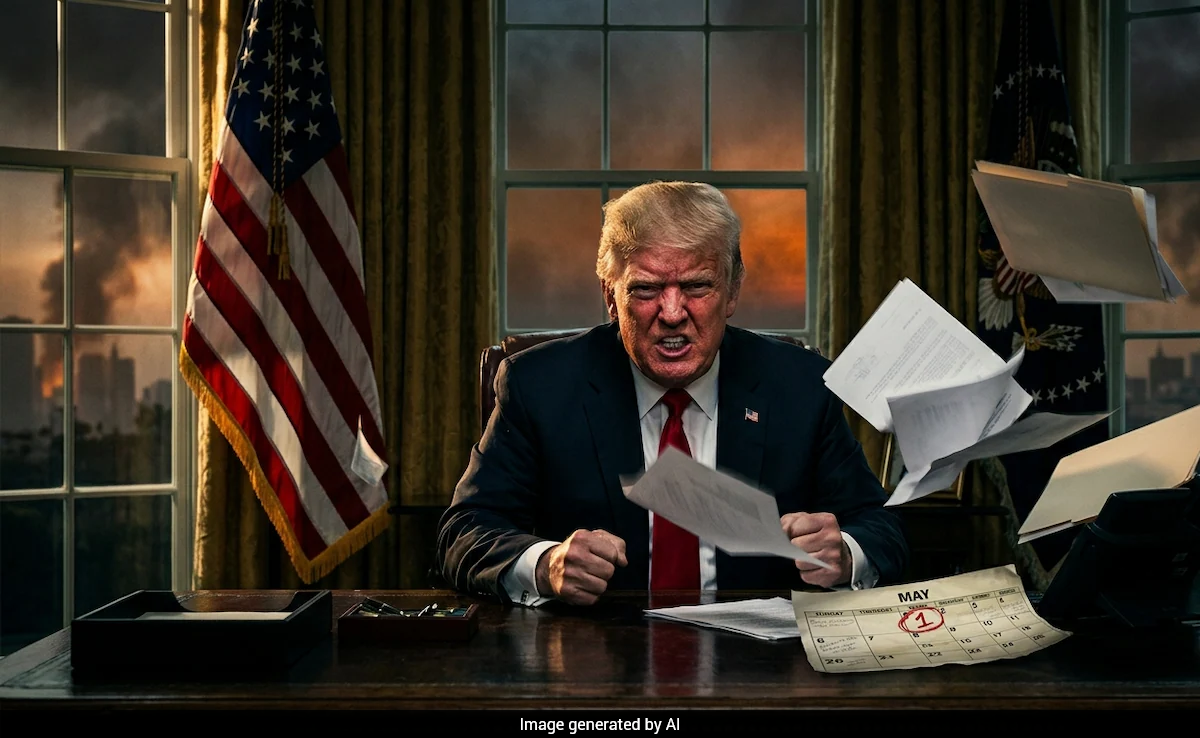
May 1, 2026. In Democrat offices and those of anti-Iran war protestors worldwide, there is likely a calendar with this date circled in red, maybe with an exclamation point for emphasis.
The US launched missile strikes on Iran - ostensibly to degrade its nuclear and ballistic missile programme, and effect regime change - Feb 28, leading to retaliatory strikes and a conflict that escalated sharply, dragging in other Gulf states and triggering a global energy crisis.
Since then, conservative estimates indicate over 5,000 deaths, including a large number of civilians and children, and over $50 billion in damage to energy infrastructure. And crude oil prices jumped past $110 a barrel, prompting fuel and gas prices to spike in the US and Europe, and panicked smaller Asian nations into lockdown-like scenarios.
The US' war on Iran has rumbled on since.
Except, it isn't legally a war. Not in the US, not till May 1.
The war that's not a war
Under the War Powers Resolution, also called the War Powers Act, an American president who has activated the armed forces without Congressional approval has 60 days to stand down.
A 30-day extension is allowed, but only if the president offers Congress a written guarantee that the extra time is to ensure the safe withdrawal of US troops and not continue fighting.
That deadline falls on May 1.
Technically the 60-day deadline is April 28, but since US President Donald Trump formally notified Congress of the strikes on March 2, the clock began ticking from that date.
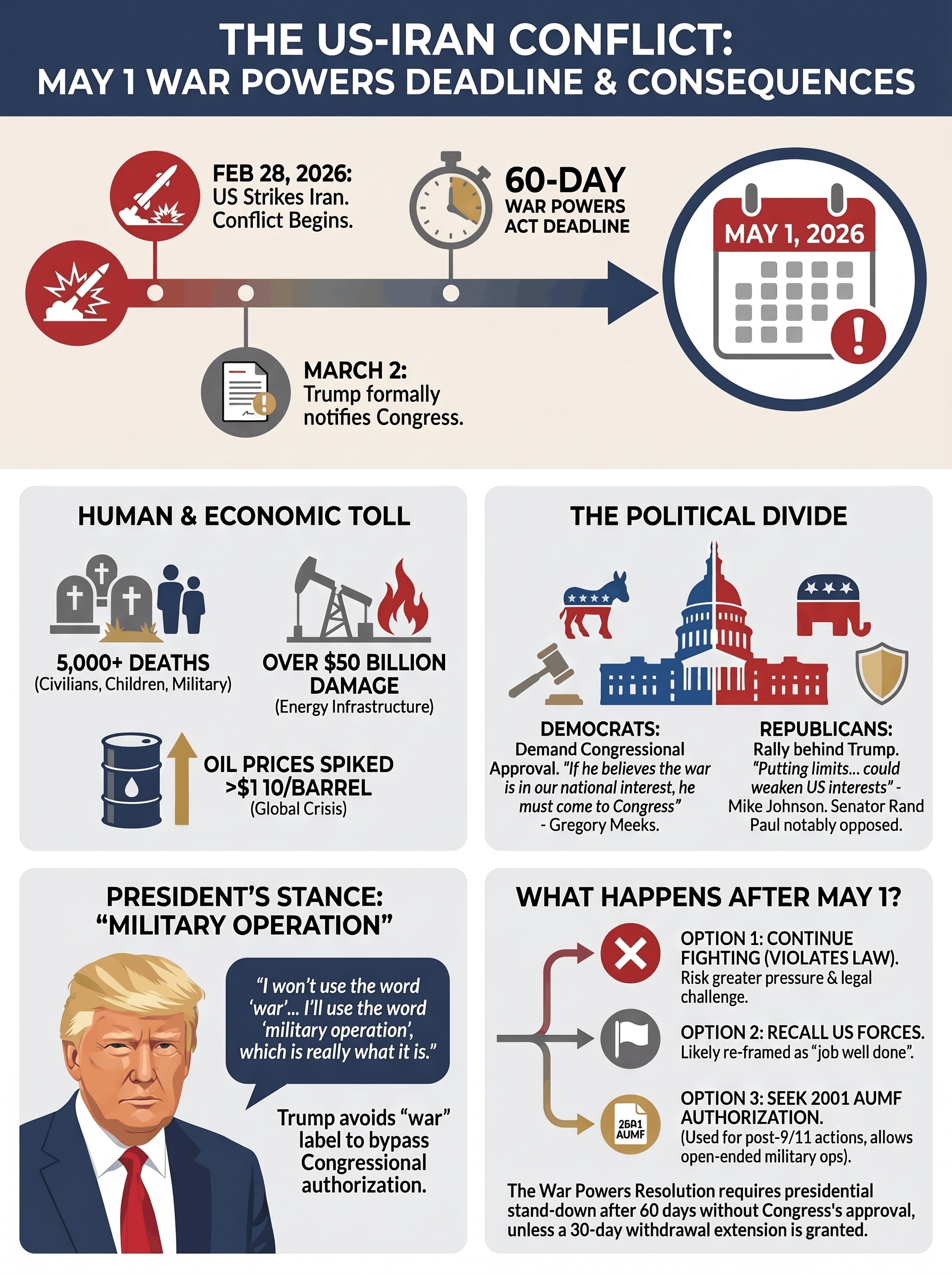
Republican and Democrat lawmakers have both called May 1 an "inflection point".
Gregory Meeks, the top Democrat on the House Foreign Affairs Committee, said last month: "If he (Trump) believes the war is in our national interest, he must come to Congress and make the case." Meanwhile, Republicans have rallied behind Trump; House speaker Mike Johnson said putting limits on Trump's authority during a military conflict could weaken US interests.
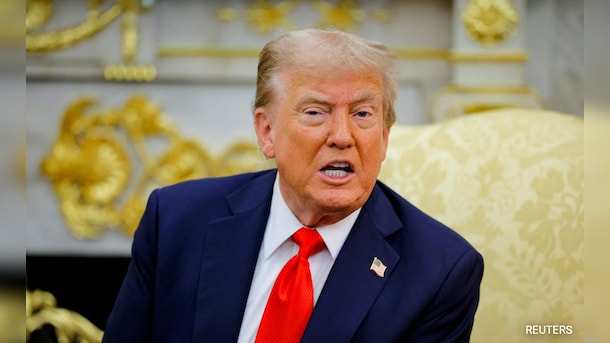
Trump understands the situation; the normally brash and outspoken president has been remarkably cautious in his choice of words. In late-March he said: "I won't use the word 'war' because they say if you use it... that's maybe not a good thing..."
"They (i.e., the Congress) don't like the word 'war'... because you're supposed to get approval (to start a war) so I'll use the word 'military operation', which is really what it is," he said.
This suggests he believes Congressional authorisation is therefore not needed.
But Democrats appear intent on holding the president to account on this point; last month the Republicans beat back three measures to call off the fighting. A fourth was stopped last week.
For the most part voting (and canvassing) was along party lines, though Senator Rand Paul, the Republican from Kentucky, voted the other way. "I think after 60 days, there may be a few more Republicans [who] join me," he told the BBC.
War or no war?
If there is no peace before May 1, Trump must choose from two options.
Trump's Iran war options - get Congress to approve fighting or pull back troops. (File).
He can order the military to continue fighting - which violates the law and puts him under even greater pressure, with Democrats and rivals baying even more loudly for his head.
Or he can recall US forces from the Gulf, leaving Iran to claim actual and moral victory, though it is likely White House propaganda will then kick in to re-frame the retreat as a 'job well done'.
However, what is likely to happen is that Trump will seek an Authorisation for Use of Military Force, a law that came into force in September 2001, days after the 9/11 terrorist attacks.
If an AUMF is granted, it means Trump can continue US military ops without an end date.
Since 2001 this has been used to authorise a number of military actions, often puzzlingly beyond the original mandate - i.e., the use of "all necessary and appropriate force against nations, organisations, or persons responsible (for the 9/11 attack)".
A presidential habit?
To be fair, Trump isn't the first contemporary president to launch military action without Congressional approval. The argument then was that it was a timebound intervention. Then-National Security Advisor Ben Rhodes said: "... the nature of our commitment is that we are not getting into an open-ended war, a land invasion in Libya."
Ground War On? US Rushes 57,000 Troops As Iran Crisis Escalates
So far, Trump has not put an explicit end-date to the fighting and has also refused to rule out a 'boots on the ground' scenario, particularly if he still wants to secure Iran's oil or secure its rumoured 440kg stockpile of enriched uranium.
The clock is ticking
If Trump does not secure Congressional approval before May 1, and refuses to pull back US troops, he needs an AUMF.
Without either of these, he will conducting an openly illegal war and even the Republicans might not be able to protect their man in such a case. The fighting in Iran has already been slammed as violative of international law.
-
Tata Sons' Trust Issue: Two-Pronged Row Goes Beyond The Chair

NDTV Explains: Overtly, the latest conflict is whether N Chandrasekaran continues as executive chairman of Tata Sons. The controversy involves at least one more issue.
-
Opinion | US Has Institutionally Weaponised India's Russia Oil Dependence. Can New Delhi Cope?
A new legislation can connect India's Russian energy purchases to its access to the American market over a five-year period
-
Opinion | Saudi Allies Are Now Discovering The Cost Of 'Commitment' - And Not Liking It
The spectacular no-show by Saudi Arabia's two defence allies - Pakistan, a nuclear power, and Turkey, which has NATO's second-largest army - is astounding
-
12 Years Of 'Modinomics': What Changed, What Worked, What Didn't
There is no single Modinomics textbook or formula. Instead, the term has come to describe a collection of choices made during the PM Modi years.
-
Opinion | How A Tiny 0.4% UPI Fee Could Change How India Pays
The introduction of a fee can have a psychological effect beyond its immediate financial cost. Businesses that have come to view digital payments as free may begin to look for alternative - split payments, cash, and so on
-
Opinion | Rs 75-Lakh Bounty, New Jaish Base, And The Case Of Pak's Ever-Missing' Terrorist
Pak's yearly act is back: finding Masood Azhar. But there are other questions FATF must be asking next month as it meets
-
For Years, Saudi Saw Houthis As Yemen's Problem. Then, A Knock On The Door
Actual fighting between the Houthis and Saudi Arabia began late in the overall timeline of the conflict that now involves powerful belligerents
-
Lal Topi, Blue T-Shirt: Akhilesh Yadav's 'PDA' For Blue Has A Coded Message
The message is clear: the Samajwadi Party wants to talk to voters beyond its traditional Yadav-Muslim support base, particularly to Dalits.
-
The Day 600 Men Lay Siege To Islam's Holiest Site And How They Were Gassed Out
Nearly 47 years ago, on November 20, 1979, the Grand Mosque itself was seized by an armed group in one of the most extraordinary episodes in modern Saudi history.
-
New UPI Charges: If Digital Payments Save Money, Why Charge For Them Now?
UPI Payments Free For Years: The government has subsidised UPI adoption for years. Official figures show thousands of crores in payouts over years.