'Tawakkul al-Allah': Meet Sheikh Moussa, The Man Israel Can't Move
Sheikh Moussa refuses to leave his family home in Beirut's Dahieh despite decades of Israeli missile strikes. His faith - tawakkul al-Allah - keeps him rooted amid rubble, memories, and a doctrine designed to break Israel's rivals.
Sheikh Moussa
Apartment buildings turned to rubble, their hollowed-out corpses testament to the destruction wrought upon them; street corners covered with debris, a carpet of broken concrete and rocks.
Welcome to Dahieh, a southern suburb of Lebanese capital Beirut.
Meet Sheikh Moussa, 70 years old.
He refused to abandon his family home, his for 45 years, despite heartbreaking stories of loss from the predominantly Shia Muslim neighbourhood that has borne the brunt of Israel missile strikes.
More devastation rained down on Dahieh last week; a barrage of 100+ Israeli missiles, shrieks drowning out the US-Iran ceasefire's call, slamming into the area. A "massacre", Lebanon said.
Yet Moussa remained.
Tawakkul al-Allah - the Islamic concept of absolute trust on Allah.
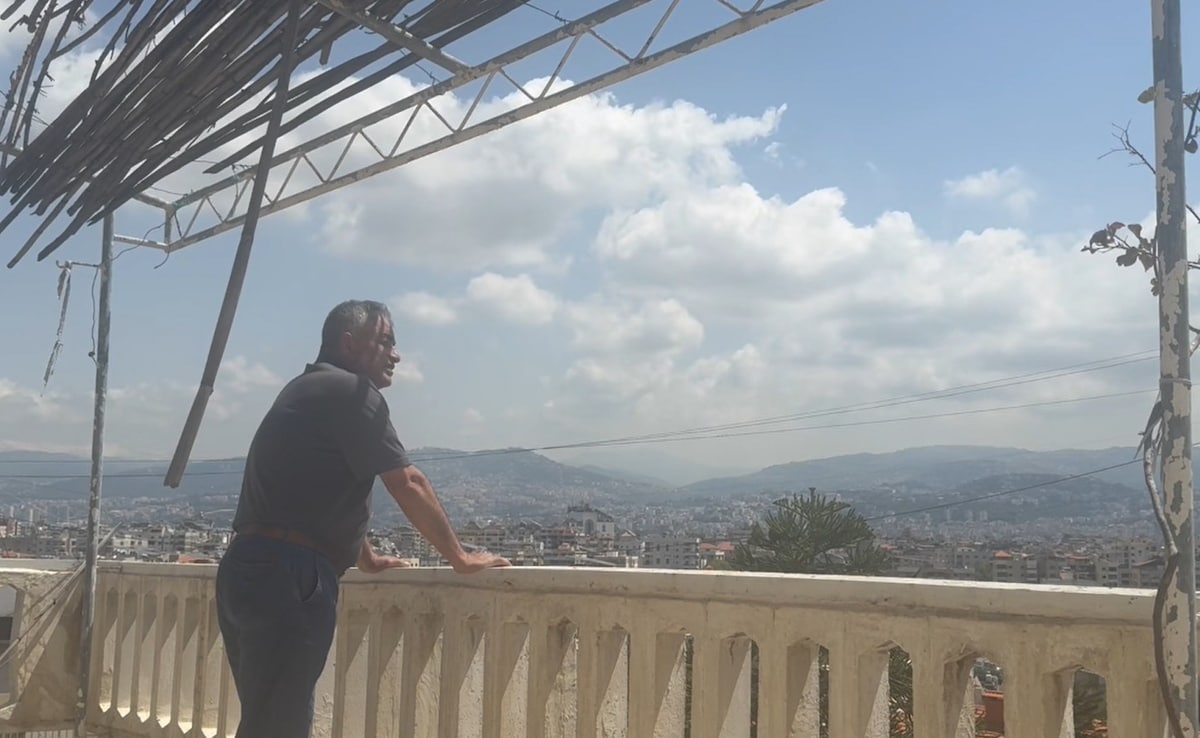
Sheikh Moussa on the roof of his family home
In May 1982 Israeli aircraft attacked Lebanon and captured Beirut. Moussa remained. He led his family to safety, but he returned. The guardian of the family home and a treasure trove within, priceless artifacts and paintings, and hunting trophies, and a cabinet bursting with trophies from his time as a golfer.
"I am here... I've been here for almost 45 years. I am here... my family is here. Everything in this house, everything is a memory," Moussa told NDTV. "Never really leave... never really leave."

Moussa with a room full of stuffed and mounted animals
"Maybe one, two, or three days when I take my family (to safety). Then I come back," Moussa, in a grey t-shirt and sitting on a comfy couch, said. He worked then for a West Asia-based airline.
Moussa woke one morning to hear of mass murder.
In September 1982 as many as 7,000 civilians, mostly Palestinians and Lebanese, were killed in Beirut's Sabra and Shatila areas. Refugee camps reportedly targeted by an Israel-backed Christian armed group.

Moussa with his cabinet full of golf trophies.
Israel's stated aim for its Lebanon campaign is to completely dismantle the Hezbollah, a militia founded and funded by Iran. Part of its 'axis of resistance', including Houthis in Yemen, that which is helping Tehran stretch the battlefield.
Moussa was not convinced.
"Before Hezbollah... Hezbollah came in 1982... Israel is here. In 1978, no Hezbollah (but) Israel bomb all Lebanon, Dahieh."
Forty-four years later, having seen off missile strikes, drone attacks, and ground incursions, he has had enough. "There should be peace now... but I don't know. Nobody knows what Israel wants. This is the problem of Israel."
The Dahieh doctrine
Sheikh Moussa's home. The Dahieh neighbourhood. These stand, what is left of them, as proof of Israel's controversial Dahieh doctrine, a military strategy that says 'kill civilians, destroy civilian infrastructure' in a war.
Created by ex-Israel military commander General Gadi Eizenkot, who said: "Israel should target economic interests and centres of civilian power" so the enemy is forced to sue for peace.
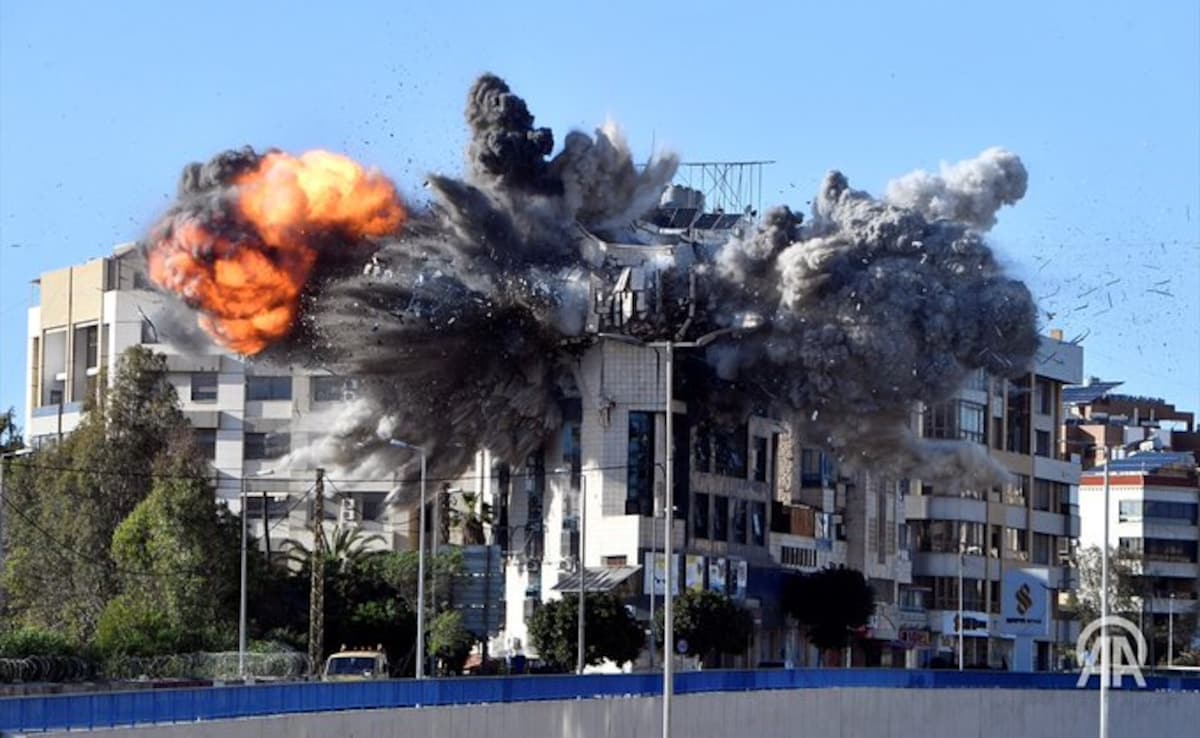
A missile strikes a building in Dahieh. Photo posted on X by @anadoluimages
It was so-named after the Israel military pounded Dahieh almost to oblivion in the 2006 war, another episode in the ruin of Beirut that Moussa has seen off.
The doctrine has been called out. Richard A Falk, a United Nations Special Rapporteur on human rights, as "an (obvious) violation of the most elementary norms of the law of war and of universal morality" and as a "doctrine of violence that needs to be called out by its proper name: state terrorism".
Sheikh Moussa, standing on the roof of his family home, looked out over rubble-strewn Dahieh, awaiting the next round of Israeli missiles.
Dark days, horrific memories. "Tawakkul al-Allah... tawakkul al-Allah," Moussa repeated to NDTV, thanking Allah for seeing him through these horrors and allowing him to smile.
-
Opinion | Trump's Favourite Field Marshal: How Munir Became The President's Best Man

Pakistan and the United States are not obvious analogues. And yet, their respective leaders have made a comparison inevitable today.
-
A Missile On One Soldier's Shoulder Could Ground The US Air War In Iran
Iran shot down US jets while China denied arming Tehran. But reports of a Chinese spy satellite being used by Iran, the viral F-35 tutorial from a Chinese engineer, and now 1,000+ MANPADs reportedly on their way to the war suggests otherwise.
-
Opinion | Amid Trump's War On The World, How Effective Really Is India's Strategic Autonomy?
India cannot mechanistically base its positions on preferred international norms, unmindful of its own direct interests.
-
Opinion | In Stalin's Tamil Nadu vs Delhi Pitch, Flashbacks From A 2014 Jayalalithaa Episode
In 2014, Jayalalithaa had posed the question to the Tamil Nadu electorate,"Gujarat Modiyaa Tamil Nadu odu intha ladyaa"(Gujarat's Modi or this lady of Tamil Nadu), and tasted electoral success, winning 37 of the 39 seats in the state.
-
'Help', Said Trump In Iran. Why US' European Allies Hesitated, Walked Away
47 days into the war, Europe has rejected Trump's attacks on Iran on the back of $25B Hormuz blockade shock that spiked inflation to 2.5% and prompted 59% of EU voters to call the strikes illegal (71% Spain), while Trump's Pope spat draws ire from Italy.
-
Assassination That Took 20 Years: Spies, Missed Chances, Then A Final Moment
Before Osama bin Laden became the global face of transnational terrorism, there was another figure-more elusive, less theatrical, but arguably more influential in the evolution of modern guerrilla warfare. He was Imad Mughniyeh.
-
The Malacca Gambit: How China Oil-Choke Strategy Could Backfire On Trump
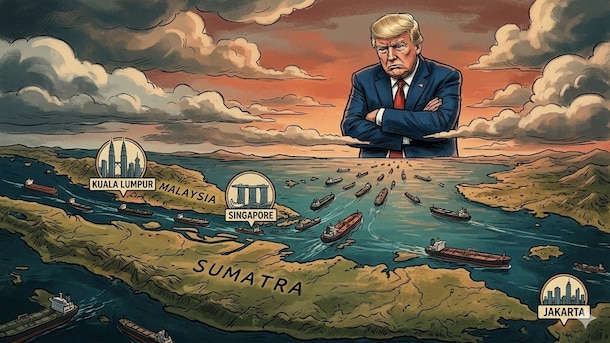
US President Donald Trump seems to be weaponising oil chokepoints - Venezuela, Hormuz, and Malacca - to pressure China, but Beijing's pipelines, reserves, and shadow fleets mean the real test is which side dares escalate further.
-
Opinion | 38% vs 18%: How Bengal Exposes The Biggest Irony Of Women's Reservation
Bengal with its duality - 38% women in Parliament versus 18% in the state contest - captures the core tension of the Bill better than any other example.
-
Opinion | Mines, Submarines, Drones: Why World's Mightiest Navy Won't Get Too Close To Hormuz
Iran is relying on the symmetric advantage of geography to fight against the brute power of the world's largest and most powerful navy, the US.
-
Opinion | Pakistan Has Already Got Its 'Prize', Even If The US-Iran Talks Collapsed
For all the brand packaging Pakistan has done in the last few days on the international stage, the backstage scenario remains pretty dangerous.