'Tawakkul al-Allah': Meet Sheikh Moussa, The Man Israel Can't Move
Sheikh Moussa refuses to leave his family home in Beirut's Dahieh despite decades of Israeli missile strikes. His faith - tawakkul al-Allah - keeps him rooted amid rubble, memories, and a doctrine designed to break Israel's rivals.
Sheikh Moussa
Apartment buildings turned to rubble, their hollowed-out corpses testament to the destruction wrought upon them; street corners covered with debris, a carpet of broken concrete and rocks.
Welcome to Dahieh, a southern suburb of Lebanese capital Beirut.
Meet Sheikh Moussa, 70 years old.
He refused to abandon his family home, his for 45 years, despite heartbreaking stories of loss from the predominantly Shia Muslim neighbourhood that has borne the brunt of Israel missile strikes.
More devastation rained down on Dahieh last week; a barrage of 100+ Israeli missiles, shrieks drowning out the US-Iran ceasefire's call, slamming into the area. A "massacre", Lebanon said.
Yet Moussa remained.
Tawakkul al-Allah - the Islamic concept of absolute trust on Allah.
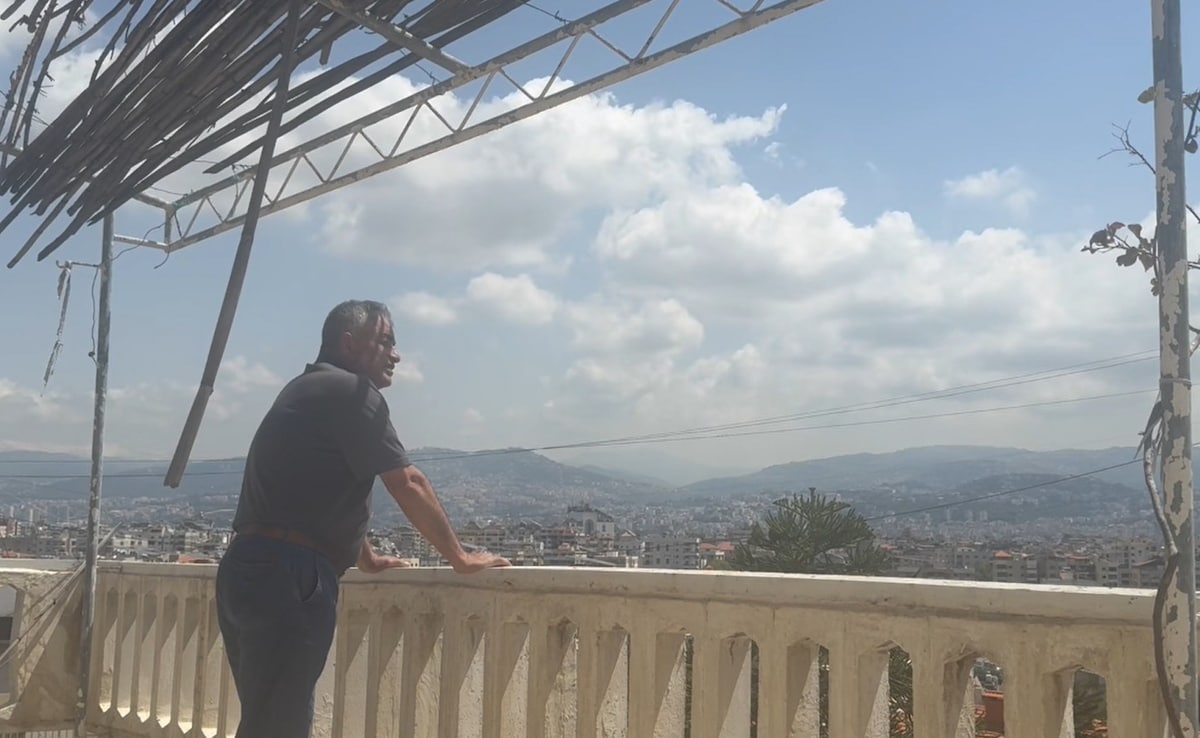
Sheikh Moussa on the roof of his family home
In May 1982 Israeli aircraft attacked Lebanon and captured Beirut. Moussa remained. He led his family to safety, but he returned. The guardian of the family home and a treasure trove within, priceless artifacts and paintings, and hunting trophies, and a cabinet bursting with trophies from his time as a golfer.
"I am here... I've been here for almost 45 years. I am here... my family is here. Everything in this house, everything is a memory," Moussa told NDTV. "Never really leave... never really leave."
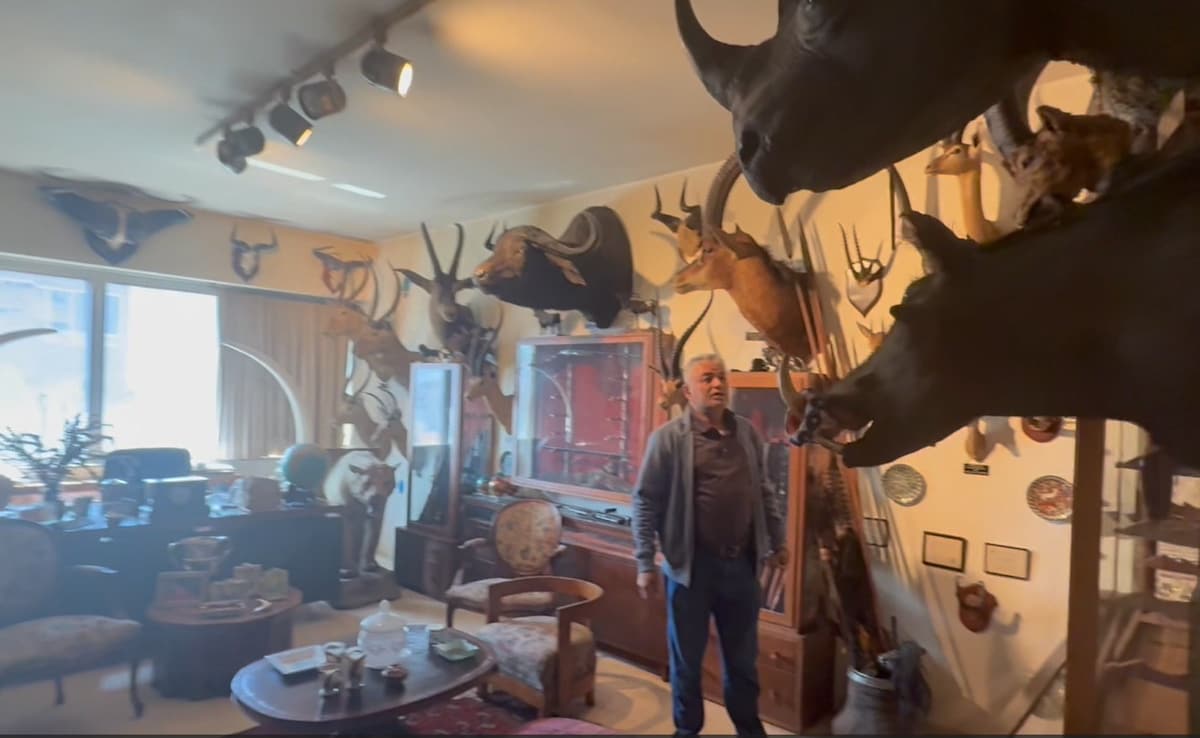
Moussa with a room full of stuffed and mounted animals
"Maybe one, two, or three days when I take my family (to safety). Then I come back," Moussa, in a grey t-shirt and sitting on a comfy couch, said. He worked then for a West Asia-based airline.
Moussa woke one morning to hear of mass murder.
In September 1982 as many as 7,000 civilians, mostly Palestinians and Lebanese, were killed in Beirut's Sabra and Shatila areas. Refugee camps reportedly targeted by an Israel-backed Christian armed group.
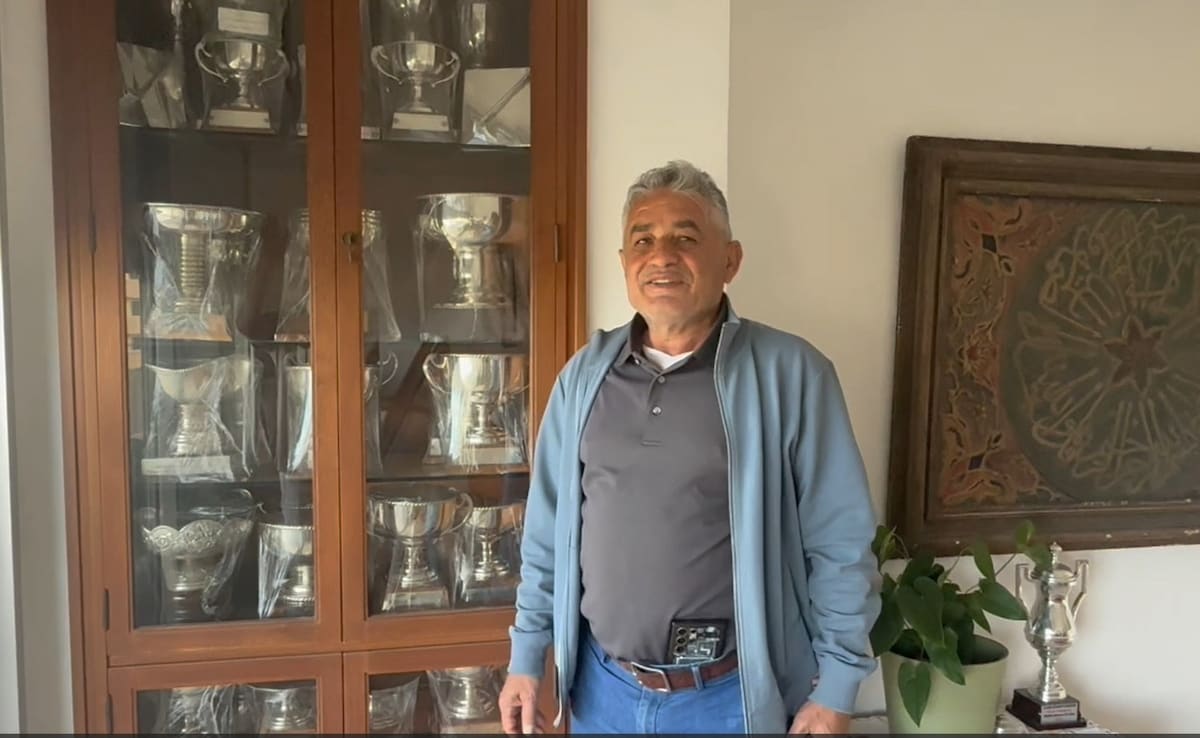
Moussa with his cabinet full of golf trophies.
Israel's stated aim for its Lebanon campaign is to completely dismantle the Hezbollah, a militia founded and funded by Iran. Part of its 'axis of resistance', including Houthis in Yemen, that which is helping Tehran stretch the battlefield.
Moussa was not convinced.
"Before Hezbollah... Hezbollah came in 1982... Israel is here. In 1978, no Hezbollah (but) Israel bomb all Lebanon, Dahieh."
Forty-four years later, having seen off missile strikes, drone attacks, and ground incursions, he has had enough. "There should be peace now... but I don't know. Nobody knows what Israel wants. This is the problem of Israel."
The Dahieh doctrine
Sheikh Moussa's home. The Dahieh neighbourhood. These stand, what is left of them, as proof of Israel's controversial Dahieh doctrine, a military strategy that says 'kill civilians, destroy civilian infrastructure' in a war.
Created by ex-Israel military commander General Gadi Eizenkot, who said: "Israel should target economic interests and centres of civilian power" so the enemy is forced to sue for peace.
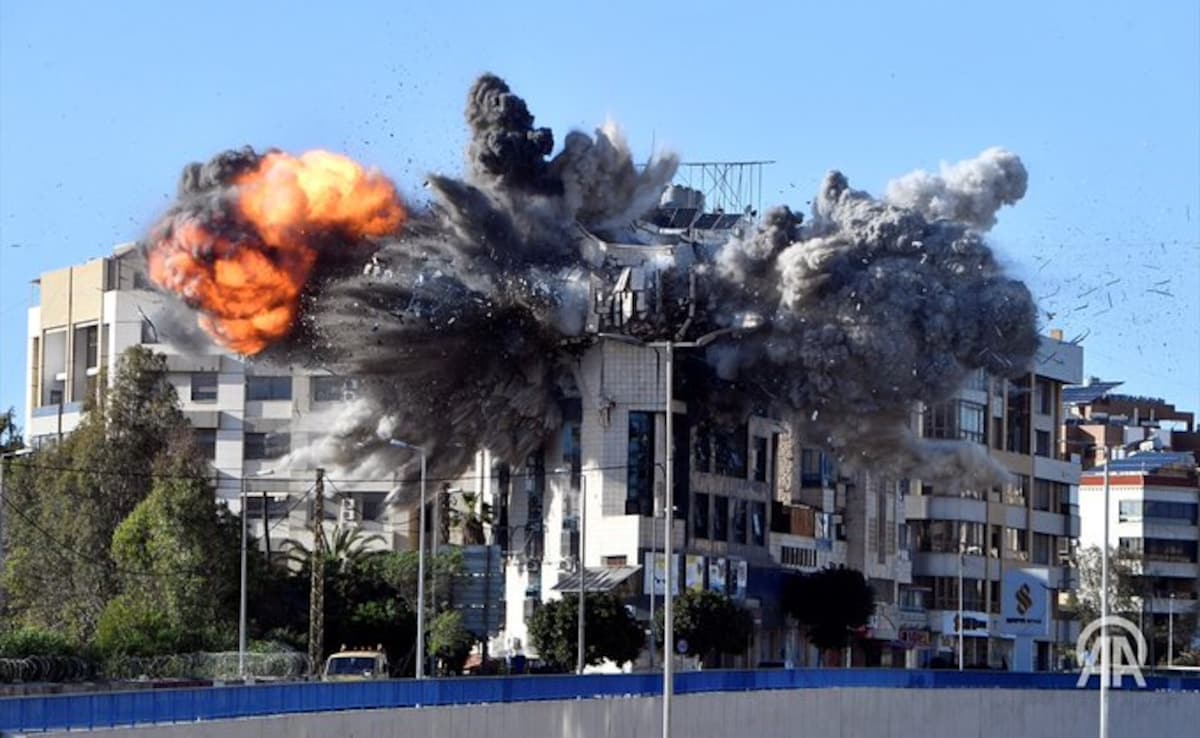
A missile strikes a building in Dahieh. Photo posted on X by @anadoluimages
It was so-named after the Israel military pounded Dahieh almost to oblivion in the 2006 war, another episode in the ruin of Beirut that Moussa has seen off.
The doctrine has been called out. Richard A Falk, a United Nations Special Rapporteur on human rights, as "an (obvious) violation of the most elementary norms of the law of war and of universal morality" and as a "doctrine of violence that needs to be called out by its proper name: state terrorism".
Sheikh Moussa, standing on the roof of his family home, looked out over rubble-strewn Dahieh, awaiting the next round of Israeli missiles.
Dark days, horrific memories. "Tawakkul al-Allah... tawakkul al-Allah," Moussa repeated to NDTV, thanking Allah for seeing him through these horrors and allowing him to smile.
-
MK Stalin: The Boy From Chennai's Marina Beach

From a naming ceremony on Chennai's Marina Beach in 1953 to Tamil Nadu Chief Minister - this is the story of Muthuvel Karunanidhi Stalin, the DMK, and the 2026 election.
-
NTR, MGR, Jayalalithaa, Rajinikanth, Pawan Kalyan - Vijay, Respectfully, Is None Of Them
Vijay is unlike anything Tamil Nadu has ever seen. Comparing him to other star-turned-politicians is tempting, but unfair.
-
Opinion | 35 US Lawmakers Just Moved A Bill That Could Upend Indian Techies' Careers
For years, Indian students going to America have followed a set path: F-1 student visa, then OPT, and later an H-1B visa. That may soon be off the table, thanks to a group of American lawmakers.
-
Opinion | Iran May Be Doing With Its Nukes What Another 'Rogue' Regime Did 20 Years Ago
A rogue state got away with its nuclear weapons programme decades ago, defying all sanctions. Iran may be going down the same path.
-
UAE Quits OPEC: What It Means For India's Oil Prices, Fuel Bills
Being able to deal with the UAE as a separate seller should give India the chance to re-adjust risk levels and pricing, particularly if some volume of crude is routed via overland pipelines to bypass the Hormuz blockade.
-
Opinion | If Mamata Banerjee Wins Again, It Might Be Only Because Of One Particular Group
Anyone familiar with the recent political and electoral history of West Bengal knows that while the BJP has done extremely well in north Bengal, it has so far failed to breach the Mamata citadel of south Bengal.
-
Opinion | Pak Is Finally Back In Middle East's 'Good Books'. But Can It Stay There?
This is both an enviable and challenging space to be in for the only Islamic nation in the world that has nuclear weapons.
-
Opinion | Can Saudi Arabia, Now Alone At The Top, Manage To Keep Oil Stable?
With the UAE's exit, Saudi Arabia will remain the only swing producer in the cartel to deal with market shocks. Can it fulfil that role alone?
-
Opinion | UAE Can Now Easily Meet An Old American 'Demand'. But There's A Casualty: Saudi
For years, the US had been pressing the Gulf states over low oil prices. One country can make that possible now.