From Surviving Massacre To Death Sentence, Sheikh Hasina's 50-Year Journey
Five decades after she survived a coup during which her family members were murdered, Hasina has been sentenced to death for crimes against humanity.
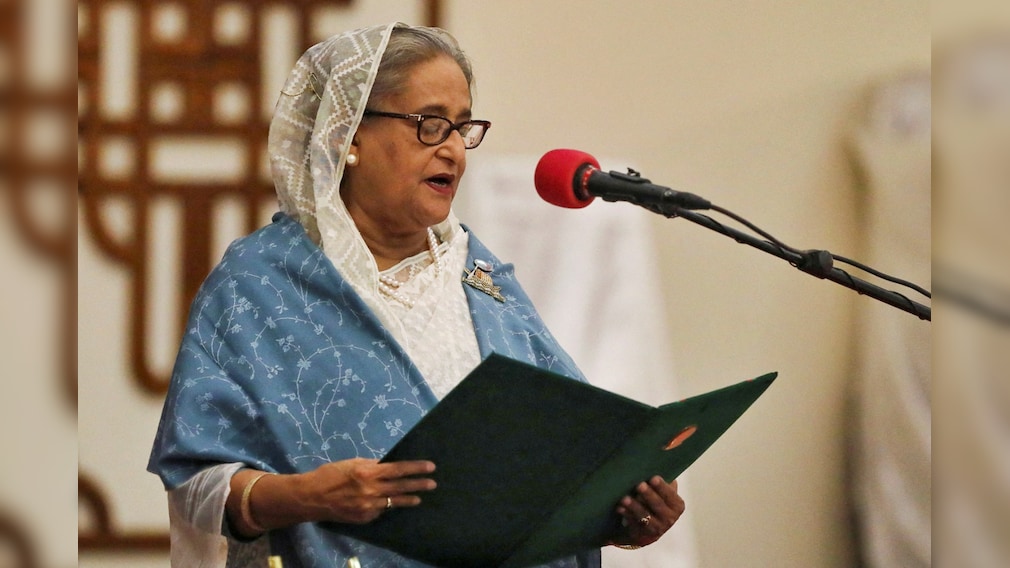
Five decades after she survived a midnight coup in which her entire family, including her father and Bangladesh's founding President Sheikh Mujibur Rahman, were murdered, Sheikh Hasina has been sentenced to death for committing "crimes against humanity".
The 78-year-old Awami League leader, who fled to India last year after a nationwide protest that led to a regime change in Dhaka, was found guilty of ordering the killing of protesters during the July movement. The International Crimes Tribunal in Dhaka said Hasina incited attacks against student protesters and failed to protect them.
The verdict marks the 50-year journey of the Bangladesh leader, the country's longest-serving Prime Minister, from being a survivor of a massacre to being blamed and convicted for hundreds of killings.
Addressing her party supporters ahead of the verdict, Hasina said it was a sham trial. She alleged that Nobel laureate Muhammad Yunus, the head of the interim government, wanted to finish off her party. She said she will continue to work for the people of Bangladesh and that every act of injustice will be accounted for.
The Massacre Survivor
In July 1975, Hasina and her sister Rehana flew to Germany, where Hasina's husband and physicist, late MA Wazed Miah, was working. The whole family came to the airport to see them off.
Hasina spoke about the airport farewell in an interview decades later. "Because my husband was abroad, I used to live in the same house (as my parents). That day, everybody was there: my father, mother, my three brothers, two newly-wedded sisters-in-law, everybody was there."
On August 15, 1975, Mujibur Rahman, his wife, three sons and two daughters-in-law were massacred at their home in Dhaka's Dhanmondi. A group of Bangladesh Army personnel stormed the residence and murdered 36 people in all, in what is counted among the bloodiest coups in world history.
Hasina, her husband and children, Sajeeb Wazed and Saima Wazed, and her sister, Rehana, took refuge in India after the massacre.
The Popular Leader
In 1981, while she was still in India, Sheikh Hasina was elected president of the Awami League, once led by her father, fondly known as Bangabandhu for his role in the country's freedom movement.
After the 1991 election, the Bangladesh National Party formed the government, and the Awami League was the main opposition. Hasina would serve as the Leader of the Opposition.
In the 1996 election, Hasina's Awami League posted a strong performance, and she took over as Prime Minister. Hasina would be re-elected in 2009 and stay in the top post till her ouster last year.
Hasina's years as Prime Minister saw a boost in New Delhi's ties with Dhaka. From cooperation in border security to infrastructure to counter-terrorism operations, her years as Prime Minister are considered the golden era of the Delhi-Dhaka partnership.
It is this longstanding camaraderie that prompted India to give refuge to her after the regime change in Bangladesh, despite the new regime's persistent demands to hand her over.
The Ousted Premier
Months after she began her fourth term as Prime Minister, protests began in Bangladesh against the reservation system, under which family members of Muktijoddhas -- those who took part in the 1971 Bangladesh freedom struggle -- enjoyed preference in jobs and education.
Responding to the protests, the Prime Minister remarked, "If the grandchildren of freedom fighters should not get quota benefits, should they go to the grandchildren of the Razakars?"
Razakar is a loaded term in Bangladesh's political landscape and refers to the East Pakistan volunteer force that opposed the creation of Bangladesh and was involved in numerous atrocities against the country's freedom fighters.
This remark lit the spark, and the protests against the quota system snowballed into a full-fledged movement for her removal. Hasina responded with a severe crackdown. Some estimates say the casualties crossed 1,000.
The state crackdown failed to contain the movement, and the protesters reached Hasina's doorstep. She had to escape to India with her sister Rehana. She has been here since.
A Conviction In Exile
Fifteen months after her ouster, the former Prime Minister has been convicted of crimes against humanity. A Bangladesh court today sentenced her to death and said she incited violence, issued orders to kill protesters and failed to protect the civilian population. The court also said Hasina did not join the trial despite summons and said her "abscondence is suggestive of guilt".
Hasina has trashed the judgment and said she was not given a fair opportunity to defend herself. She has also said that there is "nothing international" about the International Crimes Tribunal and that it is not impartial. "Its guilty verdict against me was a foregone conclusion, but no genuinely respected or professional jurist in the world would endorse the Bangladesh ICT," an Awami League statement quoted her as saying.
"There is no other motive than the personal pursuit of revenge against a democratically elected government that upheld the nation's independence and sovereignty," she said.
-
Before The Nepal Flood, A Glacial Fall: Tracing The Trigger, And A 100-km Killer Surge

A glacier came off a ridge on the Nepal-China border and travelled 100 km down multiple rivers, the longest part of the run being in the Trishuli.
-
Opinion | China To Pak To America, The Growing Dilemmas Of The 'General'
Recent civil military turmoil in the United States, China and Pakistan can be understood through two lenses.
-
Census Asks 40 Questions. Why Number 10 Is A Battleground | NDTV Explains
The caste question is a fill-in-the-blank for everyone other than SCs and STs. But there's a case for making it a dropdown with set options. Let's decode the history and math behind the politics.
-
Opinion | Why India's Bureaucrats Have Learnt That Doing 'Nothing' Is Safer
India's bureaucracy has perfected a peculiar survival strategy: make a decision, you may be punished; make none, and you are usually safe.
-
Opinion | 482 Dead, And Counting: How A Glacier Collapse Became A Himalayan Disaster
What looks like a sudden flood is actually the final link in a chain of events unfolding across an increasingly unstable Himalayas
-
Opinion | Rahul Gandhi Is Cleaning House - But At The Cost Of The Congress
In his search for a new organisation, Rahul Gandhi is making the big mistake of treating the Congress he inherited as dead weight.
-
One-Day Disaster, Multi-Season Economic Shock: Nepal's Sisyphean Curse
Nepal Flash Floods: Nepal cannot prevent every earthquake, landslide or glacial collapse. But it can reduce how much each disaster costs.
-
Meta Pays Billions Over Teen Harms In US. In India, Algo Runs Unchecked
The US Surgeon General has separately warned that heavy social media use roughly doubles adolescents' risk of depression and anxiety, and that nearly half of teens surveyed said it made them feel worse about their bodies.
-
Blog | 'No Calls, People Scanning Banks For Bodies': Nepal Journalist Describes Flood Aftermath
As of Thursday evening, it was still impossible to get through to mobile phones in Dhunche, the district headquarters, or the flood-ravaged towns of Syabru Bensi or Timure.
-
Opinion | Toxic Knows Exactly What It Is Doing To Its Hero. And You May Have Missed It
Toxic's bait-and-switch goes beyond its plot. Geetu Mohandas is almost making a subtle point - for those who can see it.