NDTV Exclusive: Rifle, Tactical Gear And A Long Wait - Inside The Kill Of A Ukrainian Sniper
NDTV caught up with a sniper from the Second Corps "Khartiia" of the National Guard of Ukraine, Brigade Raid, special operations sniper unit, who spoke about the realities of the job.
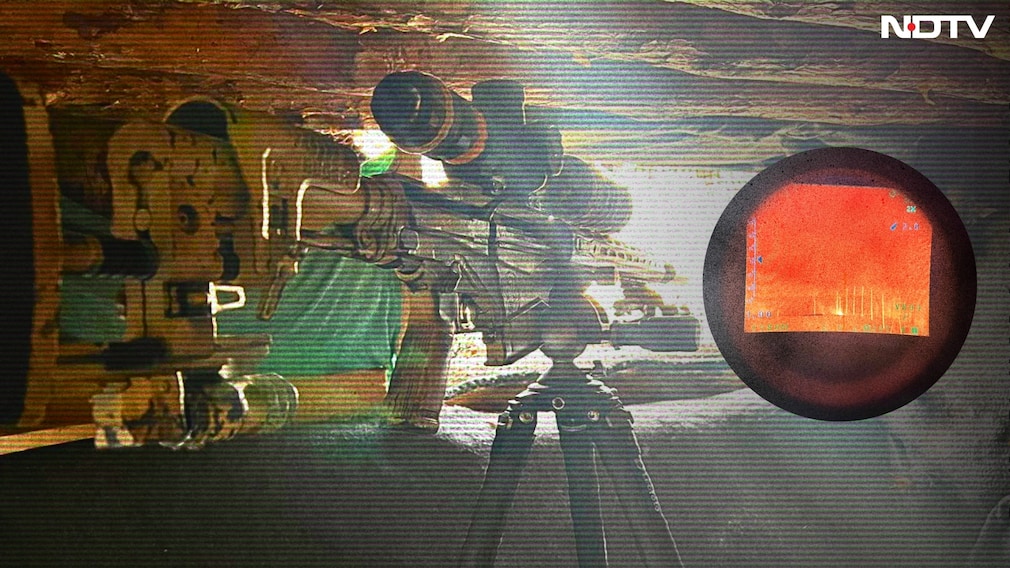
In modern war, the sniper's work remains one of the most technically demanding and psychologically challenging roles on the battlefield. Long-range shooting requires far more than a steady hand. Wind speed variability, air density, terrain, and the Coriolis effect, among other things, can alter the path of a bullet travelling over kilometres. At the same time, the sniper operates under constant threat such as drones overhead, artillery scanning the terrain, and enemy patrols searching for any sign of movement.
In Ukraine's grinding war with Russia, these calculations are no longer theoretical as Ukrainian snipers operate across a battlefield where distances can stretch across open steppe for several kilometres. For example, in August 2025, an unnamed Ukrainian sniper from the elite Pryvyd, or "Ghost", sniper unit set what Ukrainian officials described as the longest confirmed combat kill, striking two Russian soldiers with a single shot from 4,000 metres in the Pokrovsk-Myrnohrad sector of Donetsk.
NDTV caught up with a sniper from the Second Corps "Khartiia" of the National Guard of Ukraine, Brigade Raid, special operations sniper unit, who spoke about the realities of the job.
Named "Roman" with callsign "Anarchy", here's a transcript of the chat.
1: What led you to become a sniper, and what was your life like before the war began?
The reason is actually very simple. I have always liked firearms. Long before the full-scale war began, I already owned weapons. Like most beginner shooters in Ukraine, I bought an AR-15 rifle.
After mastering the basic shooting skills, I realised that I enjoyed shooting at longer distances and with greater accuracy than my assault rifle allowed. I started thinking about buying a bolt-action rifle in .308 calibre, because it is one of the most common. I also began studying how to work with high-magnification optics.
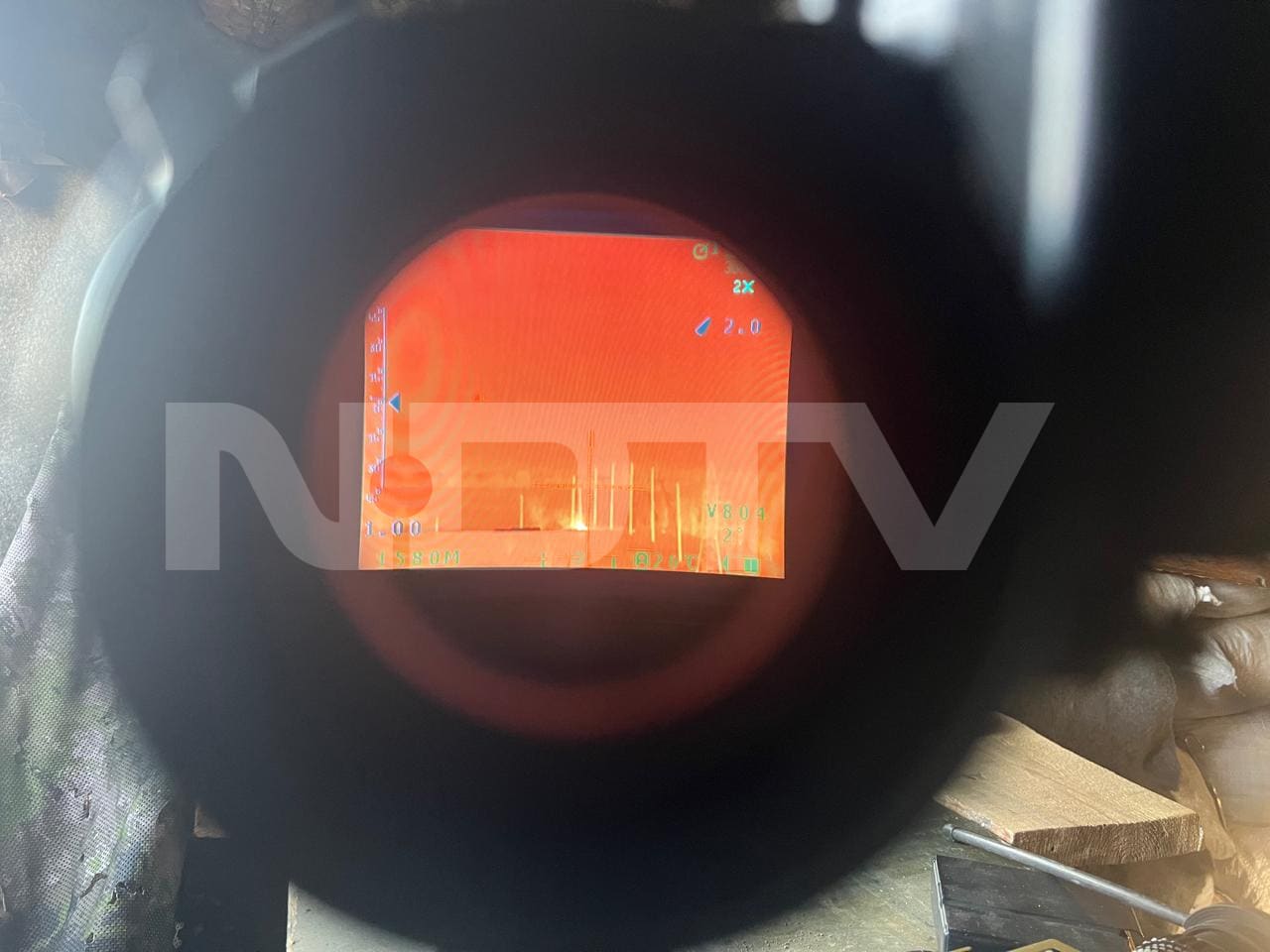
My hobby developed so deeply in the years before the full-scale war with Russia that I even considered designing and producing match-grade sniper bullets in various calibres on a small scale. When the full-scale invasion began, the choice of specialisation for me was obvious.
2: Do you remember the moment you decided to join the fight against Russia?
Yes. If I remember correctly, it was probably in the autumn of 2015. I went to the front line as part of a volunteer mission, visiting an infantry unit. I wanted to see with my own eyes what was really happening.
It is one thing to read in the news that Russians have attacked your country and watch footage on television. It is completely different when military guides tell you: "Here we drive five kilometres at the highest speed possible because there is a Russian mortar battery on the hills about three kilometres from the road. We do not know what their mood is today."
At that moment, I realised I did not like the fact that Russians on my land had a better firing position than we did.
3: How does sniper training differ from regular infantry training in Ukraine's military?
Up to a certain point, there is basically no difference. A sniper must know and be able to do everything that a well-trained infantryman can do.
Only after acquiring these survival skills and learning to operate as part of an organised unit can a sniper begin to develop the individual skills required to become a precise shooter.
4: What psychological qualities are most important for a sniper?
Patience, first of all. And the ability to calculate your own actions carefully while anticipating the actions of the enemy.
5: Did you ever hesitate about taking on a role that involves killing at long distance?
Yes, but the hesitation is not exactly about the act itself. It is more technical. I ask myself whether I calculated the vertical adjustments correctly, and whether the wind near the target is the same as the wind I observe from my position.
6: What does sniper training involve physically and mentally?
Physically, everything that builds endurance.
Psychologically, I can only speak for myself. If I am ready to take risks, then the answer must be yes. Modern war shows that reaching your position and then leaving it after completing the mission is often more dangerous than the actual work from the position itself.
7: How are soldiers taught to manage fear and stress in combat?
Perhaps in armies with very large budgets, where they can choose when to fight, there are special programmes and specialists who teach soldiers how not to be afraid.
In our reality, the people who go into battle are those who already know how to control their fear. And they lead those who do not.
8: What distances do you train for compared with real combat?
It depends on the calibre you are using.
With a .308 rifle, we train from 300 to 900 metres. In reality, the effective working distance is usually up to about 650 or 700 metres. Targets are often partially obscured by branches or other obstacles, and enemy soldiers often wear body armour. To achieve a reliable hit, you must deliver enough energy to the target.
For the .338 Lapua Magnum calibre, we train from 600 to 1,400 metres. The working distances are also up to about 1,400 metres, although the calibre can potentially deliver effective energy several hundred metres further.
9: What is the longest successful shot you have personally made?
The longest successful shot in my experience was 1,540 metres.
10: How long does it take before a trainee sniper becomes combat-ready?
Many factors influence the duration of training. In my unit, new arrivals usually already have some experience and skills.
I would say that teaching a shooter to the level where they can continue improving independently requires about two thousand shots of focused training. By that point, most people develop a stable "feel for the shot" and the ability to calculate it correctly.
After that, much of the progress comes from self-improvement. But there are also many other skills to learn - engineering preparation, movement techniques in areas monitored by drones, and camouflage against thermal imaging devices.
In short, developing a truly skilled specialist takes years.
11: Were NATO or foreign training methods incorporated into your preparation?
Yes. Many Ukrainian soldiers attend training courses at military bases across Europe in different disciplines. It benefits both sides.
We receive systematic military education from our European partners, including coordination between large numbers of units and operational planning. At the same time, we often share our own battlefield experience, explaining what no longer works in modern war.
For example, our experience with medical evacuation at the front line, battlefield first aid, trench medical equipment, and the use of armoured vehicles. In many ways, it is an exchange of knowledge.
12: Can you describe your first deployment as a sniper?
At that time, I was not officially a sniper, although I was already carrying out tasks typical of one. I had many fears about insignificant threats and, at the same time, a foolish confidence where I should have been more cautious.
13: What is the longest mission you have been on?
More than 30 days. The hardest part was the uncertainty. You never know when the mission will end, tomorrow or in a month. I know other soldiers who have remained in position even longer.
14: How do snipers move close to the front lines without being detected?
Usually on foot, moving very slowly and covering the route in short segments. I cannot share more details.
15: What is the biggest threat to a sniper today?
FPV drones are the biggest threat, along with reconnaissance drones that guide enemy artillery. Remote-controlled mines are also dangerous. These are the main threats in our area of responsibility.
16: Have you ever been targeted by a Russian sniper?
So far, no.
17: What goes through your mind before taking a shot?
I think about how comfortable my position is and whether I calculated the shot adjustments correctly.
18: Do you ever see the faces of the soldiers you target?
No. And it does not affect me. They had a choice not to come to my country.
19: How do you cope with the moral weight of killing?
I will think about that after the war is over.
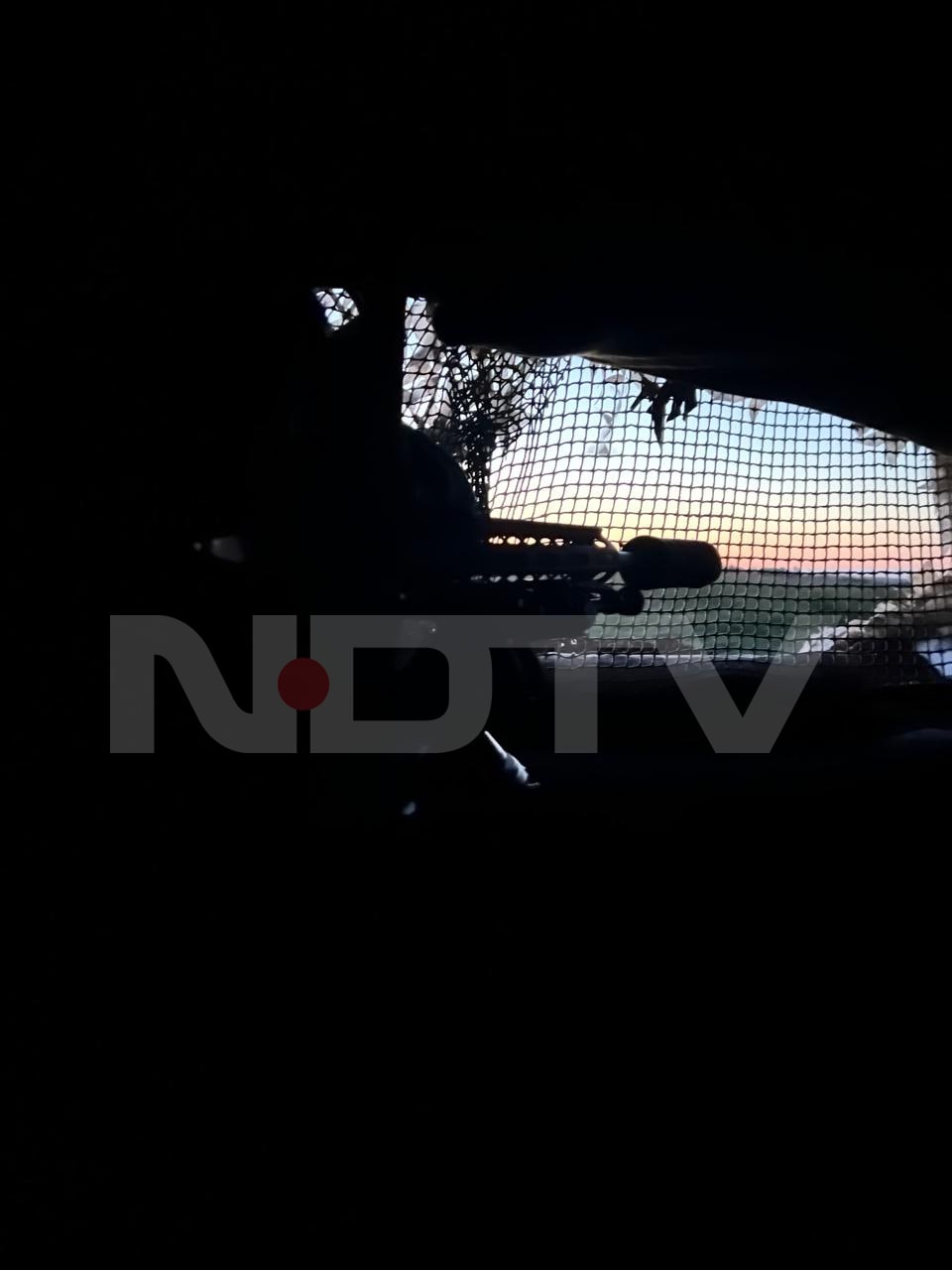
20: Have you ever aborted a shot?
Yes. Either the conditions were not favourable, or the status of the target was unclear. Sometimes you cannot be sure whether the people in the grey zone are enemy soldiers or friendly forces.
21: What has been the most dangerous moment in combat?
Encountering an FPV drone at close range while moving.
22: What rifles and optics do you currently use?
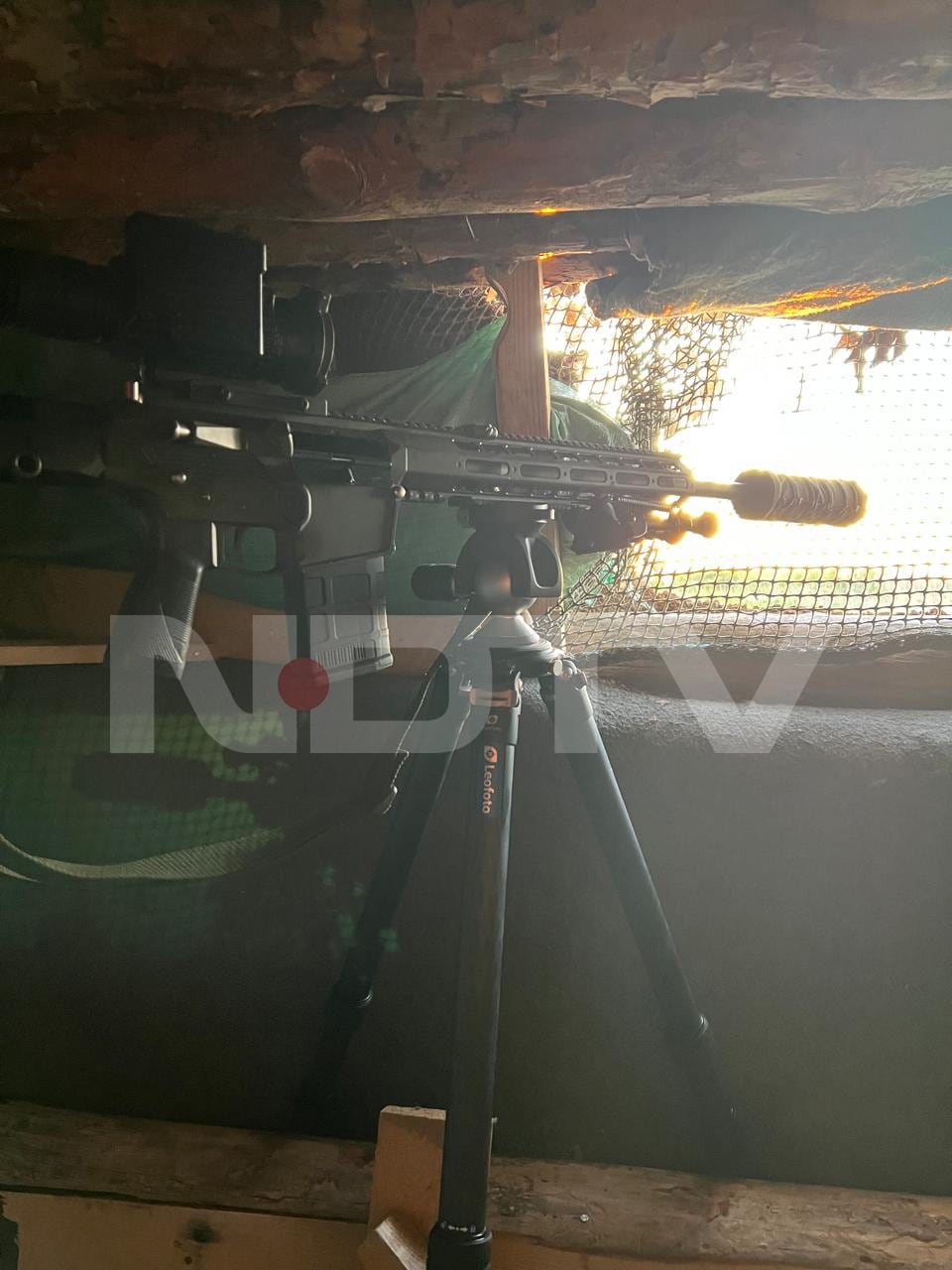
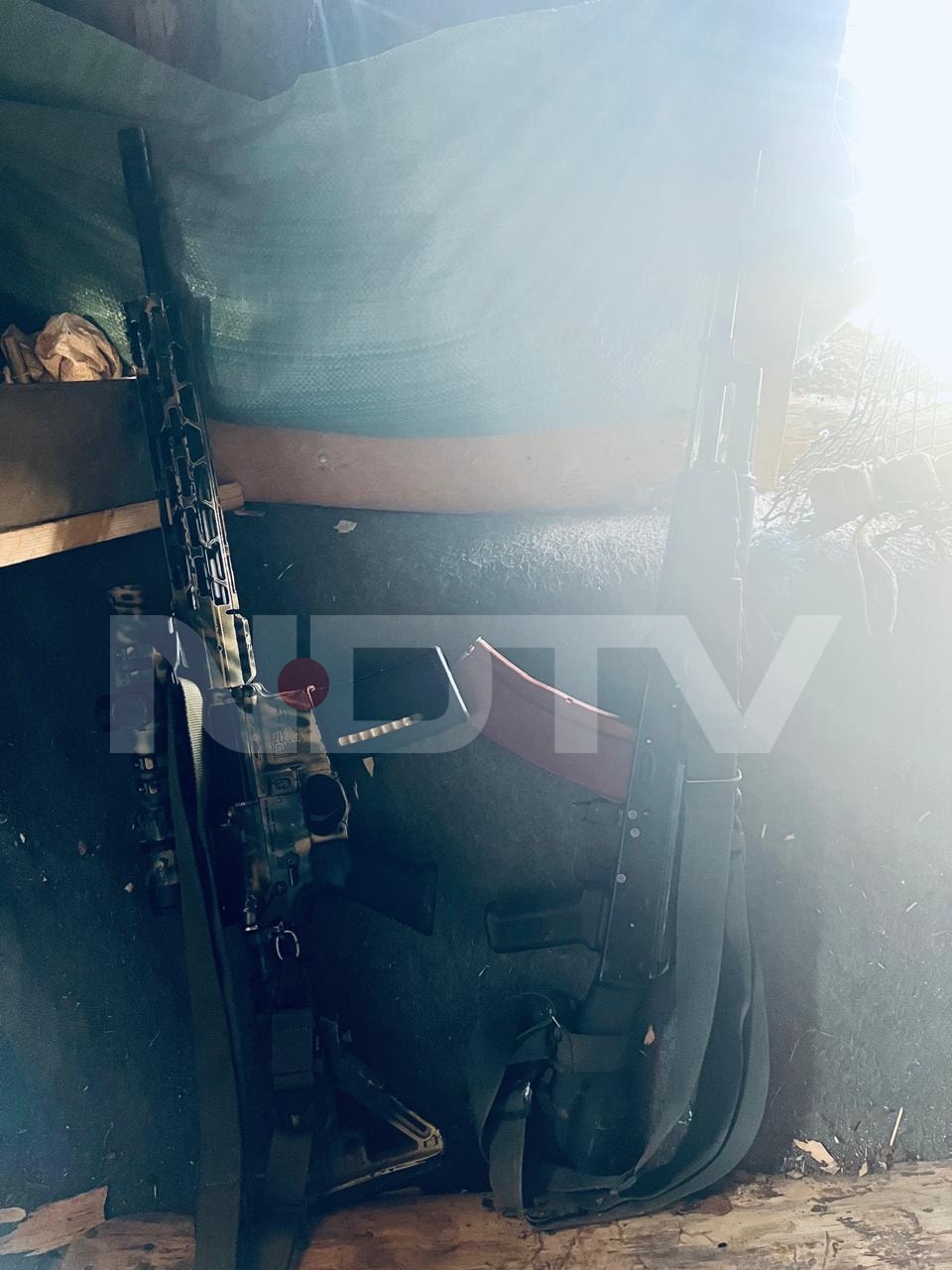
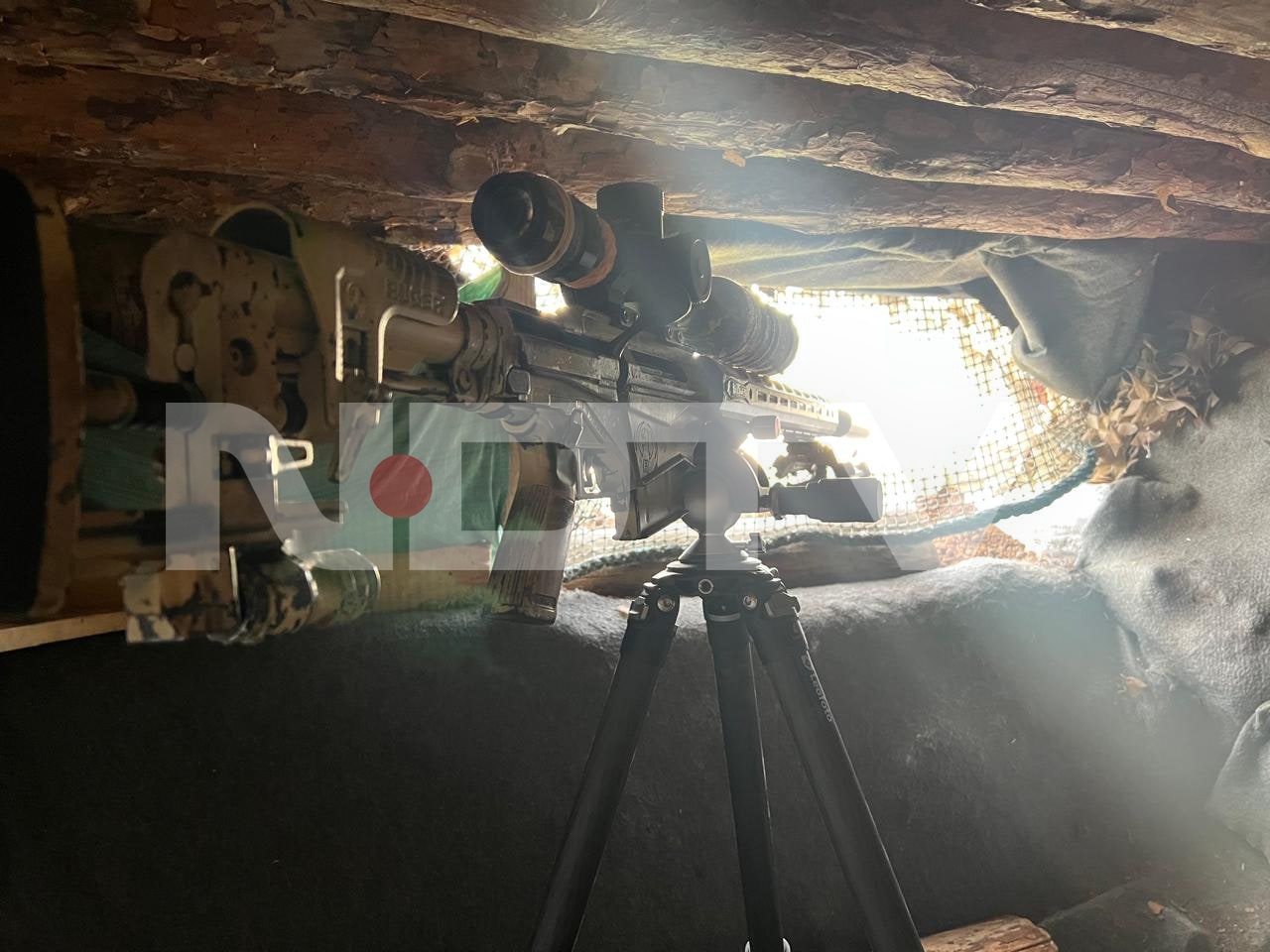
We use the Accuracy International AIXMC, Ruger Precision Rifle in .338 calibre, UAR-10, and UAR-15.
For optics we mainly use Leupold, Archer, and ELCAN Specter. They are reliable enough in combat conditions.
23: How do the weather and terrain in Ukraine affect your work?
Weather, mud and terrain mainly affect mobility and movement. If you decide to shoot, it means you have already assessed all those conditions and calculated them. You alone are responsible for the accuracy.
About 35 per cent of Ukraine's terrain is urban, where distances are relatively short. The rest is steppe terrain, where distances can start at 700 metres and extend to 3,000 metres or more.
24: What is the relationship between a sniper and a spotter like?
Comradely. You must always be ready to support and help each other.
25: What does a typical day look like near the front?
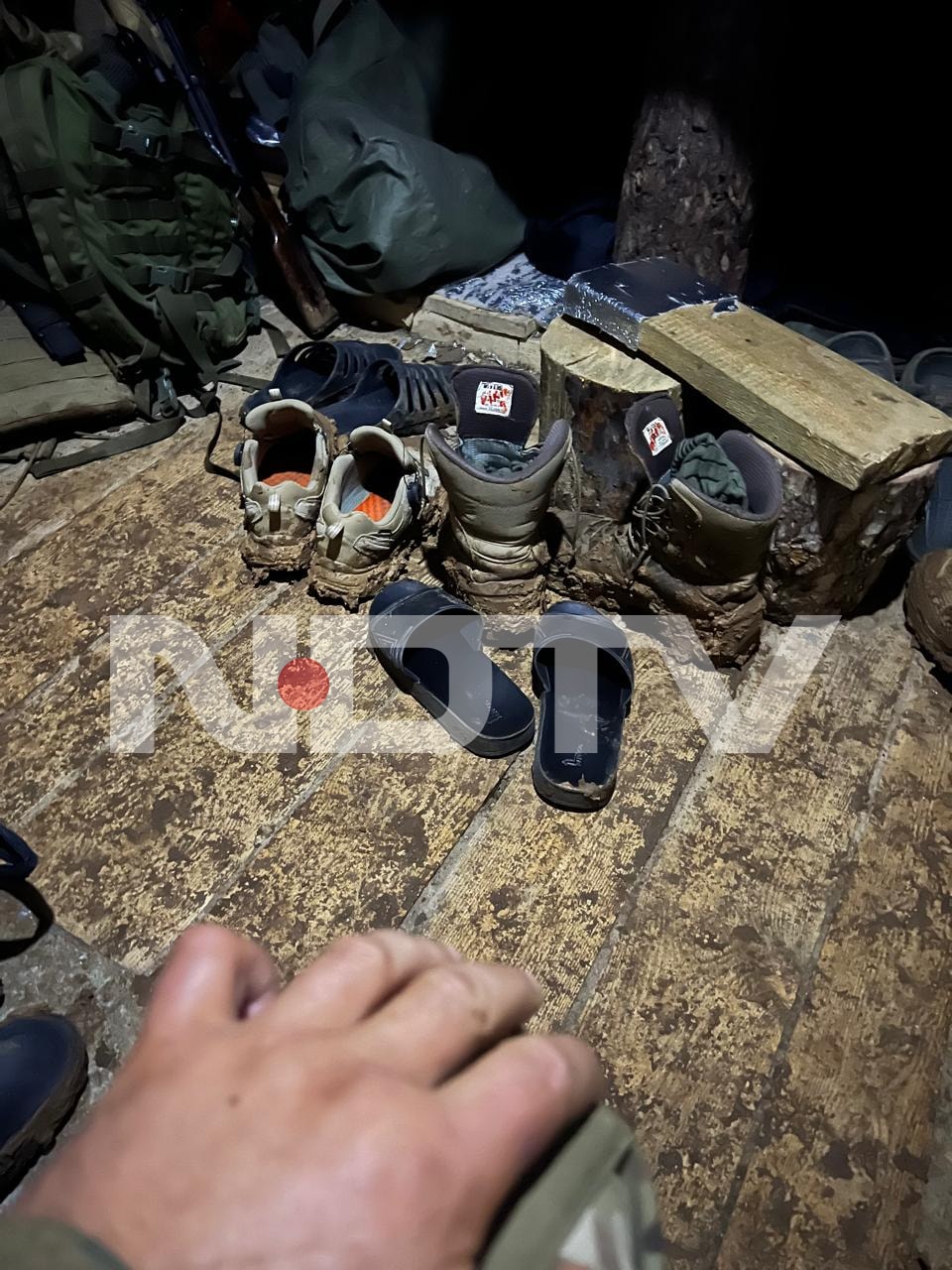
During rest periods, you sleep, clean your weapon, cook something to eat, and wash your things. It is probably what soldiers do in every army that is at war.
26: How do you eat or sleep during long missions in concealed positions?
Everything is done minimally, only as much as necessary.
-
Opinion | Amateur 'Advisors', Ignored Generals: How Trump Shunned Protocol To Launch Iran War

Recordings obtained by the Arms Control Association suggested that Witkoff misunderstood key technical aspects of Iran's nuclear programme.
-
Turning The Other Cheek: While Missiles Fly, UAE's Gamble On Restraint
Over the past 17 days Tehran has fired around 1,600 drones, including the infamous Shahed, nearly 300 ballistic missiles, and 15 cruise missiles at military and civilian targets in the UAE.
-
Opinion | 4 Leaders In Congress Are Vying For One Job - And None Is Ready To Step Aside
'Three Musketeers' in the Kerala Congress - and an unexpected fourth - are quietly redrawing the contest in Kerala.
-
Opinion | Trump And His America Are Fast Losing Touch With Reality
What is the guiding logic of the rather brash turn in American foreign policy? It is all too easy to box Trump as an irrational player, but frankly, it is a bit of an analytical copout.
-
Game Of Drones: Ukraine's Sting Answer For US' Shahed Problem
The Iranian-designed Shahed-136 drone has become one of the most recognisable weapons of the modern battlefield.
-
Opinion | Iran-Israel War, And What India Can Learn From The 'KC-135' Crash
Transparency doesn't just establish honesty; it denies the adversary the space to peddle the exaggerated claims we frequently see from Pakistan or China, where military losses erode state power.
-
Opinion | Mojtaba's First Message Makes It Clear: Iran Won't Give An Easy 'Exit' To Trump
In Iran, the assassination of a Supreme Leader demands a response, a do-or-die response. Backing down would risk undermining Mojtaba's legitimacy at home and weakening his authority among the hardline institutions that support his regime.
-
Opinion | What Happens If Saudi Arabia Really 'Asks' Pakistan To Go To War?
Since the beginning of the Iran-Israel war, questions have been raised about what role Pakistan would play on the side of the Saudis. The answer is getting murkier.
-
Oil Wars: How Iran's Hormuz Grip Is Bleeding Americans' Wallets
Tehran's response to US-Israel strikes that began Feb 28 was to target oil infrastructure in Gulf nations, an early and clear sign it is trying to force the US to answer questions from the global community about a cost-of-living crisis.
-
Opinion | The Real Winner Of Iran-Israel War Is Someone Trump Never Accounted For
The current crisis promises tens of billions of dollars to Russia in additional revenue. Here's how.

-
News Updates
-
Featured
-
More Links
-
Follow Us On
