Israel Claims Killing Of Iran's Wartime 'Khamenei'. Who Was Ali Larijani?
Born in Iraq in 1957 to a prominent Shia cleric close to the Islamic Republic's founder Ayatollah Khomeini, Larijani's family has been influential within Iran's political system for decades.
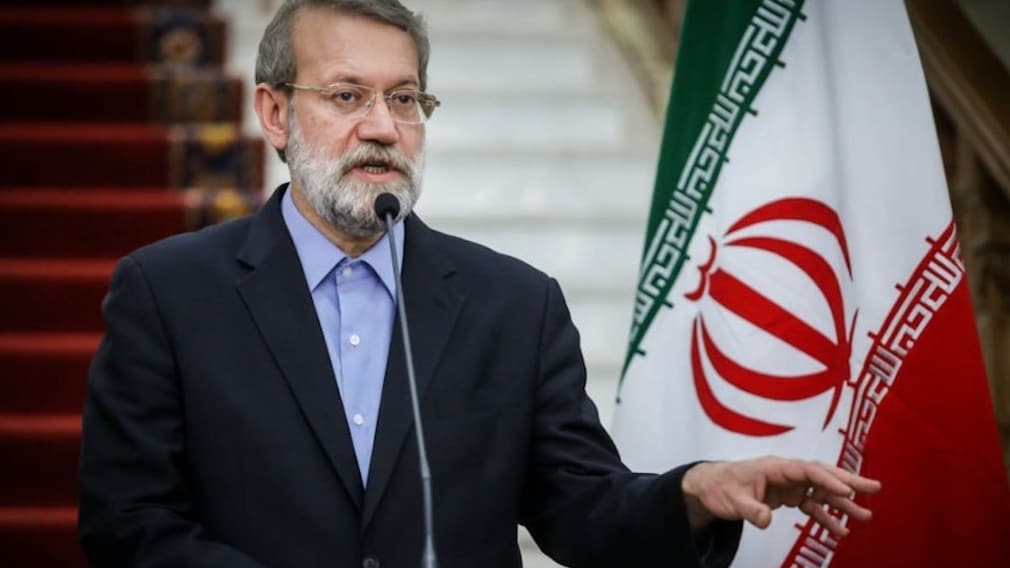
Israel said Tuesday it had killed Iran security boss Ali Larjiani, a senior politician and Revolutionary Guards Corp veteran, and the country's de facto wartime chief following the death of Supreme Leader Ayatollah Khamenei in a US-Israel air strike on his central Tehran compound.
Israeli Defence Minister Israel Katz said Larijani had been "eliminated last night".
Iran has not confirmed this. But, if true, it will be the biggest blow to the country since Khamenei's death, and underlines the capacity of Israeli intelligence and American air superiority in this war.
Larijani, 67, has been described as a 'true insider', a trusted and loyal lieutenant of the former Ayatollah and adept at balancing ideology with pragmatism, the soldier-to-diplomat transition underlined by Khamenei sending him to Oman and Qatar to hold talks with the United States.
In August last year he was appointed as Secretary of Supreme National Security Council; this was in the aftermath of the 12-Day War, i.e., US-Israel air strikes on Iranian nuclear facilities.
But Larijani's heft reached much further back; months earlier (and with some prescience) Khamenei entrusted him with drafting a strategy to survive decapitation strikes. The remit, senior IRGC officials told The New York Times, was 'to ensure the Islamic Republic survives not only American and Israeli bombs, but also any assassination attempt on its leadership'.
When death came for Khamenei, he executed the playbook.
After Khamenei, the rise
And Ali Larijani, already one of the regime's most powerful figures, became even more so, eclipsing the Ayatollah's successor – his son Mojtaba Khamenei – in visibility.
Hours into the war, with Tomahawk missiles and F-35 fighter jets hammering 'hidden' nuclear sites, IRGC bases, and capital Tehran, Larijani then appeared on national television.
The Americans and the Zionists had "burned the heart of the Iranian people", he said, "… and we will burn their hearts. They should know it's not like they can strike and leave…"
More statements and public appearances followed, Larijani's role as Iran's visible war leadership settling any nerves hit by the Ayatollah's death, even as his son shunned the spotlight. He was seen in public in Tehran for the annual Quds Day rally.
The wartime role
His position as the SNSC chief and IRGC military experience meant the bespectacled Larijani emerged as the focal point of war-time planning, coordinating ballistic missile deployments along the Gulf coast and overseeing the defence of nuclear sites as Defence Council head.
He was also seen as playing a critical role in the hours and days immediately after the Ayatollah's death, simultaneously delivering thunderous warnings to the US and Israelis while working behind the scenes to revive and operationalise the 'mosaic defence' network.
The survival playbook aside, Larijani remained the figure greenlighting missile strikes against American and Israeli military targets and civilian and oil infrastructure at Gulf neighbours.
And regional analysts told The New York Times Iran's chokehold on the Hormuz, a pressure point that has driven global energy supply to the brink of chaos, had been planned by Larijani.
There were even rumours Larijani vetoed the use of cluster munitions against Israel, though in angry statements released last week Tel Aviv claimed such bombs had, in fact, been fired.
Unnamed regime sources said Larijani felt cluster bombs were a red line for the US.
Domestically, Larijani had his eye on civilian protests – building on December-January agitations that caught Trump's eye in the build-up to this war – that could threaten regime continuity.
His attempts to quell the protests – in which thousands of people died, many executed by the regime – led to the US sanctioning him for "violently repressing the Iranian people".
Larijani's diplomatic avatar also fed into Iran's post-Khamenei leadership structure, setting him up as potential peace broker between the Americans and the regime. If nothing else Larijani was a key nuclear off-ramp, a familiar figure with mediators in Qatar and Oman and with the US.
Who was Ali Larijani?
Born in Iraq in 1957 to a prominent Shia cleric close to the Islamic Republic's founder Ayatollah Khomeini, Larijani's family has been influential within Iran's political system for decades.
He earned a doctorate in Western Philosophy from the University of Tehran and served with the IRGC during the Iran-Iraq war and as Speaker of the Parliament from 2008 to 2020.
In-between he also contested the 2005 presidential election, losing eventually to Mahmoud Ahmadinejad, with whom he later had disagreements over Iran's nuclear programme. Larijani, in fact, had supported the 2015 nuclear deal with the West from which Trump withdrew.
-
Opinion | Bihar Assault, Hisar Marriage Ban: Who'll Stop The Guardians Of Indian 'Culture'?

Why exactly does the sight of a young couple seeking a bit of alone time somewhere tend to particularly provoke a certain kind of Indian men?
-
Opinion | The Trump-Xi Summit, And India's Many Worries Of Its Own
Washington and Beijing may have chosen coexistence over confrontation. For India, that could be both a relief and a warning.
-
Opinion | China Claims It Has Cut Troops At The Indian Border. But The Math Doesn't Add Up
The reduction likely has more to do with the deployment along the LAC than the total strength active in the region
-
Opinion | China Is No Longer Waiting For Trump To Set The Rules. And He Knows It
America's old diplomatic tricks with China won't work any longer. Because China has changed, and so has its ambitions.
-
Opinion | As UN Interviews Its Next Chief, The Interviewers Have Some Explaining To Do
On the panel sit governments whose wars, vetoes, and unpaid dues have helped make the organisation ineffective.
-
Opinion | Trump-Xi Meet: What China Can Give America, And What India Could Lose
If Trump can secure some of what he wants directly from Beijing, India's immediate value to Washington could change in particular areas.
-
A New 'Axis'? 87 Years After Pact Of Steel, A New European Far-Right Tie-Up
Nearly nine decades after Nazi Germany and Fascist Italy formalised their alliance, senior figures from Germany and Italy's far-right appeared together at a political rally on Sunday.
-
Opinion | 'Blackmail' Diplomacy: Why India Can't Be A Pawn In US' War On Russia
The new sanctions bill is both blackmail and hypocritical: blackmail because it seeks to change India's principled stand, and hypocritical because the US has provided exemptions to others, and itself.
-
Blog | Katrina Kaif, And The Very Indian Problem Of Too Much 'Audacity'
The remarkable thing about many Indian trolls is not that they have opinions, but that they expect - get this, Katrina Kaif, no less - to care about them.