AI That Edits Your Photos Now Drops Bombs From Sky, And Iran Paid The Price
The entry of AI in warfare has changed how we assess battlefields. What took hours to take a shot at has become a second's job.
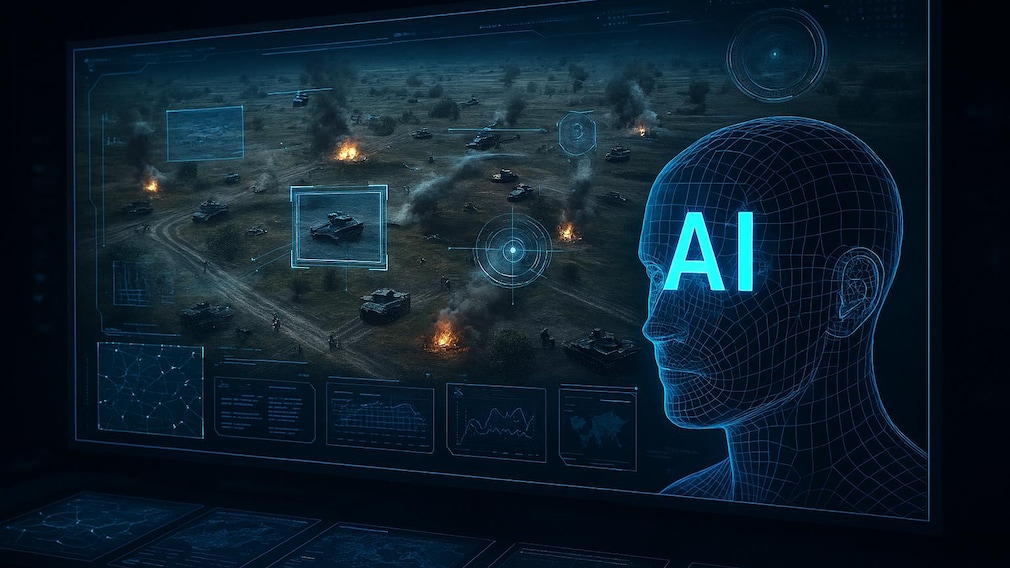
Artificial Intelligence has become a household term. But the scope of what we imagine as our go-to assistant in our day-to-day lives is much larger. And it's safe to assume that at this moment, it is helping a weapon sensor scan through hundreds of datapoints to fire a munition to take down an enemy drone in some remote part of the world.
The entry of AI in warfare has changed how we assess battlefields. What took hours to take a shot at has become a second's job. It's automated. The gun points at the target when the need arises. It fires if it deems required. And that sounds as simple as editing an image on our phones or adding a filter.
One of the most exemplary uses of such technology was witnessed on February 28, when the US and Israeli forces struck Iran.
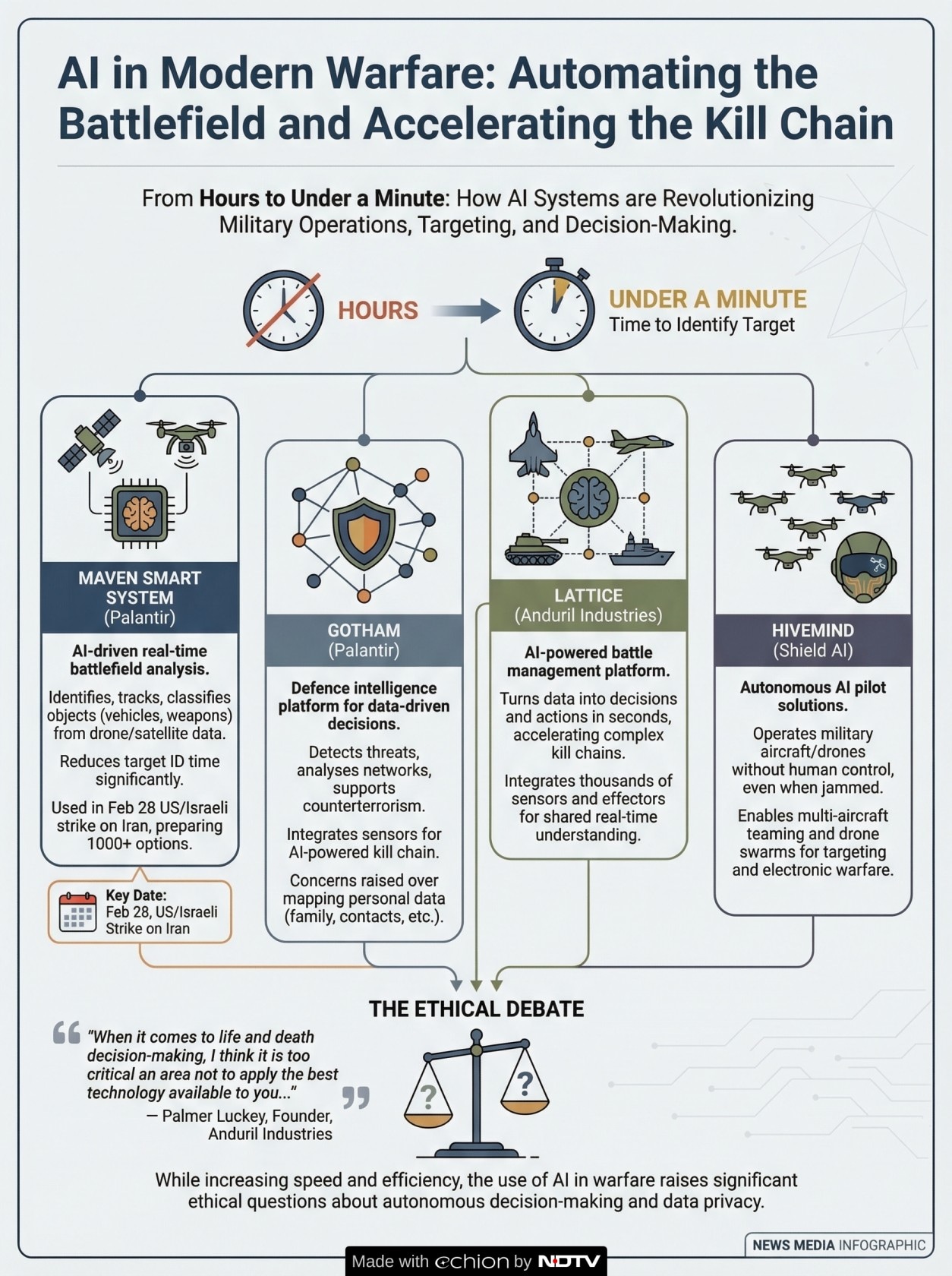
Pentagon's Maven system scanned through satellite imagery and drone footage to prepare over a thousand strike options for the US military. And then it rained death on unsuspecting Iranian bunkers and installations. Though the strikes were still carried out manually, Maven did what humans could have taken days.
Maven
At the centre of the US' Iran ops was the Maven Smart System, the AI-driven real-time battlefield analysis system developed by Palantir Technologies. Built over Anthropic's LLM, Claude AI, it was conceptualised by the US Army's 18th Airborne Corps to serve as a unified AI-powered network for a command-and-control system that oversees all branches of the military.
What Maven does is simple: It identifies, tracks, and classifies objects like vehicles, weapons, or buildings on the battlefield, and significantly reduces the time to identify a target from hours to under a minute. It uses data from drone footage, satellite, and other sensors.
Read: When Death Strikes 900 Times In 12 Hours: Palantir's AI Play In Iran
Beyond analysing visuals, it is also designed to help with predictive logistics to forecast supply needs and in decision-making for joint fires.
While Maven is helping the US forces with targeted capability, another Palantir platform used by the military, Gotham, has for years helped them with making data-driven decisions in defence intelligence.
Gotham

Gotham is Palantir's answer to the world's most complex defence challenges. Used by defence and intelligence agencies to detect threats, analyse networks, and support counterterrorism missions, it helps law enforcement track criminal activity and coordinate operations.
According to Palantir, Gotham helps soldiers with an Al-powered kill chain by seamlessly integrating target identification and target-effector pairing. It allows autonomous tasking of sensors of drones to satellites, based on either manual inputs or an AI-driven system.
The software system is designed to maximise the effectiveness of defence assets by empowering its operators to make informed decisions in a modern battlespace with enhanced situational awareness.
Read: AI To Starlink: How Drone Technology Transformed Battlefield In Ukraine
Its surveillance capabilities have also raised concerns in the past. A Vice News investigation suggests Palantir's Gotham can map a person's family members, business relationships, email addresses, phone numbers, current and previous addresses, and even social security numbers, eye colour, height, and weight.
A Forbes report citing Bloomberg recalled an instance when the Los Angeles Police Department used Palantir's software to assess interactions of residents with the police to look for opportunities to arrest them.
But Maven and Gotham aren't the only players in AI-driven defence and security landscape.
Lattice
Anduril Industries' Lattice provides a software platform for both commercial and military applications, including public safety, security, and defence. Its user base comprises some of the major defence forces in the US and allied nations.
An emerging ecosystem, Lattice also offers an AI-powered battle management platform that can accelerate complex kill chains.
Anduril markets it as a platform that can turn data into decisions and decisions into actions within seconds, at a speed beyond human capacity, by integrating thousands of sensors and effectors. It creates a shared real-time understanding of the battlespace, according to the defence startup, to support operators by leveraging AI and deep learning models.
But, like with other AI-driven warfare systems, Andruil has also faced questions over the ethical implications of the use of AI in war. And the use of AI has been defended by its founder, Palmer Luckey.
"When it comes to life-and-death decision-making, I think it is too critical an area not to apply the best technology available to you, regardless of what it is," he argued during a discussion with Fox News last year.
Hivemind
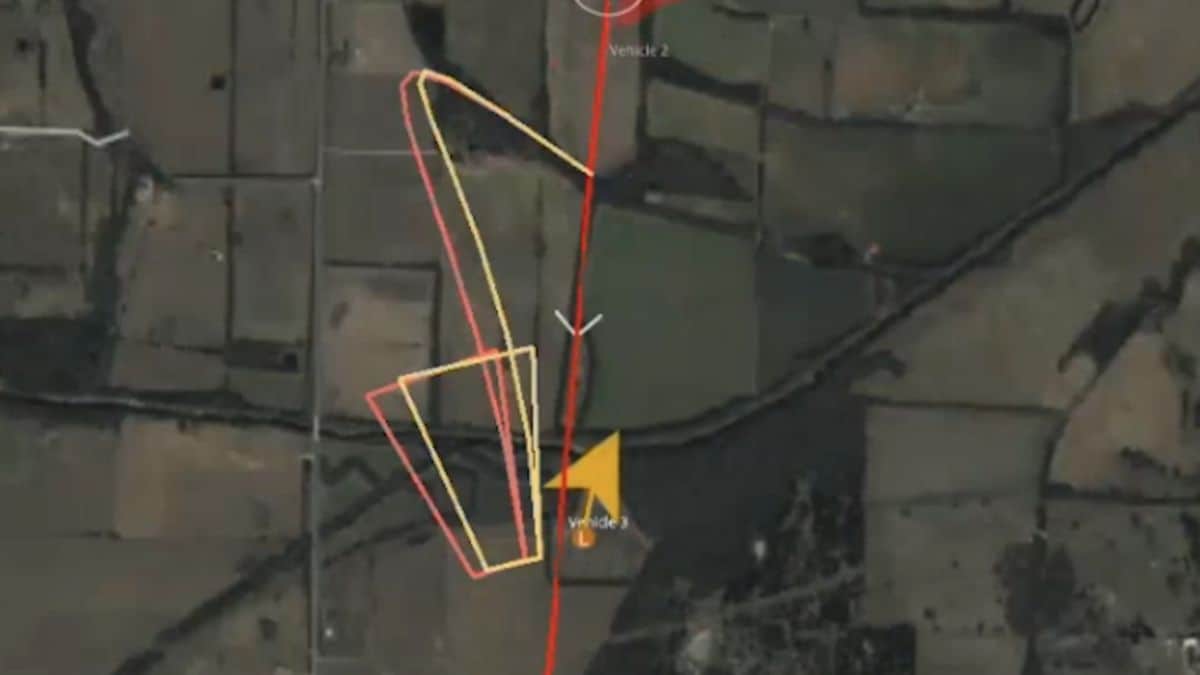
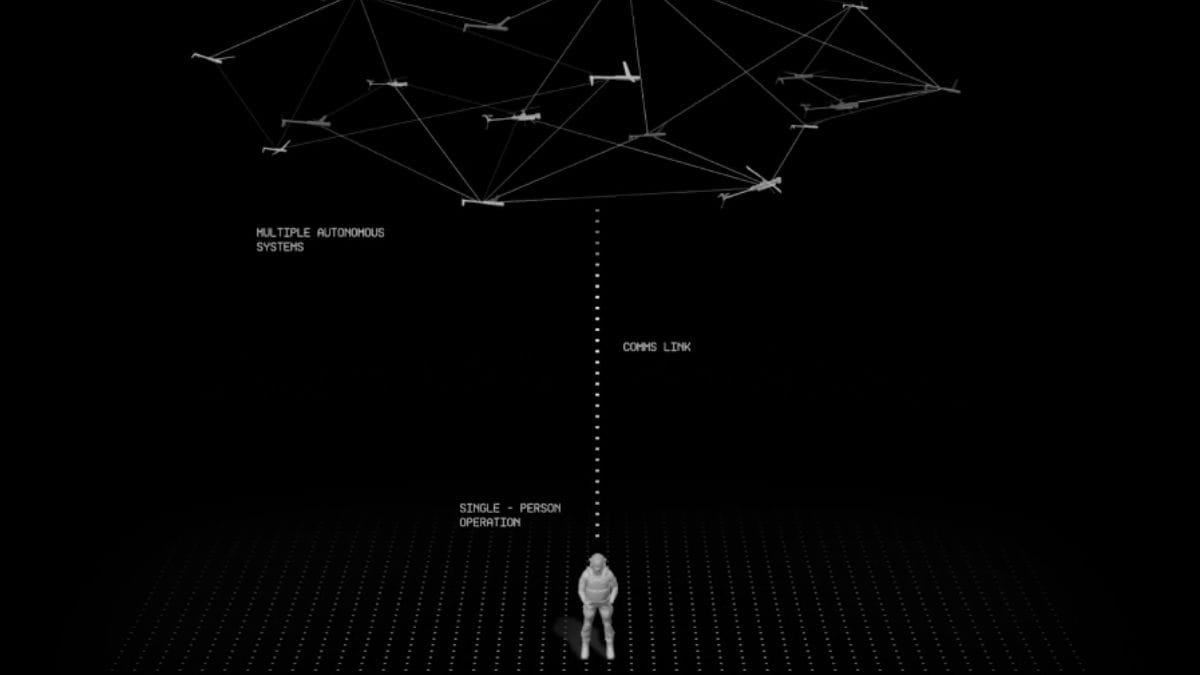
Shield AI's Hivemind provides autonomous AI pilot solutions that can operate military aircraft or drones without any human control. Even when jammed or when communication is cut off, it enables the execution of missions independently, making it suitable for electronic warfare that can disable conventional UAV control.
Hivemind also allows teaming of multiple unmanned aircraft and control a swarm of drones for targeting and electronic warfare missions. Its V-Bats are equipped for this purpose and can execute autonomous intelligence, surveillance, and reconnaissance missions.
Several international militaries, including the US Air Force, US Marine Corps, and Singapore Air Force, are among its users.
-
Opinion | Can A Gen Z-Influencer-Rapper PM Really 'Change' Nepal?

Observers say it's high time the former mayor evolved and grew, as well as became more mature, diplomatic and friendly with journalists, opponents and, most importantly, friendly neighbours like India and China.
-
China's Quiet Military Aid To Iran - And Why Beijing Won't Admit It
China officially refrains from highlighting any military partnership with Iran, referring to itself as a "responsible major power". Even so, joint drills, its alleged support to Houthis, and a growing defence footprint tell a more complex story.
-
Opinion | Iran And The Actual Questions India Should Be Asking About IRIS Dena Storm
The Iranian ship was our invitee, took part in our Fleet Review, and its personnel paraded before our President. As hosts, this put some moral burden on us to express our regrets at the tragedy that befell those who were earlier our guests.
-
Hitting A Bullet With A Bullet: No Such Thing As Ballistic Missile Shield
The most effective ballistic missile defence remains what it has always been: not letting the missile launch in the first place
-
When Death Strikes 900 Times In 12 Hours: Palantir's AI Play In Iran
The Maven Smart System - Palantir's ML/AI real-time battlefield analysis beast - crunched through satellite imagery, drone footage, intercepted enemy comms, and 150+ other feeds to spit 1,000+ strike options for the US military on Day 1.
-
For Ayatollah Khamenei, Death Came In Form Of A Blue Sparrow From Space
The 86-year-old supreme leader, who had spent much of the previous weeks sheltering deep underground amid fears of Israeli strikes, had surfaced to attend a high-level meeting. Within hours, he would be dead.
-
Opinion | How Pakistan Became World's Only Muslim Nuclear-Powered Nation - Secretly
Trump is bombing Iran now for allegedly building nuclear weapons. But America had once let Pakistan illegally develop an N-bomb right under its nose. This is the scandalous story of 'Project 706'...
-
Opinion | Will The Iran War Force Pakistan To Pick 'Sides'?
Given its economic dependence on Gulf countries and strategic leanings toward the US, Pakistan will aim to contain any overt anti-American positioning in public protest or state rhetoric.
-
'Did It My Way': Nitish Kumar Quits As Chief Minister After 20 Years Reshaping Bihar Politics
Nitish Kumar this week brought the curtains down on a two-decade journey as Chief Minister of Bihar ahead of a shift to the Rajya Sabha.
-
Why US Sinking Iran Warship Is A Major Wake-Up Call For India's Submarine Arm
Project 75-India, the programme meant to field six next-generation submarines with submerged endurance-boosting air independent propulsion (AIP) tech and land-attack missile capability, was conceived in the late 1990s.







-
News Updates
-
Featured
-
More Links
-
Follow Us On
