AI That Edits Your Photos Now Drops Bombs From Sky, And Iran Paid The Price
The entry of AI in warfare has changed how we assess battlefields. What took hours to take a shot at has become a second's job.
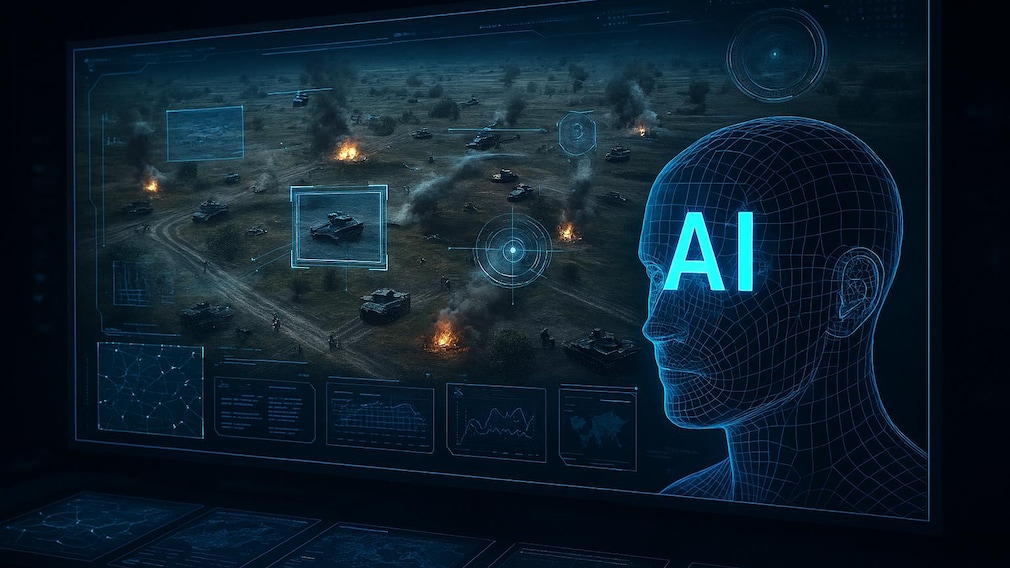
Artificial Intelligence has become a household term. But the scope of what we imagine as our go-to assistant in our day-to-day lives is much larger. And it's safe to assume that at this moment, it is helping a weapon sensor scan through hundreds of datapoints to fire a munition to take down an enemy drone in some remote part of the world.
The entry of AI in warfare has changed how we assess battlefields. What took hours to take a shot at has become a second's job. It's automated. The gun points at the target when the need arises. It fires if it deems required. And that sounds as simple as editing an image on our phones or adding a filter.
One of the most exemplary uses of such technology was witnessed on February 28, when the US and Israeli forces struck Iran.
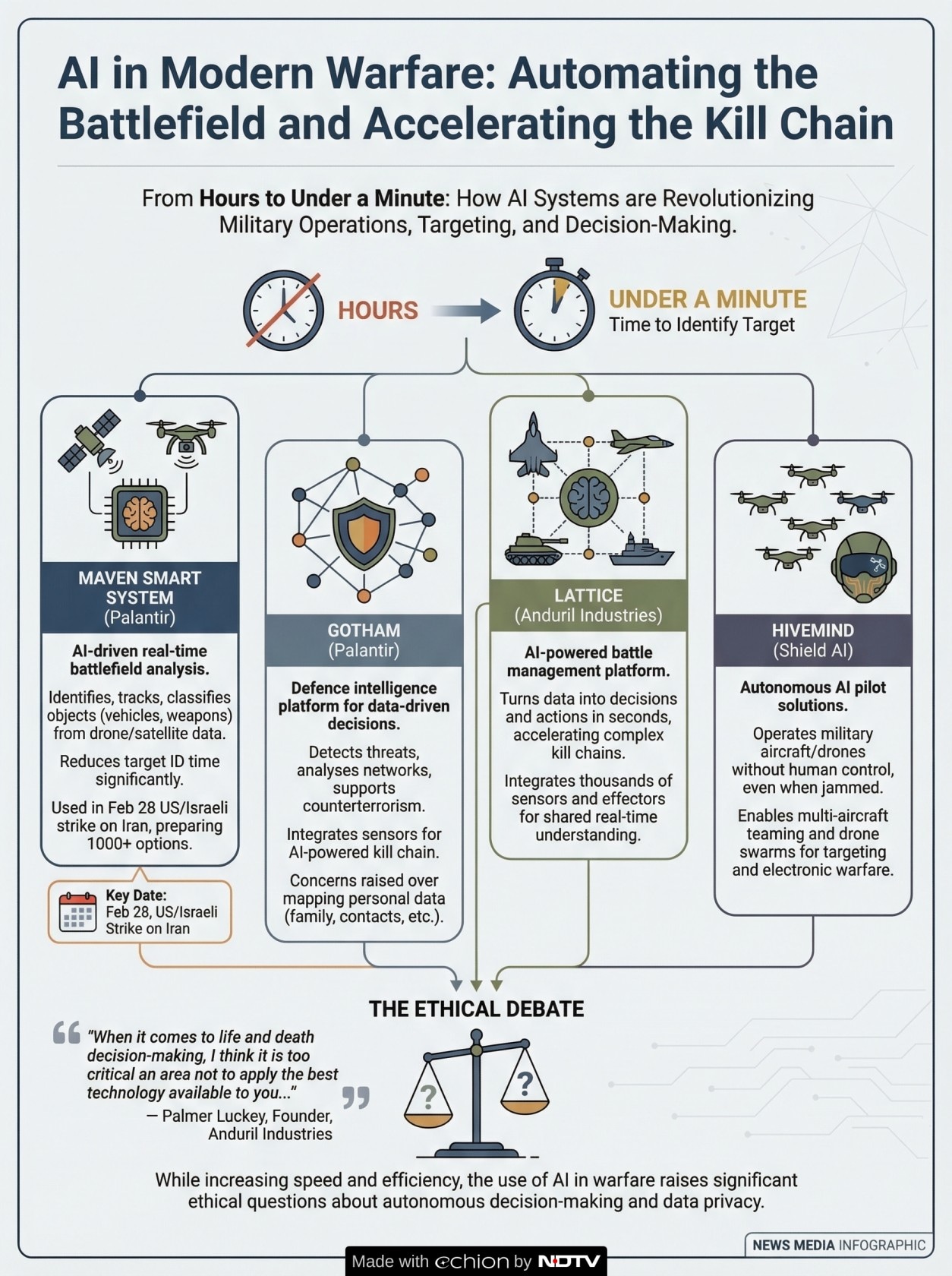
Pentagon's Maven system scanned through satellite imagery and drone footage to prepare over a thousand strike options for the US military. And then it rained death on unsuspecting Iranian bunkers and installations. Though the strikes were still carried out manually, Maven did what humans could have taken days.
Maven
At the centre of the US' Iran ops was the Maven Smart System, the AI-driven real-time battlefield analysis system developed by Palantir Technologies. Built over Anthropic's LLM, Claude AI, it was conceptualised by the US Army's 18th Airborne Corps to serve as a unified AI-powered network for a command-and-control system that oversees all branches of the military.
What Maven does is simple: It identifies, tracks, and classifies objects like vehicles, weapons, or buildings on the battlefield, and significantly reduces the time to identify a target from hours to under a minute. It uses data from drone footage, satellite, and other sensors.
Read: When Death Strikes 900 Times In 12 Hours: Palantir's AI Play In Iran
Beyond analysing visuals, it is also designed to help with predictive logistics to forecast supply needs and in decision-making for joint fires.
While Maven is helping the US forces with targeted capability, another Palantir platform used by the military, Gotham, has for years helped them with making data-driven decisions in defence intelligence.
Gotham

Gotham is Palantir's answer to the world's most complex defence challenges. Used by defence and intelligence agencies to detect threats, analyse networks, and support counterterrorism missions, it helps law enforcement track criminal activity and coordinate operations.
According to Palantir, Gotham helps soldiers with an Al-powered kill chain by seamlessly integrating target identification and target-effector pairing. It allows autonomous tasking of sensors of drones to satellites, based on either manual inputs or an AI-driven system.
The software system is designed to maximise the effectiveness of defence assets by empowering its operators to make informed decisions in a modern battlespace with enhanced situational awareness.
Read: AI To Starlink: How Drone Technology Transformed Battlefield In Ukraine
Its surveillance capabilities have also raised concerns in the past. A Vice News investigation suggests Palantir's Gotham can map a person's family members, business relationships, email addresses, phone numbers, current and previous addresses, and even social security numbers, eye colour, height, and weight.
A Forbes report citing Bloomberg recalled an instance when the Los Angeles Police Department used Palantir's software to assess interactions of residents with the police to look for opportunities to arrest them.
But Maven and Gotham aren't the only players in AI-driven defence and security landscape.
Lattice
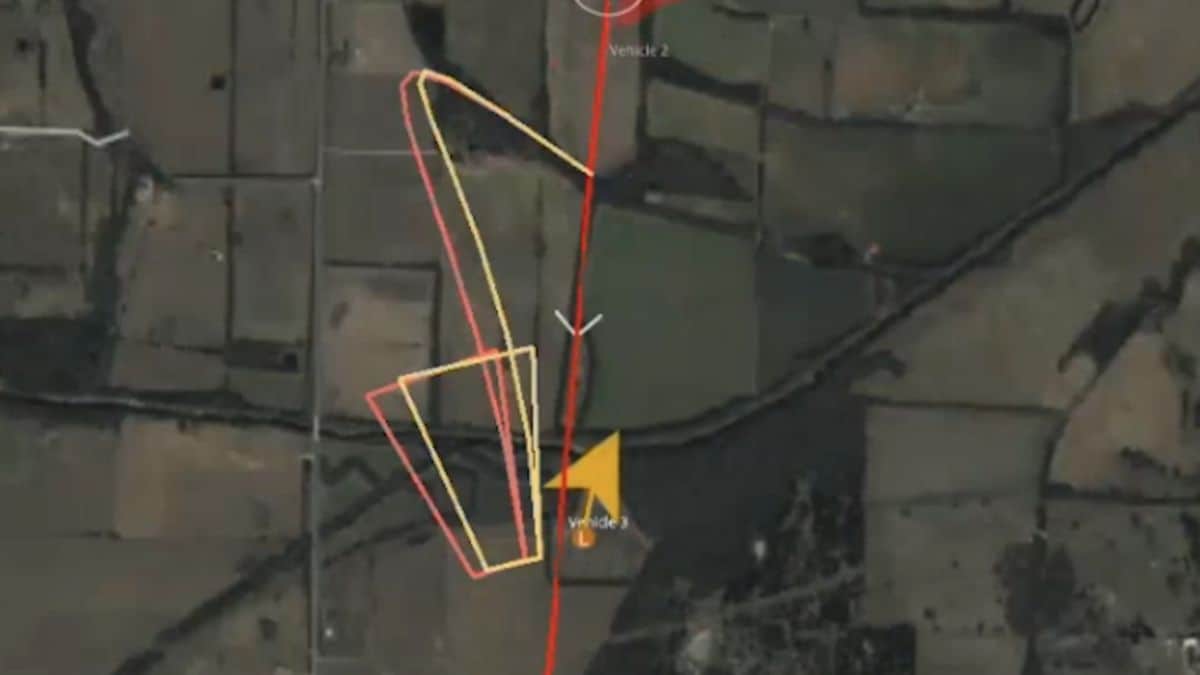
Anduril Industries' Lattice provides a software platform for both commercial and military applications, including public safety, security, and defence. Its user base comprises some of the major defence forces in the US and allied nations.
An emerging ecosystem, Lattice also offers an AI-powered battle management platform that can accelerate complex kill chains.
Anduril markets it as a platform that can turn data into decisions and decisions into actions within seconds, at a speed beyond human capacity, by integrating thousands of sensors and effectors. It creates a shared real-time understanding of the battlespace, according to the defence startup, to support operators by leveraging AI and deep learning models.
But, like with other AI-driven warfare systems, Andruil has also faced questions over the ethical implications of the use of AI in war. And the use of AI has been defended by its founder, Palmer Luckey.
"When it comes to life-and-death decision-making, I think it is too critical an area not to apply the best technology available to you, regardless of what it is," he argued during a discussion with Fox News last year.
Hivemind
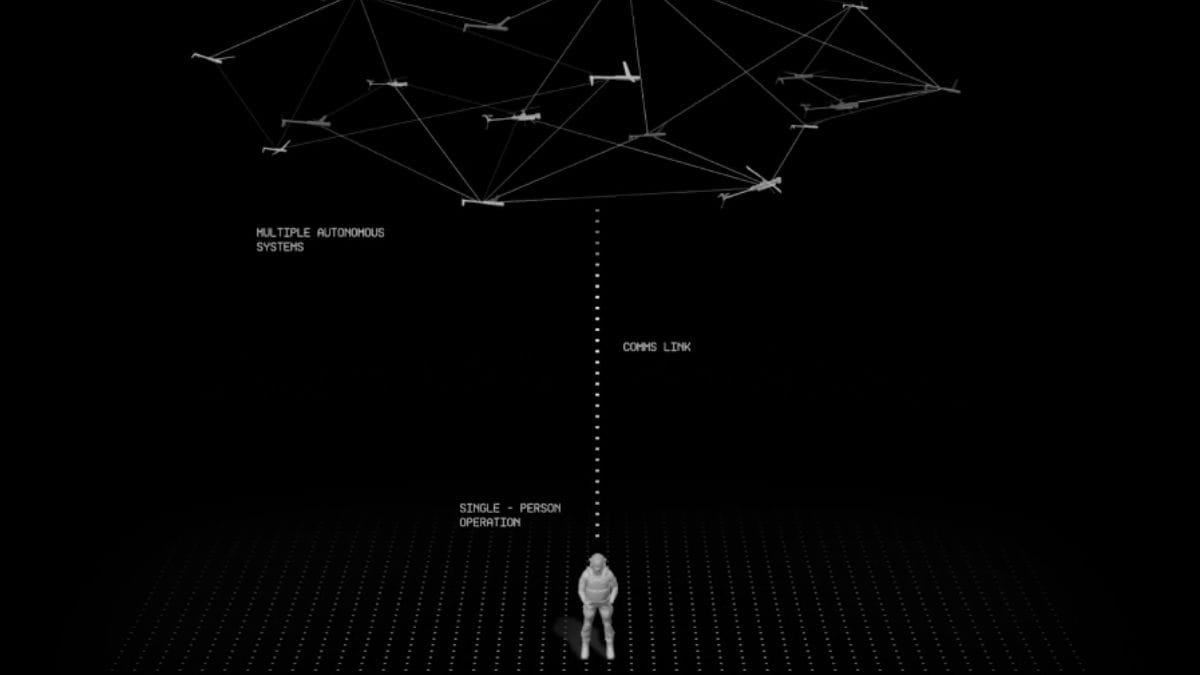
Shield AI's Hivemind provides autonomous AI pilot solutions that can operate military aircraft or drones without any human control. Even when jammed or when communication is cut off, it enables the execution of missions independently, making it suitable for electronic warfare that can disable conventional UAV control.
Hivemind also allows teaming of multiple unmanned aircraft and control a swarm of drones for targeting and electronic warfare missions. Its V-Bats are equipped for this purpose and can execute autonomous intelligence, surveillance, and reconnaissance missions.
Several international militaries, including the US Air Force, US Marine Corps, and Singapore Air Force, are among its users.
-
Opinion | The 'AIPC' Was Once Congress' Boldest Idea. What Happened To It?

Tharoor, to Chakravarti, to Yaskhi now, the fate of a Congress 'experiment' that started in 2017 will tell you a lot
-
Woman Biker Hit, Air Force Veteran Attacked: The Lawlessness In Gurugram
What gives confidence to some elements in Gurugram to break the law again and again in full public view and on camera?
-
Opinion | When The Feed Braves The Flood
NDTV drops the 24x7 and stakes its next chapter on presence as it inaugurates a new identity
-
The Politics Of Blue: Why Akhilesh Yadav-vs-Mayawati Over A Colour Is Just One Shade Of History
A movie starring Rajinikanth tells us how colours can carry meaning beyond what meets the eye. The latest row over Akhilesh Yadav's party adopting blue, and Mayawati objecting, can be a starting point for understanding the many shades of history.
-
2 Indians Survived 9/11, Then American Justice System Became Their Nightmare
Pulled off a Texas train hours after 9/11, two Indian men were plunged into America's largest terror manhunt.
-
Opinion | Building BRICS In New Delhi
For India as the host nation, chairing the summit tests the core tenet of its modern foreign policy: strategic autonomy.
-
Can India 'Mediate' Between Iran And UAE At BRICS? Gulf Envoy Suggested It Once
At the very start of the Israel-US war on Iran, it was a UAE diplomat who had suggested as much.
-
I Went Looking For A PG In Delhi's Kamla Nagar. Here's What I Found
In every PG visited by NDTV in Delhi's Kamla Nagar, the conversation began with amenities. Nothing in the sales pitch was about how secure the building was.