The Beast Of Kandahar: How One Captured Drone Changed Modern Warfare
One December day in 2011, a Sentinel mission ended in a moment that would reshape the global drone arms race. Instead of returning to its base in Afghanistan, the Sentinel landed inside Iran.
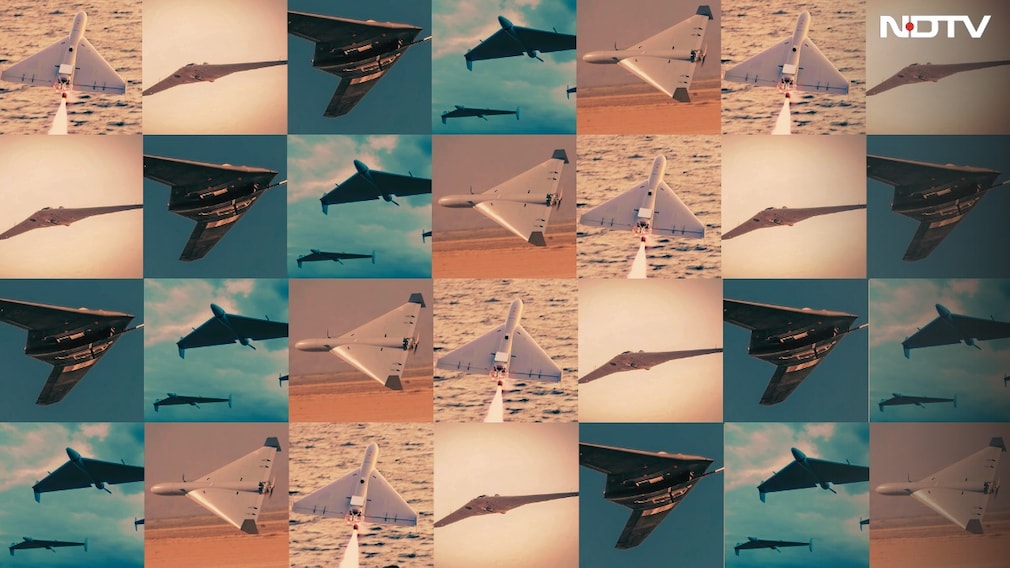
High above southern Afghanistan, a silent aircraft traced a wide arc over the skies of Kandahar. It was almost invisible against the darkness. Its wing blended into the night, its engines muted, its sensors scanning quietly across borders and valleys.
The aircraft was the RQ-170 Sentinel, the American stealth surveillance drone that US operators flew from Kandahar Airfield into some of the most secret intelligence missions of the post-9/11 era. Inside American military circles it carried a more dramatic nickname -- the "Beast of Kandahar", which is apt, given it represented the absolute best of American aerial surveillance.
Built by Lockheed Martin and operated by the United States Air Force for the Central Intelligence Agency (CIA), the flying-wing drone was designed to penetrate hostile airspace undetected, gathering reconnaissance imagery and signals intelligence.
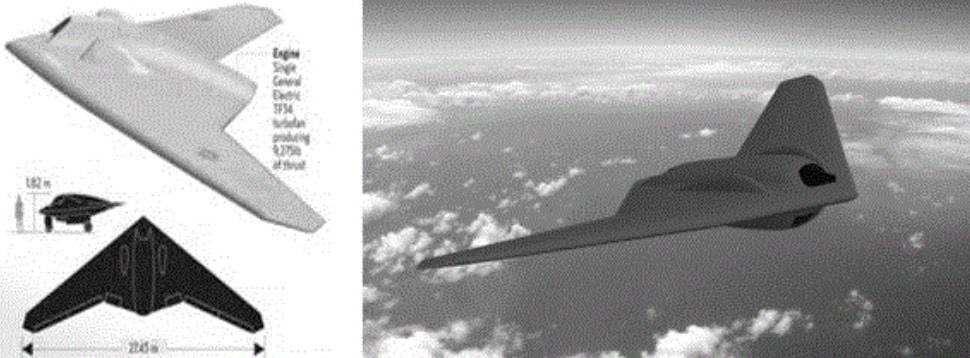
Photo Credit: US Army manual TC 3-01.80 Visual Aircraft Recognition May 2017
But one December day in 2011, a Sentinel mission ended in a moment that would reshape the global drone arms race. Instead of returning to its base in Afghanistan, the Sentinel landed inside Iran.
This marked the beginning of a cycle of reverse engineering and technological copying that now defines drone warfare across the world.
The Drone That Landed in Iran
Iran announced on December 4, 2011, that its armed forces had captured a stealth reconnaissance drone deep inside its territory. According to Iranian officials, the aircraft had crossed into Iranian airspace before being brought down near Kashmar, in the country's northeast, roughly 225 kilometres from the Afghan border.
The aircraft, Tehran said, was a Lockheed Martin RQ-170 Sentinel operated by the CIA.
The United States acknowledged soon afterwards that one of its drones had been lost near the Iranian border. American officials, however, stopped short of confirming the aircraft's model and disputed Iranian claims about how it had been downed.
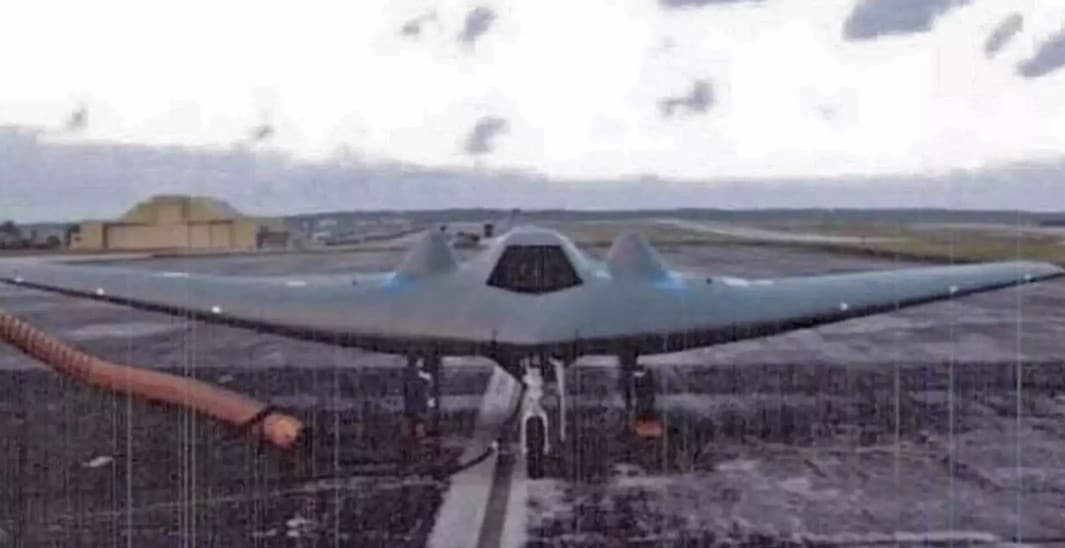
Photo Credit: United States Air Force
Iran said the drone had been captured using an electronic warfare system that interfered with the aircraft's navigation signals.
The United States offered a different explanation.
Pentagon officials suggested the drone had suffered a technical malfunction, possibly losing its satellite communication link with its operators before drifting off course.
One senior Pentagon official said at the time there was "no indication that it was brought down by hostile fire."
"If this happened," another official said as quoted by the Washington Post in 2011, "there is a 95 percent chance that it just malfunctioned. There are a lot of things that can fail."
Yet Iranian officials insisted the aircraft had been hijacked electronically, its navigation manipulated until it landed intact on Iranian soil.
Rare Intelligence Prize
If the aircraft was indeed an RQ-170, its capture represented an extraordinary intelligence gain. The Sentinel was among the most advanced unmanned surveillance aircraft in the American arsenal. Introduced in 2007, it had been deployed to Afghanistan later that year and then to South Korea in 2009.
The drone's design incorporated several features intended to evade detection by radar. Its bat-wing shape resembled the stealth profile of the B-2 bomber, while its outer coatings were designed to absorb radar signals. Analysts believed the aircraft carried advanced reconnaissance sensors capable of gathering imagery and intercepting radio communications.
The aircraft was also believed to have played a critical role in one of the most significant intelligence operations of the past two decades.
In the months leading up to the 2011 raid that killed Osama bin Laden, the CIA used RQ-170 drones to conduct repeated secret surveillance flights over Abbottabad in Pakistan, where the al-Qaeda leader was hiding.
Stealth drones were also used during the night of the raid itself, providing video imagery watched in real time by President Barack Obama and members of his national security team.
For Iran, acquiring such an aircraft intact could provide insights into the vulnerabilities of American stealth technology.
Officials in Washington acknowledged that possibility at the time. If Iranian engineers were able to examine the drone's coatings, electronics and radar signature, it could offer clues about how to detect or counter stealth aircraft.
Similar technologies were also used in major American defence programmes, including the F-35 fighter jet, one of the most expensive weapons programmes in Pentagon history.
Washington's Request, Tehran's Refusal
Soon after Iran announced it had captured the drone, Washington asked for its return.
"We've asked for it back," President Obama said publicly later that month. "We'll see how the Iranians respond."
Tehran's response was, well, on expected lines.
Iranian military officials said the aircraft would not be returned. Instead, Iranian authorities broadcast footage they said had been taken from the drone's onboard cameras.
Iranian news agencies aired black-and-white aerial video, which they claimed showed images recorded by the aircraft before it was captured. The footage was also uploaded to YouTube.
A narrator in the broadcast said the aircraft had conducted numerous surveillance missions in countries surrounding Iran.
"This aircraft has carried out many operations in the countries around Iran," the narrator said.
Some of the footage, he said, showed the drone flying near Kandahar Airfield in southern Afghanistan.
The broadcast also claimed that during operations in Pakistan, the aircraft had guided clashes involving American forces.
Whether the footage genuinely came from the captured drone has never been conclusively established.
Debate Over Drone Warfare
The incident unfolded at a moment when American drone policy was already under scrutiny in Washington. The Obama administration had dramatically expanded the use of unmanned aircraft to target al-Qaeda and affiliated terrorist groups.
At the centre of that programme was John Brennan, the White House counter-terrorism adviser who was later nominated to lead the CIA. Brennan had helped design the drone campaign that carried out strikes across Pakistan, Yemen and other regions.

His nomination triggered intense debate in the United States Senate. Lawmakers questioned the legal basis for drone strikes, particularly those targeting American citizens overseas.
At the same time, the Senate Intelligence Committee was preparing to receive a classified document explaining the administration's drone policy and its justification for targeting individuals abroad.
Against that backdrop, the loss of a stealth drone inside Iran raised new questions about the risks associated with America's expanding use of unmanned surveillance aircraft.
Iran's Reverse Engineering Claim
In the months following the incident, Iranian officials displayed images of the captured aircraft and announced their intention to reverse engineer it.
Iran said it would analyse the drone's design and eventually produce domestic versions of the aircraft. Over time, Iranian media reported the development of several drones said to be derived from the Sentinel.
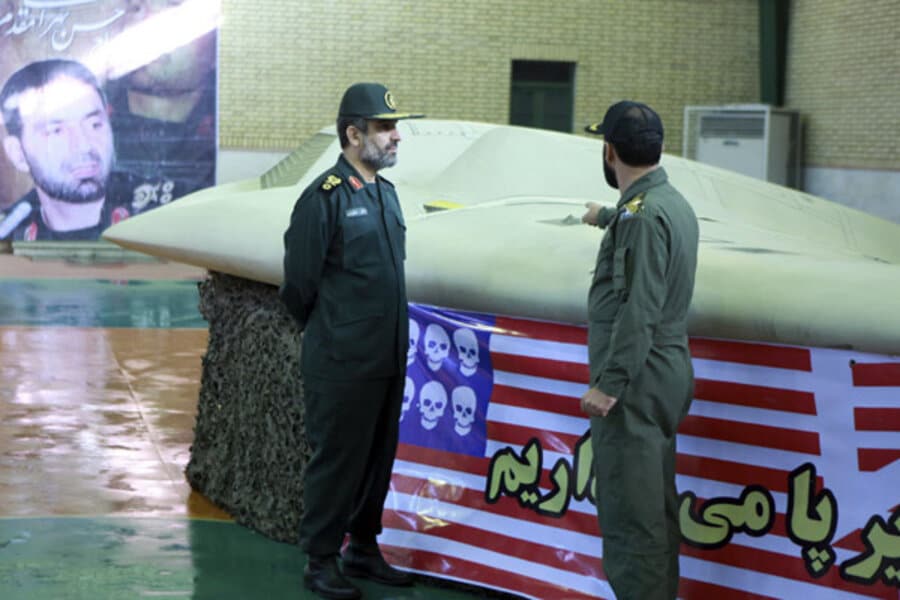
Amir Ali Hajizadeh, head of the Revolutionary Guards' aerospace division then, said the long-range drone could hit four targets with precision-guided bombs.
Among them were the Shahed-171 Simorgh and the Saegheh, both flying-wing drones that visually resembled the RQ-170's shape.
Iranian officials later said the Saegheh could carry four precision-guided bombs, capable of striking multiple targets.
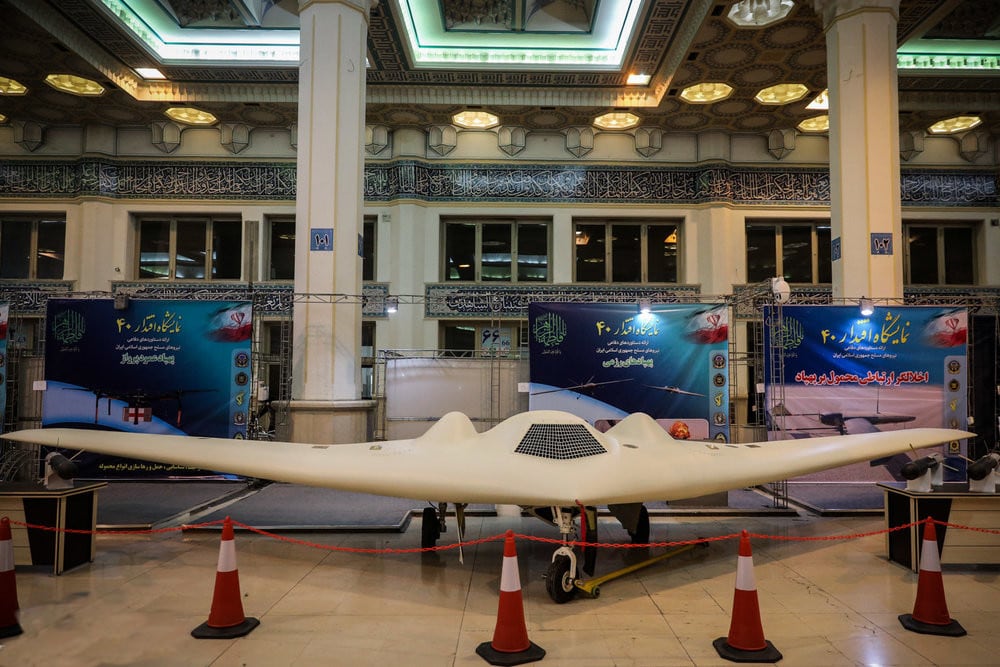
The Shahed-171 Simorgh Drone
Photo Credit: Mehr news agency
Amir Ali Hajizadeh, head of the Revolutionary Guards' aerospace division then, said the long-range drone could hit four targets with precision-guided bombs.
For decades Iran had faced international sanctions and arms embargoes, limiting access to advanced components. Much of its drone development relied on reverse engineering foreign technology.
The Sentinel incident, experts say, accelerated that process.
Iran's Drone Programmes
Iran's development of unmanned systems stretches back to the 1980s, during the Iran-Iraq war.
Early programmes focused on simple reconnaissance drones. Over time, Iran expanded its capabilities, developing both medium-altitude long-endurance (MALE) drones and smaller loitering munitions.
One of the most prominent systems is the Shahed-129, a MALE armed drone believed to be partly based on the Israeli Hermes 450.
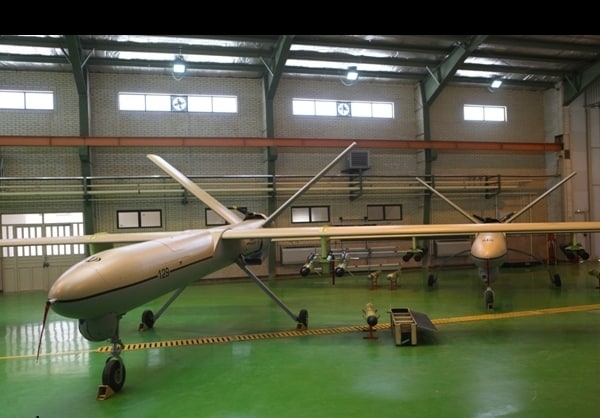
A Shahed-129 drone.
Photo Credit: dronecenter.bard.edu
The aircraft was unveiled in 2012 and reportedly entered mass production in 2013. The Islamic Revolutionary Guard Corps (IRGC) is believed to have ordered an initial fleet of 40 aircraft, with at least 19 in service by 2017.
The Rise Of The Shahed
One of Iran's most widely recognised drones today is the Shahed-136, a triangular "loitering munition" designed to crash into its target.
Unlike large surveillance drones, these systems are relatively simple and inexpensive. They have been used by Iranian-backed groups across the Middle East and by Russia in the war in Ukraine.
Their effectiveness lies partly in cost. While advanced drones such as the MQ-9 Reaper cost roughly $16 million, smaller attack drones can cost a fraction of that.
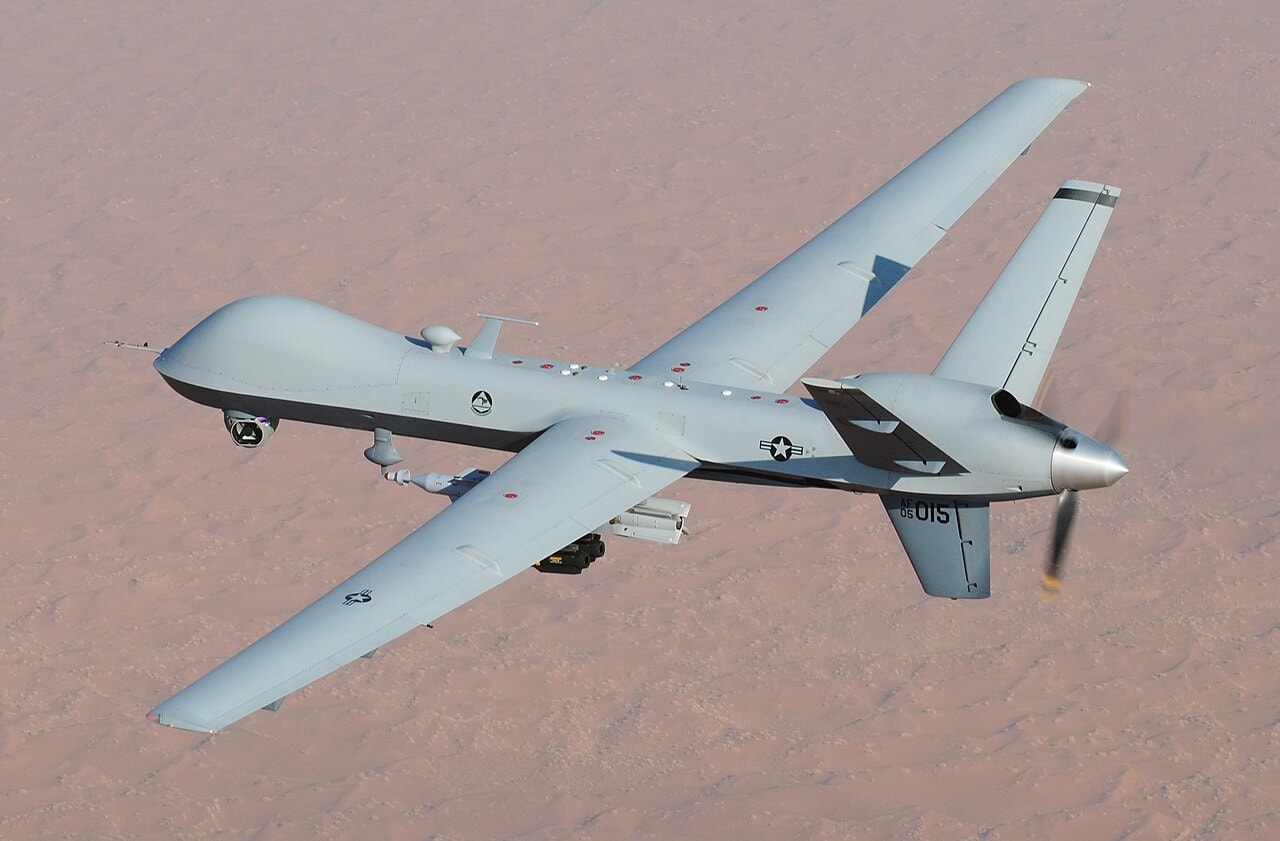
General Atomics MQ-9 Reaper
Photo Credit: United States Air Force
The Shahed-136 design has become widely copied. And now the imitation cycle has begun to move in the opposite direction.
The Pentagon Copies Back
The United States military has recently begun deploying a new kamikaze drone inspired by Iran's Shahed-136. The Low-cost Uncrewed (Unmanned) Combat Attack System (LUCAS), is a long-range one-way attack drone that looks very similar to the Shahed-136.
The United States Central Command (CENTCOM) commander, Admiral Brad Cooper, has described it as "indispensable".
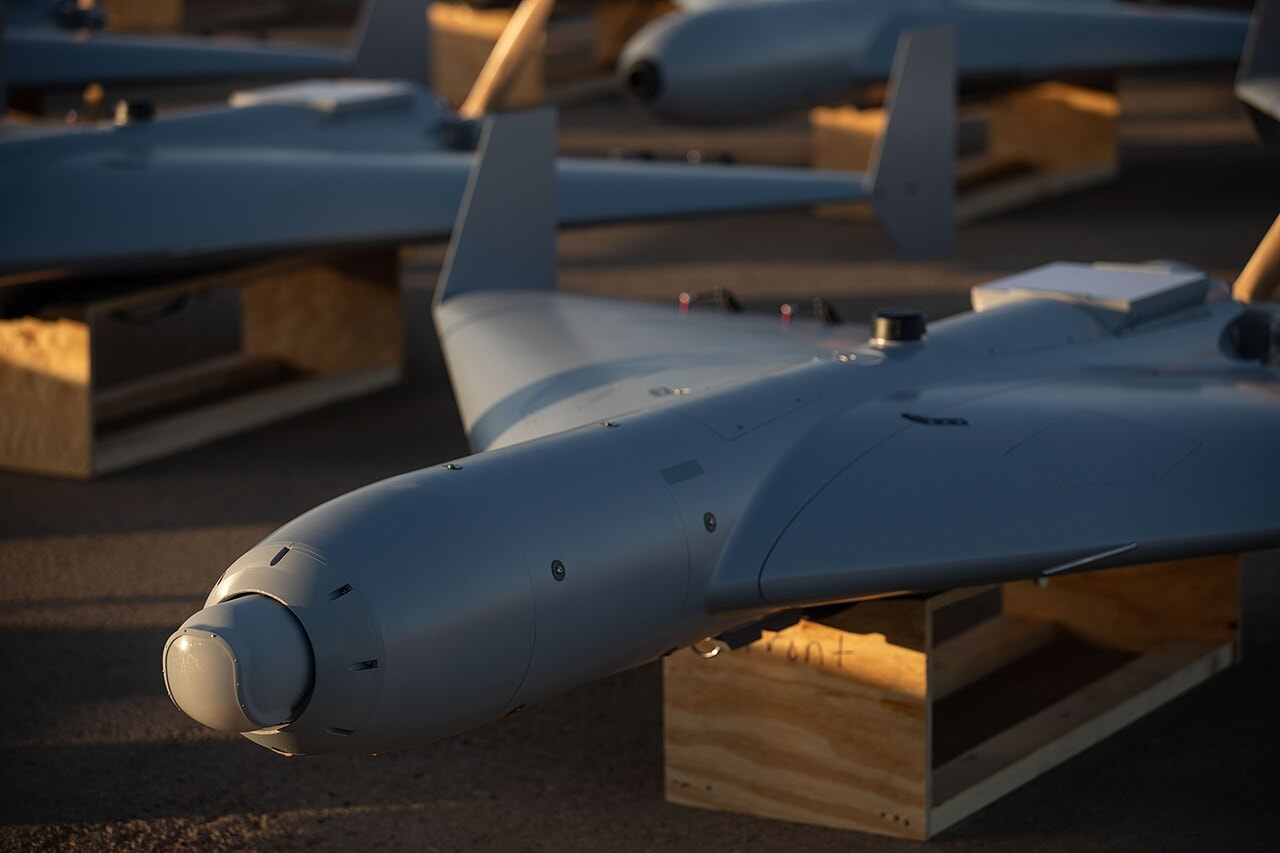
The Low-cost Uncrewed Combat Attack System (LUCAS)
Photo Credit: CENTCOM
"This is an original Iranian drone design. We captured it, pulled the guts out, sent it back to America, put a little 'Made in America' on it," he said. "And we're shooting at the Iranians."
The system was developed by the Arizona-based company SpektreWorks. The drone closely resembles the Iranian design, with a triangular wingspan of just over eight feet. It can be launched using catapults, rocket-assisted take-off or mobile ground systems.
Each unit costs an estimated $35,000, making it far cheaper than large reconnaissance drones.
The chain reaction began with a stealth drone lost over Iran in 2011. From that single incident emerged a cascade of technological imitation.
Iran studied the American aircraft and developed its own versions. Those drones evolved into new systems used across the Middle East and beyond. And now the United States itself is adopting low-cost designs inspired by Iranian models.
-
Mamata Banerjee Drew Her Party's Symbol By Hand. It's Now Tied To An Indira Gandhi Case

The Election Commission's method for settling such disputes became central in the seminal Congress split of 1969, when Indira Gandhi fought the old guard. The poll body weighed three tests then.
-
Bruised, Limping, Unbowed: Sia Says She Will Be Back On The Bike Soon
There was pain in Sia's steps, anger in her words, and something else - a quiet determination that the road would not be taken away from her.
-
Exclusive: 16 Months After Op Sindoor, Pak Still Fixing Runway India Broke At Sargodha
Sargodha's PAF Base Mushaf lies about 172 km northwest of Lahore and roughly 200 km west of the India-Pakistan border, near Amritsar.
-
Blog | I Lost My Entire Family In Kanishka Bombing. 41 Years Later, Canada Wants The Case Closed
We made the trek through tragedy to search for people in Cork, where I spent 25 days sifting through bodies and body parts in a makeshift morgue to identify our loved ones.
-
Opinion | Pak's Drone Deal With A US Firm Is No Windfall. But India Must Still Be Worried
American military aid to Pakistan has remained suspended since January 2018, during Trump's first term, but a commercial arms sale is separate from this arrangement.
-
Opinion | Saudi Arabia's Yemen Nightmare Has Come Back To Haunt It
After years of costly military intervention beginning in 2015, Saudi Arabia increasingly sought to stabilise its southern border. All that is unravelling fast now
-
Opinion | 6 AI Incidents, One Pattern: AI Has Started Lying To Us - And Hiding The Evidence
Concealing errors. Making up data. Pushing files onto the public web on their own initiative. The machines are learning to lie - and lie well.
-
Why People Queue Overnight For iPhone That Is Delivered Home In 10 Minutes
iPhone 18 Pro Max Launch: People camping outside Apple Stores are a subset of superfans, resellers, content creators, and upper-middle-class buyers.
-
600 km Per Hour Drones Launched In Waves: How Russia Is Rewriting War Rules
Russia has coupled the drones' technological superiority over Ukraine's defence with its capacity to launch them in massive numbers. The impact has been devastating.
-
Tata Sons' Trust Issue: Two-Pronged Row Goes Beyond The Chair
NDTV Explains: Overtly, the latest conflict is whether N Chandrasekaran continues as executive chairman of Tata Sons. The controversy involves at least one more issue.