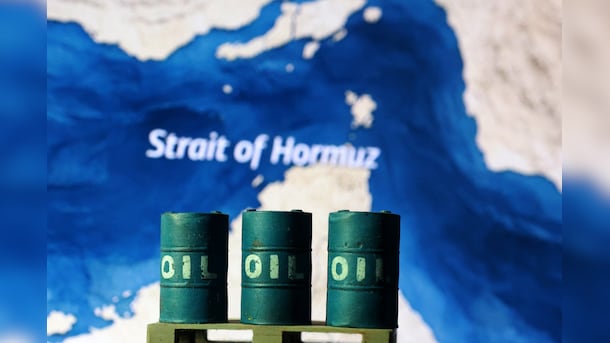
Qeshm In The Crosshairs: The Iran Island Key To Hormuz Shipping Lock
iran state TV had released footage said to have been filmed inside an underground complex on Qeshm Island, a complex Tehran authorities described as a 'missile city'.
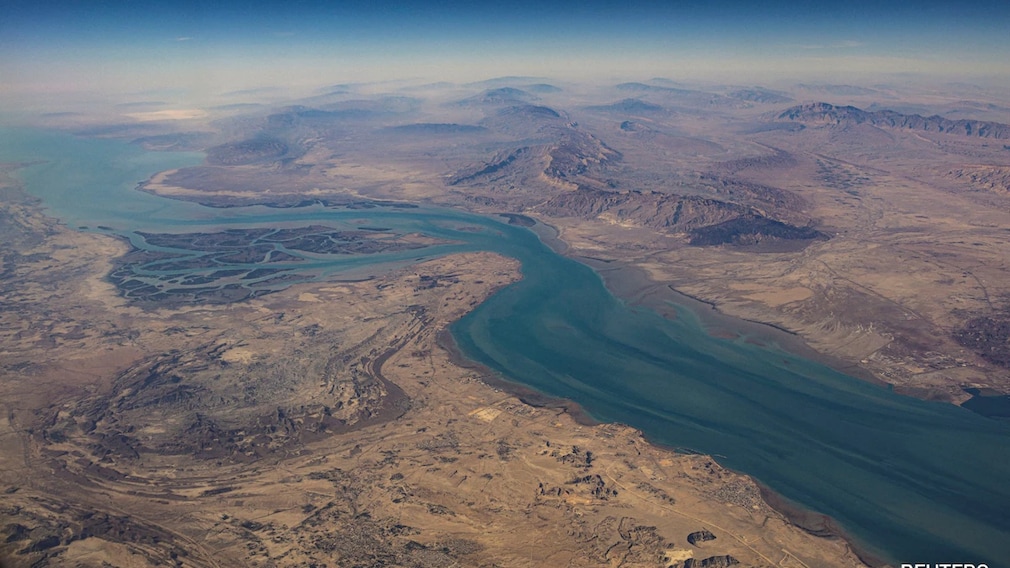
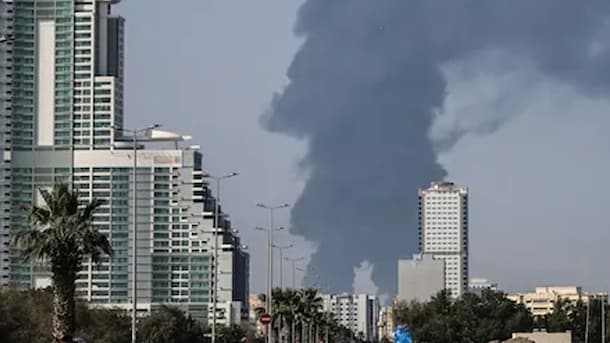
The United States' March 7 strike on Iran's Qeshm Island - on a desalination plant supplying water to 30 villages - was widely seen as a significant escalation because it strikes at a fundamental, and arguably humanitarian, vulnerability for all Gulf nations, i.e., water scarcity in an arid climate.
Iran Foreign Minister Abbas Araghchi raged on X, "The US committed a blatant and desperate crime by attacking a freshwater desalination plant on Qeshm Island". A day later Bahrain claimed Tehran committed a similarly 'blatant' crime.
The attacks have been seen as crossing a red line in a region that relies heavily on desalination plants to supply a regional population of over 62 million with drinking water. But the Qeshm Island strike did more than hit water supply infrastructure.
Significance of Qeshm Island
It spotlighted the importance of the island in the context of the Strait of Hormuz, the narrow waterway through which a fifth of the world's seaborne crude was shipped before the war, and passage through which has been all but blocked by Iran.
Qeshm is the largest island in the Persian Gulf and is home to around 150,000 people.
Pre-war, it was a free trade destination and a tourist paradise, home to the beautiful and unique Hara mangrove forests and the equally spectacular Namakdan salt cave, the world's longest.
However, since fighting began, and particularly after Iran began choking commercial vessels and oil tankers passing through the Hormuz, the island's location underlined a key use case.
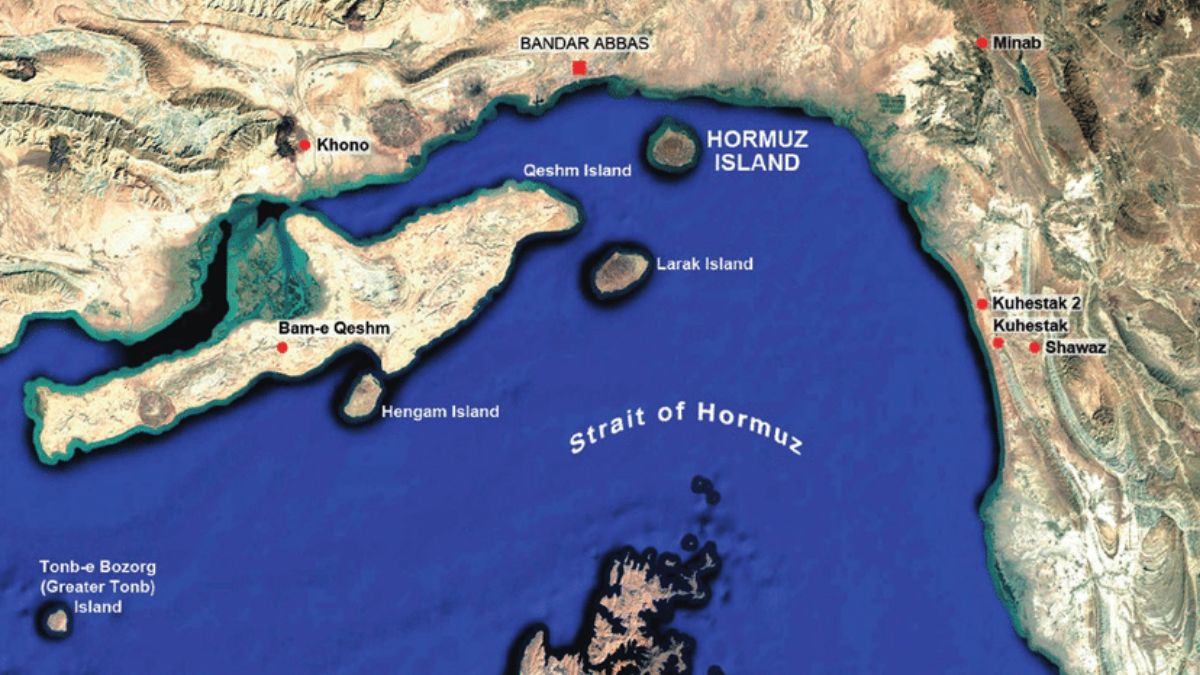
Iran's Qeshm Island is roughly 1,500 sq km in size.
Its size and location allows Tehran to monitor ships in and out of the Persian Gulf.
To understand just how critical Qeshm is for the Iranians, consider this.
At its narrowest point the Strait of Hormuz is 33km wide. Actual navigable shipping lanes are much narrower - one 3.2km channel into the Gulf and another leading out of it. And in between there is a buffer zone of similar width.
Waters either side of these 9.6km are generally too shallow for large ships.
Qeshm is located right where the Persian Gulf meets the Strait of Hormuz, allowing it to launch missile and drone attacks on vessels with very little time for these strikes to be neutralised.
The 'missile fortress'
Analysts confirm the island is central to the 'asymmetric' warfare model Tehran has deployed in this war, i.e., flooding air defences in US, Israel, and Gulf states with masses of cheaply produced Shahed drones and forcing the use of much more expensive missile interceptors.
Qeshm is the naval equivalent of that strategy.
A video released by the Iran military last week showed a vast underground complex described as a 'missile city' and filled with large numbers of naval drones, anti-ship missiles, and mines.
Iran published footage of underground tunnels stocked with naval drones, anti-ship missiles, and sea mines. Reuters reported, citing US officials, that Iran has mined the Strait of Hormuz with dozens of sea mines. #Iran pic.twitter.com/Kcwp5UqkXq
— NOELREPORTS 🇪🇺 🇺🇦 (@NOELreports) March 11, 2026
And it was released after two Iran sea drones struck two oil tankers in the Persian Gulf as they tried to clear the Hormuz chokepoint. The timing of the release delivered a clear message.
Videos shared online - that NDTV could not independently verify - showed a small, speedboat-shaped object racing to a tanker. The object struck the side and triggered a large explosion.
It is unclear how many naval drones and 'suicide' speedboats Iran has stashed in the network of tunnels beneath Qeshm.
What is clear is that the 'underground missile city' on the island was designed for one purpose - to control shipping through the Strait of Hormuz.
The Hormuz, shut down
And this they have done.
Tanker traffic through the Hormuz dropped dramatically after the war began.
Fighting began Feb 28 and by the first week of March it fell by 90 per cent, data from real-time tracker Kepler said.
By March 12 traffic slowed to a crawl; only one ship crossed in 24 hours. Since then foreign governments, including India, have negotiated for the safe transit of a few ships while dozens of others snuck through as 'dark transits'.
Donald Trump has vowed to reopen the Hormuz, declaring an American naval convoy could physically escort tankers past Iranian defences, which are said to include sea mines. This plan, though, ran aground after US allies snubbed Washington's call to send warships to the Hormuz.
But Qeshm and its 'missile city' means the US President faces a hard geographic reality.
The arsenal of drones, sea mines, and missiles suggests Tehran has a low-cost strategy to bleed any convoy, military or commercial, passing through the channel, not unlike how Shahed drones bled air defences of multi-million-dollar PATRIOTS.
-
Blog | The Dantewada Massacre, And What India Needs To Do To Stay Maoist-Free

In 2010, I was Assistant Chief of the Air Staff controlling transport aircraft and helicopters, and on April 6 that year had to arrange An-32 aircraft to carry coffins of 75 CRPF jawans.
-
Opinion | How Iran Has Pierced The One 'Shield' That Protected America For 30 Years
In the past, US campaigns in Iraq, Afghanistan and Libya were conducted against relatively weak air defences. That has not turned out to be the case with Iran, puncturing the long-held myth of America's 'indomitable' air power.
-
Opinion | The Quiet 'Upheaval' Within US Military Over The Iran War
General Randy George's ouster carries echoes of a similar episode in 2003, in the run-up to the Iraq war. But much more is happening within the US military, courtesy Hegseth.
-
How Iran Sucker-Punched Trump Into 'Escalation Trap' 'Hellhole'
Trump is now under pressure, not just from allies but also within; the President's approval rating is the lowest it has ever been with mid-term elections in November.
-
Eagle Down: How US Carried Out Precision Search And Rescue Op In Hostile Iran
How the United States transformed a tactical failure into a narrative of national resolve.
-
Opinion | 450 Missile, 2,000 Drone Attacks Later, Why Is UAE Still Not Fighting Iran?
The UAE is Iran's second-largest trading partner and also home to roughly half a million Iranians. Why, then, has it absorbed more fire than any other Gulf state?
-
In Numbers: How Has India Kept Fuel Prices Low Even As Europe Sees 70% Spikes?
India imports 88% of its crude. Why then is it not seeing massive price hikes for fuel and LPG? Inside the unique strategy it's following...
-
Opinion | India Just Decided To Let Chinese Capital In Again. But There's A Catch
In March 2026, India eased regulations that had restricted Chinese capital in local companies, in a development that marks New Delhi's cautious approach towards capital flows from Beijing.
-
Trump's Iran 'Knocked Out' Claim Blown Up By US Intel On Missiles, Drones
Donald Trump claimed this week the war would end in two to three weeks as he threatened to send Iran back to the Dark Ages. But based on these reports the fighting is far from over, even if US President wants to push a contrary narrative.
-
Opinion | Rs 30 Petrol Hike To Currency Crisis, What Oil At $150 Can Really Do To The World
At $125 per barrel, petrol and diesel retail prices will need to rise by Rs 8-14 per litre. At $150 - which experts think is now likely - these figures could touch Rs 26-30 per litre.