Iran Found Its 'Nuclear Weapon'. Now The US Has To Adapt
Iran's ability to throttle tanker traffic through the Hormuz acts as a strategic, nuclear-like weapon without physical destruction, and the US must find a way around this particular challenge.
For decades the US and Israel have drawn a bullseye around Iran's nuclear programme, arguing that allowing Tehran a nuke risks triggering an arms race and destabilising a region that produces a third of the world's oil and gas, as well as large quantities of fertilisers.
For the US, the risk is also loss of strategic control - since a nuclear-powered Iran rewrites power equations with neighbouring Arab states - over a critical global trade and transit hub.
Air strikes, this year and last, on nuclear and military bases were meant to destroy Iran's ability to enrich uranium past the current 60 per cent threshold and degrade its missile arsenal.
The strikes have been relatively successful; satellite images showed damage to nuclear and missile capabilities, particularly after the US dropped 'bunker busters' on Isfahan, Natanz, and Fordow in June 2025, and on missile depots in March 2026.
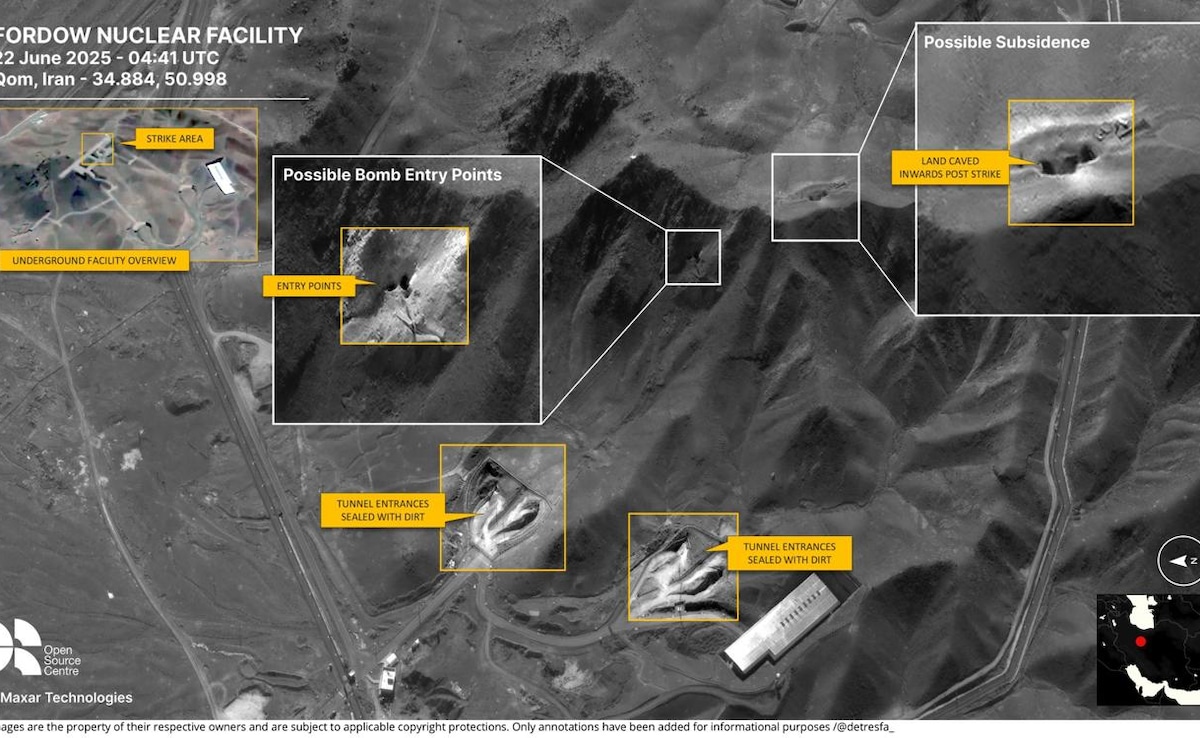
Images of missile impact at Fordow. Photo: Damien Symon
But they have also shown Iran already has a nuke - the Strait of Hormuz.
Deterrence by disruption
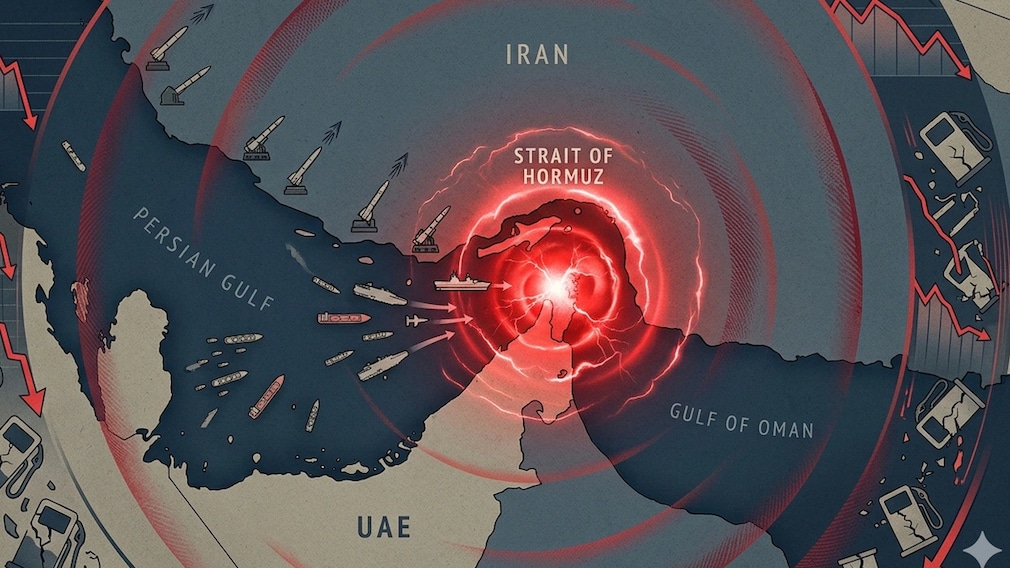
Tehran's throttling of tanker traffic revealed the channel - which handles around 20 per cent of the world's seaborne crude oil and gas trade - to be the geographical equivalent of a nuke.
Nukes, the missile kind, deter by threat of catastrophic physical damage - deaths, injuries, and long-term radiation effects. And, most importantly, there is no 'rewind' option.
The US Was Right: Iran Has A 'Nuclear' Weapon, But It's Not A Missile
They are also expensive and hazardous to manufacture and maintain and, in the case of Iran, draw unwelcome attention, which includes sanctions that cripple the national economy.
But Iran's Hormuz chokehold results in none of that death and devastation.
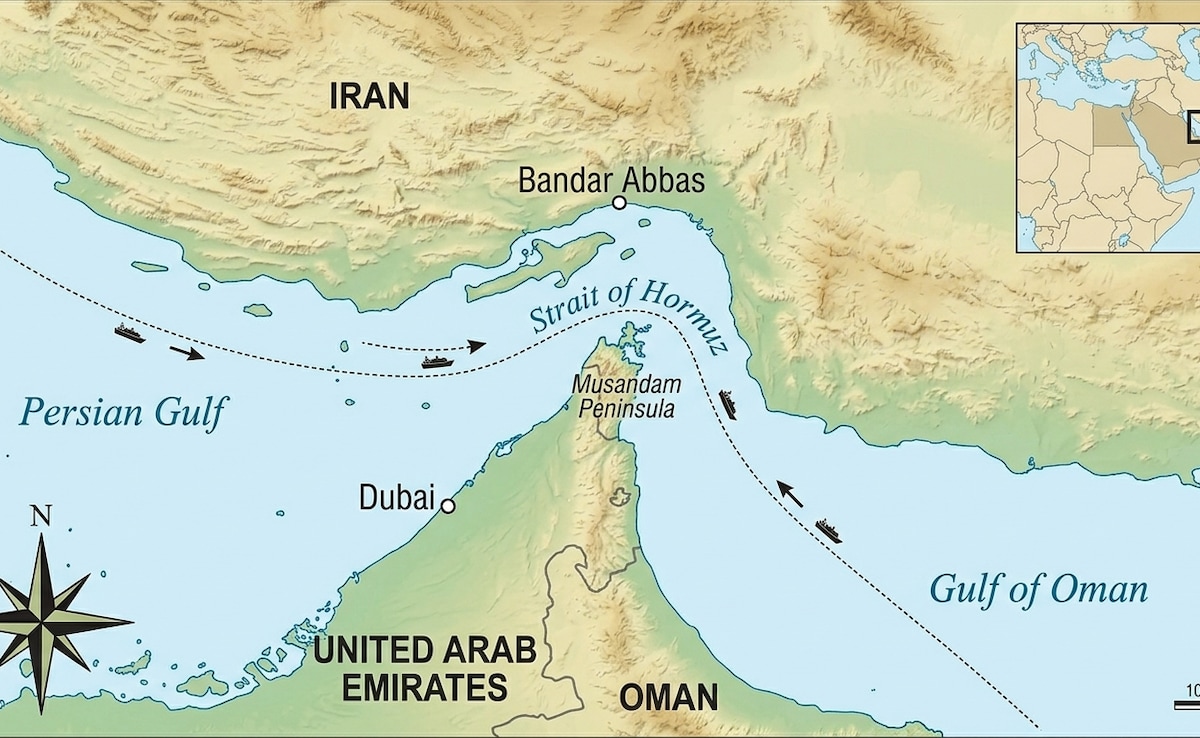
Map of the Strait of Hormuz region. Image generated by AI.
All it really had to do was warn tankers against crossing and fire at a few to make its point, and insurance providers and ship owners did the rest, driving up premiums and charter rates.
Transit numbers tumbled within hours. Crude stored in port terminals built up, forcing prices to spike past the $110 a barrel red line and production to slow down or even shut.
And cue the biggest oil crisis in decades.
What does this mean for the US?
That it may have to recalibrate its approach to the war.
The recovery, when it is effected, of an estimated 440kg of 60 per cent enriched uranium - short of the 90 per cent weaponisation threshold but enough to build eight to 12 bombs - gives it a tactical gain but does not eliminate Tehran's Hormuz edge.
To blunt that edge it needs to do more than seize Iran's uranium or degrade enrichment facilities, both of which are, at best, short-term measures. It needs to control the Hormuz.
'Owning' the strait
The US Navy blockade is the clearest sign of that attempt to 'own' Hormuz.
Positioning warships between the strait and the Arabian Sea signals Trump has shifted the frontline from air strikes to a naval campaign, and control of the passage is a mission goal.
It also establishes the US's intent to police marine traffic through the channel, which is a small step from claiming 'ownership' of it; Trump's remark about the US being entitled to collect a 'toll' from transiting tankers and cargo vessels underlines that tilt towards 'ownership'.
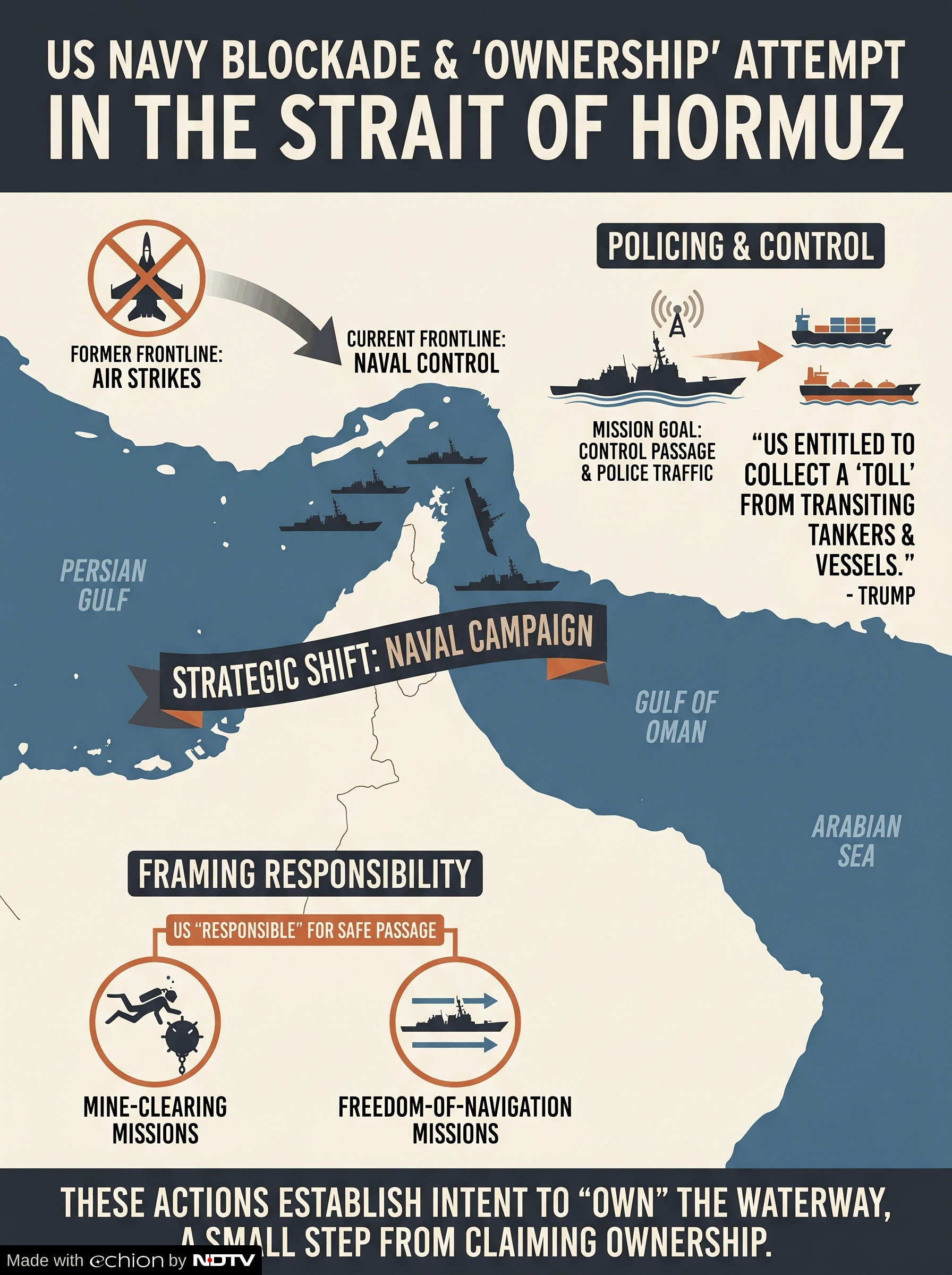
Mine-clearing and freedom-of-navigation missions inside the channel add to the framing the US is 'responsible' for safe passage through it, much as it would be for any American waterway.
The Hormuz-as-nuke challenge
US attempts to 'own' the Hormuz will have to extend beyond a warships-backed claim.
It will likely play out as long-term diplomatic, military, legal, and economic posturing that begins with the understanding that headbutting over the Hormuz will likely become a recurring issue, requiring Washington to invest significant naval and air assets for surveillance and deterrence.
It likely means CENTCOM's current deployment of multiple aircraft carriers, for example, might have to become a permanent feature. And this may have an impact on operations in other parts of the world, particularly in other energy chokepoints.
'5 Straits Trap': How Hormuz Blockade Exposes Global Oil Flow Risk
It also likely means the US must accept a long-term war of attrition with Iran's ability to close, partially or fully, the Hormuz via fleets of small attack craft, anti-ship missiles, and drones.
And, finally, it also means Trump will have to offset long-term (and disastrous) impact on global oil prices in the event of a protracted military stand-off over the Hormuz.
This will involve establishing new pipelines to shift oil, something that will take years and billions of dollars to build, maintain, and defend, while also working with India, China, and other leading economies on alternative energy sources and plans.
This means that if the US wants to counter the Hormuz-as-nuke challenge by assuming a guardian role, it has to prep for a potentially decades-long scenario that will involve multiple military engagements and more than one likely energy crisis.
-
3 Minutes, 6 Stanzas, Century-Old Debate: The Many Turns In Vande Mataram's Journey

PM Narendra Modi launched a year-long commemoration of the song's 150th anniversary on November 7, 2025. In December, both Houses held special discussions on it, during which the 1937 Congress decision was scrutinised.
-
Opinion | Sajjan Kumar, Congress, And How To Keep Messing Up An 'Apology'
A sitting Congress MP has termed Sajjan Kumar's death an "irreparable loss", calling him a man whose bond with the people of Delhi was "an example". This was a tribute, delivered in full sentences, to a convicted killer of Sikhs.
-
Explained: Why Tamil Nadu Dropped Second Airport Near Chennai
While the government stands firm with the protesting residents, Chief Minister Vijay assured that Chennai's aviation needs will not be ignored. The state will soon announce a detailed plan for a new airport at an alternative site, he said.
-
Opinion | A 'Snub' Gone Too Far? The Story Of Bangladesh PM's Stalled India Visit
The abrupt cancellation of Prime Minister Tarique Rahman's scheduled visit to New Delhi this month raises many questions.
-
Inside Pak's New Law That Has One Man Written All Over It: Asim Munir
With a new act, Munir has truly reached the apex. At least most politicians in Pakistan will hope so.
-
Behind Sugar Shock: Not Ethanol, But Over-Estimation Led To 16% Price Rise
In November 2025, the government allowed sugar mills to export 15 lakh tonnes. Now, India has allowed 10 lakh tonnes of raw sugar to enter duty-free.
-
Indian Family Wipeout Over iPhone: The Dangerous Lure Of Consumer Tech Debt
Young buyers walk into physical retail stores, hand over basic identity documents and walk out with a consumer electronic device that costs more than their entire family's monthly take-home income
-
China Outspends India In Space, But New Delhi Holds The Trust Card
The US remains the undisputed leader in the global space race. But it's realistic for India to aim for the third place, says Bellatrix Aerospace COO.
-
It's About The Provenance: Head Of Strategy Koreel Lahiri Decodes One Identity Of NDTV
We at NDTV consciously recognise the fact that the same consumer inhabits several screens during the course of a day.
-
Opinion | India's UPI Miracle Has Created A Difficult, Rs 20,000-Crore Question
UPI's whole magic was the Rs 30 payment it charged nothing for. But how long can it stay free?