From Trump And AI To Russia And Water: The 'Top Risks' Of 2026
Ian Bremmer's Eurasia Group, one of the world's top risk research and consulting firms, has released its 'Top Risks 2026' report.
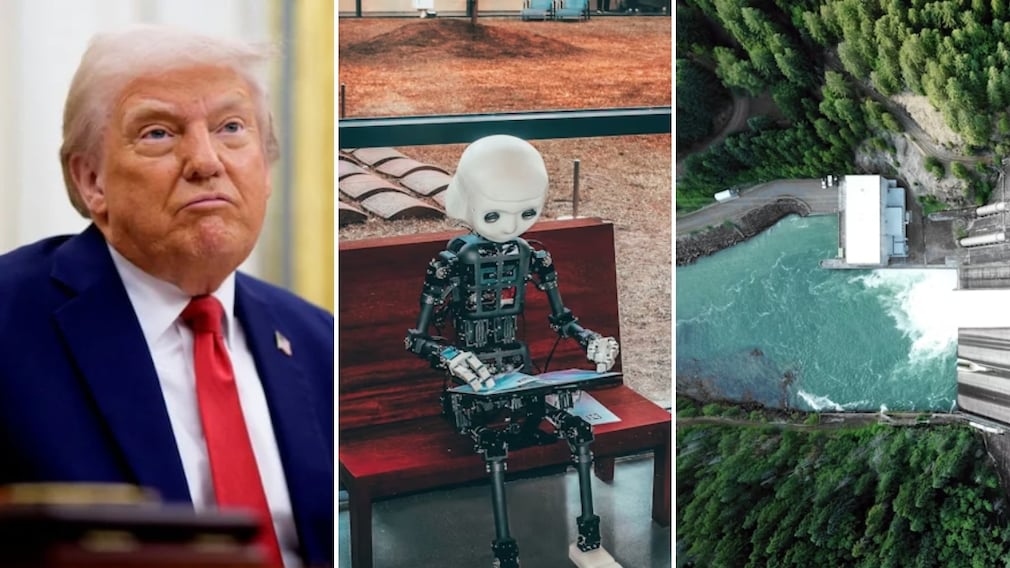
As the hands of the clock inched towards midnight on December 31, Russia and Ukraine were still at war, Israel and Hamas were in the middle of an uneasy truce, tariffs ensured the global economy was still plagued by uncertainty, and even experts were unsure about what the rise of AI would mean for jobs, geopolitics and even the future of military conflicts.
Then came 2026.
On only the third day of the new year, the US carried out the unprecedented capture of Venezuelan President Nicolas Maduro. After a mere 30-minute operation, Maduro and his wife were flown out of Venezuela and bundled into a US warship to face trial for "narco-terrorism", among other charges, in New York.
The reasons for the capture, according to the United States government, were many, but several experts pointed out - including many in the US itself - that it was a naked resource grab in a country with the world's largest proven oil reserves.
It's little wonder, then, that Ian Bremmer's Eurasia Group has listed US President Donald Trump's attempts to swat aside all checks on his power as the first item on its top risks for 2026.
The rest of the list also makes for a fascinating - albeit somewhat troubling - read. It includes the widening gap between the US and China in their mastery of the tools that may power the future, the US' efforts to assert its primacy in the West while Russia gets more aggressive in the East, and water becoming a contested resource.
There is, of course, also AI.
Trump's 'Mandate For Retribution'
The 'Top Risks 2026' report by the Eurasia Group, one of the world's top risk research and consulting firms, has 'US Political Revolution' as its first line item. The report outlines how, in his second term, Trump is making systematic efforts to dismantle institutional checks and weaponise the government against domestic "enemies". The US president, it says, believes he has got a mandate for retribution.
"In Trump's view, he overcame a rigged election, two partisan impeachments, dozens of unjust felony convictions, and two assassination attempts - one a whisker's breadth from killing him - to stage the greatest political comeback in American history. President Trump sees the principal threat to him and his allies as domestic, not external, and he believes he has a mandate for retribution," the document states.

The administration, it says, views this project "not as an assault on democracy but as its restoration, a necessary purge of a political system captured by a deeply corrupt establishment that had already weaponised government against them."
Pointing out that 77 million Americans voted for Trump in 2024 and many of them agree with him and his administration's views on this, the report states these voters believed the system was broken and wanted someone to disrupt it.
In 2025, the report says, the bureaucracy was sanitised and institutions like the Justice Department and the FBI were taken over and weaponised.
It notes that Congress failed to impose necessary checks, a leaderless Democratic Party could not resist, and much of the corporate media was cowed into submission.
Whatever happens from here, the Eurasia Group warns, the United States itself "will be the principal source of global risk in 2026" and, however Trump's term ends, "democratic backsliding in the United States will embolden autocrats elsewhere".
"Whether Trump's revolution succeeds or fails, there is no going back to what came before," it states.
Electrostate vs Petrostate
Some of the technologies that have defined the first quarter of the century, from EVs to drones to battery storage, all depend on something the report calls an electric stack - batteries, motors, power, electronics and embedded compute.
"Master the stack, and you can build almost anything the modern economy demands. Cede it, and you're buying the future from someone else," it warns, adding, "China has mastered it. The United States is ceding it. In 2026, that divergence will become impossible to ignore."
The report highlights that from being the country that was the most dependent on fossil fuels, China dramatically transformed itself into being driven by clean energy - an "electrostate". The US, helmed by a president notoriously critical of renewables, went in the other direction, cementing itself as the world's largest "petrostate" and pumping 13.5 million barrels of oil a day.
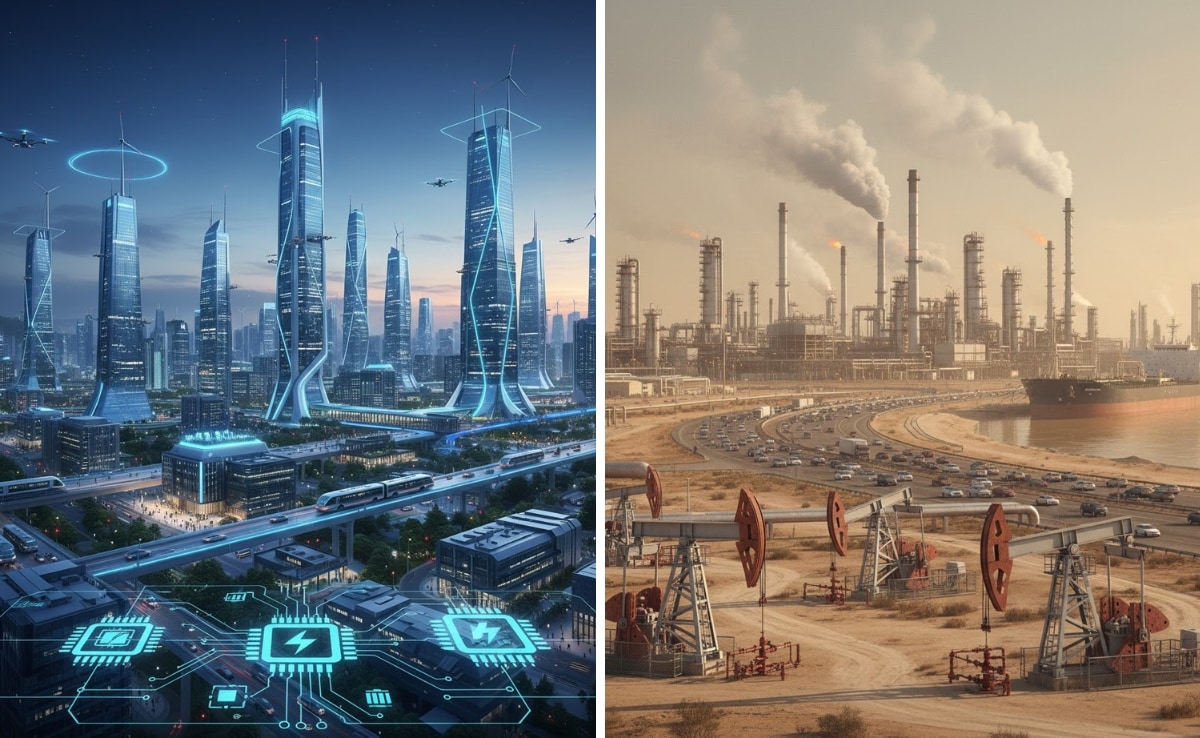
AI-Generated Photo
As emerging economies weigh the two offerings from a long-term perspective, the report notes, the Chinese one will be much more appealing, and this shift will accelerate in 2026.
Acknowledging that the US still has an edge in developing cutting-edge artificial intelligence models, the risks document points to how power-hungry AI is. China, it says, is already producing 2.5 times the US' electricity output, and widening that gap even further.
"The United States is betting that whoever builds the best and largest AI models - and whoever develops Artificial General Intelligence first - will win the race. China is making a different bet: that on its own, intelligence is a commodity, and it creates strategic value only when it can
be powered and deployed at scale," the report explains.
All of these factors together could ensure the US will cede ground to China in the power generation space internationally, leave US industry vulnerable as it navigates higher power costs, and may also lead to Washington falling behind as Beijing leverages that stack in the economic, geopolitical and military arenas.
Backyard Troubles
Referring to the Monroe Doctrine - essentially the US giving itself the right to intervene in Latin American countries - and Donald Trump's christening of it as the "Donroe Doctrine", the report argues that the US is seeking to assert primacy over the Western Hemisphere.
Nicolas Maduro's capture is a good example of this and, pointing to the many possible pitfalls, the report contends that if things don't go too badly in Venezuela, Trump may train his guns - in varying degrees - on countries like Cuba, Colombia, Mexico and Brazil.
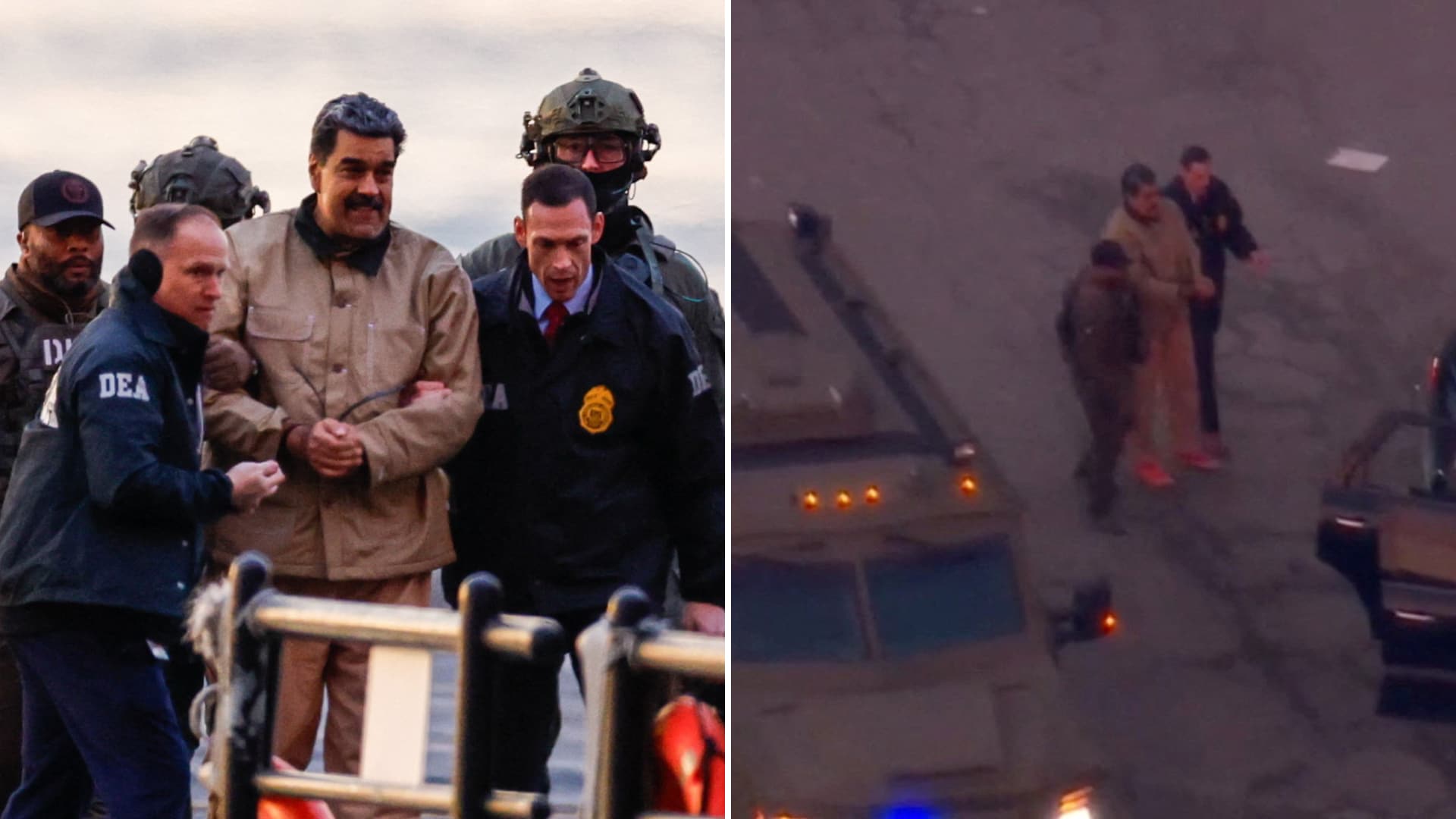
Lessons from history, it says, show moves like this will merely diffuse illicit networks, not dismantle them, and also give rise to anti-American sentiment in the region. This could defeat the very purpose of the "Donroe Doctrine" and push more countries closer towards China.
"A doctrine designed to secure America's backyard could ultimately end up loosening its grip," it cautions.
A Bulwark Collapses?
Under Emmanuel Macron in France, Friedrich Merz in Germany and Keir Starmer in the UK, three key countries - the E3 - in Europe have entered the new year with unpopular governments, facing attacks from within, and a US administration hoping for their fall, the report states.
The Trump administration, the document argues, wants a more fragmented Europe and is willing to back movements on the populist right to achieve this.
"The E3 are Europe's core; when their centre weakens, so does the continent's. Without alignment in Paris and Berlin, policy confusion spreads to Brussels - undermining Europe's ability to build consensus, complicating trade policy, and making the next EU budget fight uglier. European efforts to coordinate on defence, trade, regulatory, or fiscal policy will face not just internal paralysis but active US hostility," it states.
This also weakens support for Ukraine and emboldens Russia, leaving Europe more vulnerable in the bargain.
The Russian Shadow
Noting that there is no immediate end in sight to the Russia-Ukraine war, now in its fourth year, the document states Kyiv may now be forced to take bigger gambles, risking greater retaliation.
But the bigger danger, it underscores, lies in the Russia-NATO face-off, which has been simmering and could begin to boil.
"Russia will escalate grey-zone operations against NATO, from infrastructure sabotage to airspace probes to election interference. And NATO, after years of absorbing punishment, will for the first time push back. That combination raises the odds of more frequent and dangerous confrontations in the heart of Europe," it states.
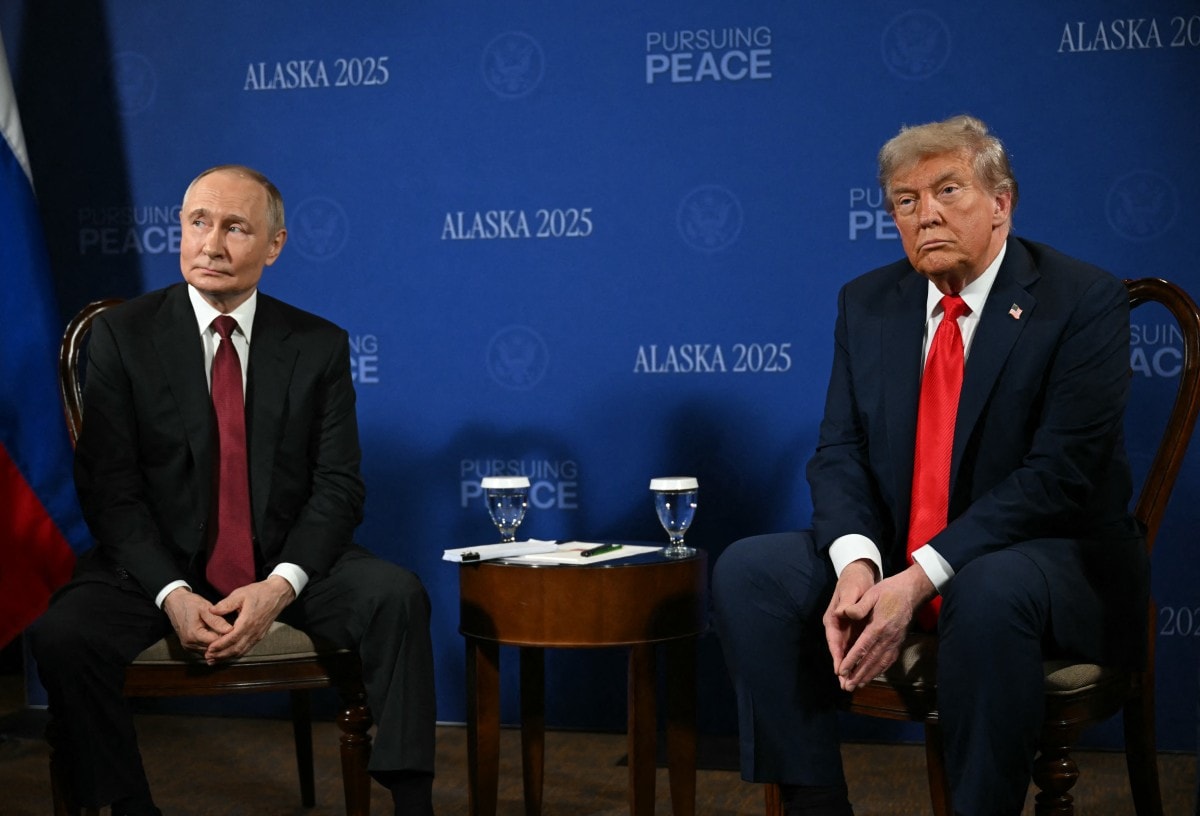
Pointing to Russian drones over Poland and Romania and jets in Estonian airspace, the report said drones are the ideal weapons for grey-zone warfare, where a country can be aggressive without prompting an open war, and also maintain deniability.
"A more assertive NATO posture is unlikely to change Moscow's policy toward the hybrid war. It does, however, increase the risk of an escalatory spiral. The result: more direct, more frequent, and more dangerous Russia-NATO confrontations," the report highlights.
It lists possible scenarios like NATO conducting an exercise near the Russia-Finland border, prompting a response from Moscow, or GPS jamming at European airports causing a crash of a civilian aircraft, killing hundreds. From explosives aboard cargo aircraft in NATO countries to cyber sabotage of critical infrastructure, the document paints a believable picture of escalation and then goes on to say a direct Russia-NATO military exchange is "probable this year, if still unlikely".
The report speaks of Russian interference in elections, warns of volatility in markets in Europe due to Moscow's actions, and even describes how things could go downhill even if a Russia-Ukraine ceasefire does happen.
"For three years, the West has treated Russia's hybrid campaign as a nuisance: irritating but manageable, below the threshold that demands a serious response. That calculation is breaking down. As Russia, NATO, and Ukraine all become more risk-acceptant, the margin for
error will narrow," it states.
It's The (US) Economy, Stupid...
The Eurasia Group notes in the report that it had warned of Donald Trump infusing crony capitalism in the US economy and points to how interventionist his administration has been. This, it says, is going to only get worse in the first year of the second quarter of the 21st century, and warns that the US president's transactional nature will prevent capital from being deployed where it will perform best.

"Over time, productivity will suffer as more capital flows to politically favoured firms rather than the most innovative ones, as CEOs spend more time cultivating access and favour, and as the Oval Office increasingly intervenes in the marketplace," it cautions.
The same logic also applies to foreign governments, which will have global implications - from Venezuela to Ukraine, and the EU to Qatar.
...And China's Too
The 'Top Risks 2026' report states China's deflationary spiral will only worsen this year and Xi Jinping will prioritise political control over arresting that slide.
"Home prices in China have been falling for four and a half years - a household wealth destruction on par with America's 2008 crash, except it's still accelerating. Consumer confidence, investment, and domestic demand have cratered with it. Beijing bet big that high-tech manufacturing would fill the gap left by property. Instead, state-driven investment has created overcapacity, and weak domestic demand means there aren't enough buyers to absorb it," the document warns.

Instead of injecting a much-needed stimulus to boost consumption in the short term, the report predicts, Jinping may stick to his guns and keep investing in manufacturing and other sectors.
Then, there is the youth factor.
"The pain will fall hardest on the young. Youth unemployment is high and rising, and even graduates who land jobs face the '996' grind - 9 am to 9 pm, six days a week - with little hope of advancement. While young Chinese won't riot, a growing number are opting out altogether. The 'lying flat' movement reflects a generation's rejection of China's culture of overwork and hyper-competition in service of 'national greatness... For a generation of young urban Chinese, the social contract is fraying and the 'China Dream' appears an illusion," the report posits.
Just like the US, China's economic troubles could also affect the global economy.
Intelligence, Built Intelligently?
Finally making its way to the elephant in the room, the report is blunt - Artificial Intelligence companies could adopt business models this year that "threaten social and political stability - following social media's destructive playbook, only faster and at greater scale".
Acknowledging AI's potential and the myriad doors of development it could open, the report highlights how most models still hallucinate; and excel at some tasks while failing spectacularly at others.
Companies, it maintains, have seen productivity gains from the use of AI, but no big impact on profits.
Then, there are the investments.
The report cautions that companies have pumped in billions in AI and will now be under pressure to show returns.
"We've seen this movie before. Cory Doctorow calls it 'enshi**ification': platforms attract users with attractive 'free' products, lock them in, then systematically degrade the experience to extract maximum value - leaving just enough to keep people stuck. Social media transformed from tools for connecting with friends and family into engagement-optimised rage machines. Now nearly half of young people wish social media had never been invented, but network effects make it costly to leave, and accordingly almost nobody does," it observed.
This is followed up by another warning: "An AI companion that's learned your insecurities can recommend products calibrated to exploit them, and you'll never know the difference between advice and advertising. If the AI appears free or cheap, you're paying with something more valuable: your autonomy, your privacy, your cognitive capacity, and your ability to think independently."
The report also underscores that AI threatens to weaken humans' ability to think by offering a crutch that replaces the need for using cognitive functions. This could also directly impact democracy by simply reducing the number of informed, thinking citizens needed to keep it functioning well.
And, of course, there is the threat to jobs. Noting that "mass labour substitution does not appear imminent", the report cautions that it could come later.
Water, And An India-Pakistan-China Angle
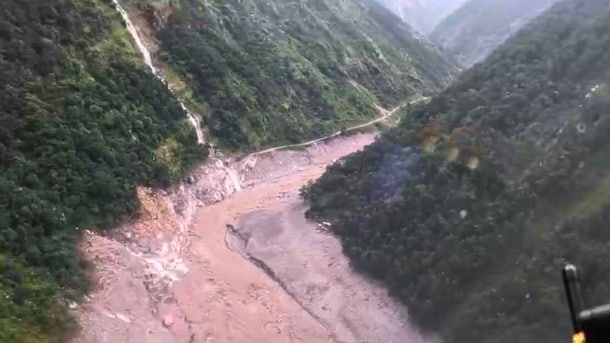
Listing the United States-Mexico-Canada Agreement as one of the threats, the report moves on to what it calls the "water weapon". The Chinese dam project on the Yarlung Tsangpo river - the Tibetan name for Brahmaputra - which will be the largest in the world, has already been dubbed a "ticking water bomb" in India and the report contends that water is morphing from a humanitarian crisis into a national security threat.
"The ingredients have been building for years: roughly half of humanity lives under water stress for at least one month annually; 1.8 billion people face absolute scarcity. Population growth and rapid urbanisation are straining basins already overdrawn - megacities from Chennai to Mexico City and Tehran have faced 'Day Zero' crises or near-misses. Water-driven displacement is accelerating. Surging energy demand is pushing countries to build hydropower dams even as the water they depend on grows scarcer. And climate change is tightening the vise: Himalayan glaciers are melting faster, monsoons are growing erratic, and droughts are deepening across South Asia and the Sahel," the report highlights.

It says risks are very high in places like Africa, where groups like al Qaeda and ISIS have learnt to exercise control over water as a way of controlling people. The document points to the Egypt-Ethiopia standoff over the Nile, how dams could become a flashpoint between Morocco and Algeria, and then talks about India and Pakistan as well.
"In South Asia, India and Pakistan show how quickly water can become a weapon once broader tensions ignite. The Indus Waters Treaty survived three India-Pakistan wars over 65 years - until April 2025, when India suspended it after the Pahalgam terrorist attack and stopped sharing hydrological data with Pakistan," the report highlights.
Agriculture in Pakistan, the report notes, depends heavily on water from the Indus basin. It cautions that water could become a flashpoint for a conflict between the two nuclear-armed nations, and between India and China too.
"Without water-sharing frameworks, any future border crisis between China and India - or a shift in China-Pakistan relations - could spill into water... In a G-Zero world where no power or group of powers are willing and able to build global governance infrastructure, scarcity becomes a weapon. Countries that should be working together on counterterrorism or climate instead remain locked in zero-sum struggles over rivers. When upstream powers control the tap, downstream countries have few options beyond escalation," it warns.
-
Reporter's Diary | Worse Than War: An Aerial View Of Nepal's Trishuli River Valley Tragedy

In many ways, reporting on natural disasters is far more harrowing than covering modern war
-
Opinion | The Indian Investor Has A New Problem: An SIP That Does Nothing
You keep doing everything right. So why aren't your stocks paying off, even as your investments rise?
-
The River Took It All: Aerial Visuals From Nepal Show Scale Of Catastrophe | NDTV Exclusive
Visuals from a helicopter showed narrow gorges now flattened and widened into valley-like spreads, with rocks, debris, mud, and bodies strewn across them.
-
Before The Nepal Flood, A Glacial Fall: Tracing The Trigger, And A 100-km Killer Surge
A glacier came off a ridge on the Nepal-China border and travelled 100 km down multiple rivers, the longest part of the run being in the Trishuli.
-
Opinion | How A 'Friendship' Pact With Russia Came To India's Rescue 55 Years Ago
With PM Modi set to meet Putin in Kyrgyzstan, a throwback to a historic treaty that helped India fend off Pakistan - and America's 7th Fleet - over 50 years ago.
-
Opinion | The OBC Fault Line That Could Shake Up Uttar Pradesh - And BJP
For years, the BJP was propelled by support from the OBCs. Now, cracks have begun to appear in that base
-
Census Asks 40 Questions. Why Number 10 Is A Battleground | NDTV Explains
The caste question is a fill-in-the-blank for everyone other than SCs and STs. But there's a case for making it a dropdown with set options. Let's decode the history and math behind the politics.