Donald Trump's 'Truths': How Social Posts Are Waging Iran Narrative War
Trump's Truth Social blasts narrate the Iran war like no leader before - viral diplomacy over secret scribbles. NATO flip-flops, Israel deflections, oil chaos all combine his "narrative airstrikes" as India and the world brace for risk escalation and Hormuz pain.
Churchill's World War II scribbles. Rants by Goebbels, Hitler's propaganda man. Count Galeazzo Ciano's diary on Axis powers' decisions. Across the Atlantic, Roosevelt's secret notes.
War-time leaders routinely keep private journals and diaries or whisper secrets into tape-recorders. These may chronicle their thoughts and fears, or fighting, death, and devastation, or the impact on their people, or even military strategy and battle plans for a final push for victory.
But these often slumber beneath the leaders' pillows during the fighting, hidden from public view and released, if at all, years after the last bullet was fired and the last bomb dropped.
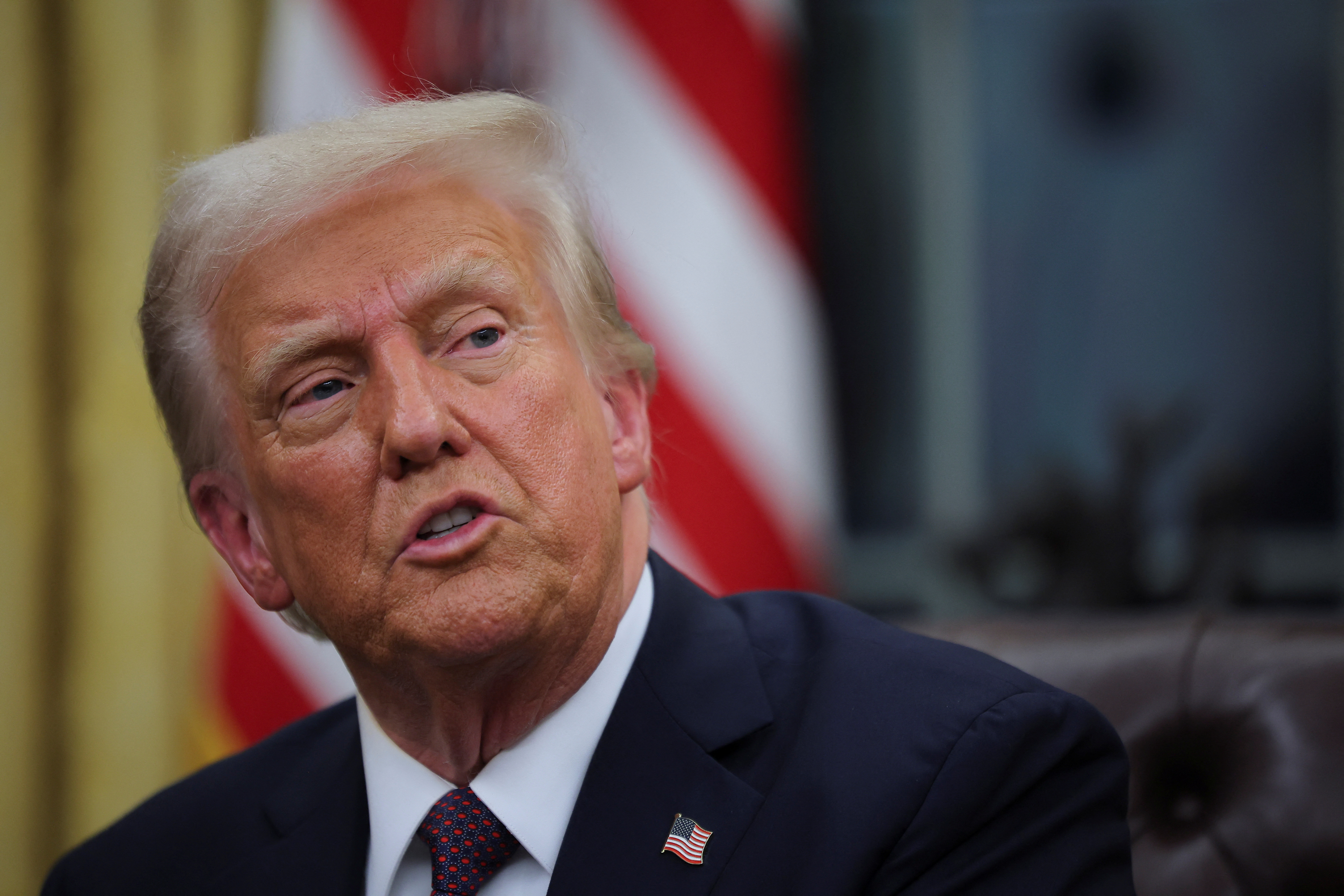
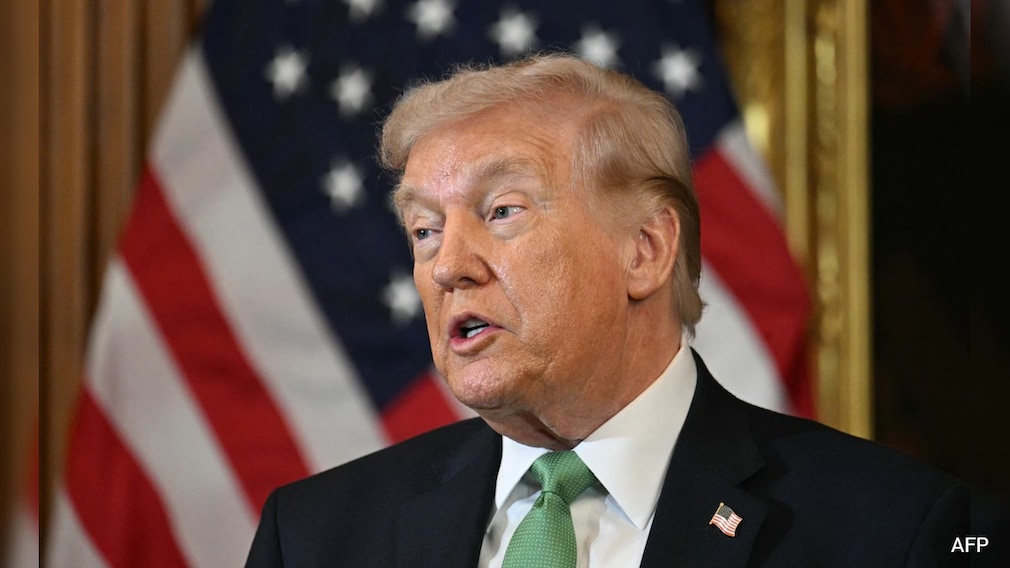
Donald Trump, however, seems to have no such compunction and unleashes his thoughts on social media daily, often hourly – blast after blast on Truth Social proclaiming America's 'greatness', denouncing 'scumbag' Iranians, threatening 'enemies', and brow-beating 'allies'.
Nearly a century's worth of such blasts – viral, unfiltered – fired since Feb 28, since the US and Israel attacked Iran in violation of international law and shocking the oil market, leading to fears of a global energy crisis and threatening to drag other Gulf states into the fighting.
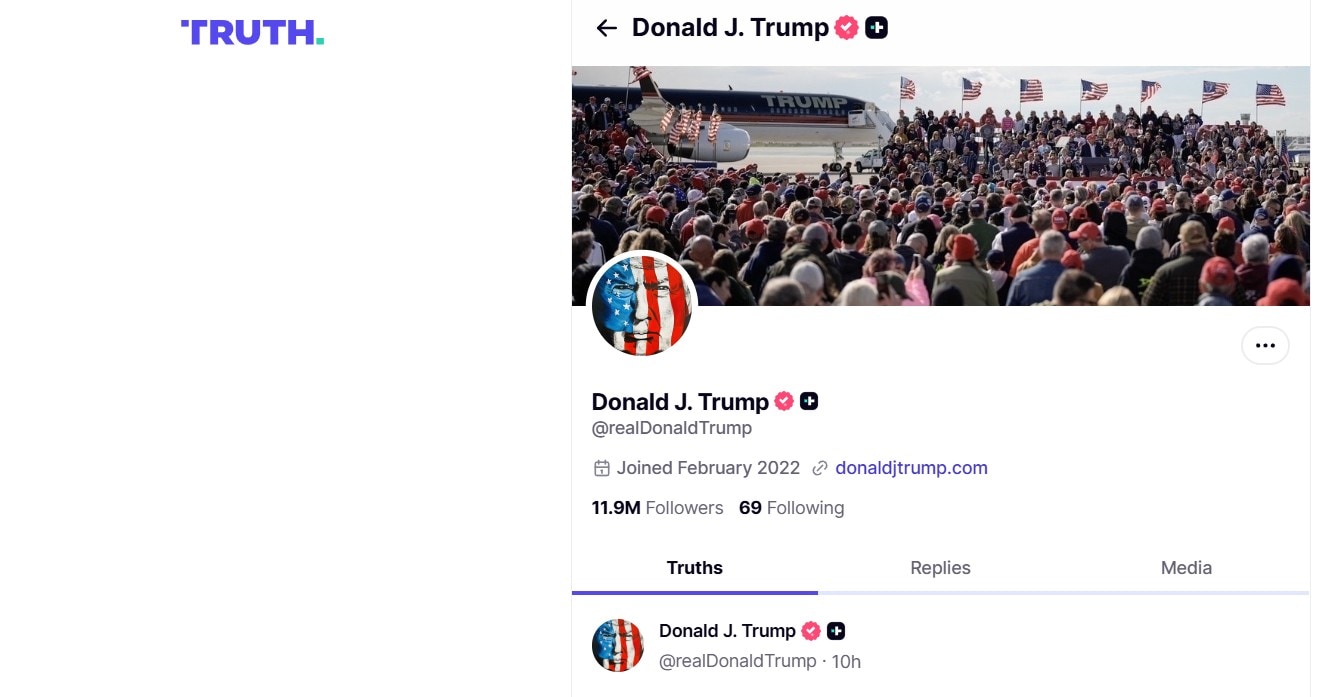
Donald Trump's Truth Social homepage
Robert De Niro's 'spin doctor' in Wag the Dog got it right nearly 30 years ago; controlling imagery and narrative win wars as much as air strikes and missiles, perhaps more so today than ever.
And few understand that better than the US President, a man whose reality TV roots and penchant for 'big, bigger, and biggest' showmanship underscores his presidential outlook.
Truth Social, Trump's personal megaphone
The most recent blast was March 19; tit-for-tat Israeli-Iranian strikes on gas fields in South Pars and Qatar sent prices and supply crisis fears into overdrive, and drew Trump's attention.
The US President's (lengthy) post simultaneously distanced Washington from Tel Aviv's South Pars strike and warned Tehran not to retaliate (which it did anyway) on pain of an American counter "at an amount of strength and power that Iran has never witnessed before".
The day before he condemned Iran as "the NUMBER ONE STATE SPONSOR OF TERROR" and hours before that he trained his guns on 'allies' NATO and nations like Japan and South Korea, for not sending warships to seize control of the Strait of Hormuz, to complain and then petulantly claim "… (the USA is) by far the Most Powerful Country Anywhere in the World".
It all began with the Feb 28 announcement that seemed to bypass the US State Department and even the Oval Office, traditional and sombre backdrops to pronounce the waging of war.
Trump the diplomat, on Truth Social
Since then Truth Social has become the rostrum from which foreign policy is announced, often in ALL CAPS and with one post contradicting the next and a third refuting both.
On March 15, Trump demanded NATO warships; 'Countries of the world that receive oil through the Hormuz must take care of that passage', he declared after claiming energy independence.
But UK, France, Germany, and others refused to commit and drew a rebuke. NATO is making a "very foolish mistake", he responded, before making an about-face and declaring "we no longer ‘need,' or desire, NATO… WE NEVER DID!"
The rant March 17 evening pulled in earlier showdowns with NATO – over defence budgets and contributions – to deliver another public diplomatic dressing down, labelling US-NATO ties a "one way street". "Thank you for you attention to this matter," Trump signed off as he does.
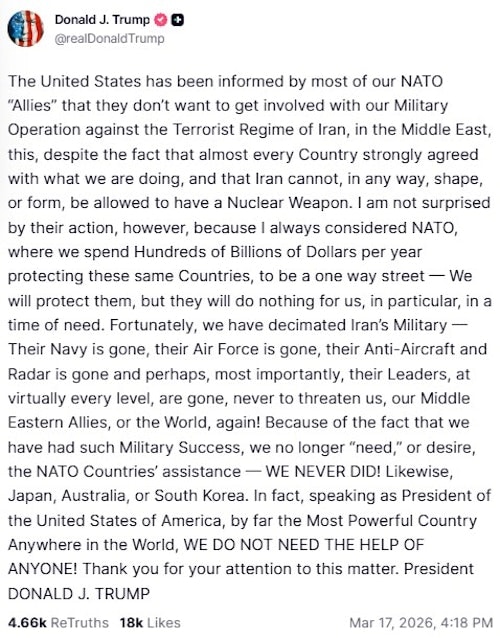
Screenshot from Truth Social account @realDonaldTrump
Posts over the South Pars gas field attack offers similar insights, i.e., diplomatic aggression and distancing the US from global pushback over skyrocketing gas prices.
Trump has used this diplomatic bull horn to target 'allies' and enemies from the European Union and Greenland to Venezuela, Cuba, and China.
For India this comes at a cost. Public remarks during Op Sindoor, Delhi's military response to the April 2025 Pahalgam terror attack, threaten to destablise narratives with incorrect information, from fighter jets being shot down to claiming a US role in securing a ceasefire.
And today, with the Hormuz crisis pushing oil prices to potentially catastrophic highs, many around the world might want to trade unapologetically loud Truth Social diplomacy for a softer, behind-the-scenes touch. But that is certainly not Donald Trump's style.
-
Opinion | The Trump-Xi Summit, And India's Many Worries Of Its Own

Washington and Beijing may have chosen coexistence over confrontation. For India, that could be both a relief and a warning.
-
Opinion | China Claims It Has Cut Troops At The Indian Border. But The Math Doesn't Add Up
The reduction likely has more to do with the deployment along the LAC than the total strength active in the region
-
Opinion | China Is No Longer Waiting For Trump To Set The Rules. And He Knows It
America's old diplomatic tricks with China won't work any longer. Because China has changed, and so has its ambitions.
-
Opinion | As UN Interviews Its Next Chief, The Interviewers Have Some Explaining To Do
On the panel sit governments whose wars, vetoes, and unpaid dues have helped make the organisation ineffective.
-
Opinion | Trump-Xi Meet: What China Can Give America, And What India Could Lose
If Trump can secure some of what he wants directly from Beijing, India's immediate value to Washington could change in particular areas.
-
A New 'Axis'? 87 Years After Pact Of Steel, A New European Far-Right Tie-Up
Nearly nine decades after Nazi Germany and Fascist Italy formalised their alliance, senior figures from Germany and Italy's far-right appeared together at a political rally on Sunday.
-
Opinion | 'Blackmail' Diplomacy: Why India Can't Be A Pawn In US' War On Russia
The new sanctions bill is both blackmail and hypocritical: blackmail because it seeks to change India's principled stand, and hypocritical because the US has provided exemptions to others, and itself.
-
Blog | Katrina Kaif, And The Very Indian Problem Of Too Much 'Audacity'
The remarkable thing about many Indian trolls is not that they have opinions, but that they expect - get this, Katrina Kaif, no less - to care about them.
-
Mamata Banerjee Drew Her Party's Symbol By Hand. It's Now Tied To An Indira Gandhi Case
The Election Commission's method for settling such disputes became central in the seminal Congress split of 1969, when Indira Gandhi fought the old guard. The poll body weighed three tests then.