Bangladesh Planning New Barrage On Padma River As Farrakka Talks Stall
The Bangladesh Water Development Board (BWDB) is now preparing to implement the long-delayed Padma Barrage project at a cost of 50,443.64 crore Taka.
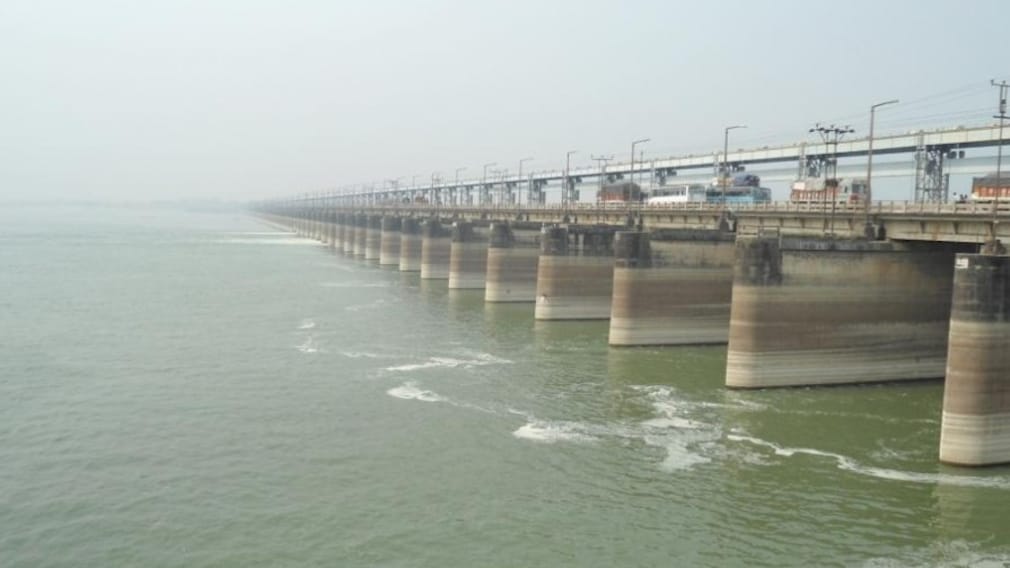
The India-Bangladesh Farrakka Water Treaty talks between India and Bangladesh have made little headway as it comes up for renewal this year. But a development that India will be watching closely is the renewed push for another barrage further downstream in Bangladesh.
The Bangladesh Water Development Board (BWDB) is now preparing to implement the long-delayed Padma Barrage project at a cost of 50,443.64 crore Taka. The Padma is the continuation of the River Ganga as it flows into Bangladesh from India.
The Farakka Water Treaty, a 1996 agreement between India and Bangladesh for sharing Ganges River water, is up for renewal in 2026, but diplomatic tension and the deteriorating ties between India and Bangladesh have made negotiations very slow, as Bangladesh seeks guaranteed dry season flows, while India looks to revise it for its own needs, complicated by regional politics, climate change, and West Bengal's demands to ensure its water needs are not compromised. But India and Bangladesh have sparred over the details of the Farakka Agreement, and the recent development of the Padma Barrage is being seen as a move by Bangladesh to act on its own.
At a campaign rally in Sylhet yesterday, Bangladesh Nationalist Party Chairman Tarique Rahman brought up the issue of unresolved water problems the country faces. He said, "We have seen during the times of President Ziaur Rahman how canals were constructed across Bangladesh. By constructing those canals, apart from providing irrigation services to farmers, people's water problems were resolved."
"If the BNP is elected by the vote on February 12 by the wishes of Allah we will start a programme of canal construction again. We will construct canals and ensure there is water in our rivers. Why? You remember a few years ago, how water was released from the other side and entire Sylhet was flooded with floodwater. That's why we have said on thing. In the last 15-16 years we have seen how this country interests were mortgaged. That's why I have said, Not Dilli, Not Pindi, No Other Country, Bangladesh Comes First," Tarique Rahman added.
One of the key areas of negotiations with India for the incoming government in Bangladesh would be the renewal of the Farakka Water Treaty, which was signed for a duration of 30 years in 1996. India and Bangladesh have repeatedly sparred over the release of water and the holding of water through the Farakka Barrage.
In 2024, as Bangladesh faced devastating floods across the country caused by relentless monsoon rain and overflowing rivers affecting 11 districts in the country, reports in Bangladesh claimed that the flooding was caused partially by the opening of the Farakka barrage in West Bengal, prompting a fact-check by the Government of India.
"We have seen fake videos, rumours and fear-mongering to create misunderstanding. This should be firmly countered with facts," External Affairs Ministry spokesperson Randhir Jaiswal had said.
"It is to be understood that Farakka is only a barrage and not a dam. Whenever the water level reaches the pond level, whatever inflow comes passes. It is merely a structure to divert 40,000 cusecs of water into the Farakka canal that is carefully done using a system of gates on the main Ganga/Padma River, while the balance of the water flows into the main river to Bangladesh," India had added.
Bangladesh says the need for such a barrage has grown due to disrupted water flow in the Padma, caused by India's Farakka Barrage upstream on the Ganges. The project is likely to come up in Pangsha in the Kushtia district of Bangladesh, around 180 km downstream from the Farakka Barrage.
Documents shared by the BWDB state that water flow in Bangladesh's southwest has fallen sharply since the Farakka Barrage began operation. Under the 1996 Ganges Water Sharing Treaty, the two countries share the river's flow at Farakka from 1 January to 31 May each year, which was agreed to by both countries, but the 30-year treaty now has to be renegotiated in an atmosphere of strained ties between the two countries.
Bangladesh opposed India's suggestions, and in 1977, the then President of Bangladesh, Ziaur-Rehman, took the Farakka barrage issue to the United Nations General Assembly, or UNGA, which advised resolving the issue at a bilateral level. In November 1977, the then Deputy Prime Minister of India, Babu Jagjivan Ram, went on an official visit to Bangladesh and signed an agreement to resolve the Farrakka issue. In 1996, the Ganga Water Treaty was signed to ensure sharing the surface waters at the Farakka Barrage near the India-Bangladesh border.
Bangladesh says the Padma Barrage would enable Bangladesh to store water from the monsoon season flow in the Padma River and ensure a round-the-year supply to the southwest and northwest regions of the country. Bangladesh adds the Padma River-dependent areas in Bangladesh, which cover nearly 37% of the country, and the barrage will ensure optimal use of the water under the 1996 treaty with India.
Bangladesh believes the project could ensure water supply to around seven to eight rivers and restore degraded water systems during the dry season. The interim government led by Muhammad Yunus has decided to move ahead with the project by financing it domestically, leaving the prospect of seeking foreign loans for the project, including from China, for a later stage of the project.
China is also partnering with Bangladesh for the implementation of the Teesta Master Plan, and the recent visit of Chinese envoy Yao Wen to northern Bangladesh to an area close to the strategic Siliguri corridor in West Bengal is also something that India is watching closely. Wen visited the project area in Rangpur, close to the border with India. He was accompanied by Bangladesh's water resources advisor in the Yunus-led Interim Government, Syeda Rizwana Hasan.
India and Bangladesh have been unable to finalise the long-pending deal to formulate the sharing of the waters of the Teesta River that flows from Sikkim into West Bengal and then eventually into Bangladesh.
West Bengal Chief Minister Mamata Banerjee has been opposed to the agreement, as sharing Teesta water will mean "depriving northern West Bengal of even drinking water", let alone any provision for irrigation purposes.
-
Lal Topi, Blue T-Shirt: Akhilesh Yadav's 'PDA' For Blue Has A Coded Message

The message is clear: the Samajwadi Party wants to talk to voters beyond its traditional Yadav-Muslim support base, particularly to Dalits.
-
The Day 600 Men Lay Siege To Islam's Holiest Site And How They Were Gassed Out
Nearly 47 years ago, on November 20, 1979, the Grand Mosque itself was seized by an armed group in one of the most extraordinary episodes in modern Saudi history.
-
New UPI Charges: If Digital Payments Save Money, Why Charge For Them Now?
UPI Payments Free For Years: The government has subsidised UPI adoption for years. Official figures show thousands of crores in payouts over years.
-
Opinion | Sydney Sweeney And The Obsession With Asking Sportswomen To 'Take The Clothes Off'
There is a world of difference between an athlete choosing to be sexy and an advertiser deciding that sex is the most interesting thing about her
-
Opinion | The 'AIPC' Was Once Congress' Boldest Idea. What Happened To It?
Tharoor, to Chakravarti, to Yaskhi now, the fate of a Congress 'experiment' that started in 2017 will tell you a lot
-
Woman Biker Hit, Air Force Veteran Attacked: The Lawlessness In Gurugram
What gives confidence to some elements in Gurugram to break the law again and again in full public view and on camera?
-
Opinion | When The Feed Braves The Flood
NDTV drops the 24x7 and stakes its next chapter on presence as it inaugurates a new identity
-
The Politics Of Blue: Why Akhilesh Yadav-vs-Mayawati Over A Colour Is Just One Shade Of History
A movie starring Rajinikanth tells us how colours can carry meaning beyond what meets the eye. The latest row over Akhilesh Yadav's party adopting blue, and Mayawati objecting, can be a starting point for understanding the many shades of history.