A Missile On One Soldier's Shoulder Could Ground The US Air War In Iran
Iran shot down US jets while China denied arming Tehran. But reports of a Chinese spy satellite being used by Iran, the viral F-35 tutorial from a Chinese engineer, and now 1,000+ MANPADs reportedly on their way to the war suggests otherwise.
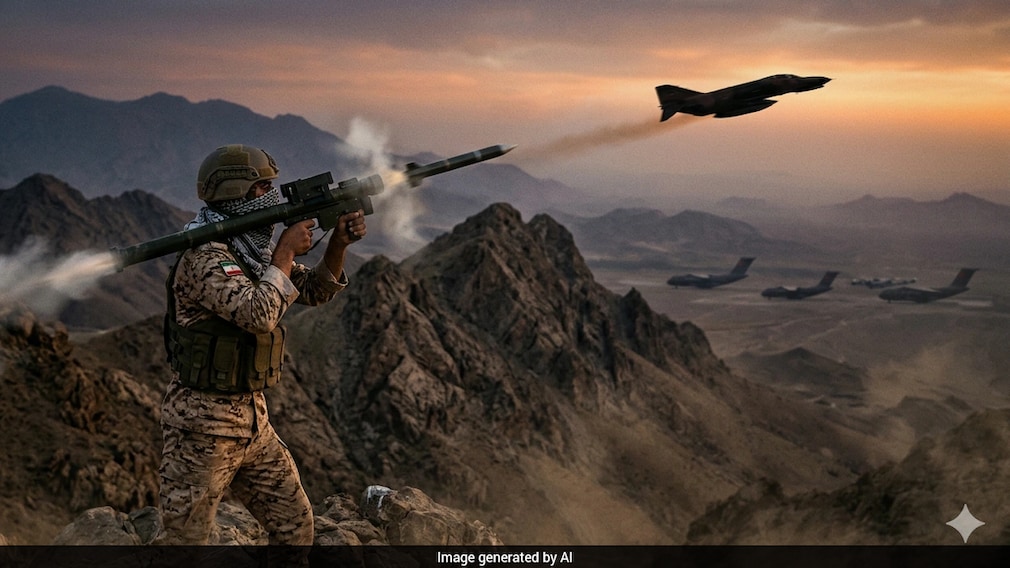
MANPADs - not the most fearsome name for a weapon that can shoot down advanced American fighter jets, but they'll do for an Iranian military that has held its own against the US so far, even inflicting first combat losses in over two decades.
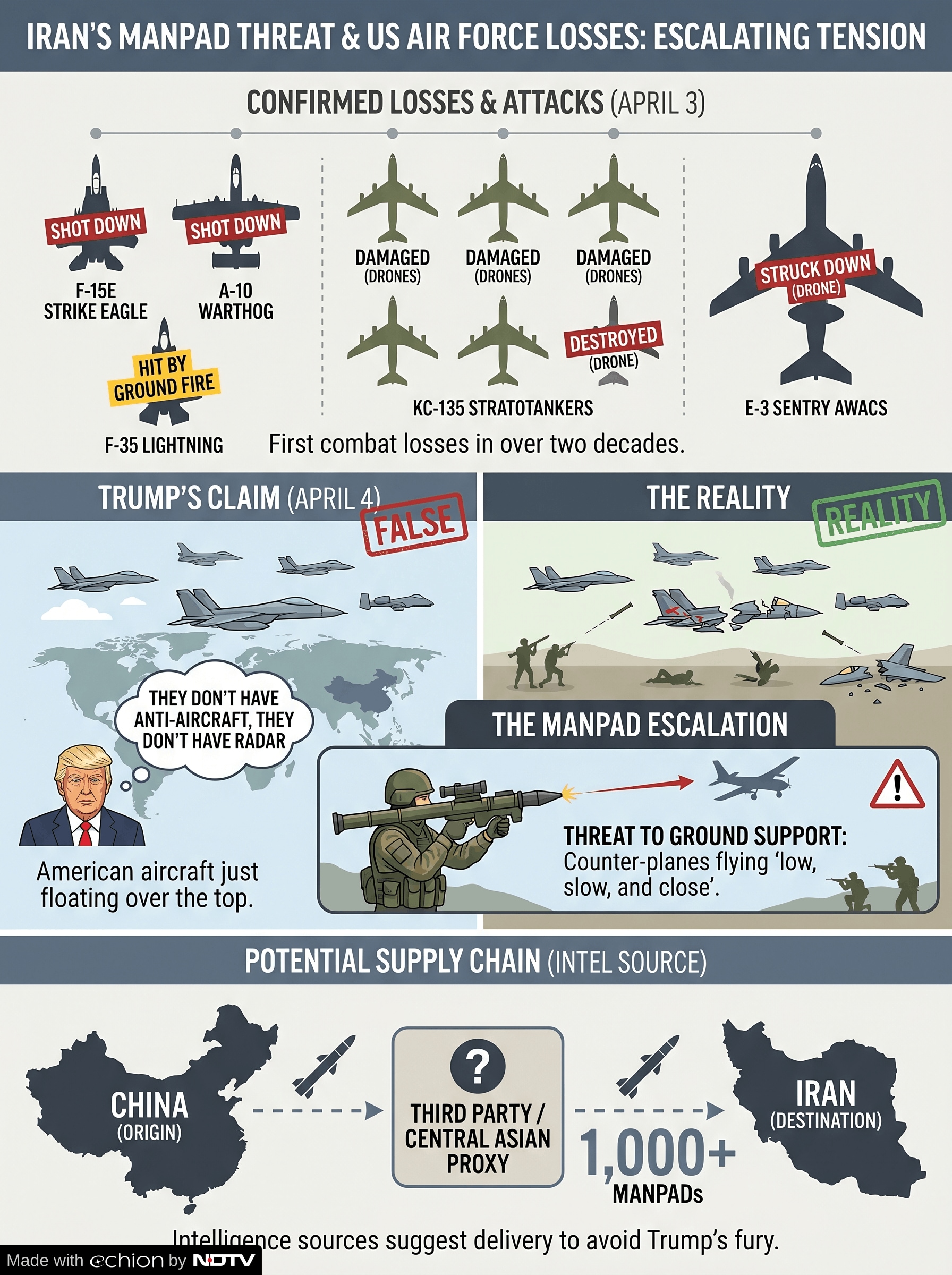
An F-15E 'Strike Eagle' and A-10 'Warthog' were confirmed shot down April 3, a day before Donald Trump claimed 'they don't have anti-aircraft, they don't have radar', and that US military aircraft were just 'floating over the top' in Iran.
Iran also damaged five KC-135 'Stratotanker' - mid-air refueling aircrafts - and destroyed a sixth in Saudi Arabia., while also striking down an E-3 'Sentry' AWACS, a billion-dollar flying radar. And the US lost three F-15Es in 'friendly fire' in Kuwait.
And Iranian ground fire hit a F-35 'Lightning' - a 5th generation stealth fighter jet.
MANPADS, though, represent a threat escalation, particularly if Trump greenlights a ground war.
Putting boots on the ground without suppression of enemy air defences risks casualties.
But ensuring SEAD will be tricky if US aircraft are going to be targeted by a purpose-built weapons system to counter planes flying 'low, slow, and close' for ground support missions.
And US intelligence sources told CNN this week Iran could soon get 1,000+ MANPADs from China, likely re-routed via third parties - possibly a Central Asian proxy - to avoid Trump's fury.
Why? What are MANPADs
Shoulder-fired rockets, basically.
MANPADs, or man-portable air defence systems, are infrared-guided anti-aircraft missiles carried and operated by a lone soldier. They are cheap, easy to conceal, transport, and use, and that makes them dangerous, particularly for militaries on a limited budget or even terrorists.
And they are difficult to counter, since they have no radar signature for US missiles or bombs to track; don't operate from a fixed site, such as a military base; and can be moved around quickly.
There are three types divided by how the missile tracks its mark - infrared systems that pick up a heat signatures, line-of-sight guided by the solider, and laser beams that designate targets.
The missiles travel at twice the speed of sound and most have a five km ceiling.
That limit means they are ineffective against high-altitude targets on standoff, or single strike, missions, which is the profile of most of the US' current air operations.
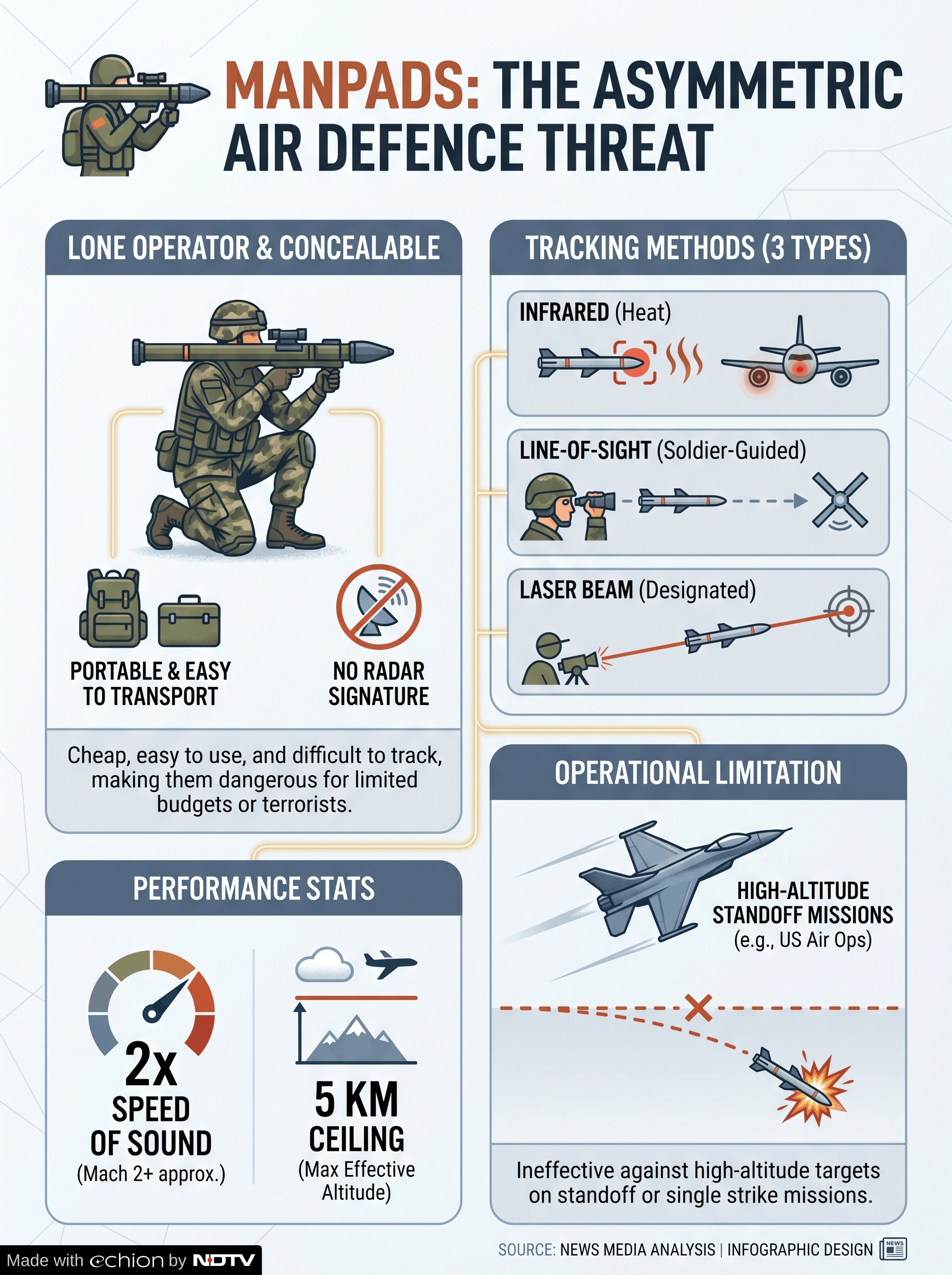
Image generated by AI
So why should the US worry?
If Washington puts boots on the ground.
For now, the US maintains its air superiority - and yes, it does enjoy that advantage despite combat losses.
'Air superiority' only means one side can conduct aerial operations without much interference. It does not mean there is no threat or risk of planes being shot down.
But Iran's rumoured MANPAD buy isn't a story for the here-and-now, it is a put-a-pin-in-it moment for when the US does send soldiers into Iran, whether to seize oil stores on Kharg Island, secure a stockpile of enriched uranium, or effect regime change.
When US aircraft do operate at lower altitudes - to provide accurate fire support for ground troops - they can become targets for ground-launched air defence systems, like MANPADs.
Exposure to enemy fire increases dramatically in such scenarios.
In addition, MANPADs will also spread the anti-aircraft threat across Iran's rugged geography, which provides innumerable mountainous nooks and crannies within which a launcher-carrying soldier can hunker down to target American planes.
This combination - low-flying aircraft on predictable and extended flight paths + dispersed launch points for shoulder-fired SAMs - makes SEAD a challenge.
What are China's MANPADs?
It is unclear which of Beijing's many MANPAD options could be sold to Iran.
There is speculation the QW-2 and QW-18 models could be Tehran-bound; both have an estimated range of four kilometres, are infrared guided, and are used by Turkmenistan in Central Asia. The Turks could, in theory, be China's proxy seller.
What has China said?
China has firmly denied selling these, or any arms, to the Iranians.
The Chinese foreign ministry called all such reports "fabricated".
And intelligence on any potential transfer is not conclusive. In fact, there is no confirmaion yet that Iran has even used Chinese-origin MANPADs in ths war, sources familiar with the matter told The New York Times.
But Iran does have MANPADs.
And China is unlikely publicly acknowledge arms sales to the West Asia country, since it will offset the role claimed in helping negotiate the ceasefire and also further strain ties with the US before Trump's visit next month.
In Trump's Post On Strait Of Hormuz, A "China Very Happy" Message
Trump said April 15 that he had asked President Xi Jinping not to sell arms to Iran. "I wrote him a letter asking him not to do that, and he wrote me, saying, ;he's not doing that'," Trump said.
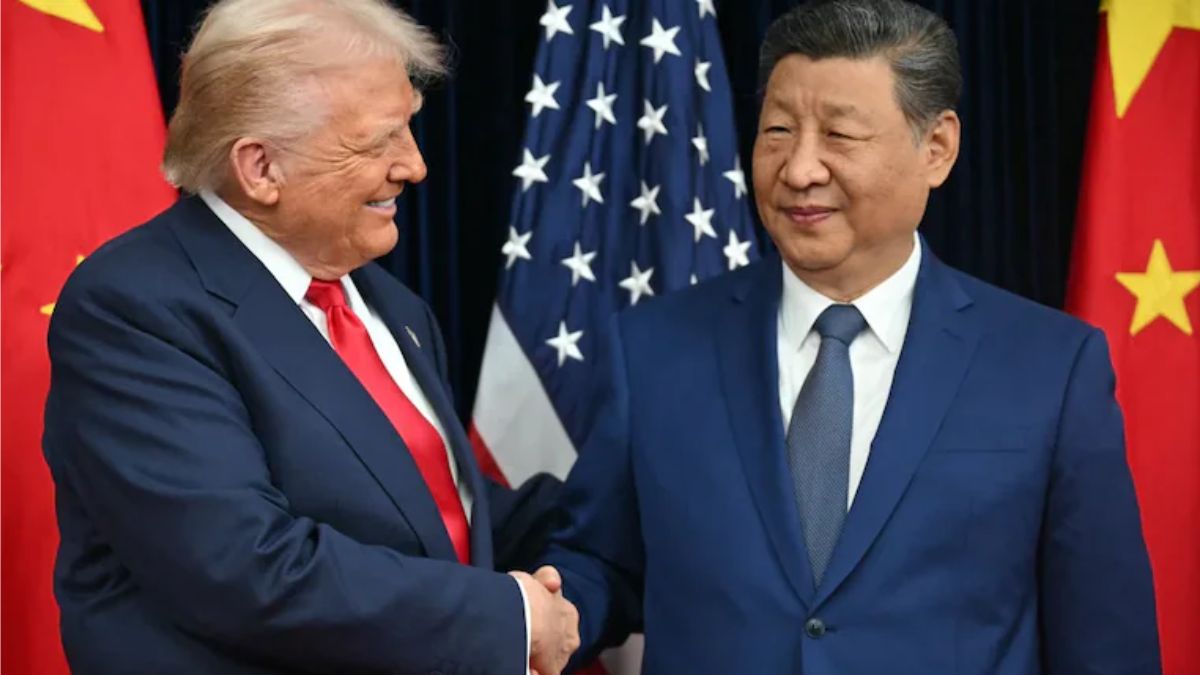
Donald Trump said Xi Jinping told him China won't sell arms to Iran (File)
Last week, he threatened countries with a 50 per cent tariff on arms sales to Iran.
But it is more than likely that China has already backed Iran in this war.
After shooting down the F-15E Tehran boasted a new air defence system, built with help from Beijing, was used.
Iran Bought Chinese Satellite, Used It To Target US Bases: Report
This week it emerged that a Chinese spy satellite - TEE-01B - acquired by the Revolutionary Guards Corps in 2024 was used to target US bases. And there were reports Iran may have used tactical info from a Chinese video to shoot down that F-35.
And in February - days before the war began and as American forces were amassing - Iran was reportedly close to buying Chinese anti-ship cruise missiles. Reuters said the deal was for CM-302 supersonic missiles that a 290-km range and can evade shipborne defences by flying low and fast. If that deal has gone through, it will pose a threat to US naval forces.
-
"We Don't Have 5 Years": Celebrated American General Sounds Alarm On War

Former CIA Director David Petraeus says the drone war in Ukraine has made traditional manoeuvre warfare obsolete, and that armies which do not overhaul themselves within a year risk being left behind
-
Can't Save Enough For A Home Down Payment? 3 Ways To Build Your Fund
Down payment is only part of the money a buyer needs. Stamp duty, registration, moving expenses and furnishing can add to the upfront cost.
-
Opinion | Jamnagar, Rubio, And Why The US Wants India To 'Obey', Not Negotiate
Marco Rubio's dash to Jamnagar was driven by Trump's hope that India could do something about the shortage of diesel that the world is experiencing and thereby help his mid-term performance. But why the punishing policies then?
-
Opinion | Why China Is Producing More, Selling Cheaper - And Still Not Getting Anywhere
More capital, more capacity, more elaborate technology, and steadily less profit to show for any of it. That's what's happening to China now.
-
Opinion | A Jolt For Trump? How The US May Be Staring At A 'Blue' Wave
Evidence now points firmly to a Democratic majority in the House. The only real surprise is the Senate
-
Opinion | Why The Saudi-Pak-Turkey Defence Pact May Actually Be An 'Intel' Network
Rather than a NATO-like construct, the Mecca pact may evolve to become something like the West's Five Eyes alliance.
-
The Real Story Of France's Unrest Is Getting Lost In A Storm Of Online Lies
A man cosplaying Napoleon on the streets, looting at luxury fashion stores like Dior, France is currently confronting one of its most serious episodes of civil unrest in years.
-
Opinion | The Last Bet? What Trump's 'Mother Of All Bombs' Could Actually Do To Iran
Can an MOAB deliver a decisive blow to Iran that may force it to surrender immediately, as Japan did after Hiroshima and Nagasaki in World War 2?
-
Hit Songs, Empty Pockets: The Hidden Math Behind India's Viral Music Boom
Over 80,000 brands and five lakh creators in India make branded content. The opportunity is worth around Rs 1,500 crore.