Ctrl + Alt + Defence
62 Episodes
For more than two decades, Vishnu Som and Shiv Aroor have covered wars, national and international security - on land, at sea and from the air. Together, Som and Aroor, two of India's most credible Editors come together for an unmissable weekly podcast - Ctrl+Alt+Defence - a no-holds barred conversation between two of India's leading experts on critical themes that define India's security


India's Submarines: Sunk By System? | Ctrl Alt Defence Ep 62
Update on : Oct 24, 2026 19:20 (IST)
India has built a credible nuclear submarine capability, but its conventional submarine fleet is ageing, its numbers are falling short, and its next major acquisition is still years away. With 17 diesel-electric submarines in service, only six of them considered contemporary, how did India's submarine programme lose decades, and can the long-delayed Project 75(I) bridge the capability gap with Pakistan and China?
On Episode 62 of #CtrlAltDefence, Shiv Aroor and Vishnu Som discuss the state of India's conventional submarine fleet, the delays that have held back modernisation, and the critical decisions that will shape the future of underwater warfare.
Episode 62
Watch now: https://youtu.be/ct7gvhuz7JI
India's conventional submarine fleet: Why 17 boats do not tell the full story
The Scorpene programme: Delays, missing capabilities, torpedo integration and the proposed DRDO-developed AIP retrofit
Pakistan's Hangor-class submarines: How air-independent propulsion could change the underwater balance
Project 75(I): The proposed ₹1 lakh crore deal for six advanced submarines with TKMS and Mazagon Dock
Two lost decades, a lost quarter-century: How delays and idle production lines weakened India's submarine-building capacity
The Kilo and HDW legacy: Why upgrades cannot replace ageing submarine hulls
India's indigenous sonar capabilities: Where domestic defence technology has made significant progress
Why India can build nuclear submarines and advanced warships, but still struggles to develop its own conventional submarine design
From the collapse of submarine-building momentum to the long road ahead for Project 75(I), this episode examines the decisions, delays and capability gaps shaping India's underwater warfare preparedness. Can India rebuild its conventional submarine fleet before the next generation of threats arrives?
Watch now: https://youtu.be/ct7gvhuz7JI
The Scorpene programme: Delays, missing capabilities, torpedo integration and the proposed DRDO-developed AIP retrofit
Pakistan's Hangor-class submarines: How air-independent propulsion could change the underwater balance
Project 75(I): The proposed ₹1 lakh crore deal for six advanced submarines with TKMS and Mazagon Dock
Two lost decades, a lost quarter-century: How delays and idle production lines weakened India's submarine-building capacity
The Kilo and HDW legacy: Why upgrades cannot replace ageing submarine hulls
India's indigenous sonar capabilities: Where domestic defence technology has made significant progress
Why India can build nuclear submarines and advanced warships, but still struggles to develop its own conventional submarine design
Why India Ignores The F-35 | Ctrl Alt Defence Ep 61
Update on : Oct 17, 2026 17:31 (IST)
India has been discussing the F-35 for nearly two decades. With six American stealth fighters recently participating in Tarang Shakti exercise in India and the US ambassador signalling the importance of the relationship, is the F-35 a serious option for the Indian Air Force, or is the deal still a non-starter?
On Episode 61 of #CtrlAltDefence, Shiv Aroor and Vishnu Som examine the long history of American fighter jet offers to India, why successive proposals have failed to translate into acquisitions, and the strategic and operational hurdles that continue to stand in the way of the F-35.
Episode 61
Watch now: https://youtu.be/bOmKBGsb96Y
Why six F-35s in India send a message, and what their participation in Tarang Shakti means
The 20-year history of F-35 engagement with India, from early briefings to renewed US interest
Why the F-35 remains a difficult proposition for India, despite repeated American overtures
The S-400 question: why India's Russian air defence system complicates a potential F-35 deal
Why the F-16, F/A-18 and other American fighter aircraft have failed to secure major Indian orders
Can the F-35 integrate with India's existing fighters, AWACS platforms and air command-and-control networks?
Where does Russia's Su-57 fit into India's search for a fifth-generation fighter?
From the F-35's long history with India to the future of stealth warfare, this episode examines why a fighter that has repeatedly featured in discussions with Washington remains far from an Indian acquisition. What would it take for the F-35 to become a viable option, and should India even want it?
Watch now.
Watch now: https://youtu.be/bOmKBGsb96Y
The 20-year history of F-35 engagement with India, from early briefings to renewed US interest
Why the F-35 remains a difficult proposition for India, despite repeated American overtures
The S-400 question: why India's Russian air defence system complicates a potential F-35 deal
Why the F-16, F/A-18 and other American fighter aircraft have failed to secure major Indian orders
Can the F-35 integrate with India's existing fighters, AWACS platforms and air command-and-control networks?
Where does Russia's Su-57 fit into India's search for a fifth-generation fighter?
Game Over For Zorawar Tank? | Ctrl Alt Defence Ep 60
Update on : Oct 10, 2026 21:59 (IST)
What does it take to build an Indian light tank for the world's highest battlefields, and why is the Zorawar's induction facing challenges?
On Episode 60 of #CtrlAltDefence, Shiv Aroor and Vishnu Som speak to Lieutenant General Karanbir Singh Brar (Retd.) about the origins of India's Zorawar light tank, the operational lessons from the 2020 India-China standoff in Ladakh, and the challenges of developing and inducting indigenous armoured platforms.
Episode 60
Watch now: https://youtu.be/4ci6SYVAyKk
How the 2020 Ladakh standoff triggered the push for a light tank
Why the Zorawar was designed for high-altitude warfare
The thinking behind its 25-tonne weight, mobility and amphibious capability
The debate over armour protection and the proposed induction of 59 tanks
Make in India: Why the Zorawar is a milestone for indigenous tank development
What went wrong with the Arjun tank programme, and the lessons for future projects
Drones, AI and network-centric warfare: How modern battlefields are changing
Why tanks remain critical to capturing and holding territory
Watch Episode 60 of #CtrlAltDefence.
Watch now: https://youtu.be/4ci6SYVAyKk
Why the Zorawar was designed for high-altitude warfare
The thinking behind its 25-tonne weight, mobility and amphibious capability
The debate over armour protection and the proposed induction of 59 tanks
Make in India: Why the Zorawar is a milestone for indigenous tank development
What went wrong with the Arjun tank programme, and the lessons for future projects
Drones, AI and network-centric warfare: How modern battlefields are changing
Why tanks remain critical to capturing and holding territory
IAF Foxbats Over Pakistan: The True Story Revealed | Ctrl Alt Defence Ep 59
Update on : Oct 3, 2026 17:28 (IST)
For nearly 25 years, the Indian Air Force operated one of the world's fastest and most secretive reconnaissance aircraft in near-total secrecy.
The MiG-25 Foxbat could climb beyond 65,000 feet, cruise at more than twice the speed of sound and cross sensitive airspace before an adversary could fully react. But what was it actually like to fly this extraordinary machine?
On Episode 59 of #CtrlAltDefence, Shiv Aroor and Vishnu Som speak to Air Marshal Sumit Mukerji and Wing Commander Pradeep Jaswant Thakur, two former MiG-25 pilots who reveal what it was like to fly the Foxbat and carry out some of India's most closely guarded reconnaissance missions.
Episode 59
Watch now: https://youtu.be/n5blYF7aE1s
Flying the MiG-25 at Mach 2.4 and above 65,000 feet
The extreme pressure suit and claustrophobic cockpit
What happened when the aircraft's skin temperature crossed 300°C
Seeing the curvature of the Earth from the edge of the stratosphere
The truth behind the legendary 1997 MiG-25 mission over Pakistan
The MiG-25's reconnaissance missions during the Kargil War
How its cameras captured critical strategic intelligence
The extraordinary mission to photograph a total solar eclipse
From its extreme operating altitude and blistering speed to its pressure suits, enormous reconnaissance cameras and covert missions, this episode takes you inside one of the most extraordinary chapters of Indian military aviation.
India finally retired the MiG-25 in 2006, after nearly 25 years of service.
But the stories of the men who flew it, and the missions they carried out in secrecy, remain a remarkable part of the Indian Air Force's history.
Watch Episode 59 of #CtrlAltDefence.
Watch now: https://youtu.be/n5blYF7aE1s
The extreme pressure suit and claustrophobic cockpit
What happened when the aircraft's skin temperature crossed 300°C
Seeing the curvature of the Earth from the edge of the stratosphere
The truth behind the legendary 1997 MiG-25 mission over Pakistan
The MiG-25's reconnaissance missions during the Kargil War
How its cameras captured critical strategic intelligence
The extraordinary mission to photograph a total solar eclipse
Uri Surgical Strikes: The Truth Nobody Knows | 10th Anniversary | Ctrl Alt Defence Ep 58
Update on : Sep 26, 2026 18:39 (IST)
What really happened behind India's 2016 surgical strikes across the Line of Control? How was the operation planned, what happened inside the crucial meetings before the mission, and what did it take to bring every soldier back safely?
On Episode 58 of #CtrlAltDefence, Shiv Aroor and Vishnu Som speak to Lieutenant General Satish Dua (retd.), the former Chinar Corps Commander who was at the centre of the planning and execution of the 2016 surgical strikes, in a rare first-hand account of one of India's most significant special forces operations. Ten years after the Uri terror attack and the operation that followed, Lt Gen Satish Dua revisits the decisions, preparations, risks and execution of the mission.
Episode 58
Watch now: https://youtu.be/4EiqBT1uU2w
How the 2016 surgical strikes were planned after Uri
What happened when Defence Minister Manohar Parrikar arrived in Srinagar
How the young officers and soldiers for the mission were selected
Who chose the targets and how the Army prepared for the operation
What Lt Gen Satish Dua saw as the strikes unfolded in real time
How the targets were engaged and what happened on the ground
Why the unnamed soldiers who carried out the mission remain at the heart of the story
Episode 58 takes you inside the operation through the recollections of one of the key commanders at its centre.
Watch now.
Watch now: https://youtu.be/4EiqBT1uU2w
What happened when Defence Minister Manohar Parrikar arrived in Srinagar
How the young officers and soldiers for the mission were selected
Who chose the targets and how the Army prepared for the operation
What Lt Gen Satish Dua saw as the strikes unfolded in real time
How the targets were engaged and what happened on the ground
Why the unnamed soldiers who carried out the mission remain at the heart of the story
Greatest IAF Pilot's Last Interview | Ctrl Alt Defence Ep 57
Update on : Sep 19, 2026 19:44 (IST)
What does it take to face four enemy fighters alone, survive a close-range dogfight and return to base with a damaged aircraft and almost no ammunition?
On Episode 57 of #CtrlAltDefence, Shiv Aroor and Vishnu Som speak to Flt Lt Alfred Tyrone Cooke, Vir Chakra, one of the most remarkable fighter pilots of the 1965 India-Pakistan War, in what became his final interview.
Flt Lt Alfred Cooke passed away on September 18, 2026, just three days after recording this conversation.
Episode 57
Watch now: https://www.youtube.com/watch?v=AfZ6UBjj2Hw
The September 7, 1965 mission that made Alfred Cooke a legend
How he took on four Pakistani Sabres over West Bengal
The dogfight that saw him shoot down at least one Sabre
How he engaged another aircraft at extremely close range
Why his Hunter's ammunition configuration became a source of lasting anger
His reflections on war, service, sacrifice and the men he fought against
Recorded just days before his passing, this episode preserves the extraordinary first-hand account of a fighter pilot who spent decades carrying the memories of one of India's most remarkable aerial battles.
From the skies over West Bengal in 1965 to his reflections more than six decades later, Alfred Cooke recounts the mission, the dogfight, the decisions that followed and the reasons he felt his story had never been fully told.
This is his final interview.
Watch now.
Watch now: https://www.youtube.com/watch?v=AfZ6UBjj2Hw
How he took on four Pakistani Sabres over West Bengal
The dogfight that saw him shoot down at least one Sabre
How he engaged another aircraft at extremely close range
Why his Hunter's ammunition configuration became a source of lasting anger
His reflections on war, service, sacrifice and the men he fought against
India's Nuclear Submarine Story, Arihant's 1st Captain Speaks | Ctrl Alt Defence Ep 56
Update on : Sep 12, 2026 17:28 (IST)
What does it take to build, operate and sustain a nuclear submarine? And after INS Arihant, where does India's undersea warfare capability go from here?
On Episode 56 of #CtrlAltDefence, Shiv Aroor and Vishnu Som speak exclusively to Vice Admiral Sanjay Mahindru (retd.), the first commanding officer of INS Arihant, India's first homegrown nuclear-powered ballistic missile submarine.
Episode 56
Watch now: https://youtu.be/wxUwPjfiKgI
How INS Arihant went from years of preparation to its first sea trials
The reactor's first criticality and the journey towards full power
How India progressively tested the K-15 and K-4 submarine-launched missiles
The challenge of acoustic quieting and making submarines harder to detect
Watch now: https://youtu.be/wxUwPjfiKgI
The reactor's first criticality and the journey towards full power
How India progressively tested the K-15 and K-4 submarine-launched missiles
The challenge of acoustic quieting and making submarines harder to detect
War's New Epoch Is Here - India Must Leap, Or Lose | Ctrl Alt Defence Ep 55
Update on : Sep 5, 2026 18:37 (IST)
India's military is at a once-in-a-century turning point - and drones, AI, autonomy and software could fundamentally change the character of warfare.
On Episode 55 of #CtrlAltDefence, Shiv Aroor speaks to Lieutenant General Raj Shukla (retd.) about the technological revolution reshaping modern warfare, the lessons emerging from Ukraine, and why India needs to rethink its military doctrines, force structures and defence spending before it falls behind.
Episode 55
Watch now: https://youtu.be/YXpr9hrkPFc
Why drones and AI are transforming the character of warfare
How autonomous systems and algorithmic warfare are changing the battlefield
What Ukraine has revealed about the future of war
Why traditional platforms like tanks, artillery and fighter aircraft face a new challenge
Why software, data and AI could be as important as weapons platforms
Why India needs to rethink its approach to military modernisation
Should India redirect a larger share of its defence budget towards drones, AI, autonomy and cyber capabilities?
Can India's defence startups scale from promising innovators into major military suppliers?
The case for deeper civil-military fusion and greater private-sector participation
From Ukraine's drone revolution and autonomous warfare to India's defence startups and military modernisation, this episode examines a bigger question for India's vision ahead.
Watch now.
Watch now: https://youtu.be/YXpr9hrkPFc
How autonomous systems and algorithmic warfare are changing the battlefield
What Ukraine has revealed about the future of war
Why traditional platforms like tanks, artillery and fighter aircraft face a new challenge
Why software, data and AI could be as important as weapons platforms
Why India needs to rethink its approach to military modernisation
Should India redirect a larger share of its defence budget towards drones, AI, autonomy and cyber capabilities?
Can India's defence startups scale from promising innovators into major military suppliers?
The case for deeper civil-military fusion and greater private-sector participation
MQ-9B For India: Win Or Waste? | Ctrl Alt Defence Ep 54
Update on : Aug 29, 2026 16:24 (IST)
India has signed a ₹1,900 crore deal for two more MQ-9B Sea Guardian drones - but is the capability worth the cost, and what does it mean for India's push for indigenous military technology?
On Episode 54 of #CtrlAltDefence, Shiv Aroor and Vishnu Som break down the new lease deal, the Indian Navy's experience with the MQ-9B, and the debate over whether expensive foreign platforms are undermining India's own drone programmes.
Episode 54
Watch now: https://youtu.be/rdhppF4kbp0
How the Indian Navy is using the MQ-9B for persistent maritime surveillance
Why the MQ-9B offers capabilities that India's current indigenous platforms cannot yet match
The debate over India's growing dependence on American defence technology
What went wrong with the DRDO's TAPAS/Rustom-2 programme
Why TAPAS was removed from mission mode after failing to meet key requirements
How the Sea Guardian fits into India's wider network of surveillance platforms
Can India's private sector build the next generation of MALE drones domestically?
Why affordable, expendable and autonomous drones could be just as important
The online backlash, trolling and death threats surrounding the MQ-9B debate
Capability vs self-reliance: should India buy what it needs now while building for the future?
From the MQ-9B Sea Guardian and TAPAS to India's emerging private-sector drone ecosystem, this episode examines the bigger question behind the latest deal: when it comes to defence technology, should India prioritise capability today-or wait for indigenous systems to mature?
Watch now.
Watch now: https://youtu.be/rdhppF4kbp0
Why the MQ-9B offers capabilities that India's current indigenous platforms cannot yet match
The debate over India's growing dependence on American defence technology
What went wrong with the DRDO's TAPAS/Rustom-2 programme
Why TAPAS was removed from mission mode after failing to meet key requirements
How the Sea Guardian fits into India's wider network of surveillance platforms
Can India's private sector build the next generation of MALE drones domestically?
Why affordable, expendable and autonomous drones could be just as important
The online backlash, trolling and death threats surrounding the MQ-9B debate
Capability vs self-reliance: should India buy what it needs now while building for the future?
Who's Killing Kaveri & Tejas? | Ctrl Alt Defence Ep 53
Update on : Aug 22, 2026 15:25 (IST)
India's indigenous fighter programme was meant to transform the country's combat aviation. So why is the Tejas Mk1A still facing delays, and what does that mean for the Tejas Mk2 and AMCA?
On Episode 53 of #CtrlAltDefence, Vishnu Som and Shiv Aroor speak to independent defence analyst and aviation photographer Angad Singh about the state of India's fighter aircraft programmes, the problems with project management and accountability, and the long road towards an indigenous jet-engine capability.
Episode 53
Watch now: https://www.youtube.com/watch?v=x9hvPY2Xre4
Why Tejas Mk1A is still delayed despite engine availability
The project management failures behind India's fighter programmes
HAL, DRDO and the question of accountability
Why India's jet-engine roadmap remains a major concern
Tejas Mk2: Can India still make the programme work?
AMCA and the uncertainty over its engine roadmap
Why the IAF continues to back Tejas despite its problems
India's fighter squadron shortfall and the urgent numbers game
Does India urgently need a fifth-generation stealth fighter?
Kaveri lessons: What went wrong with India's indigenous engine programme
Angad Singh on his passion for aviation photography and filming India's fighters
From Tejas and AMCA to jet engines, fighter numbers and India's future air-power strategy, this episode takes a hard look at what is working, what is not, and what needs to change in Indian military aviation.
Watch now.
Watch now: https://www.youtube.com/watch?v=x9hvPY2Xre4
The project management failures behind India's fighter programmes
HAL, DRDO and the question of accountability
Why India's jet-engine roadmap remains a major concern
Tejas Mk2: Can India still make the programme work?
AMCA and the uncertainty over its engine roadmap
Why the IAF continues to back Tejas despite its problems
India's fighter squadron shortfall and the urgent numbers game
Does India urgently need a fifth-generation stealth fighter?
Kaveri lessons: What went wrong with India's indigenous engine programme
Angad Singh on his passion for aviation photography and filming India's fighters
How Bholari Got BRAHMOS'd | Ctrl Alt Defence Ep 52
Update on : Aug 15, 2026 18:00 (IST)
Operation Sindoor put India's air power to the test. But what happened inside the IAF's command rooms as the strikes unfolded?
On Episode 52 of #CtrlAltDefence, Vishnu Som and Shiv Aroor speak to Air Marshal Nagesh Kapoor, former Vice Chief of the Indian Air Force and former Air Officer Commanding-in-Chief of Southwest Air Command, about his first-hand experience of Operation Sindoor and the decisions made during the 88-hour conflict.
This episode of Ctrl Alt Defence with Air Marshal Nagesh Kapoor was recorded ahead of the release of Declassified: Operation Sindoor, a two-part docuseries on the 88-hour military operation and strategic response following the April 2025 Pahalgam attack.
From the war room and air-defence engagements to India's fighter shortfall and the future of combat aviation, this episode offers a rare view of Operation Sindoor from one of the commanders who was there.
Watch now.
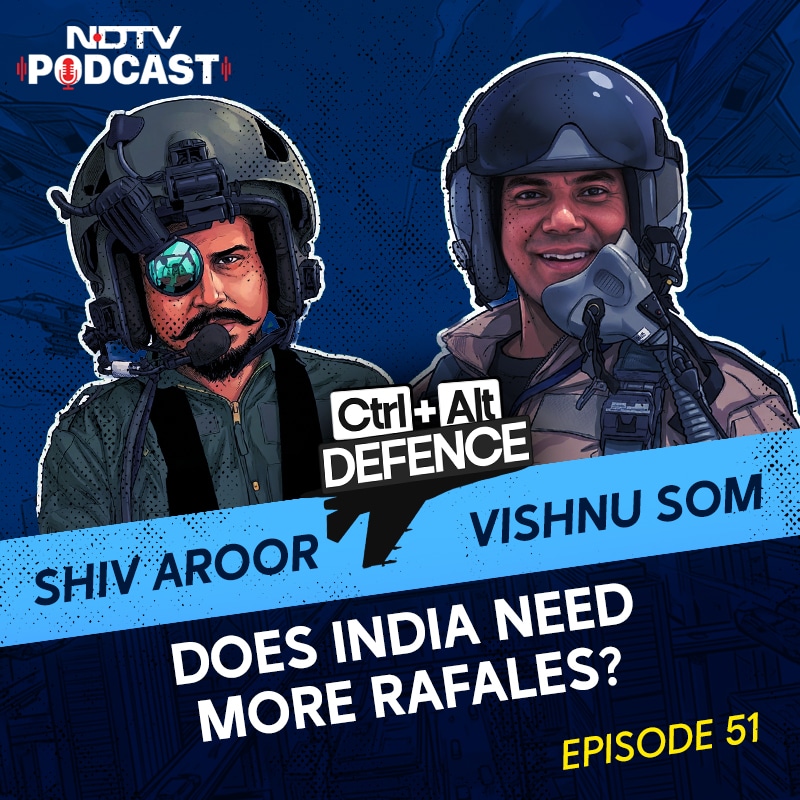
Does India Need More Rafales? | Ctrl Alt Defence Ep 51
Update on : Aug 8, 2026 17:36 (IST)
The Rafale deal is moving forward. But behind the headline number lies a much bigger question: how much of this fighter programme can India truly make its own?
On Episode 51 of #CtrlAltDefence, Shiv Aroor and Vishnu Som discuss France's ₹3.25 lakh crore bid for 114 Rafales, the push to integrate Indian weapons, and the proposed Safran-DRDO engine partnership.
Episode 51
Watch now: https://youtu.be/h3cFYeoA12Y
France submits its techno-commercial bid for 114 Rafales
Why 94 of the fighters are expected to be built in India
The push to integrate Astra, BrahMos and other Indian weapons
What India needs to make its own weapons work seamlessly on the Rafale
Why indigenous weapons integration has become a key part of the deal
The proposed Safran-DRDO engine partnership explained
Why access to jet-engine technology could matter more than the Rafale numbers
What the deal could mean for Tata, L&T and India's wider aerospace industry
What India's ₹3.25 lakh crore investment could deliver beyond the aircraft themselves
Can India turn a Rafale purchase into a bigger step towards aerospace self-reliance?
From the Rafale's weapons and production line to the technology behind India's next fighter engines, this episode looks at what India is actually getting-and what it still needs to build for itself.
Watch now.
Watch now: https://youtu.be/h3cFYeoA12Y
Why 94 of the fighters are expected to be built in India
The push to integrate Astra, BrahMos and other Indian weapons
What India needs to make its own weapons work seamlessly on the Rafale
Why indigenous weapons integration has become a key part of the deal
The proposed Safran-DRDO engine partnership explained
Why access to jet-engine technology could matter more than the Rafale numbers
What the deal could mean for Tata, L&T and India's wider aerospace industry
What India's ₹3.25 lakh crore investment could deliver beyond the aircraft themselves
Can India turn a Rafale purchase into a bigger step towards aerospace self-reliance?

-
News Updates
-
Featured
-
More Links
-
Follow Us On