Opinion | Pakistan's Dangerous Dance With America Is Finally Starting To Haunt It
Although Pakistanis have put up a brave face against Trump's Abraham Accords ask, in reality, it puts them in a difficult position at home.
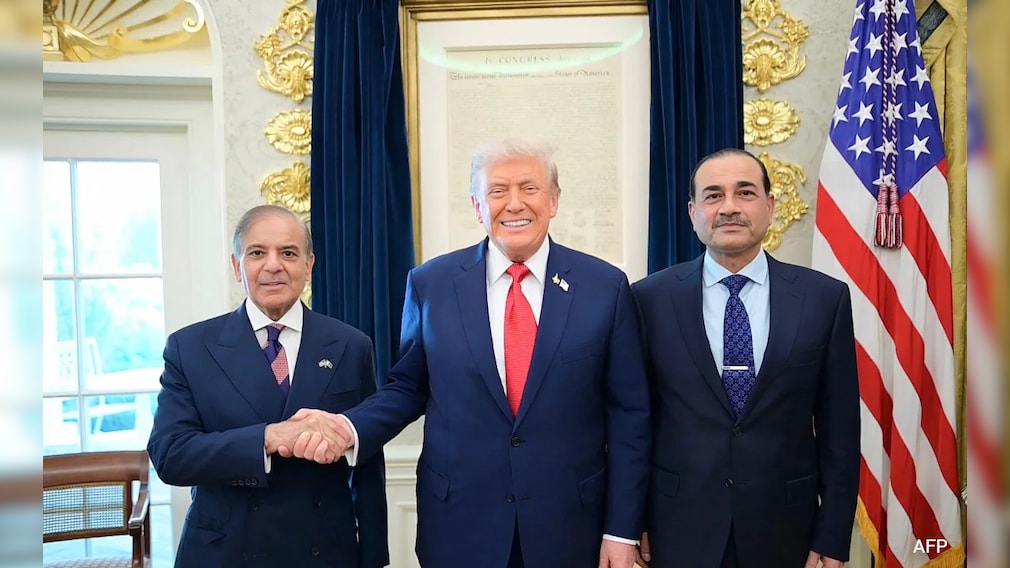
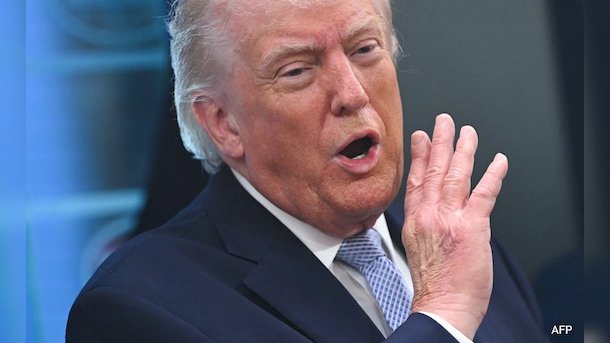
The Truth Social post of US President Donald Trump linking a peace deal with Iran to six Muslim countries - including Saudi Arabia, Qatar and Pakistan - "mandatorily" and "simultaneously" signing on to the Abraham Accords, has sent shockwaves among these nations. No one is sure about how to respond to this new demand by the capricious US president. It isn't even clear if Trump has just put this out there or whether he seriously intends to pursue this tack. Nonetheless, by shifting the goal post, Trump has confronted regional countries with a serious dilemma: if they refuse to sign on to the Abraham Accords, they not only invite Trump's ire but also risk the fraught security situation in the region not being resolved, and maybe even worsening; if they kowtow to Trump, they risk internal disturbances and public anger pouring out onto the streets.
In his post, Trump mentioned eight countries: Saudi Arabia, Qatar, Pakistan, Turkey, Egypt, Jordan, Bahrain and the UAE. But only the first three in this list are relevant from the point of view of the Abraham Accords. Bahrain and the UAE have already signed on to the deal. Turkey, Egypt and Jordan have diplomatic relations with Israel. Trump has left the possibility of a carve-out for one or two countries that may have a reason for not signing on immediately, and he very 'graciously' said that that would be "accepted". But later, in the same post, he demands "immediate signing by Saudi Arabia and Qatar". This means that the carve-out is really only for Pakistan. But is it? Because Trump then says that if any country doesn't sign on, "they will not be part of this deal in that it shows bad intention".
Pakistan's Many Confusions
Although Pakistanis have put up a brave face and insisted that they have been given the opt-out option, they aren't quite sure if that means they will still be "part of the deal", whatever that may be. Besides the possibility that holding out on signing the accords could mean falling foul of the mercurial Trump, there is another quandary that confronts Pakistan. They have been heavily invested in mediating between the warring sides and have been hoping that a settlement of the conflict will open up security, diplomatic and economic opportunities for them in West Asia. They are already dreaming of emerging as the regional pivot towards which everyone would turn for security and stability, paying Pakistan for their own exertions. If they are kept out of what Trump has in mind, this grand opportunity that they have been seeking could slip out of their hands.
But, on the other hand, while the military-dominated regime in Pakistan is powerful, it is also deeply unpopular. Signing the Abraham Accords could lead to a domestic backlash that the regime might not be able to manage.
For now, Pakistan has managed to duck the question of joining the Abraham Accords by reiterating its traditional stand of not recognising or normalising relations with Israel until a two-state solution is worked out, with Jerusalem as the capital of the Palestinian state. Within Pakistan, on cue, the media and supporters of the Pakistan Army have drummed up the usual rhetoric of quoting Jinnah's opposition to accepting Israel. But there is also some disquiet over the prospect of the Israel issue leading to a backsliding in the diplomatic profile Pakistan has managed to build, thanks to the American president's indulgence.
Being 'Flexible'
For all its grandstanding on sticking to its 'principled' position on the Palestine question, Pakistan's military and civilian establishment has often flirted with the idea of recognising Israel and building relations with the Jewish state. The logic is rooted not in altruism, but in hopes of countering India. The argument in Pakistan is that India has been given a walkover on Israel, thanks to Pakistan's refusal to engage with it. Establishing relations with Israel will help Pakistan balance India's influence in Israel and the US. Pakistan also hopes that if it establishes relations with Israel, it will be able to access the country's defence and civilian (primarily agricultural) technology. And then, of course, there is the legendary Jewish lobby that can be used to gain influence in Washington. An added benefit, the Pakistanis argue, is that since international Jewry controls global finances, Pakistan will get financial benefits too.
Occasionally, the Pakistani military establishment has floated trial balloons and even held meetings with Israeli officials - some declared and others behind the scenes. In Trump's first term, there was a lot of pressure on Saudi Arabia, Indonesia and Pakistan to normalise ties with Israel. The Pakistanis dodged the bullet back then. All these three big Islamic countries hid behind each other. The Saudi crown prince was believed to be open to the idea but was apprehensive of how such a move would be perceived inside the Kingdom and in the Islamic world. There was a fear that if the Saudis took the plunge, they could lose their status as leaders of the Islamic world. He, therefore, pleaded that King Salman did not give his nod. Soon after, Pakistan hid behind the Saudis and did not sign on. Perhaps if the Saudis and Indonesians, along with some other countries, had jumped on the Abraham Accord bandwagon, the Pakistani military establishment would have manufactured the necessary consensus, altered its principles, and perhaps even quoted something to justify the normalisation of its ties with Israel.
Will They Risk It?
Today, once again, Pakistan is faced with the same dilemma. However, it is extremely difficult for the unpopular, unelected regime to reach a consensus on the accords. A fanatical opposition to Israel has been assiduously cultivated by successive regimes in Pakistan, so much so that anti-Semitism has been normalised, even gentrified, and casual references to exterminating Jews and the Jewish state are quite normal in public discourse. Under the circumstances, there is a fear that a U-turn on Israel could bring the fulminating fundamentalists out on the streets. Normally, demonstrations by Islamist groups are orchestrated by the Pakistani state to evade international pressure and convince Westerners that Pakistan's hands are tied. But on the subject of Israel, such demonstrations might just be organic.
While street demonstrations and upheaval might still be risked, there is a fear within the regime that there could be resistance from within the military as well. According to some reports, there was a lot of disquiet in the rank and file about the question of being part of the Gaza Peace Force, in part because it would involve working with the Israeli Defence Forces. The Pakistani regime could not care less for public opinion, but it cannot afford to ignore military sentiments. What is more, Pakistan also doesn't feel the need to take this risk at all, for now. While they temporarily need America for image restoration, some financial relief, and some trade and investment deals, they think they already are in Trump's good books and can skirt the Abraham accords issue altogether. There may also be a sense in the Pakistani establishment that the US is a declining power and its influence is starting to wane to a point where saying 'no' is no longer an onerous exercise. A declining and receding America can be defied if the risk being taken isn't justified by the rewards.
There is, therefore, no compulsion on Pakistan to sign the Abraham accords, for now. If the situation takes a direction where not getting on board will invite huge costs, then sure, the Pakistanis might relent. But until then, they will hold out and not risk unrest on the streets of Pakistan.
(The author is a Senior Fellow at ORF)
Disclaimer: These are the personal opinions of the author
-
Opinion | The Last Bet? What Trump's 'Mother Of All Bombs' Could Actually Do To Iran

Can an MOAB deliver a decisive blow to Iran that may force it to surrender immediately, as Japan did after Hiroshima and Nagasaki in World War 2?
-
Hit Songs, Empty Pockets: The Hidden Math Behind India's Viral Music Boom
Over 80,000 brands and five lakh creators in India make branded content. The opportunity is worth around Rs 1,500 crore.
-
Opinion | Great 'Exceptions': How The Oil India Was Attacked For Is The Oil Trump Now Seeks
A law written to punish the buyers of Russian oil was suspended by the US to protect a purchase of Russian oil. India spent fourteen months being lectured for less.
-
Opinion | Louis Vuitton Loot, Torched Cars: France Protests Have An Unlikely Beneficiary
It's an unbelievable moment. Crowds looting the most exclusive stores in Paris, including the famed Luis Vuitton. But what's behind this meltdown?
-
Blog: Kolkata Didn't Learn From 2015. Eleven Years Later, It Proved To Be Fatal
The City of Joy isn't a stranger to crowd control. Be it during Pujo or Christmas at Park Street, Eden Gardens cricket matches, or Derbies between Mohun Bagan and East Bengal. But during Pujo, the entire city is on alert.
-
Opinion | Slurs, Threats, Now A Temple Attack Plot: When Did America Become So Hostile To Indians?
The rising tide of anti-India, anti-Hindu, and racist attacks serves as a stark reminder that economic prosperity does not automatically guarantee social immunity from bigotry.
-
A Step Behind Neha Bora: What Rahul Gandhi's Gesture Says About Congress' Gen-Z Pitch
At INDIA bloc's march to Supreme Court, Rahul Gandhi placed himself a step behind two women, hands resting on their shoulders. One was his sister Priyanka. The one on his right was Neha Bora. Here's what the image means for the protest wave now, and for Rahul's politics in general.
-
Opinion | Imran Khan, And The Perils Of Having An 'Opinion' In Bollywood
The reality of the industry is quite grimy. More often than not, its inhabitants have been fairweather friends, happy to sing the praises of whoever is in a position of authority.
-
Exclusive: India's Food Safety Problem Goes Beyond Just Dirty Kitchens - By Tukaram Mundhe
On World Food Day, Maharashtra's Commissioner of Food Safety explains why instead of taking stopgap measures, the entire supply chain in India needs to be held accountable and made transparent.
-
Opinion | India Has Enough Coal. So Why Are Power Plants Running Short? A 76 Million 'Crunch'
As of October 5, as many as 82 of the 191 thermal plants monitored by the Central Electricity Authority were in the 'critical' category