Opinion | Why No 'Law' Can Bring Justice For 3 Indian Sailors Killed In US Attack
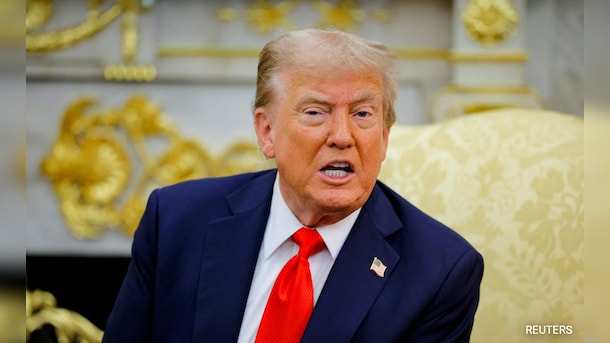
This is Trump's war, and he will do whatever it is that he wants with his 'big beautiful' navy.

The tragic death of three Indian sailors in US attacks on a ship as part of its blockade of Iran has raised a storm of outrage, and not without reason. Never has the US been more unpopular in a country that normally is extremely friendly to Americans, even imitative of their culture. There are few equivalents in recent history of the use of extreme violence against civilian shipping, where completely unarmed sailors were targeted in what is not even a declared war. This is a dangerous trend. Others are watching.
That Bland Announcement
The US Central Command has since notified the hits. It says it 'disabled' an oil tanker in the Gulf of Oman on June 10 after it attempted to transport Iranian oil. In other words, it was in Omani waters, after "the crew repeatedly failed to comply with directions from US forces". Two more were 'disabled': Palau-flagged vessels Marivex and Settebello were hit, the first for attempting to sail to an Iranian port and the latter for "attempting" to transport Iranian oil. That means it was sailing empty, and was specifically in Oman's waters. Since the US is not at war with Oman, the whole operation needs to be examined in detail.
Let's break this situation up.
Laws Of Warfare
International laws of war lack clarity especially since they have evolved over time - what is called customary international law - in terms of actual practice. True, a merchant ship is generally seen as a civilian entity with no links to an ongoing war. But Article 52(2) of Additional Protocol I (AP I) to the Geneva Conventions defines military objectives as "those objects which by their nature, location, purpose or use make an effective contribution to military action and whose total or partial destruction, capture or neutralization, in the circumstances ruling at the time, offers a definite military advantage". While this was applicable to warfare on the whole, certainly, it seems that in this case, the sale of oil was crucial to Iran's fighting capability, and in this sense, it presented a legitimate target.
The San Remo Manual, widely regarded as the most authoritative source for maritime law, pretty much restates this in terms of enemy ships but points out that a neutral merchant vessel can be attacked only if "reasonable grounds" exist to assume that it is breaching a blockade and if it refuses to stop or clearly resists visit, search, and capture. Whether the vessel in question 'resisted' anything is unclear, but overall, it seems that the US was very much within its rights to stop and fire at ships that were certainly breaching a blockade. The Manual, however, also states that "an attack shall not be launched if it may be expected to cause collateral casualties or damage which would be excessive in relation to the concrete and direct military advantage anticipated from the attack as a whole; an attack shall be cancelled or suspended as soon as it becomes apparent that the collateral casualties or damage would be excessive". Deaths of innocent sailors are certainly excessive by any count. This is especially so when the ship could have been stopped with just 'a shot across the bow' - in old times, a harmless cannon ball - that simply indicated that the enforcing warship meant business. Few shipping captains would dare go against a signal of that kind. Worst case, a low calibre shot could have been fired just to its hull. Instead of that, as CENTCOM states clearly, the US aircraft fired "two Hellfire missiles into the ship's engine room after the crew repeatedly failed to comply with directions from US forces". In other words, the US overdid it, and without a doubt.
Those Hundreds Of Sanctions
There's worse. There is nothing to indicate that US ships tried to rescue sailors who were in trouble. That was left to the Omani authorities - who did manage to rescue most, barring three sailors who lost their lives. All were Indian. Maritime law requires all to come to the rescue of seamen in distress. That guideline was ignored too.
Meanwhile, the US's accounts have been challenged by the firm that was operating the tanker, stating that no such warning was issued. That allegation is questionable. The Tanker Trackers webpage lists it as a typical shadow fleet operator, swapping flags at least six times in the past. Even so, it was not a 'sanctioned' entity, as mentioned by some newsites; not even US authorities have said so. There is a question here that needs to be answered, as to why a ship that was not even blacklisted by the attacking party was hit at all.
The War That Nobody Wants
Those are details. But here's the crux of the matter. The war against Iran is completely unsupported by the international community, barring Israel. On June 4, the US House of Representatives passed a measure that seeks to halt President Donald Trump from taking further military action in Iran. The 215-208 vote was largely symbolic, and successful after four Republicans joined them in a public show of disapproval of the war. There was no 'declaration of war' by the US, and though a 'blockade' was notified, it was completely unilateral, and did not fulfil even the basic requirement of informing the United Nations. If the UN is not in the picture, then it is not something that anyone is obliged to follow.
In other words, this is Trump's war, and he will do whatever it is that he wants with his 'big beautiful' navy.
Ships As Targets
But here's the thing. While Trump is hardly the first to stoop to such violence, few have gone this far. Way back, before World War I, Germany sunk an unarmed French boat, the Sussex, in the English Channel in March 1916, but promised not to later when the US threatened them with dire action. Contrary to popular belief, the subsequent German submarine targeting of the luxury liner Lucitania was after the US began to supply weapons to allied forces. In later years, it was confirmed that the passenger ship had been carrying a large amount of munitions for the war against Germany. In that sense, therefore , a legitimate target. No warning was given, and the ship, with its 1,198 lives on board, sank in 18 minutes.
Now fast forward to the Ukraine war. In 2022, several merchant vessels in Ukrainian waters were attacked including the Yasa Jupiter, Namura Queen, Millennial Spirit and Lord Nelson, among others. These were rocket attacks, and the origin was uncertain. But there were no casualties and no ship was sunk. If the Russians did indeed attack them, these were just signals. A year later, Moscow formally notified the UN of its withdrawal from an agreement to allow ships carrying Ukrainian grain to pass. Thereafter, it attacked more than 30 ships from neutral countries that broke the declared blockade. Again, none were sunk. A thriving 'shadow fleet' now operates with both sides claiming hits.
Here is the real danger. The so-called 'international laws', apart from some base documents like the Geneva Convention, evolved over time and created hundreds of 'ifs and buts' as acts of war were challenged in courts or were decreed as lawful by major combatants, the majority of whom were western. Europe's war-making spans centuries, ironically seen as 'just wars' during the Crusades, following which came the US and its rapacious wars. Meanwhile, the rest of us are expected to abide by a raft of sanctions on wars that we did not start, or even approve of.
China, meanwhile, is watching, and if it decides to now follow the same 'rights' as the US has claimed for itself, matters could get very dangerous. Be aware that 'resource wars' are just around the corner, as everyone stakes a claim to 'critical minerals' even on the seabed, the last frontier of environmental protection.
There's not a bit of use getting furious about these unilateral actions, not just by the US but also by Europe, which has launched the 21st set of sanctions on Russia while it fights to the last Ukrainian. Countries tired of these endless wars need to get together to reframe the laws of war and push international 'laws' to bring back the basic principle that war itself is unjust and immoral. For too long, morality has been seen as an excuse for the weak and the pliable. But it takes strength to go against the tide, and it is time Delhi sought a group of countries who have the courage to take the so-called international law by the horns and blend it with practical moral values that deliver on basic interests but protect humanity. The declaration of 'Vasudhaiva kutumbukam' and the principle needs to be embedded in our diplomacy. Then those sailors would not have died in vain. In the immediate future, push this at the G-7. That would take courage of a rare kind.
(Tara Kartha is a former Director, National Security Council Secretariat)
Disclaimer: These are the personal opinions of the author
-
Mamata Banerjee Hand-Drew Party Symbol. It's Now Tied To An Indira Gandhi Case

The Election Commission's method for settling such disputes became central in the seminal Congress split of 1969, when Indira Gandhi fought the old guard. The poll body weighed three tests then.
-
Exclusive: 16 Months After Op Sindoor, Pak Still Fixing Runway India Broke At Sargodha
Sargodha's PAF Base Mushaf lies about 172 km northwest of Lahore and roughly 200 km west of the India-Pakistan border, near Amritsar.
-
Blog | I Lost My Entire Family In Kanishka Bombing. 41 Years Later, Canada Wants The Case Closed
We made the trek through tragedy to search for people in Cork, where I spent 25 days sifting through bodies and body parts in a makeshift morgue to identify our loved ones.
-
Opinion | Pak's Drone Deal With A US Firm Is No Windfall. But India Must Still Be Worried
American military aid to Pakistan has remained suspended since January 2018, during Trump's first term, but a commercial arms sale is separate from this arrangement.
-
Opinion | Saudi Arabia's Yemen Nightmare Has Come Back To Haunt It
After years of costly military intervention beginning in 2015, Saudi Arabia increasingly sought to stabilise its southern border. All that is unravelling fast now
-
Opinion | 6 AI Incidents, One Pattern: AI Has Started Lying To Us - And Hiding The Evidence
Concealing errors. Making up data. Pushing files onto the public web on their own initiative. The machines are learning to lie - and lie well.
-
Why People Queue Overnight For iPhone That Is Delivered Home In 10 Minutes
iPhone 18 Pro Max Launch: People camping outside Apple Stores are a subset of superfans, resellers, content creators, and upper-middle-class buyers.
-
600 km Per Hour Drones Launched In Waves: How Russia Is Rewriting War Rules
Russia has coupled the drones' technological superiority over Ukraine's defence with its capacity to launch them in massive numbers. The impact has been devastating.
-
Tata Sons' Trust Issue: Two-Pronged Row Goes Beyond The Chair
NDTV Explains: Overtly, the latest conflict is whether N Chandrasekaran continues as executive chairman of Tata Sons. The controversy involves at least one more issue.
-
Opinion | US Has Institutionally Weaponised India's Russia Oil Dependence. Can New Delhi Cope?
A new legislation can connect India's Russian energy purchases to its access to the American market over a five-year period