Opinion | Nepal's 'Climate Compensation' Pitch Is Valid, But Its Demand From India Isn't
Nepal's vulnerability gives it a claim on multilateral climate finance. It does not follow that India bears responsibility for this.
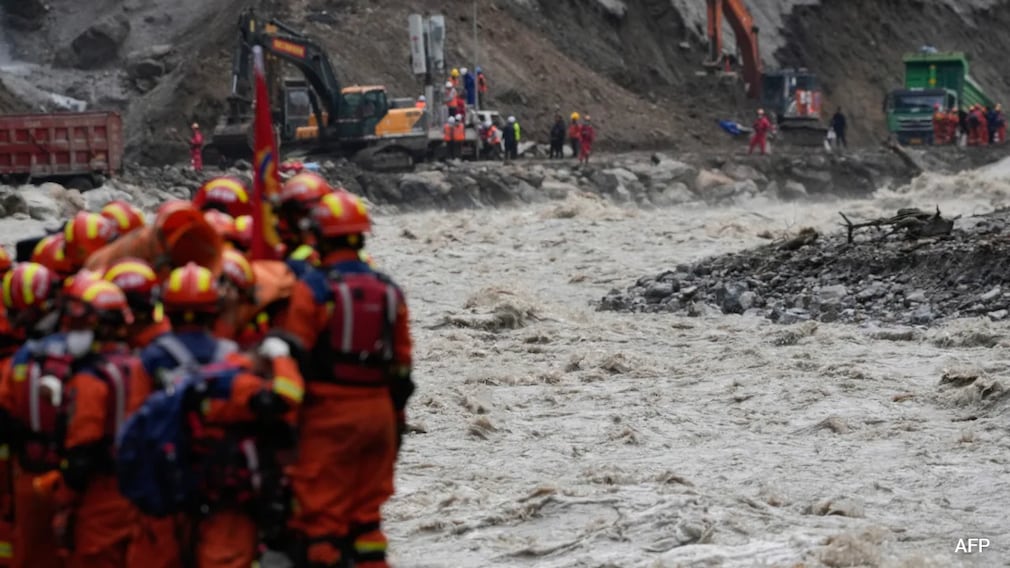
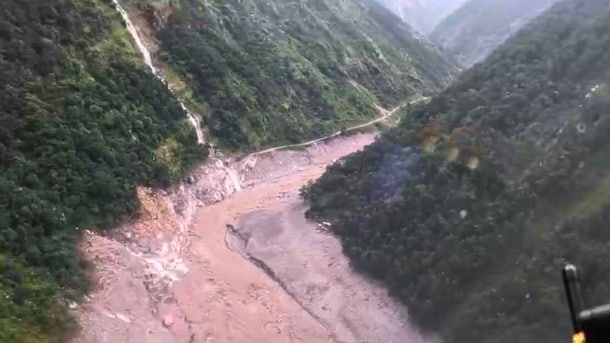
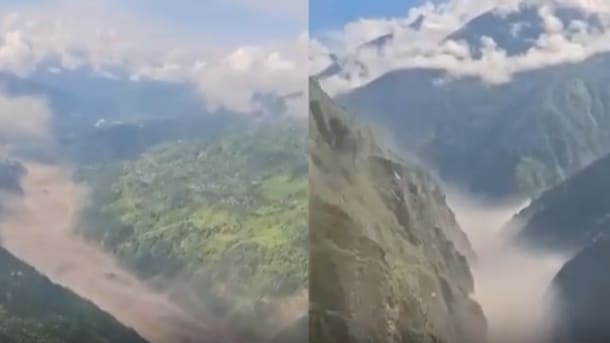
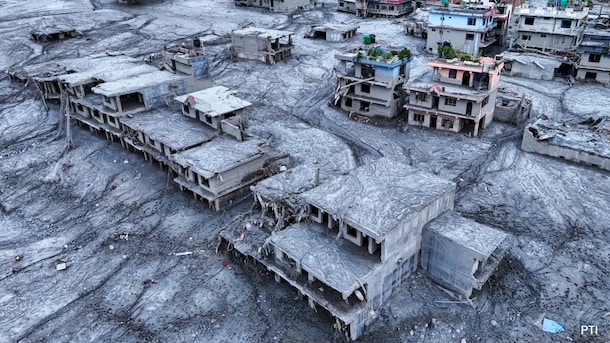
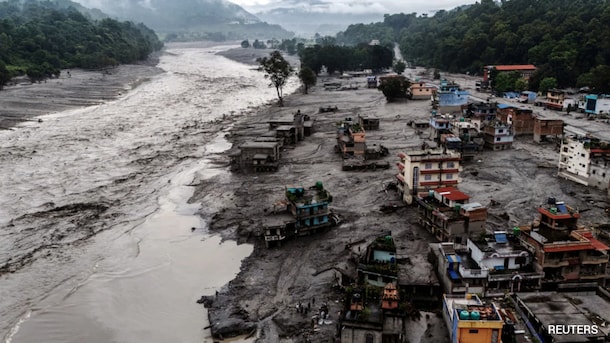
When a flood sweeps through a mountain valley in Nepal, the debris does not need a visa to enter Indian strategic thinking. The surge that tore through the Bhote Koshi and Trishuli river system on August 26 carried water, rock, mud, homes, and human lives. It also carried a question across the border: should India be asked to pay for a climate disaster for which no Indian responsibility has been established?
Nepal has formally asked the Fund for Responding to Loss and Damage (FRLD) for urgent support. Foreign Minister Shisir Khanal has publicly named China, the United States, and India as countries with a "historical responsibility to compensate vulnerable nations like Nepal". No quantified compensation claims against these countries have been made public.
Missing The Nuance?
Khanal's argument moves too quickly from a general claim about climate injustice to a demand directed at India. Prime Minister Balen Shah later put the case more carefully in Parliament. "There is a global contribution behind climate change. And the responsibility to manage and minimise its effects also rests on the global community."
Nepal's vulnerability gives it a claim on multilateral climate finance. It does not follow that India bears responsibility for this flood or owes compensation. Under the UN climate framework, developed countries carry the main obligation to provide climate finance. India remains a developing country.
Nepal contributes about 0.05% of annual fossil and industrial carbon dioxide emissions and 0.01% of the cumulative total since 1751. Its emissions per person are about 0.63 tonnes. Nepal's mountains leave it unusually exposed to warming generated elsewhere. The anguish in Kathmandu is understandable. Retreating glaciers, weakened slopes, and violent monsoons can send one failure high in the Himalayas crashing through valleys and homes.
Conflating Three Different Issues
Countries with far larger historical emissions accumulated wealth by burning carbon. Nepal, which has a fraction of their fiscal capacity, is now absorbing the damage. Khanal's list, however, conflates three very different emissions histories. The United States carries a far larger historical and per-person burden. China is the largest current emitter and has a substantial cumulative share. India ranks third in annual emissions, but its cumulative and per-person emissions remain far lower. Historical justice loses its meaning if those differences are ignored.
Nepal's losses are real, and recovery cannot wait. The FRLD offers the clearest route. Established at COP27 in Sharm el-Sheikh in 2022 and operationalised at COP28 in Dubai a year later, it helps vulnerable developing countries meet climate-related losses. Access rests on vulnerability and need. The 2015 decision adopting the Paris Agreement says Article 8 on loss and damage "does not involve or provide a basis for any liability or compensation". COP28 retained that distinction when it operationalised the FLRD.
The FRLD has set aside USD 342 million under its start-up financing arrangements. It has received 176 requests worth approximately USD 2.8 billion from 119 countries. Nepal's Finance Minister estimates that rebuilding could cost USD 4 to 5 billion. Nepal may well need that much to rebuild. But the estimate does not identify a debtor. When the FRLD meets in December 2026, New Delhi can back prompt consideration of Nepal's request.
A separate claim would have to rest on general international law. The International Court of Justice's non-binding 2025 advisory opinion recognises that compensation may be required where a state has breached its climate obligations and the usual conditions of state responsibility are met. Nepal would, therefore, have to identify an unlawful Indian act and connect it to specific losses from this flood. With the precise trigger of the disaster still under investigation, that case has not been made.
What A Neighbour Can Actually Do
India should keep the legal answer in reserve. This is not the moment for New Delhi to conduct a legal argument through the press. Flood damage led Nepal to seek earlier electricity imports from India and sharply reduced its seasonal power exports. Nepal's rivers, roads, hydropower projects, and public sentiment all matter to India.
Longer-term resilience does not require another regional body. A Himalayan Risk and Resilience Compact among Nepal, India, China, and other countries in the region could use the International Centre for Integrated Mountain Development as its technical base. Governments would commit to sharing data promptly, monitoring glaciers and unstable slopes, and keeping warnings moving even when relations are strained. Information must cross borders before the next flood does.
Nepal has shown why it needs help, not why India owes it compensation. The flood came down a Nepali valley, but its warning crossed the frontier. India should help make the next disaster less destructive. That is the responsibility of a neighbour, not the liability of a polluter.
(The writer was a Permanent Representative of India to the UN and now serves as Dean, Kautilya School of Public Policy)
Disclaimer: These are the personal opinions of the author
-
Opinion | India Wants A 6th-Generation Fighter. But A Lot Could Go Wrong

India might just be building too many fighter jets to focus on any one of them well. A recalculcation is needed.
-
Reporter's Diary | Worse Than War: An Aerial View Of Nepal's Trishuli River Valley Tragedy
In many ways, reporting on natural disasters is far more harrowing than covering modern war
-
Opinion | China's Quiet Power Grab Is Hiding In Plain Sight
China's greatest advantage may be neither its military nor its markets, but a world too distracted to see what it is building.
-
Opinion | The Indian Investor Has A New Problem: An SIP That Does Nothing
You keep doing everything right. So why aren't your stocks paying off, even as your investments rise?
-
The River Took It All: Aerial Visuals From Nepal Show Scale Of Catastrophe | NDTV Exclusive
Visuals from a helicopter showed narrow gorges now flattened and widened into valley-like spreads, with rocks, debris, mud, and bodies strewn across them.
-
Before The Nepal Flood, A Glacial Fall: Tracing The Trigger, And A 100-km Killer Surge
A glacier came off a ridge on the Nepal-China border and travelled 100 km down multiple rivers, the longest part of the run being in the Trishuli.
-
Opinion | How A 'Friendship' Pact With Russia Came To India's Rescue 55 Years Ago
With PM Modi set to meet Putin in Kyrgyzstan, a throwback to a historic treaty that helped India fend off Pakistan - and America's 7th Fleet - over 50 years ago.
-
Opinion | The OBC Fault Line That Could Shake Up Uttar Pradesh - And BJP
For years, the BJP was propelled by support from the OBCs. Now, cracks have begun to appear in that base